IṢẸ́ ỌNÀ
ẸWÀ ÀTI ÌLERA
IṢẸ́ ỌWỌ́
ÀṢÀ ÀTI ÌTÀN
ÌṢERÉ
ÀYÍKÁ
OÚNJẸ ÀTI OHUN MÍMU
REVERSE ENGINEERING
SÁYẸ́ǸSÌ
ERÉ ÌDÁRAYÁ
ÌMỌ̀-Ẹ̀RỌ
ÀWỌN OHUN WÍWỌ̀
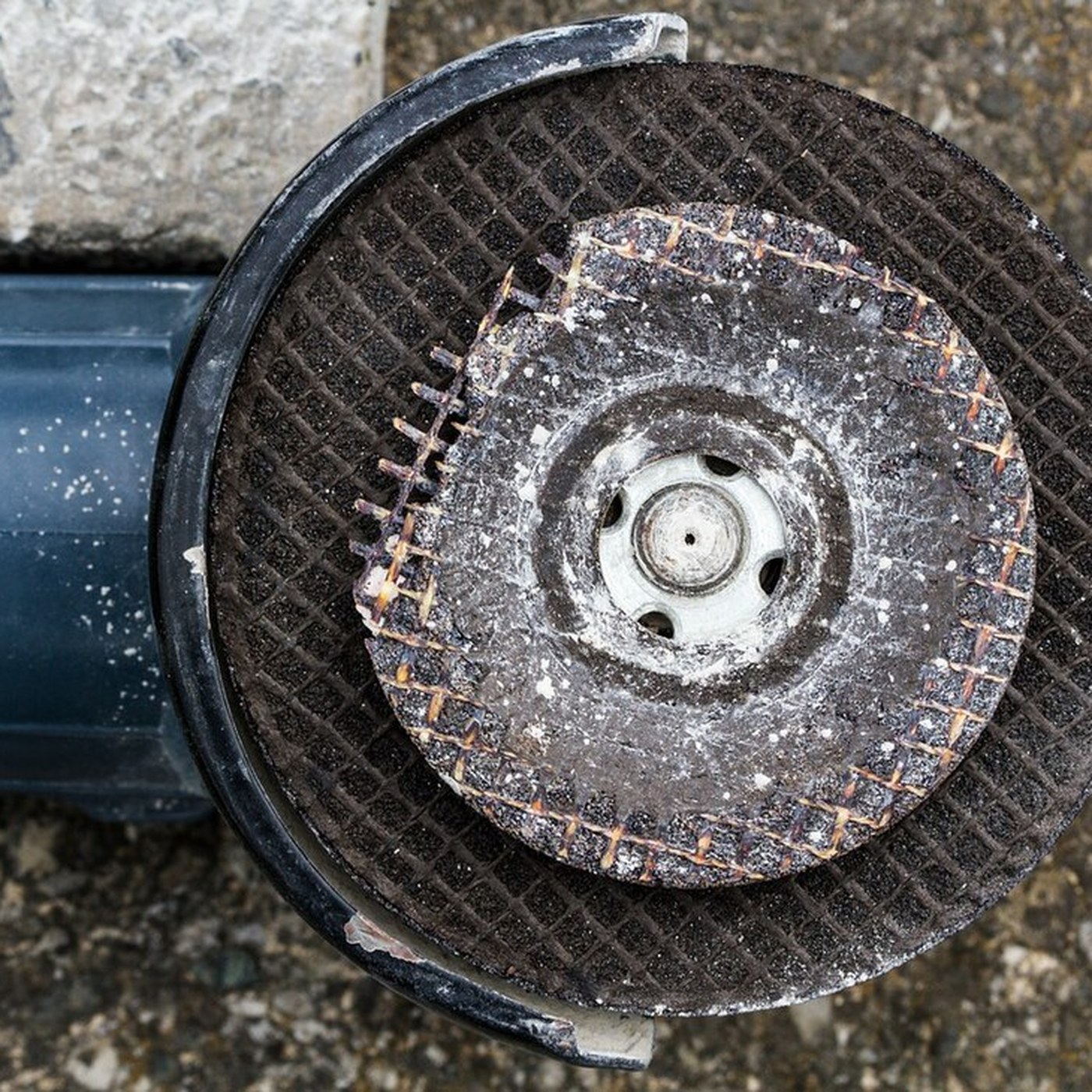


Turning the Corner: The Right-Angle Head
A bench grinder makes you bring the work to the wheel. For anything bolted down, welded up or too heavy to lift, that is the wrong way round.
The angle grinder turns the motor axis through ninety degrees with a pair of bevel gears, so an abrasive wheel can be held flat against work that is not going anywhere. It is the most generally useful metalworking tool a small shop owns, and the one that injures the most people.
Three things make it survivable and all three are geometry: the guard's position, the wheel's rated speed, and which part of the wheel you present to the work. This rung is about those three.
Àárín
About 2 hours
Ìlànà
1
1
Read the wheel before you fit it
Read the wheel before you fit it
Every bonded abrasive wheel is printed with a maximum operating speed and a diameter. Find both on the wheel and find the no-load speed on the grinder's rating plate. Write the two numbers side by side.
**The wheel's rating must be equal to or higher than the tool's no-load speed.** Not close to it. Step 4 shows why: stress in the disc rises with the square of speed, so a modest overspeed is a large overstress on a part that gives no warning.
Then check the wheel itself. Cutting discs are thin and meant for the EDGE only; grinding discs are thick and meant for the face at a shallow angle; flap discs are layered and meant for the face flat. Using a cutting disc on its face is the classic way to shatter one, because it is not built to take a side load at all.
Ring-test a bonded wheel before fitting: hang it on a finger and tap the side gently with a screwdriver handle. A sound wheel rings. A cracked one thuds. This takes two seconds and it is the only inspection that finds an internal crack.
Check the expiry date. Resin-bonded wheels degrade and are dated for that reason.
Àwọn irinṣẹ́ tí a nílò:
 Ẹ̀rọ ìlọ̀ onígun
 Kẹ̀kẹ́ ìlọ̀
 Ìtò àwo onílẹ́ẹ̀
 Ìṣù àwọn ohun ìyí skurú
 Òṣùwọ̀n Kálípà Díjítà Ìnṣì 6
2
2
The bevel pair, and why the guard sits where it does
The bevel pair, and why the guard sits where it does
Inside the head is a pair of **bevel gears**. The motor pinion turns about the tool's long axis; the wheel spindle turns about an axis at ninety degrees to it. That is the whole reason the tool exists in this shape — a motor in line with your forearm, driving a wheel you can lay flat on a workpiece.
The pair also gears down. A universal motor runs far too fast to put straight onto a 125 mm wheel, so the bevel ratio brings it into the wheel's rated range. Turn the spindle by hand with the tool unplugged and count how far the motor fan turns for one turn of the spindle — that is your ratio, measured rather than assumed.
**The guard is not a cover, it is a direction.** A bursting wheel throws fragments tangentially, along the line the rim was travelling. The guard is positioned to intercept that line on the operator's side and is deliberately open toward the work. That is why rotating the guard to 'see better' is so dangerous: it does not reduce protection evenly, it removes it from exactly the sector the fragments will take.
Set the guard so the open side faces away from you, fit the side handle, and use it. The side handle is what gives you the leverage to hold the tool when a disc snatches.
Àwọn irinṣẹ́ tí a nílò:
Ẹ̀rọ ìlọ̀ onígun Àkójọ ẹ̀rọ ìgbáradì
 Ìdìpọ̀ kọ́kọ́rọ́ igun mẹ́fà
3
3
Cut and grind a scrap, and find out which way it pulls
Cut and grind a scrap, and find out which way it pulls
Clamp a piece of steel plate in the vise, well supported, with the cut line clear of the jaws. Full face shield or goggles, gloves, hearing protection, sleeves down, nothing flammable within the spark stream — which is further than you think.
Let the tool reach full speed clear of the work, then bring the disc in. With a cutting disc, use the edge and keep the cut straight: any twist puts a side load on a disc that has no side strength, and that is how they shatter.
Feel which way the tool wants to travel. The wheel's rotation drags the tool along the work in one direction and pushes it away in the other. Work so that the tool is pushed against your grip rather than pulled out of it, and never let the disc climb out of a cut toward you.
Now grind with a flap disc at about 15 degrees to the surface and compare the finish with what a file leaves. The grinder removes metal an order of magnitude faster and leaves a coarser surface — it is a stock-removal tool, and the file rung remains the one that makes a surface true.
Let the disc stop on its own. Setting a running grinder down is how the tool takes off across the bench.
Àwọn ohun èlò fún ìgbésẹ̀ yìí:
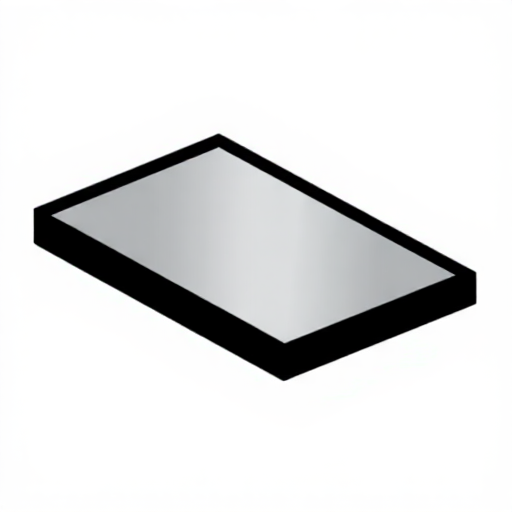 Pẹpẹ irin rírọ̀1 ẹyọ
Àwọn irinṣẹ́ tí a nílò:
Ẹ̀rọ ìlọ̀ onígunKẹ̀kẹ́ ìlọ̀Ìtò àwo onílẹ́ẹ̀ Ìdìmú Tábìlì
 Gíláàsì ààbò
 Ààbò etí
 Ìbọ̀wọ́ wẹ́lídìn
 Ìbòjú Eruku
4
4
Why the speed rating is not advisory
Why the speed rating is not advisory
Ń ṣí ìwé Jupyter…
Àwọn irinṣẹ́ tí a nílò:
Òṣùwọ̀n Kálípà Díjítà Ìnṣì 6 Ìwọ̀n Ìyípo Dígítà
5
5
History and context
History and context
**Attribution, stated honestly.** The handheld angle grinder in its modern form is credited to **Ackermann + Schmitt** of Stuttgart — the firm behind the FLEX brand — in **1954**, and in German the tool is still often called a *Flex* after it. Earlier right-angle grinding machines existed; what 1954 is remembered for is the compact one-hand form that became standard. A specific patent number could not be verified from the sources reachable here, so none is asserted. The mechanism — a bevel pair turning the drive through ninety degrees onto a guarded abrasive wheel — is not in doubt.
The tool spread because it is indifferent to what it is cutting. A change of disc turns it from a cut-off saw into a grinder, a sander, a wire brush or a mortar rake, and none of those needs the work to move. For repair, demolition and fabrication that is close to unbeatable.
It also has one of the worst injury records of any hand tool, and the reasons are structural rather than careless: the wheel is brittle, it is fast, it is close to the hand, and it gives no warning before it fails. Nearly every later feature — anti-kickback clutches, no-volt release, brake motors that stop the wheel in seconds — exists because of that record.
**Honest limits.** It removes metal fast and accurately never; anything that must be true gets finished by file, by the bevel-grinding rung, or on a machine. It throws sparks far enough to start fires out of sight. It generates dust that is genuinely hazardous when the work is stone, and silica is not a nuisance dust. And the disc it needs depends entirely on the job, which means the commonest failure is the right tool with the wrong wheel in it.
Àwọn ohun-èlò
1- 1 ẹyọÀyè
Àwọn irinṣẹ́ tó nílò
13- 1 vendor sell this, none ship to you yetÀyè
- Àyè
- Àyè
- Àyè
- Ààbò etíìdá 10%Àyè
- Àyè
Blueprint tó jọra
Àwọn blueprint wọ̀nyí pín ìmọ̀ — ọ̀nà, ohun-èlò tàbí ìlànà
CC0 Àgbègbè Gbogbogbò
Blueprint yìí ti jáde lábẹ́ CC0. O lè ṣe àdàkọ, yí padà, pín, àti lò láìsí ìyọ̀ǹda.
Ṣàtìlẹ́yìn Olùṣẹ́dá nípa rírà àwọn ọjà nipasẹ̀ Blueprint wọn Ẹ̀san Olùṣẹ́dá tí àwọn Olùtajà gbé kalẹ̀, tàbí ṣẹ̀dá àtúnṣe tuntun ti Blueprint yìí kí o sì fi sínú Blueprint rẹ gẹ́gẹ́ bí ìsopọ̀ láti pín owó-wíwọlé.