IṢẸ́ ỌNÀ
ẸWÀ ÀTI ÌLERA
IṢẸ́ ỌWỌ́
ÀṢÀ ÀTI ÌTÀN
ÌṢERÉ
ÀYÍKÁ
OÚNJẸ ÀTI OHUN MÍMU
REVERSE ENGINEERING
SÁYẸ́ǸSÌ
ERÉ ÌDÁRAYÁ
ÌMỌ̀-Ẹ̀RỌ
ÀWỌN OHUN WÍWỌ̀


What a File Actually Is: Rows of Tiny Chisels
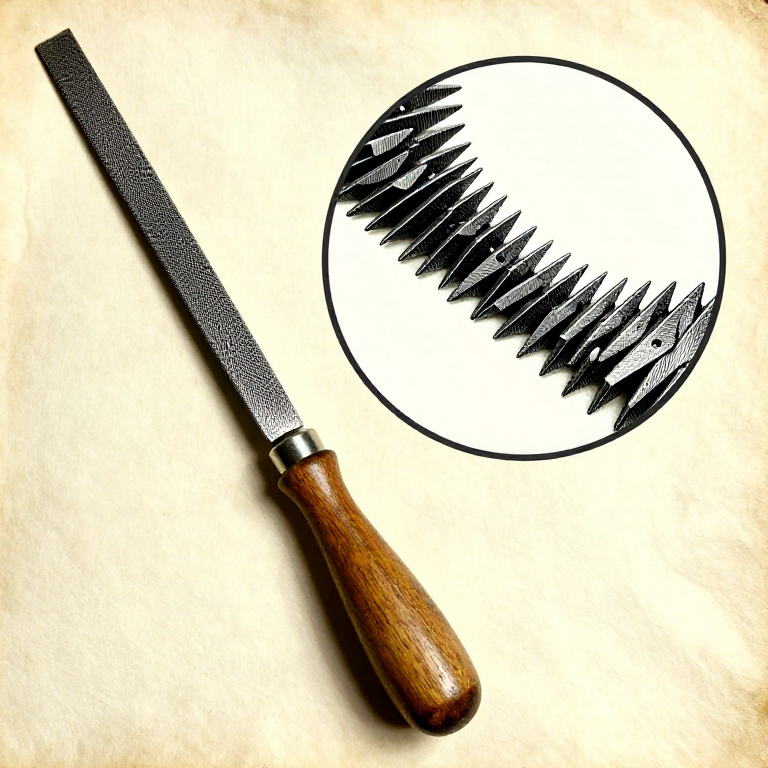
A file is not an abrasive. It is a hardened steel bar carrying hundreds of tiny chisels, each one cutting a chip exactly the way a plane iron does, and everything a file does well or badly follows from that.
It explains why a file only cuts on the push stroke, why dragging it back wears the teeth for nothing, why it stops cutting when the gullets fill, and why one file glides uselessly over hardened steel while another bites. None of that is true of sandpaper.
Two hundred and thirty-six blueprints on Youblob list a file among their tools and not one of them explains how to use it. This is the first of eight rungs that close that.
Olùbẹ̀rẹ̀
2 hours
Ìlànà
1
1
Look at the teeth and see the chisels
Look at the teeth and see the chisels
Put a file under a loupe with the light raking along it. Each tooth is a tiny wedge with a cutting edge across the top and an open space behind it — the gullet — where the chip goes.
The teeth all lean the same way: forward, toward the tip. That is why a file cuts on the PUSH and does nothing on the pull, and why lifting it on the return stroke costs nothing but saves the teeth. Dragging a loaded file backwards under pressure drags trapped chips across the work and scores it.
The other thing visible under the loupe is that the teeth are in rows running diagonally, not straight across. A straight row would cut a groove its own width; the diagonal makes each tooth land on fresh metal.
Àwọn irinṣẹ́ tí a nílò:
 Ìfá Irin
 Lúpù Ìgbéga
2
2
Single cut, double cut, and rasp
Single cut, double cut, and rasp
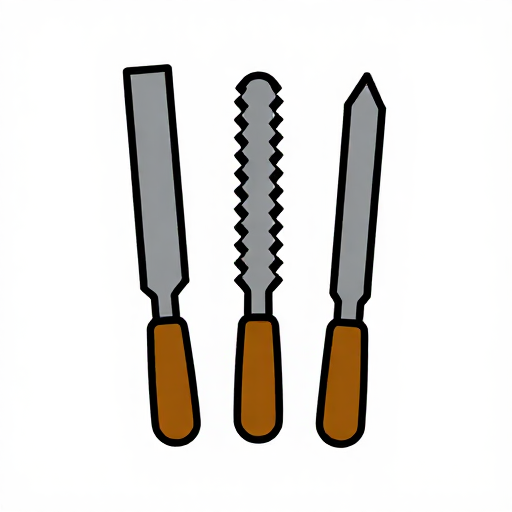
SINGLE CUT has one set of parallel diagonal rows. Each tooth is a long straight edge, it takes a wide shallow chip and leaves a smooth surface — this is what a finishing file and a saw file use.
DOUBLE CUT adds a second set of rows crossing the first, which breaks the long edges into a grid of small pointed teeth. Each takes a small deep chip, so it removes metal far faster and leaves a rougher surface. Most general-purpose hand files are double cut.
A RASP is neither: its teeth are individually raised punched points, widely spaced, with huge gaps between them. That makes it useless on metal and ideal on wood, where the chip is bulky and would instantly clog a file.
Àwọn irinṣẹ́ tí a nílò:
Ìfá Irin Fáìlì ọwọ́ kékeré
 AyùnLúpù Ìgbéga
3
3
Cut, grade and length — reading the name of a file
Cut, grade and length — reading the name of a file
Ń ṣí ìwé Jupyter…
Àwọn irinṣẹ́ tí a nílò:
 Àkójọ Ìfá
 Ẹ̀rọ Ìṣirò
4
4
A file is harder than almost anything you will file
A file is harder than almost anything you will file
File teeth are hardened to around 65 HRC and left untempered, which makes them harder than nearly all working steel and also extremely brittle.
Two consequences. First, a file will cut mild steel, brass, aluminium, cast iron and most tool steel in the annealed state, but it skates uselessly on anything hardened — a hardened blade, a bearing race, a file. That is in fact the classic workshop hardness test: if a file bites, the part is soft.
Second, never use a file as a lever or a pry bar and never strike it. It will snap without bending, and it does so suddenly. Fit a handle before using one: the bare tang is a spike aimed at your palm, and it is the single commonest workshop injury with this tool.
Àwọn irinṣẹ́ tí a nílò:
Ìfá Irin Ọ̀pá irin rírọ̀
 Gílásì Ààbò Tí Ó Mọ́
Blueprint tó jọra
Àwọn blueprint wọ̀nyí pín ìmọ̀ — ọ̀nà, ohun-èlò tàbí ìlànà
CC0 Àgbègbè Gbogbogbò
Blueprint yìí ti jáde lábẹ́ CC0. O lè ṣe àdàkọ, yí padà, pín, àti lò láìsí ìyọ̀ǹda.
Ṣàtìlẹ́yìn Olùṣẹ́dá nípa rírà àwọn ọjà nipasẹ̀ Blueprint wọn Ẹ̀san Olùṣẹ́dá tí àwọn Olùtajà gbé kalẹ̀, tàbí ṣẹ̀dá àtúnṣe tuntun ti Blueprint yìí kí o sì fi sínú Blueprint rẹ gẹ́gẹ́ bí ìsopọ̀ láti pín owó-wíwọlé.