IṢẸ́ ỌNÀ
ẸWÀ ÀTI ÌLERA
IṢẸ́ ỌWỌ́
ÀṢÀ ÀTI ÌTÀN
ÌṢERÉ
ÀYÍKÁ
OÚNJẸ ÀTI OHUN MÍMU
REVERSE ENGINEERING
SÁYẸ́ǸSÌ
ERÉ ÌDÁRAYÁ
ÌMỌ̀-Ẹ̀RỌ
ÀWỌN OHUN WÍWỌ̀
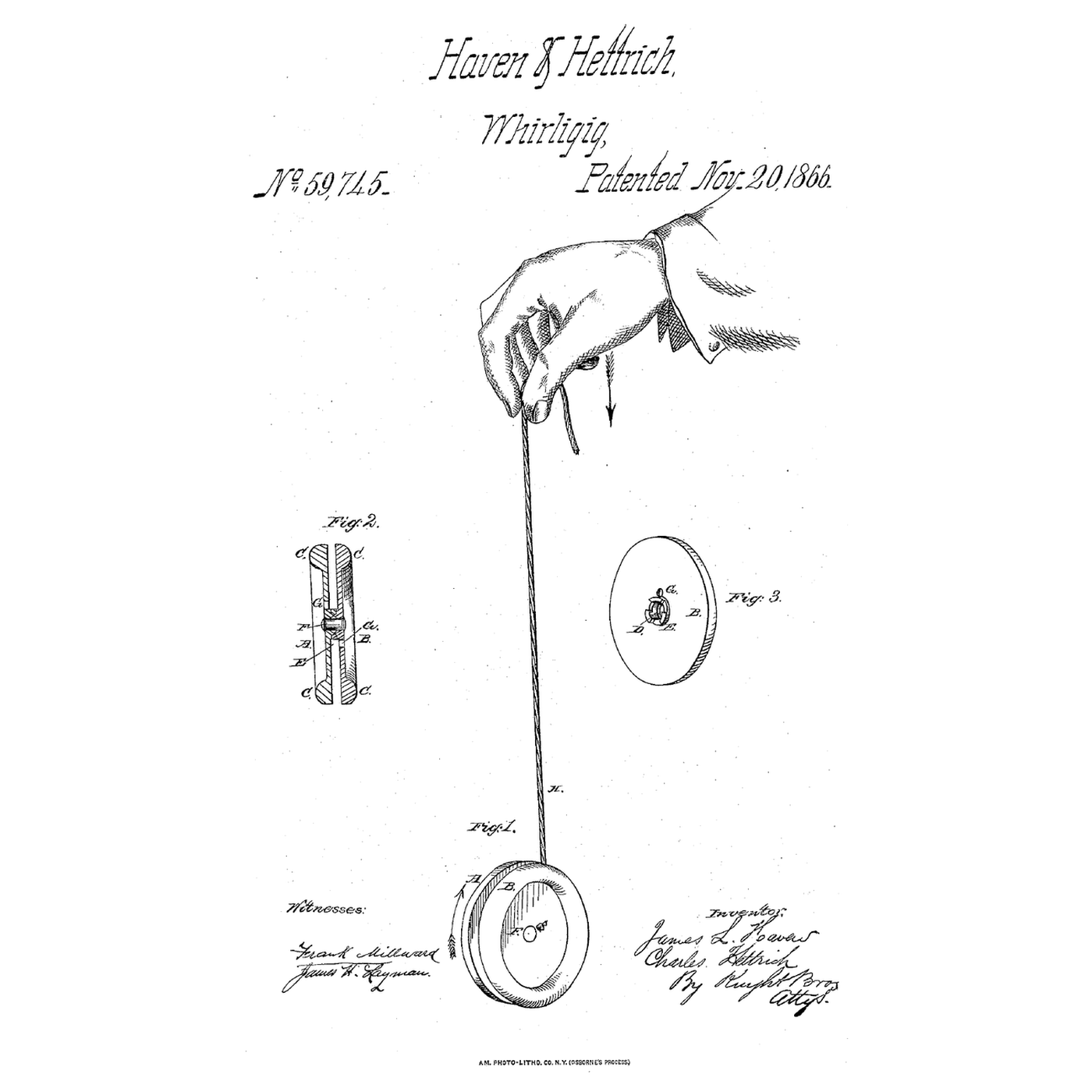

The Bandalore: A Yo-Yo With a Flywheel Rim
The toy called a bandalore in the nineteenth century — a yo-yo — is a pair of disks on a short axle with a string wound round it. Let it fall and it spins up; at the bottom its spin winds the string back and it climbs.
James L. Haven and Charles Hettrick of Cincinnati took out US 59,745, dated 20 November 1866, for a bandalore made of two metal disks, each with a thickened marginal rim, joined at the centre by a rivet through interlocking bosses. Made of metal, it had the "momentum which is essential to easy operation of the toy", and the rim acted as a flywheel.
This rung works out why a heavy rim makes a better yo-yo and makes and times two.
Olùbẹ̀rẹ̀
About 2 hours
Ìlànà
1
1
Falling, spinning and the flywheel rim
Falling, spinning and the flywheel rim
Ń ṣí ìwé Jupyter…
2
2
Read the 1866 bandalore
Read the 1866 bandalore
US 59,745 shows two similar circular disks A and B, each with "a marginal rim or swell" C on its outside and a central hole D. On the inner side of each, round the hole, is an indented annular boss E; the indentations of one fit the projections of the other, so the two "interlock firmly together on the principle of a clutch" when a rivet F is put through and clenched. A small hole G next to the boss anchors the string H.
The patent claims only the construction — the two disks joined by the rivet and interlocking bosses — but names the reason: the rim "exercises the function of a fly-wheel". The drawing sheet itself is headed "Whirligig", and shows a hand letting the toy fall on its string.
3
3
Make two yo-yos and race them
Make two yo-yos and race them
3D-print two pairs of disks 56 mm across with a 6 mm axle between them: one pair solid and flat, the other with most of the plastic in a thick outer rim and a thin web. Weigh them and add steel washers to the lighter so both have the same mass.
Tie 80 cm of cotton string to each axle and wind it on. Drop both from the same height at the same moment: the rim-weighted one falls more slowly. Time the drops with a stopwatch, and film them if you can, and compare with the notebook. Then try a loop instead of a knot on the axle, and see which one 'sleeps' longer at the bottom.
Àwọn ohun èlò fún ìgbésẹ̀ yìí:
 Okùn Òwú Ilé-ìdáná1 ẹyọ
 Wáṣà Pẹrẹsẹ6 ẹyọ
 Yoyo1 ẹyọ
Àwọn irinṣẹ́ tí a nílò:
 Ẹ̀rọ ìtẹ̀ 3D oníwàyà (FDM)
 Okùn PETG
 Òṣùwọ̀n Díjítà Ilé Ìdáná
 Aago Ìdúró
 Òṣùwọ̀n Kálípà Díjítà Ìnṣì 6
4
4
A yo-yo that will not come back
A yo-yo that will not come back
Yo-yo troubleshooting.
Flow
Loading...
5
5
History and honest limits
History and honest limits
Toys of this kind are very old; in English they were called bandalores or quizzes by the eighteenth century. **James L. Haven** and **Charles Hettrick** of Cincinnati patented their metal bandalore as **US 59,745** on 20 November 1866. The name yo-yo and the loose-looped 'sleeping' string became popular in the United States in the late 1920s.
**Honest limits.** The notebook assumes a rigid string and no slip or friction; real yo-yos lose energy in the string and at the axle, so they never climb all the way back.
Àwọn ohun-èlò
3- 1 ẹyọÀyè
- 6 ẹyọÀyè
- 1 ẹyọÀyè
Àwọn irinṣẹ́ tó nílò
5- Àyè
- Àyè
Blueprint tó jọra
Àwọn blueprint wọ̀nyí pín ìmọ̀ — ọ̀nà, ohun-èlò tàbí ìlànà
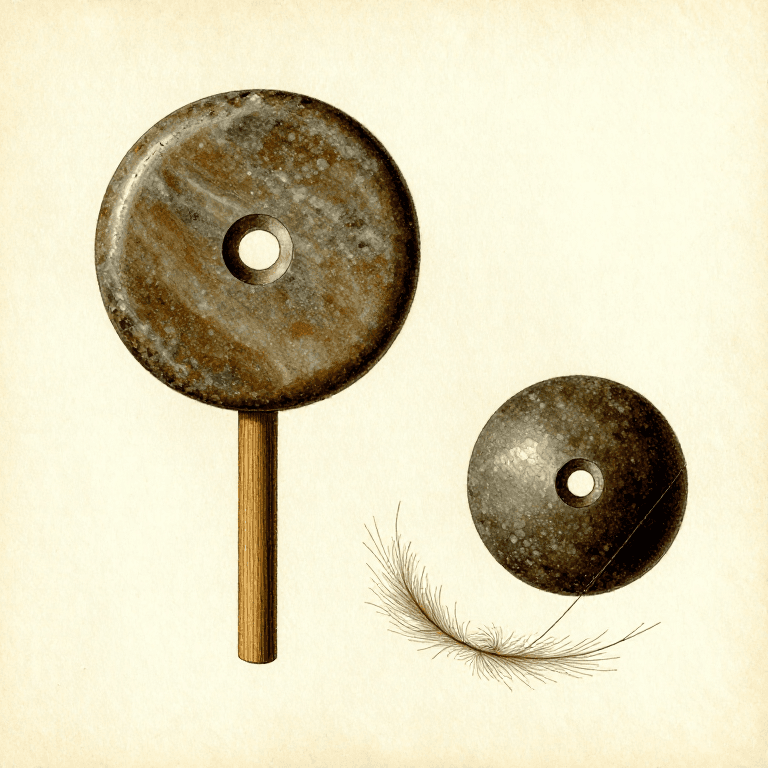
Making a Stone Spindle Whorl — The Flywheel That Made Thread Possible
láti ọwọ́ Tex
Iṣẹ́ Òkúta
70
0
0
0
1
0
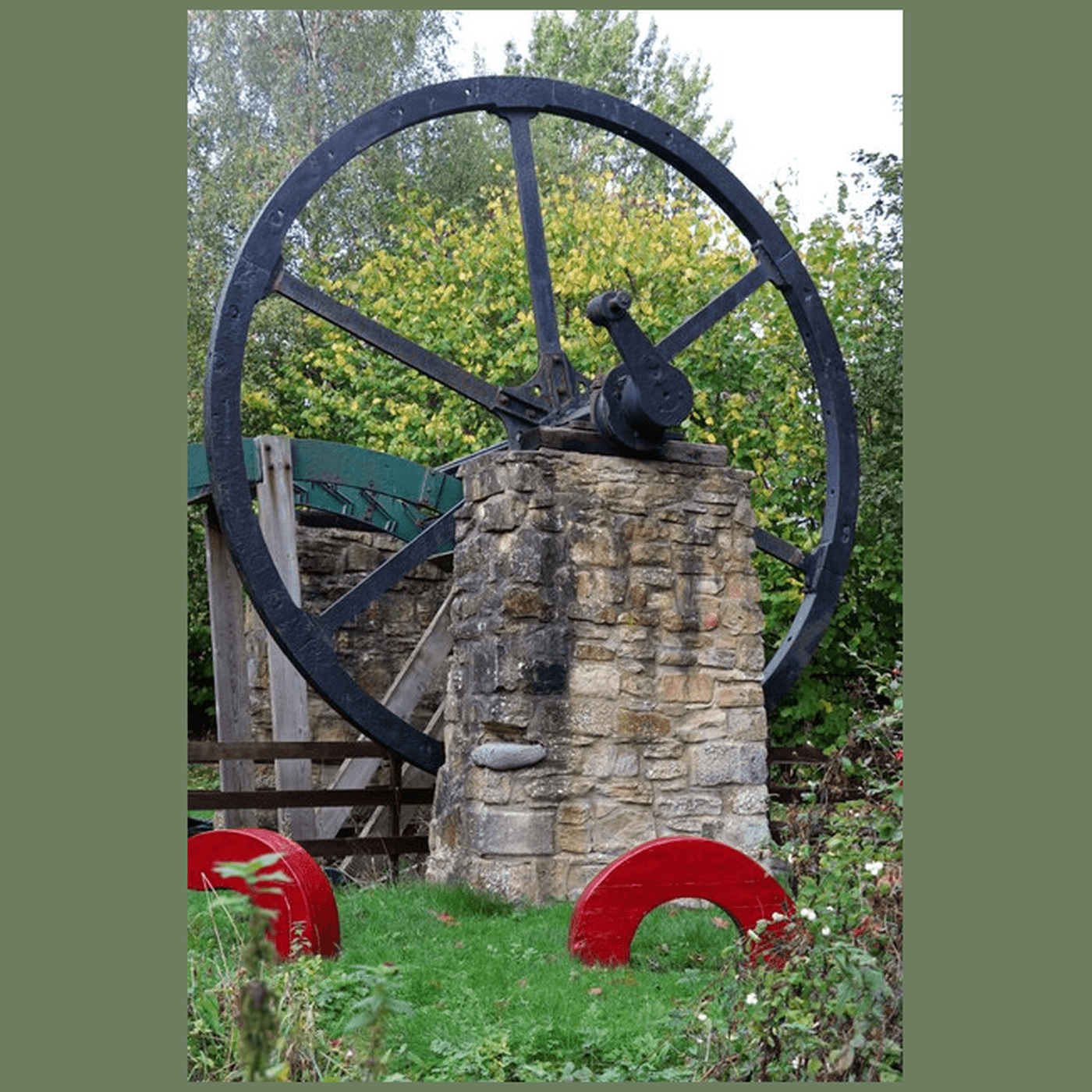
The Crank and the Flywheel: Smoothing One Bang in Two Turns
láti ọwọ́ Martin
Ìmọ̀ Ẹ̀rọ
13
0
0
0
0
0
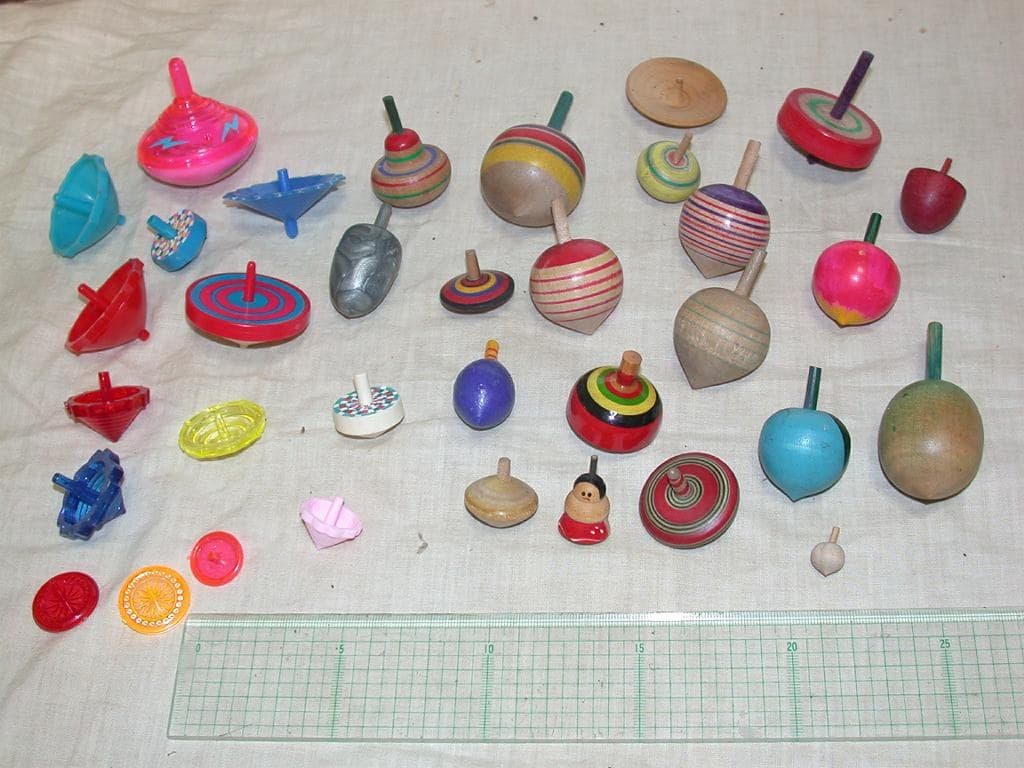
Spinning Top
láti ọwọ́ Spartan
Àwọn Eré
47
0
0
0
0
0
The Pendulum — Time a Swing and Weigh Gravity
láti ọwọ́ Martin
Físíkì
33
0
0
0
0
0
CC0 Àgbègbè Gbogbogbò
Blueprint yìí ti jáde lábẹ́ CC0. O lè ṣe àdàkọ, yí padà, pín, àti lò láìsí ìyọ̀ǹda.
Ṣàtìlẹ́yìn Olùṣẹ́dá nípa rírà àwọn ọjà nipasẹ̀ Blueprint wọn Ẹ̀san Olùṣẹ́dá tí àwọn Olùtajà gbé kalẹ̀, tàbí ṣẹ̀dá àtúnṣe tuntun ti Blueprint yìí kí o sì fi sínú Blueprint rẹ gẹ́gẹ́ bí ìsopọ̀ láti pín owó-wíwọlé.