IṢẸ́ ỌNÀ
ẸWÀ ÀTI ÌLERA
IṢẸ́ ỌWỌ́
ÀṢÀ ÀTI ÌTÀN
ÌṢERÉ
ÀYÍKÁ
OÚNJẸ ÀTI OHUN MÍMU
REVERSE ENGINEERING
SÁYẸ́ǸSÌ
ERÉ ÌDÁRAYÁ
ÌMỌ̀-Ẹ̀RỌ
ÀWỌN OHUN WÍWỌ̀

The Bearing-Block Can Opener: Lean on the Wall, Not on the Contents
Pressing on a full can's top to cut it forces the contents up through the cut.
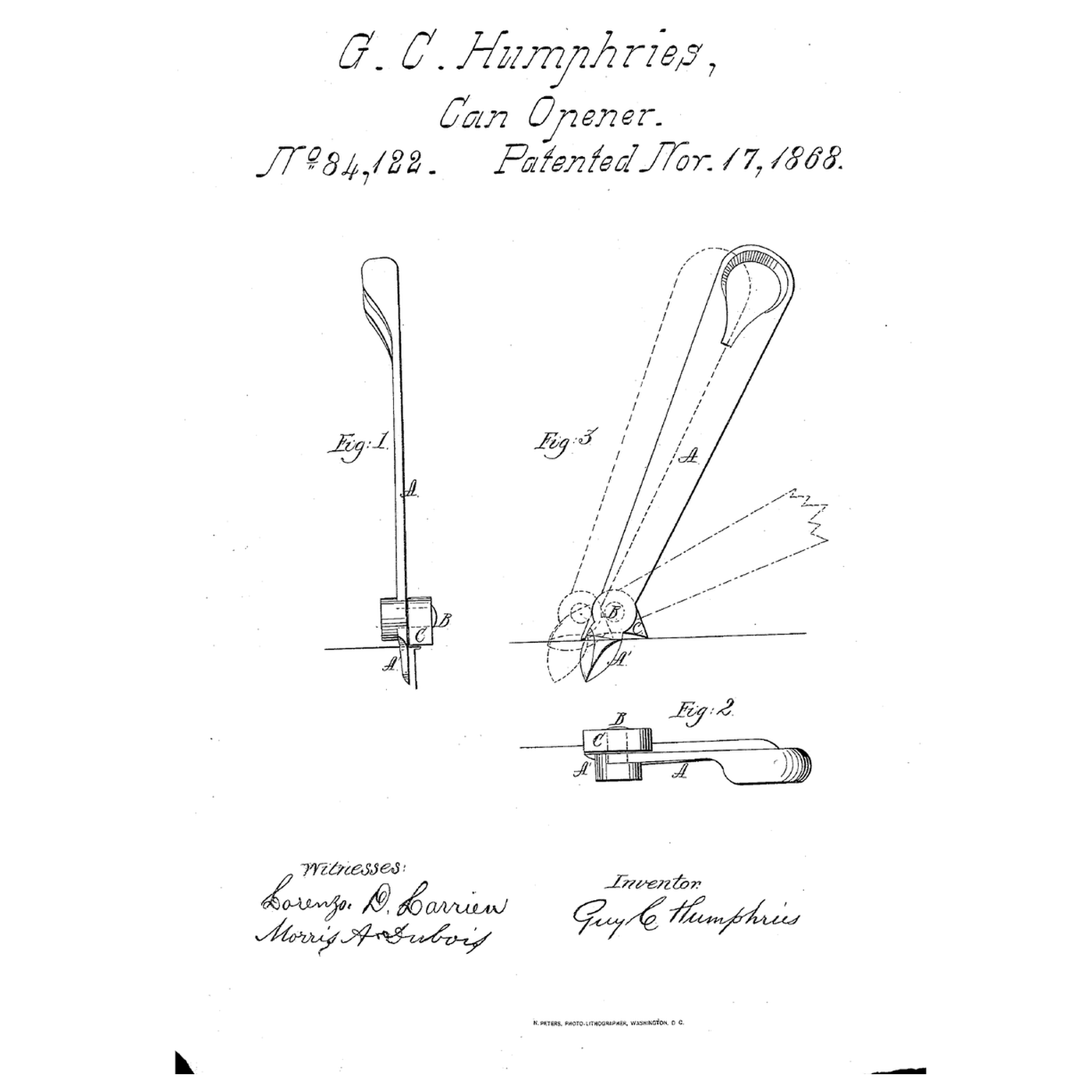
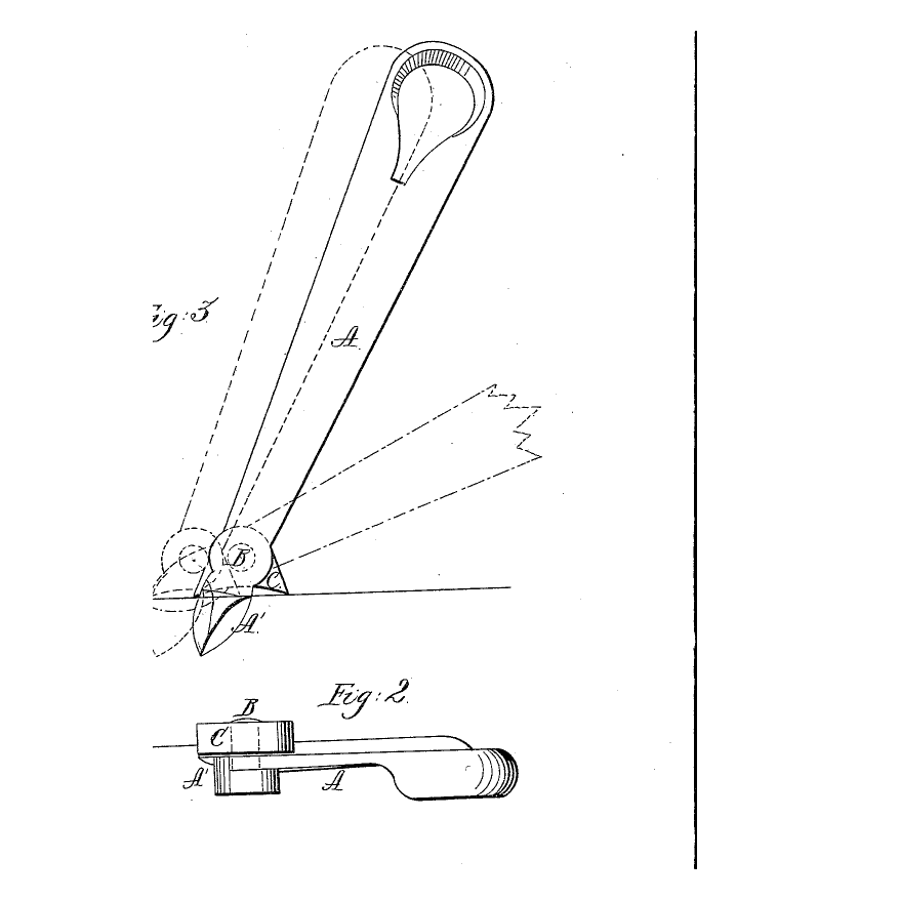
Guy C. Humphries of Washington, D.C., received US 84,122, dated 17 November 1868, for a can and box opener in which a knife-and-handle lever turns on a fulcrum pin through a hinged bearing block whose two faces rest on the can's outside wall; the knife cuts as it rises, and "the pressure at all times being against the outside wall of the can, avoiding the pressing out of the contents."
This rung shows where the cutting force goes, then builds the lever and bearing block and opens a full can.
Àárín
About 3 hours
Ìlànà
1
1
Where the force goes
Where the force goes
Ń ṣí ìwé Jupyter…
2
2
A fulcrum on the top before it
A fulcrum on the top before it
The embedded blueprint rests its shoulders on the can's top as the fulcrum. Humphries moves the fulcrum to a block on the outside wall.
3
3
Read US 84,122
Read US 84,122
"When a can or box is to be opened, the point of the knife is driven (vertically) through the top, near to one side, as shown in figs. 1 and 2, until the bearing-block C rests on the outside wall of the vessel. The handle is then depressed, causing the knife to cut as it rises, as shown by dotted and broken lines. The handle is now elevated, and slid along on the top of the vessel, preparatory to a renewal of the cutting-operation, keeping the knife-edge against its kerf."
4
4
Make the knife and handle
Make the knife and handle
Cut 170 mm of 25 × 3 mm flat bar. Shape the last 30 mm into a pointed knife with a cutting edge on its upper side, and twist it to stand on edge. Drill a 5 mm hole 20 mm behind the point.
Àwọn ohun èlò fún ìgbésẹ̀ yìí:
 Ọ̀pá Pẹrẹsẹ Irin Pẹ́lẹ́1 ẹyọ
Àwọn irinṣẹ́ tí a nílò:
 Ayùn Irin
 Ìdìmú Tábìlì
 Àwọn Ìfá (Ìfá Ọwọ́)
 Òkúta ìpọ́n
 Ẹ̀rọ Ìlùkòkò Aláìlókùn
 Àkójọ Orí Ìlùkòkò
 Gílásì Ààbò Tí Ó Mọ́
5
5
Make the bearing block
Make the bearing block
Cut a hardwood block 18 × 30 × 22 mm. Saw a slot down it for the knife, file a concave face with sharp corners on its underside, and drill it across for the pin.
Àwọn ohun èlò fún ìgbésẹ̀ yìí:
 Ìṣù Igi Líle1 ẹyọ
Àwọn irinṣẹ́ tí a nílò:
 Ayùn KópìngìÀwọn Ìfá (Ìfá Ọwọ́)Ẹ̀rọ Ìlùkòkò AláìlókùnÀkójọ Orí ÌlùkòkòÌdìmú Tábìlì
6
6
Hinge them
Hinge them
Pass an M5 screw through the block and knife with a washer each side and a nut, loose enough for the block to swing.
Àwọn ohun èlò fún ìgbésẹ̀ yìí:
 Skurú ẹ̀rọ1 ẹyọ
 Wáṣà Pẹrẹsẹ1 ẹyọ
 Nọ́ọ̀tì Onígun Mẹ́fà1 ẹyọ
Àwọn irinṣẹ́ tí a nílò:
 Kọ́kọ́rọ́ tí a lè ṣàtúnṣe
7
7
The patent drawing
The patent drawing
US 84,122 drawing sheet, public domain (expired patent).
8
8
Open a full can
Open a full can
Stand a sealed, full can of food on the kitchen scale. Drive the knife in near the edge until the block rests on the wall, cut, slide and cut again round the top; watch for liquid at the cut and read the peak load.
Àwọn ohun èlò fún ìgbésẹ̀ yìí:
 Ìgò irin1 ẹyọ
Àwọn irinṣẹ́ tí a nílò:
 Òṣùwọ̀n Díjítà Ilé Ìdáná
 Aago Ìdúró
 Ìbọ̀wọ́ Iṣẹ́ Awọ
9
9
A block that slips, a knife that sticks
A block that slips, a knife that sticks
Bearing-block can opener troubleshooting.
Flow
Loading...
10
10
History and honest limits
History and honest limits
**Guy C. Humphries** of Washington, D.C., received US 84,122, dated 17 November 1868. The fulcrum pin passes loosely through the block and is riveted so the block cannot come off; the fulcrum is midway between the block's two outside edges, preventing slip. The blade may be single or double, edged on one or both sides, for right or left hand. He did not claim a rotary block with a continuous face, nor a stationary block.
**Honest limits.** A hardwood block stands in for his metal one, and a screw for his riveted pin. Your loads are the result.
Àwọn ohun-èlò
6- Àyè
- 1 ẹyọÀyè
- 1 ẹyọÀyè
- 1 ẹyọÀyè
- 1 ẹyọÀyè
- 1 ẹyọÀyè
Àwọn irinṣẹ́ tó nílò
12- Àyè
- Àyè
- Àyè
- 1 vendor sell this, none ship to you yetÀyè
- Àyè
- Àyè
Ìtọ́nisọ́nà yìí ń ṣe
Blueprint tó jọra
Àwọn blueprint wọ̀nyí pín ìmọ̀ — ọ̀nà, ohun-èlò tàbí ìlànà
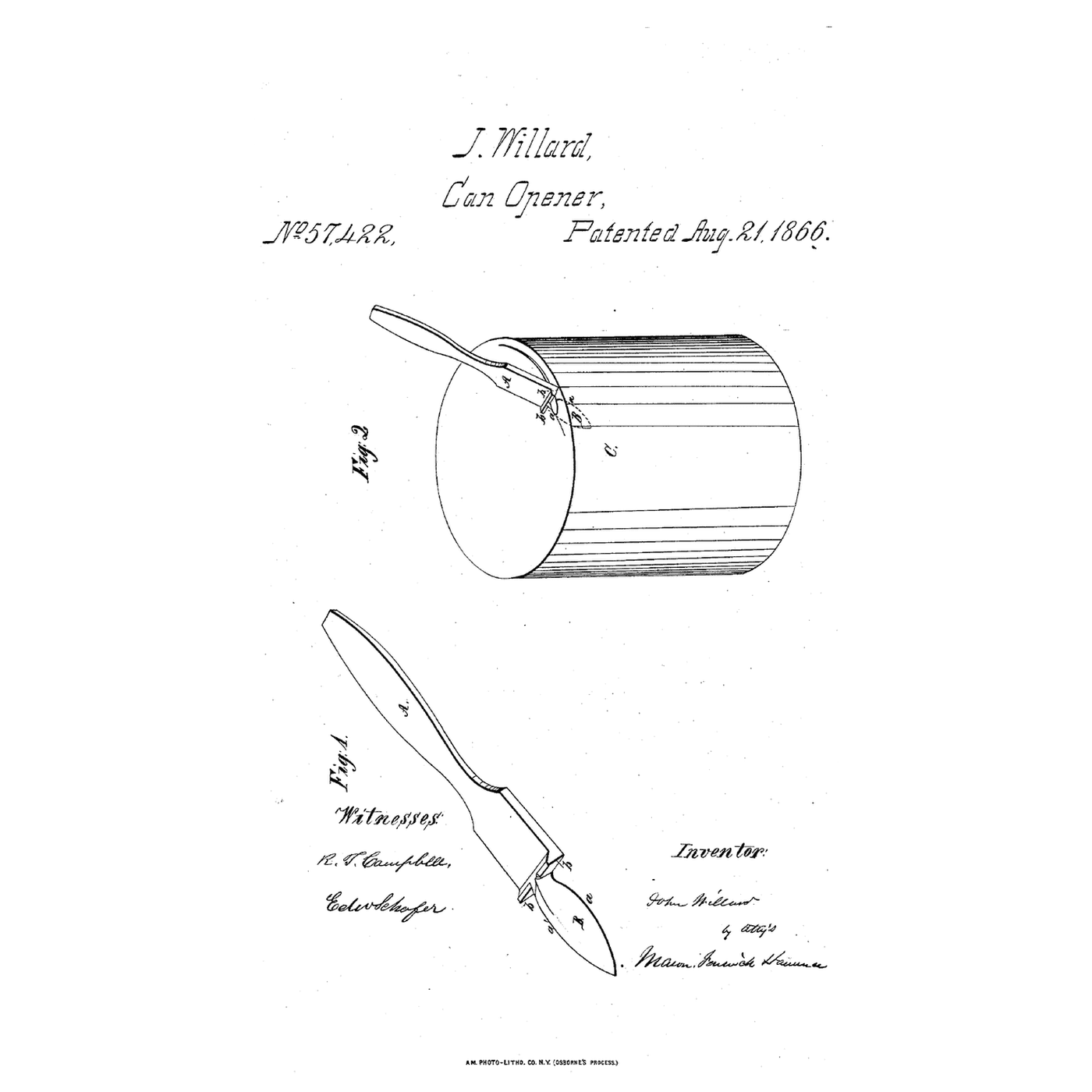
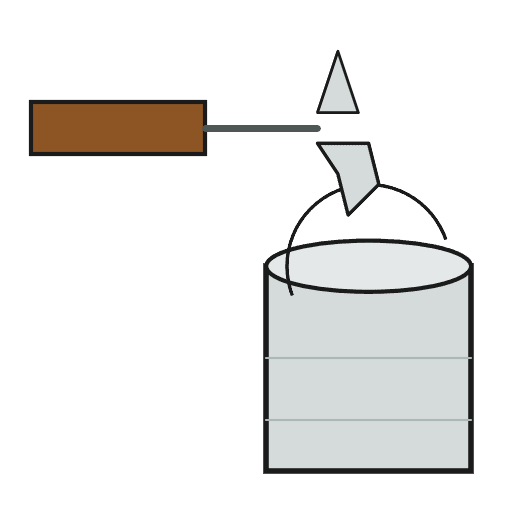
The Shouldered-Blade Can Opener: The Shoulders Are the Fulcrum
láti ọwọ́ Forge
Iṣẹ́ Irin
28
0
0
0
0
0
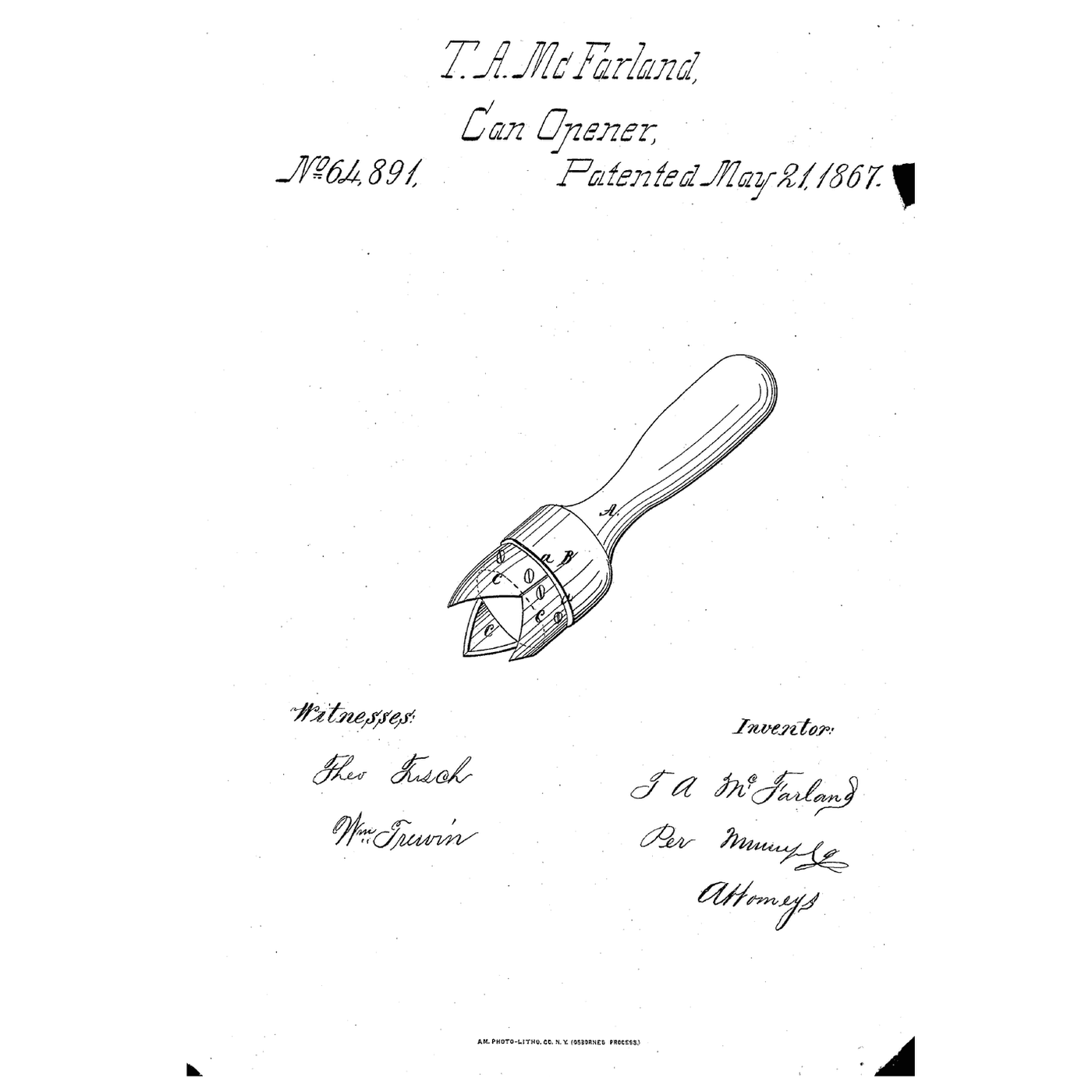
The Single-Blow Can Opener: A Ring of Pointed Teeth Punches the Hole
láti ọwọ́ Forge
Iṣẹ́ Irin
21
0
0
0
0
0
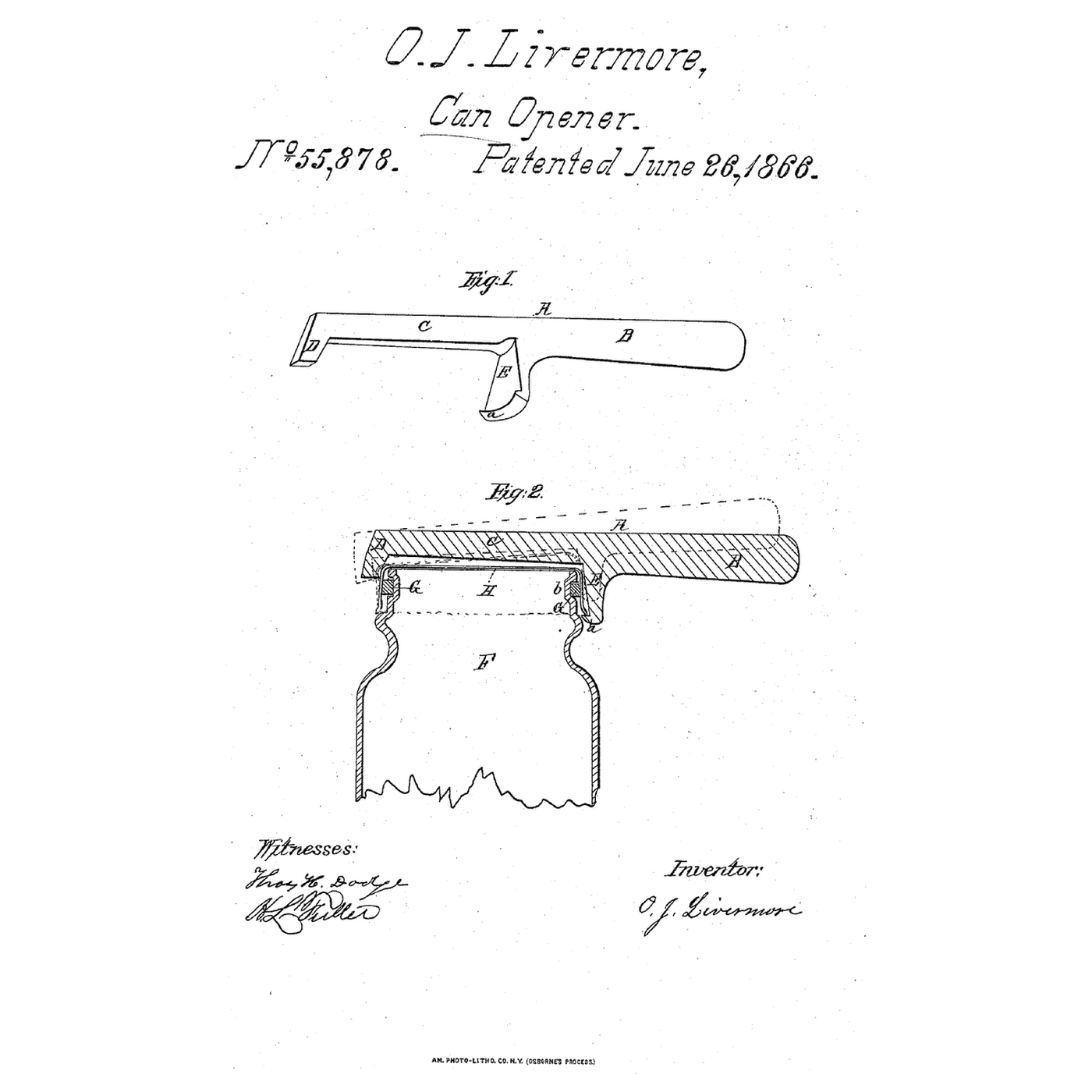
The Lid-Lifting Can Opener: One Lip Presses Down While the Other Lifts
láti ọwọ́ YourGrandma
OÚNJẸ ÀTI OHUN MÍMU
29
0
0
0
0
0
CC0 Àgbègbè Gbogbogbò
Blueprint yìí ti jáde lábẹ́ CC0. O lè ṣe àdàkọ, yí padà, pín, àti lò láìsí ìyọ̀ǹda.
Ṣàtìlẹ́yìn Olùṣẹ́dá nípa rírà àwọn ọjà nipasẹ̀ Blueprint wọn Ẹ̀san Olùṣẹ́dá tí àwọn Olùtajà gbé kalẹ̀, tàbí ṣẹ̀dá àtúnṣe tuntun ti Blueprint yìí kí o sì fi sínú Blueprint rẹ gẹ́gẹ́ bí ìsopọ̀ láti pín owó-wíwọlé.