IṢẸ́ ỌNÀ
ẸWÀ ÀTI ÌLERA
IṢẸ́ ỌWỌ́
ÀṢÀ ÀTI ÌTÀN
ÌṢERÉ
ÀYÍKÁ
OÚNJẸ ÀTI OHUN MÍMU
REVERSE ENGINEERING
SÁYẸ́ǸSÌ
ERÉ ÌDÁRAYÁ
ÌMỌ̀-Ẹ̀RỌ
ÀWỌN OHUN WÍWỌ̀


The Bottle-Holder Opener: Push the Stopper In Under a Glass and Catch the Overflow
A bottle closed by a stopper on the inside is opened by pushing the stopper down, and the drink rushes out over the hand, the counter and the floor.
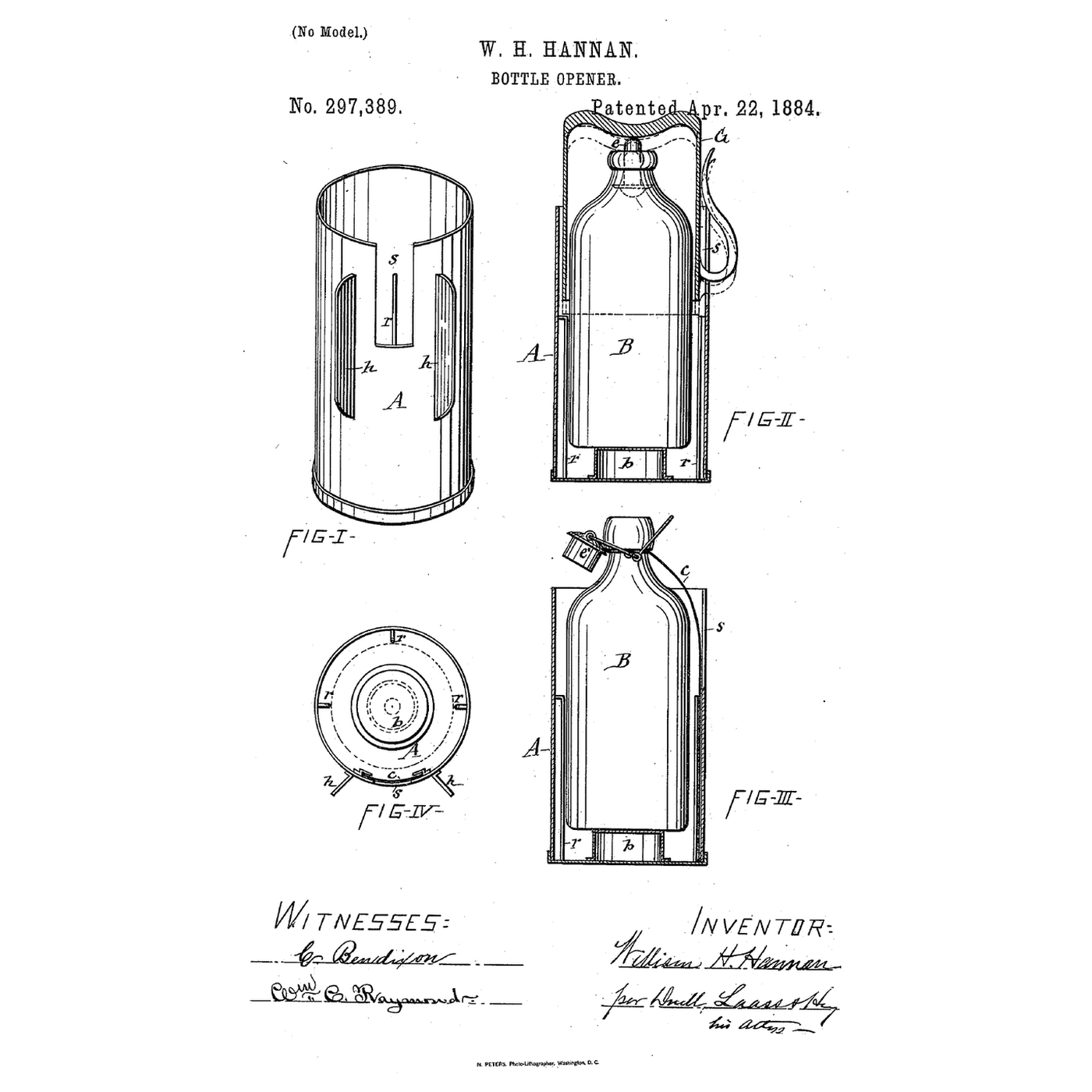
William H. Hannan of Palermo, New York, received US 297,389, dated 22 April 1884, for "a receptacle adapted to contain the body of the bottle to be opened and hold the same sufficiently isolated from the inner surface of the receptacle to form a passage for the liquid which may overflow from the mouth of the bottle in the process of opening the same". The bottle stands on a raised base between ribs; a glass is turned over its mouth and pressed down on the stopper, and the overflow runs down between the bottle and the holder, to be poured into the glass afterwards.
This rung works out how much gas a bottle gives up, then makes the holder from plastic pipe and opens a bottle with an inside stopper in it.
Àárín
About 3 hours
Ìlànà
1
1
The gas that comes out
The gas that comes out
Ń ṣí ìwé Jupyter…
2
2
The stopper it opens
The stopper it opens
The embedded blueprint makes a stopper that the gas holds up inside the neck. Hannan's holder is for opening bottles closed that way, by pushing the stopper down with the glass.
3
3
Read US 297,389
Read US 297,389
"To open the bottle, it is placed in the holder or receptacle A, as aforesaid, and if said bottle has an internally-arranged stopple, e, the glass or tumbler is placed in an inverted position over the mouth of the bottle and pressed down onto the stopple e until it is displaced from the mouth, the edge of the glass or tumbler, being inside of the receptacle A, as illustrated in Fig. 2 of the drawings, forms a shield, which protects the manipulator from the liquid issuing from the mouth of the bottle and conducts said liquid into the space between the bottle and the interior of the receptacle A."
"After the force of the gases in the bottle has been expended, the glass or tumbler can be removed from its aforesaid position and placed upright to receive the remaining liquid of the bottle and the overflowed liquid from the receptacle A, the spaces between the ribs r r forming channels, in which the liquid can flow to and from the receptacle A."
4
4
Make the holder and open a bottle in it
Make the holder and open a bottle in it
**Bottle.** Close a glass bottle of chilled carbonated water with an inside rubber-disc stopper on a figure-8 wire, as the embedded blueprint shows, and leave its wire loop standing above the mouth.
**Holder.** Cut a length of PVC pipe wide enough to leave a finger's width round the bottle and long enough to reach its shoulder. Glue a disc of plywood into one end as the bottom, and glue a smaller hardwood disc on it as the raised base. Glue three dowels lengthwise inside as the ribs, so the bottle is held clear of the wall. Saw a slot down from the rim wide enough for a finger, and file all edges smooth.
**Test.** Stand the bottle in the holder on its base. Turn a drinking glass over the mouth so its rim is inside the holder, and press down until the glass pushes the wire loop and the stopper drops into the bottle. Hold it while the gas escapes, then lift the glass, set it upright and pour the drink and the overflow from the holder into it. Open a second bottle by hand over a tray and compare how much is spilled.
Àwọn ohun èlò fún ìgbésẹ̀ yìí:
 Ìgò dígí (tí ó mọ́)1 ẹyọ
 Omi olóbùú (ìgò tí a sé)1 ẹyọ
 Àwo rọ́bà1 ẹyọ
 Okun waya irin0.3 mítà
 Páìpù PVC0.3 mítà
 Àwo igi tí a lẹ̀ pọ̀1 ẹyọ
 Ìṣù Igi Líle1 ẹyọ
 Èèkàn igi0.6 mítà
 Ìdìpọ̀ Igi1 ẹyọ
Àwọn irinṣẹ́ tí a nílò:
 Ayùn Irin
 Ayùn Ọwọ́
 Ẹ̀rọ Ìlùkòkò Aláìlókùn
 Àkójọ Orí Ìlùkòkò
 Àwọn Ìfá (Ìfá Ọwọ́)
 Ẹ̀mú Olórí Yíká
 Ẹ̀mú ìgé okùn
 Ọ̀bẹ ilé ìdáná
 Ife ìmumi
 Ìgò ìwọ̀n
 Gílásì Ààbò Tí Ó Mọ́
5
5
A holder that spills, tips or will not open the bottle
A holder that spills, tips or will not open the bottle
Bottle-holder opener troubleshooting.
Flow
Loading...
6
6
History and honest limits
History and honest limits
**William H. Hannan** of Palermo, Oswego County, New York, filed US 297,389 on 1 March 1884; it is dated 22 April 1884. He preferred incorrodible sheet metal for the holder, with ribs r r of metal strips or corrugations, a raised base b, a slot s for the handle of a beer glass, and handles h h beside the slot. For bottles with an outside wire stopple he added a spring plate c that throws the stopple off as the bottle is pushed in. His claims cover the holder alone and with its ribs, base, slot, handles and spring.
**Honest limits.** PVC pipe and dowels stand in for his sheet-metal holder, and a home-made inside stopper for a factory one, so the gas is weaker. The notebook gives the most gas that could come out; its carbonation levels and bottle size are examples. Your spill is the result.
Àwọn ohun-èlò
9- 1 ẹyọÀyè
- Àyè
- 1 ẹyọÀyè
- 0.3 mítàÀyè
- 0.3 mítàÀyè
- 1 ẹyọÀyè
- 1 ẹyọÀyè
- 0.6 mítàÀyè
- 1 ẹyọÀyè
Àwọn irinṣẹ́ tó nílò
11- Àyè
- Àyè
- 1 vendor sell this, none ship to you yetÀyè
- Àyè
- Àyè
Ìtọ́nisọ́nà yìí ń ṣe

Blueprint tó jọra
Àwọn blueprint wọ̀nyí pín ìmọ̀ — ọ̀nà, ohun-èlò tàbí ìlànà
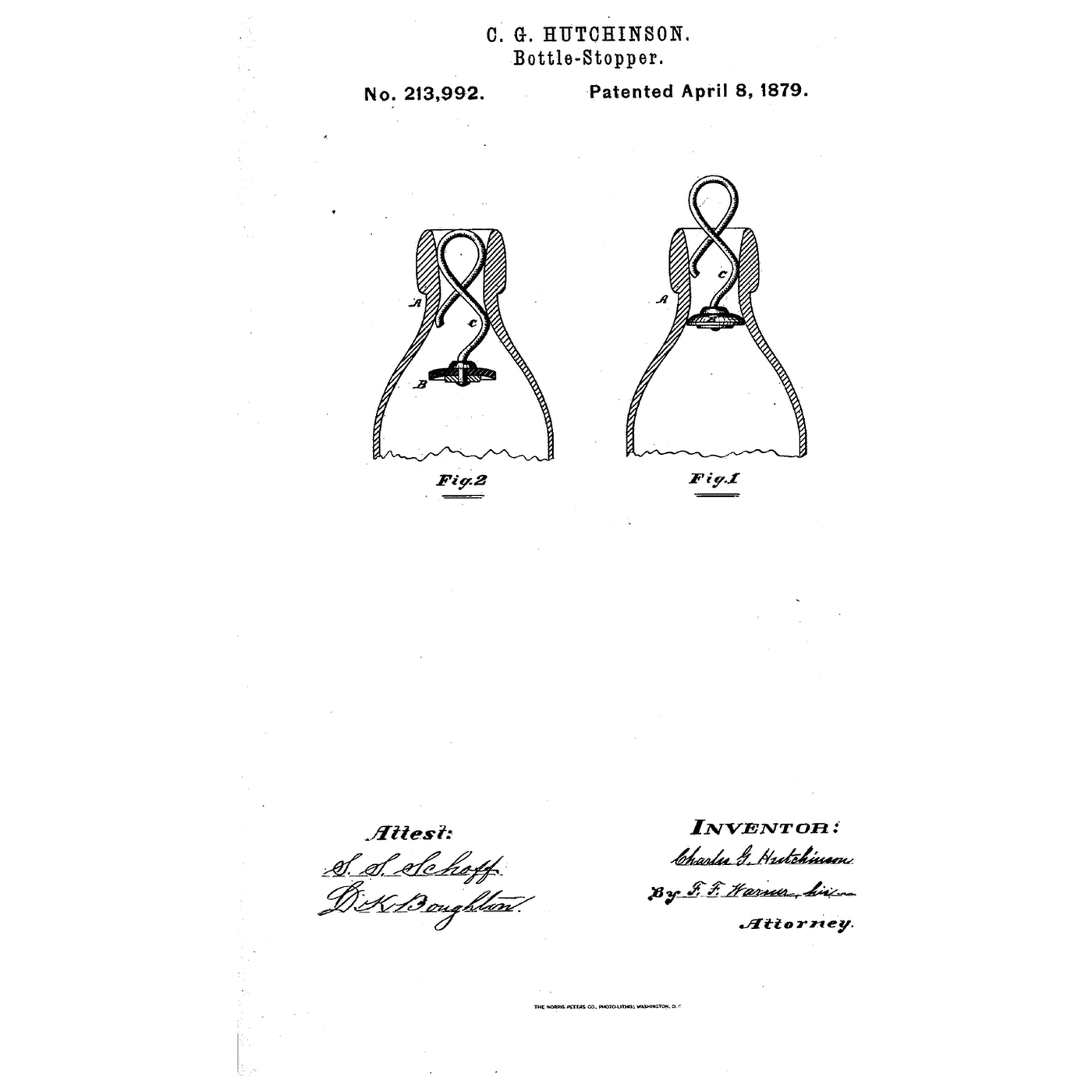
The Spring Bottle Stopper: Let the Pressure Seal It
láti ọwọ́ Charlie
Oúnjẹ
18
0
0
0
0
0
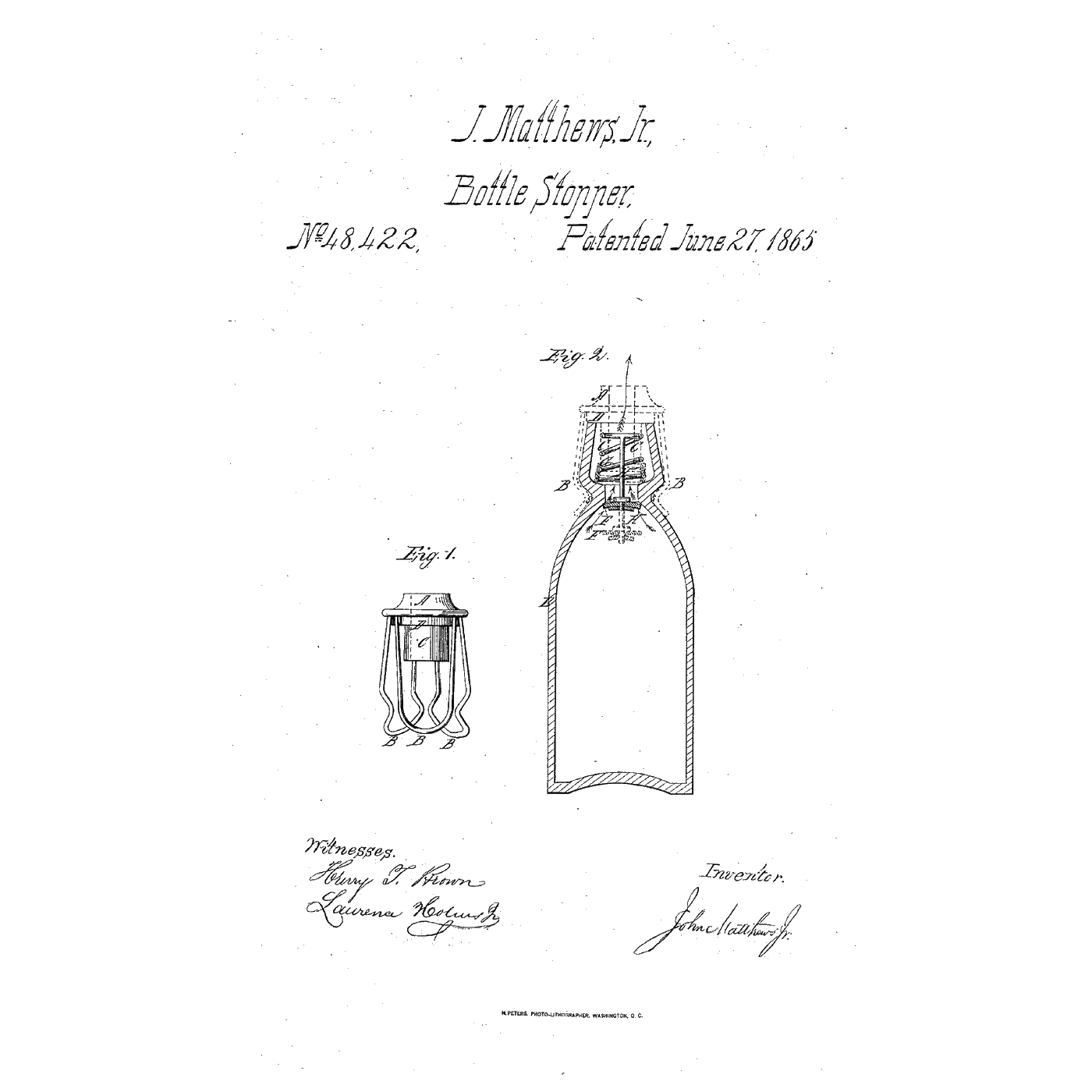
The Inner-Valve Bottle Opener: A Tube That Holds the Valve Open and Clasps That Hold the Tube
láti ọwọ́ Charlie
Àwọn Ohun Mímu
26
0
0
0
0
0
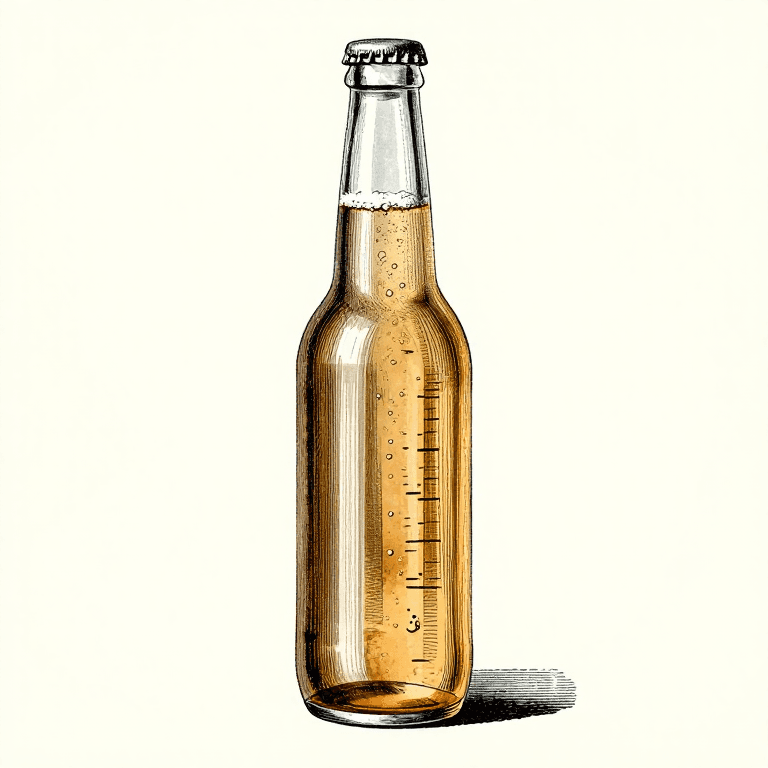
Packaging: Priming Sugar, Headspace, and the Bottle Bomb
láti ọwọ́ Alchometer
Ṣíṣe Ọtí
33
0
0
0
0
0
CC0 Àgbègbè Gbogbogbò
Blueprint yìí ti jáde lábẹ́ CC0. O lè ṣe àdàkọ, yí padà, pín, àti lò láìsí ìyọ̀ǹda.
Ṣàtìlẹ́yìn Olùṣẹ́dá nípa rírà àwọn ọjà nipasẹ̀ Blueprint wọn Ẹ̀san Olùṣẹ́dá tí àwọn Olùtajà gbé kalẹ̀, tàbí ṣẹ̀dá àtúnṣe tuntun ti Blueprint yìí kí o sì fi sínú Blueprint rẹ gẹ́gẹ́ bí ìsopọ̀ láti pín owó-wíwọlé.