IṢẸ́ ỌNÀ
ẸWÀ ÀTI ÌLERA
IṢẸ́ ỌWỌ́
ÀṢÀ ÀTI ÌTÀN
ÌṢERÉ
ÀYÍKÁ
OÚNJẸ ÀTI OHUN MÍMU
REVERSE ENGINEERING
SÁYẸ́ǸSÌ
ERÉ ÌDÁRAYÁ
ÌMỌ̀-Ẹ̀RỌ
ÀWỌN OHUN WÍWỌ̀
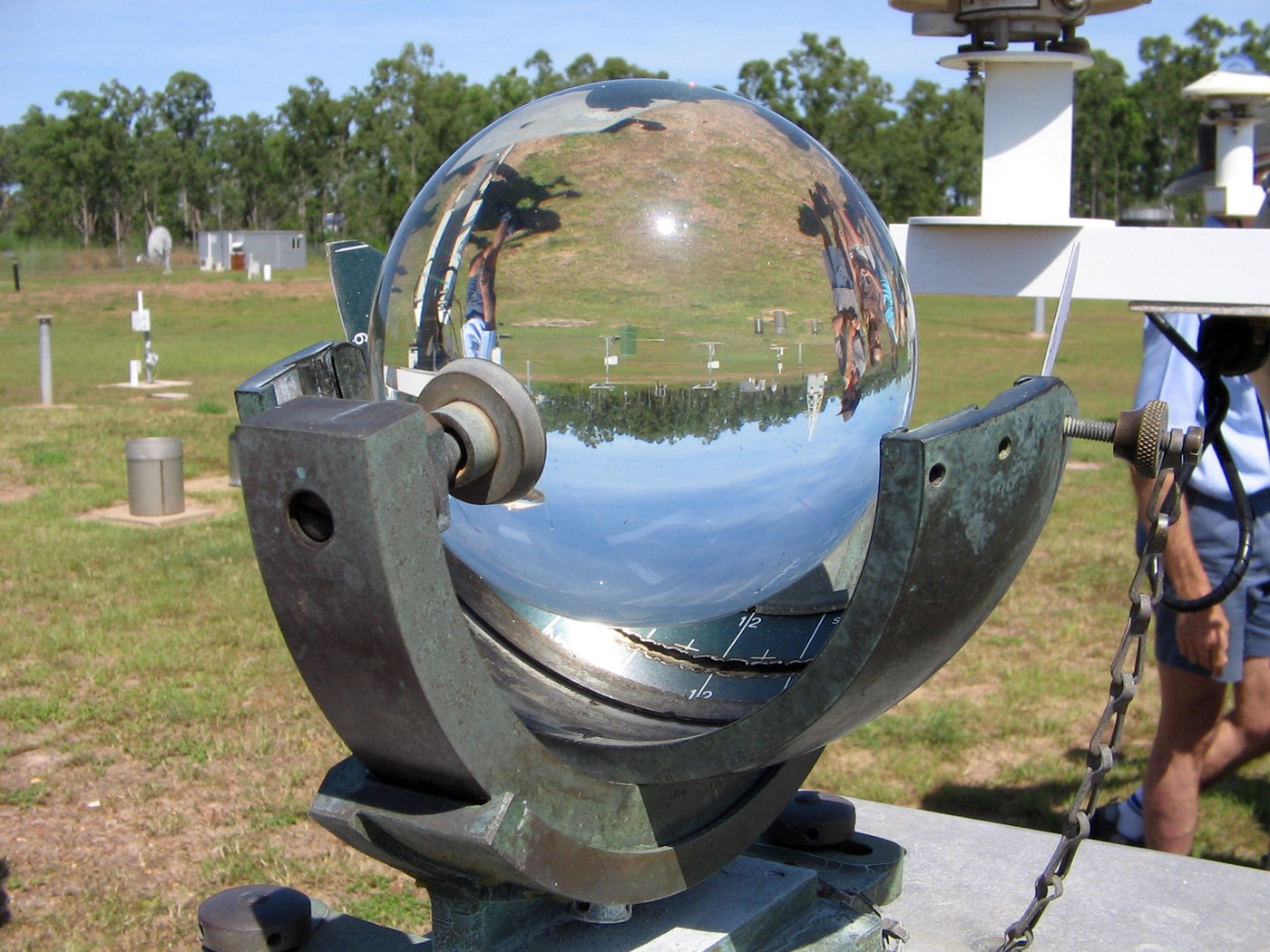


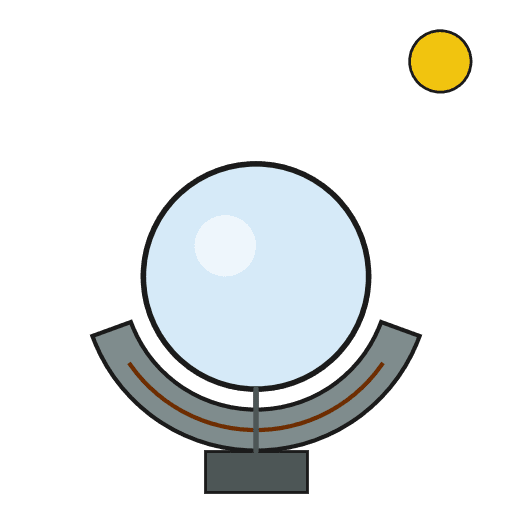
The Campbell-Stokes Sunshine Recorder
John Francis Campbell put a glass sphere in a wooden bowl in 1853 and let the focused sun char a track across it as the earth turned. George Gabriel Stokes replaced the bowl with a metal frame holding a replaceable paper card in 1879, and the design has not needed to change since.
It is the only instrument in this batch with no moving parts and no scale to read. The sphere focuses sunlight to a point; the point sweeps along the card as the sun moves; where the sun was bright enough it burns, and where cloud intervened it does not. At the end of the day the card IS the record — a physical trace of the whole day's sunshine.
There is a warning built into the object. A glass sphere in your garden focuses sunlight to a spot hot enough to set fire to dry material, and it does it whether or not you are paying attention.
Ilọsíwájú
2 days
Ìlànà
1
1
Get a solid sphere, and respect it
Get a solid sphere, and respect it
Use a solid glass sphere of 75 to 100 mm diameter. From the moment you own it, treat it as a fire source.
A 90 mm sphere concentrates sunlight roughly a thousandfold. Left on a windowsill it will scorch a curtain, a carpet or a bench top, and it has started house fires. Keep it covered whenever it is not mounted in the instrument, and site the instrument where its focus can only ever fall on the card and the metal frame — never on wood, thatch, decking or dry grass.
Àwọn ohun èlò fún ìgbésẹ̀ yìí:
 Bọ́ọ̀lù gíláàsì líle1 ẹyọ
2
2
Make the bowl at the right radius
Make the bowl at the right radius
The card must sit exactly at the sphere's focal surface, which for a solid sphere of refractive index about 1.5 lies roughly half a radius beyond its surface — so the bowl's radius is about 1.5 times the sphere's radius.
Work it out for your own sphere, then check it in sunlight before you build the frame: hold a card at various distances until the burn is a sharp point rather than a smear. A bowl a few millimetres out gives a broad scorch that cannot be read to the nearest tenth of an hour.
Àwọn ohun èlò fún ìgbésẹ̀ yìí:
 Àwo igi tí a lẹ̀ pọ̀1 ewé
Àwọn irinṣẹ́ tí a nílò:
 Ayùn Ọwọ́
 Bébà Ìfá
 Ìdíwọ̀n
3
3
Set the axis to your latitude and point it at true north
Set the axis to your latitude and point it at true north
Tilt the bowl's axis so it is parallel to the earth's axis — that means an elevation equal to your latitude — and align it on TRUE north, not magnetic.
Aligned this way, the sun's focus sweeps along the card at a constant rate all day and all year, so equal lengths of burn mean equal times. Get the alignment wrong and the time scale stretches and squeezes through the day. Find true north from the sun at local noon, or correct your compass for the local magnetic declination.
Àwọn ohun èlò fún ìgbésẹ̀ yìí:
 Èèkàn igi2 ẹyọ
 Ìṣó tí a bò pẹ̀lú sínkì20 ẹyọ
Àwọn irinṣẹ́ tí a nílò:
 Kọ́mpasi
 Òòlù oníkànnì
4
4
Use the right card, and change it daily
Use the right card, and change it daily
Use a stiff, uncoated card marked with hour lines. Fit it before sunrise and remove it after sunset, every day, and write the date on it immediately.
The standard uses three card shapes through the year — long curved cards for summer, short ones for winter — because the sun's track across the bowl moves with the seasons. Glossy or coated card does not char cleanly; plain matt card does. An unmarked, undated card is an abstract drawing within a week.
Àwọn ohun èlò fún ìgbésẹ̀ yìí:
 Bébà Líle40 ẹyọ
 Ìwé fọ́tò (multigrade)1 àkópọ̀
5
5
Read the burn as duration, not intensity
Read the burn as duration, not intensity
Measure the total LENGTH of burnt track against the hour lines and add the segments. Gaps are cloud.
This instrument measures bright-sunshine DURATION and nothing else. A deep, wide burn and a faint one both count as sunshine, so it cannot tell you how much energy arrived — for that you need a pyranometer. Knowing precisely which question your instrument answers is worth more than a more expensive instrument answering a question you did not ask.
Àwọn irinṣẹ́ tí a nílò:
Ìdíwọ̀n6
6
Focus, threshold and what the card can resolve
Focus, threshold and what the card can resolve
Ń ṣí ìwé Jupyter…
Àwọn irinṣẹ́ tí a nílò:
Ìdíwọ̀n7
7
Site it where nothing shades it and nothing burns
Site it where nothing shades it and nothing burns
Mount it clear of anything that casts a shadow between sunrise and sunset — especially low winter sun, which reaches under obstacles that clear the summer sun entirely.
Then walk round it at several times of day and check where the focus lands when the card is absent or has burnt through. Metal or stone beneath, always. This is the only instrument in this batch that can burn your shed down, and it will do it on the one sunny afternoon you forgot to fit a card.
Àwọn ohun èlò fún ìgbésẹ̀ yìí:
 Bébà Alumíníọ̀mù1 ìyípo
Àwọn irinṣẹ́ tí a nílò:
Kọ́mpasiÀwọn ohun-èlò
7- 1 ẹyọÀyè
- 1 ewéÀyè
- 2 ẹyọÀyè
- 20 ẹyọÀyè
- 40 ẹyọÀyè
- 1 àkópọ̀Àyè
- 1 ìyípoÀyè
Ìtọ́nisọ́nà yìí ń ṣe
Blueprint tó jọra
Àwọn blueprint wọ̀nyí pín ìmọ̀ — ọ̀nà, ohun-èlò tàbí ìlànà



CC0 Àgbègbè Gbogbogbò
Blueprint yìí ti jáde lábẹ́ CC0. O lè ṣe àdàkọ, yí padà, pín, àti lò láìsí ìyọ̀ǹda.
Ṣàtìlẹ́yìn Olùṣẹ́dá nípa rírà àwọn ọjà nipasẹ̀ Blueprint wọn Ẹ̀san Olùṣẹ́dá tí àwọn Olùtajà gbé kalẹ̀, tàbí ṣẹ̀dá àtúnṣe tuntun ti Blueprint yìí kí o sì fi sínú Blueprint rẹ gẹ́gẹ́ bí ìsopọ̀ láti pín owó-wíwọlé.