IṢẸ́ ỌNÀ
ẸWÀ ÀTI ÌLERA
IṢẸ́ ỌWỌ́
ÀṢÀ ÀTI ÌTÀN
ÌṢERÉ
ÀYÍKÁ
OÚNJẸ ÀTI OHUN MÍMU
REVERSE ENGINEERING
SÁYẸ́ǸSÌ
ERÉ ÌDÁRAYÁ
ÌMỌ̀-Ẹ̀RỌ
ÀWỌN OHUN WÍWỌ̀
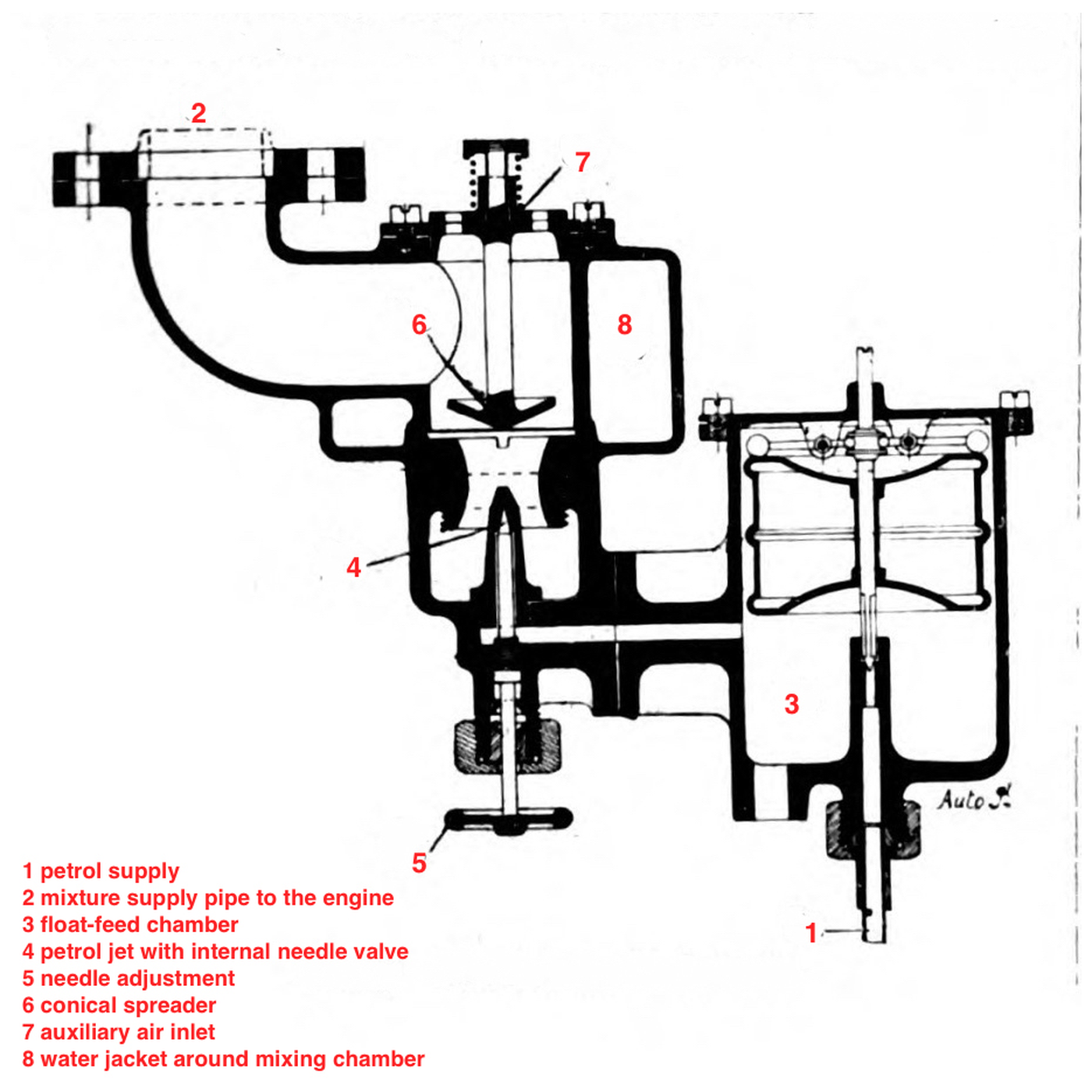


The Carburettor: A Venturi, a Jet and a Float
A petrol engine needs its fuel mixed with air in a nearly fixed ratio, at every speed. Wilhelm Maybach's spray-nozzle carburettor of 1893, for Daimler, did it with three parts and no moving control at all: a **venturi** that speeds the air and lowers its pressure, a **jet** opening into the throat that the low pressure draws fuel through, and a **float bowl** that holds the fuel at a constant level just below the jet.
Because the air flow and the fuel flow both go with the air's speed, the mixture stays right as the engine speeds up and slows down.
This rung works out why, and builds a water-and-air venturi atomiser to see the jet draw and spray — no petrol involved.
Àárín
About 3 hours
Ìlànà
1
1
Why the mixture stays right
Why the mixture stays right
Ń ṣí ìwé Jupyter…
2
2
Build a venturi atomiser — with water
Build a venturi atomiser — with water
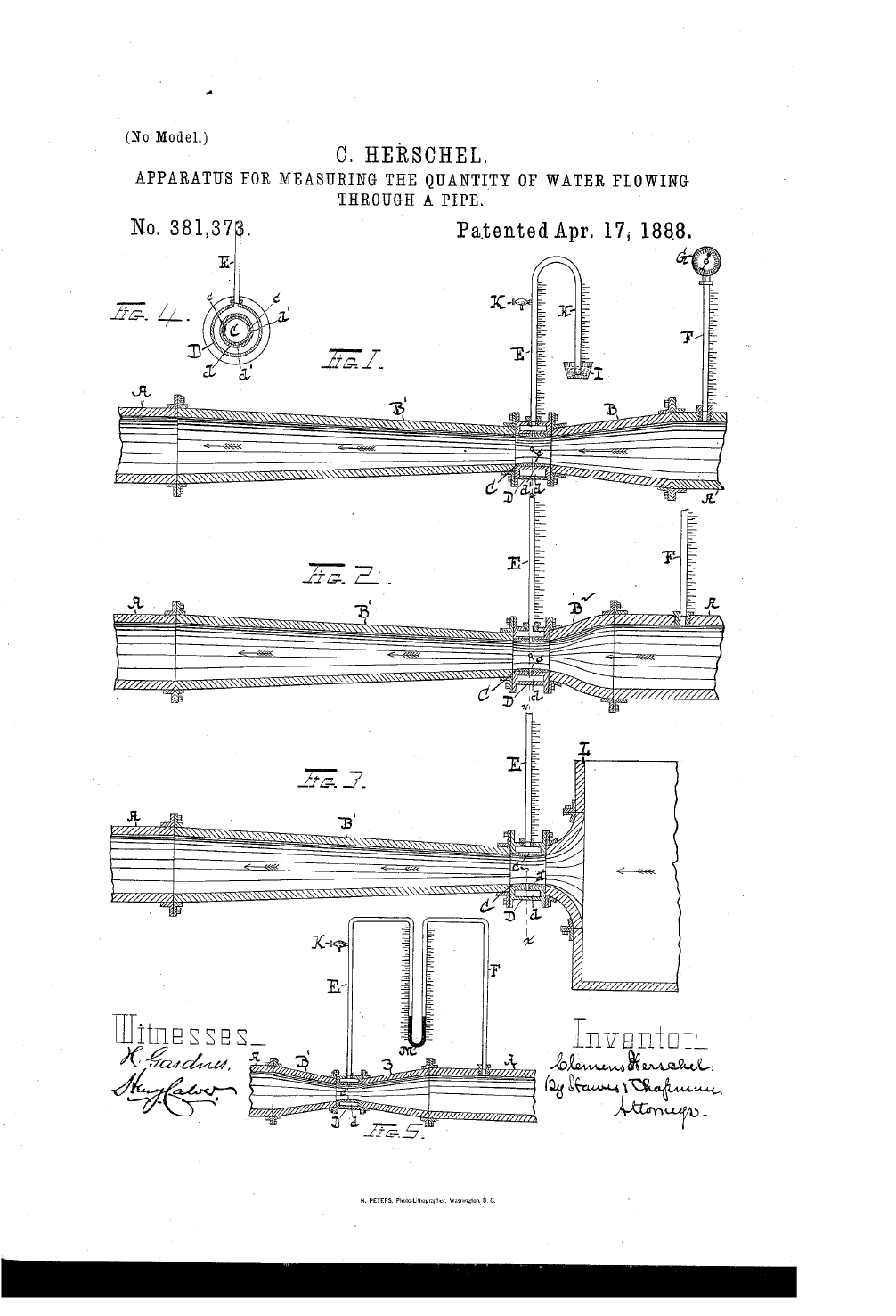
Print a venturi tube: 12 mm bore narrowing smoothly to a 6 mm throat and opening gently back out, with a 2 mm side hole at the throat into which a fine tube is sealed. Lead that tube down into a cup of coloured water 30 mm below the throat — the cup is your float bowl, and the height is the level the float holds.
Blow air through with the air compressor through the regulator, starting very low. At some air speed the water climbs the tube and is torn into a spray at the throat. Raise the cup and it starts at lower air speed; lower it and it needs more. That is why a carburettor needs a float: the fuel level must not change.
**Water only.** Never demonstrate this with petrol: an atomised fuel spray is an explosive mixture.
Àwọn ohun èlò fún ìgbésẹ̀ yìí:
 Okùn PETG30 g
 Ọ̀pá vinyl tí ó mọ́1 mítà
 Àwọ̀ oúnjẹ (aró fún ríri ìṣàn omi)1 ẹ̀kán
 Omi1 lítà
Àwọn irinṣẹ́ tí a nílò:
 Ẹ̀rọ ìtẹ̀ 3D oníwàyà (FDM)
 Ẹ̀rọ ìtẹ̀ afẹ́fẹ́ (onírísí pancake)
 Ẹ̀rọ ìdínkù ìtẹ̀
 Ìdíwọ̀n
 Gílásì Ààbò Tí Ó Mọ́
3
3
History and context
History and context
**Wilhelm Maybach, 1893** — the spray-nozzle carburettor with a float chamber, developed for Daimler engines, the pattern for carburettors for most of the next century. No patent number is asserted here. Earlier 'surface' and 'wick' carburettors had simply let air pass over or through petrol, and their mixture wandered with temperature and fuel level.
Fuel injection replaced the carburettor in cars from the 1980s, for precise mixture control and emissions; carburettors survive on small engines.
**Honest limits.** The simple venturi law fails at very low airflow (idle) and during sudden throttle opening, so real carburettors carry extra circuits. The mixture shifts with altitude, because air density falls. And petrol vapour is dangerous: carburettors are worked on outdoors, away from flame.
Àwọn ohun-èlò
4- 30 gÀyè
- 1 mítàÀyè
- Àyè
- 1 lítàÀyè
Àwọn irinṣẹ́ tó nílò
5- Àyè
Blueprint tó jọra
Àwọn blueprint wọ̀nyí pín ìmọ̀ — ọ̀nà, ohun-èlò tàbí ìlànà


CC0 Àgbègbè Gbogbogbò
Blueprint yìí ti jáde lábẹ́ CC0. O lè ṣe àdàkọ, yí padà, pín, àti lò láìsí ìyọ̀ǹda.
Ṣàtìlẹ́yìn Olùṣẹ́dá nípa rírà àwọn ọjà nipasẹ̀ Blueprint wọn Ẹ̀san Olùṣẹ́dá tí àwọn Olùtajà gbé kalẹ̀, tàbí ṣẹ̀dá àtúnṣe tuntun ti Blueprint yìí kí o sì fi sínú Blueprint rẹ gẹ́gẹ́ bí ìsopọ̀ láti pín owó-wíwọlé.