IṢẸ́ ỌNÀ
ẸWÀ ÀTI ÌLERA
IṢẸ́ ỌWỌ́
ÀṢÀ ÀTI ÌTÀN
ÌṢERÉ
ÀYÍKÁ
OÚNJẸ ÀTI OHUN MÍMU
REVERSE ENGINEERING
SÁYẸ́ǸSÌ
ERÉ ÌDÁRAYÁ
ÌMỌ̀-Ẹ̀RỌ
ÀWỌN OHUN WÍWỌ̀
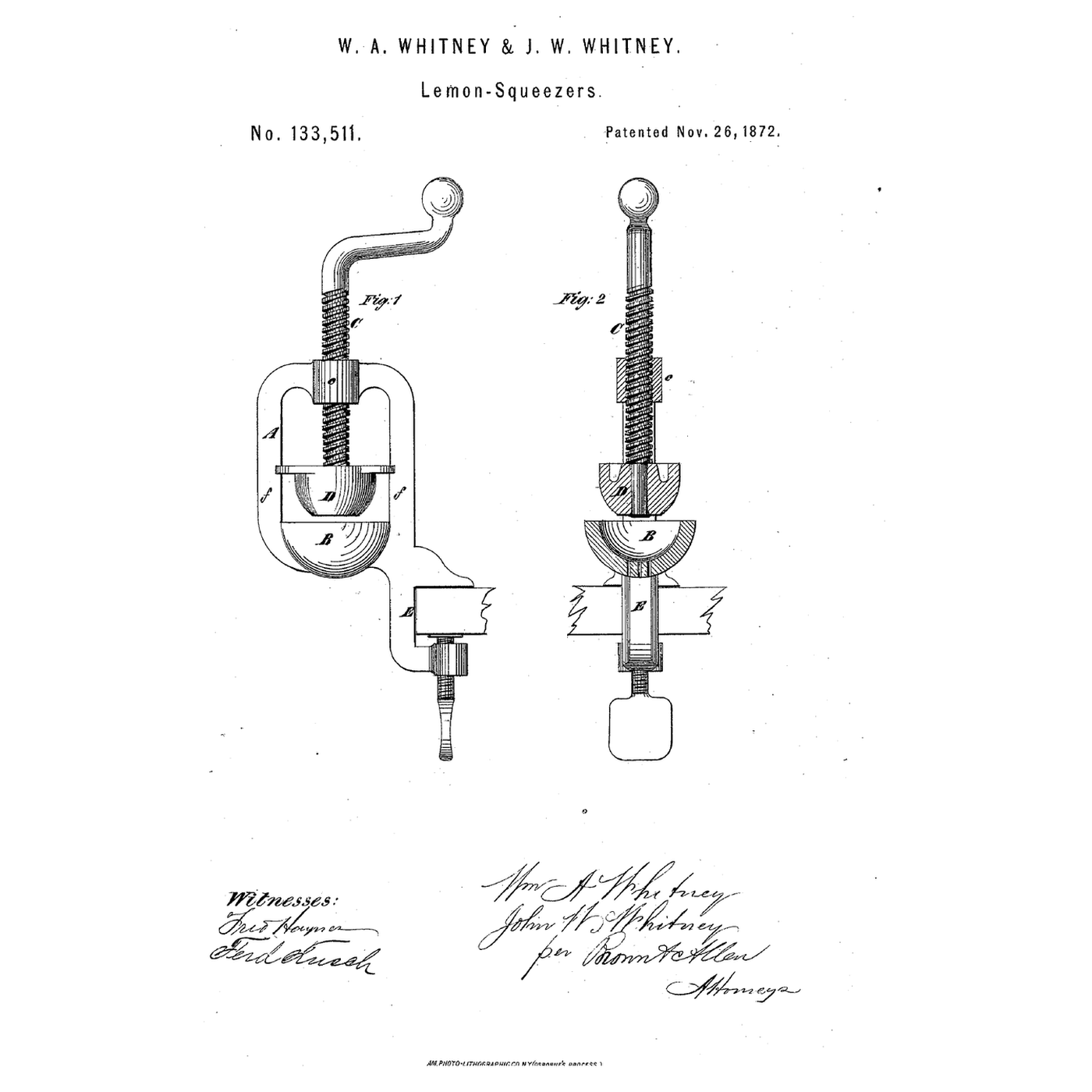


The Clamp-Frame Lemon Squeezer: A Screw Press That Clamps to the Table
Squeezing lemon after lemon by hand for a bar or a kitchen is slow, sticky work.
William A. Whitney and John W. Whitney of Brooklyn, New York, received US 133,511, dated 26 November 1872, for "a cheap and handy lemon-squeezer which shall be more effective and can be more expeditiously operated than the article ordinarily used for this purpose": a cast-iron frame with a perforated cup at its foot, a clamp to fix it to a table or bench, guides for a sliding follower, and a screw working through a nut in the frame's top that drives the follower down into the cup.
This rung works out the screw's force and the twist the clamp must hold, then builds the frame from flat bar and threaded rod, clamps it to a bench and squeezes a run of lemons.
Àárín
About 5 hours
Ìlànà
1
1
The screw and the clamp
The screw and the clamp
Ń ṣí ìwé Jupyter…
2
2
A screw squeezer before it
A screw squeezer before it
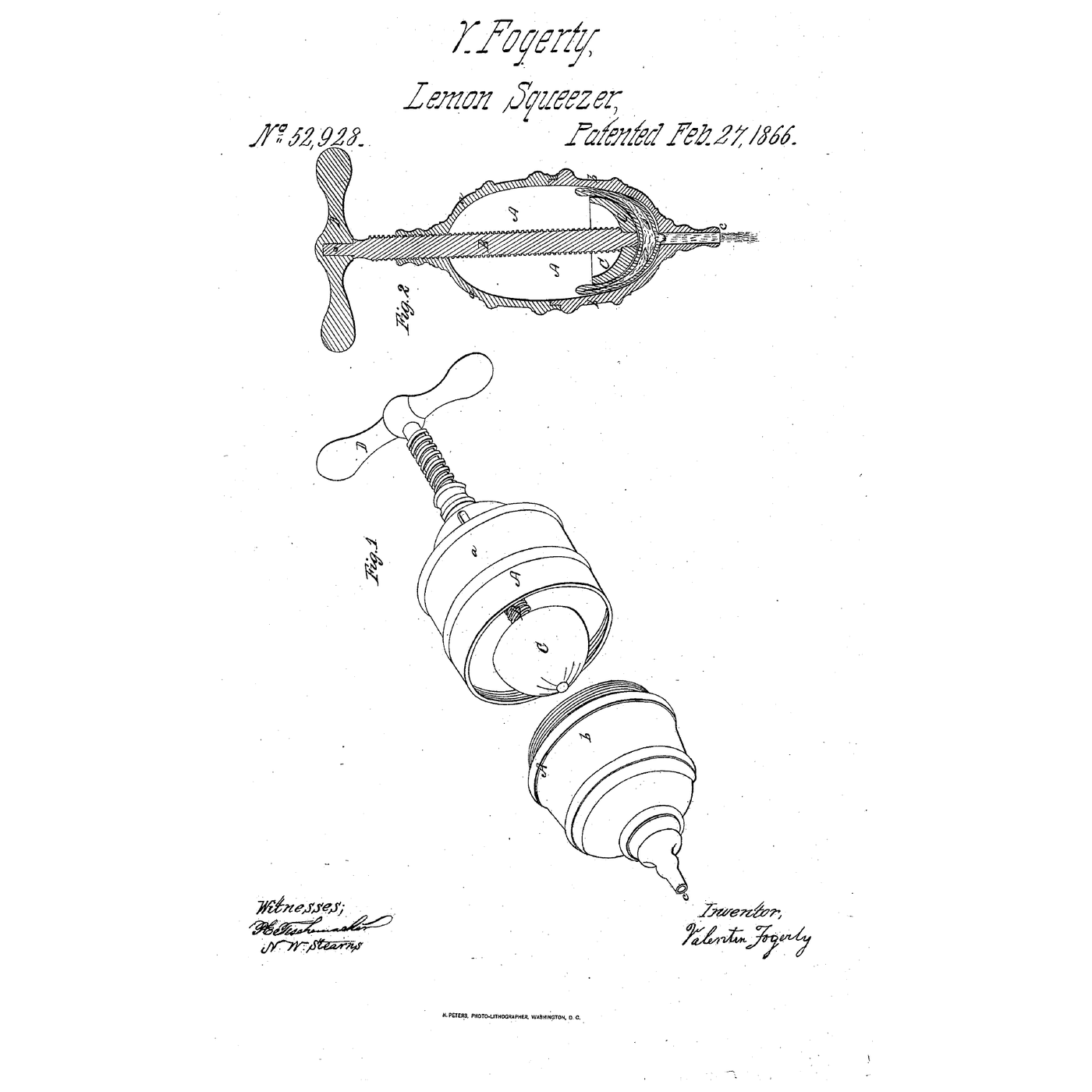
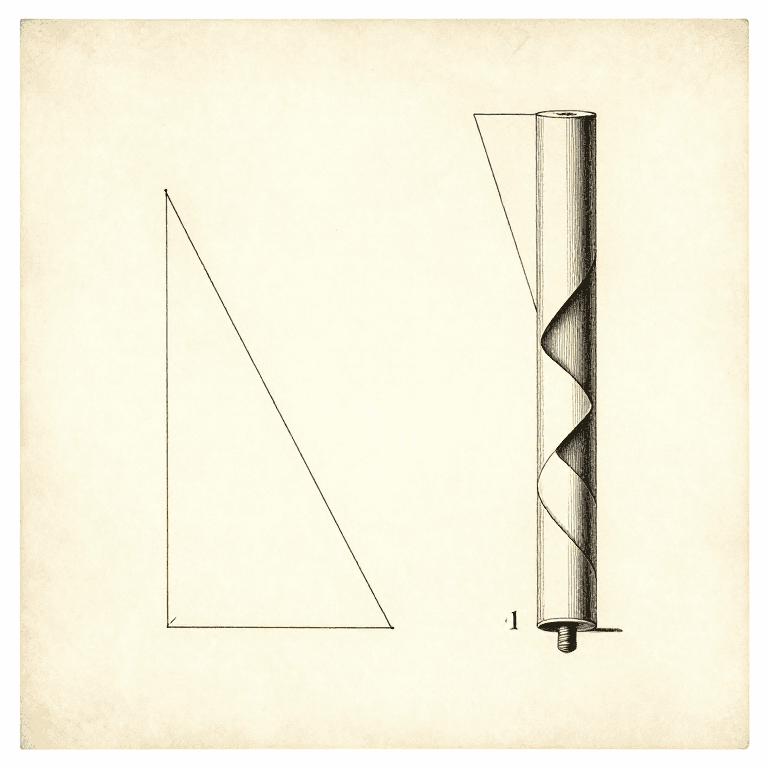
The embedded blueprint drives a plunger down with a screw in a casing held in the hand. The Whitneys' frame clamps to the table, so both hands are free for the lemons and the handle.
3
3
Read US 133,511
Read US 133,511
"A is the frame of the implement. It is of cast-iron, and has formed on its lower portion a cup, B, in which a half lemon to be squeezed is placed. This cup is perforated in the bottom to provide for the escape of juice expressed from the lemon. Over this cup is a socket, c, for the reception of the operating-screw C, and the portions f f of the frame between the socket and the cup B form guides along which the follower D works."
"The lemons to be squeezed are cut in halves and inserted piece by piece into the cup B. The handle of the screw is then turned to bring down the follower D, and thereby squeeze the lemon between it and the cup. The juice escapes through the perforations in the bottom of the cup B, into a bowl or other receptacle placed to receive it."
4
4
Build the frame and squeeze a run of lemons
Build the frame and squeeze a run of lemons
**Frame.** Cut two 16 cm lengths of 25 × 5 mm mild steel flat bar as the top and bottom. Drill each near both ends for M8 threaded rod, and drill the top's centre for a 10 mm rod. Join them 14 cm apart with two lengths of M8 rod and nuts: the rods are the guides f f.
**Nut and screw.** Silver-solder an M10 nut over the top's centre hole. Bend the top of a 25 cm length of M10 threaded rod into a crank with a hardwood knob on a bolt, and run it through the nut.
**Cup and follower.** Cut the bottom 3 cm off a tin can, punch its base, and rivet it over a large hole in the bottom bar. Rasp a hardwood follower to the cup's inside shape, drill its sides for the two guides and its top for the screw's end, fixed with a nut each side so it can turn freely.
**Clamp.** Bend a flat-bar bracket down from one end of the bottom bar and clamp it to the bench edge with a clamp, as the Whitneys' clamp E.
**Test.** Put a half lemon in the cup over a bowl and turn the screw down. Count the turns and weigh the juice for six halves in a row, and time the run.
Àwọn ohun èlò fún ìgbésẹ̀ yìí:
 Ọ̀pá Pẹrẹsẹ Irin Pẹ́lẹ́0.5 mítà
 Ọ̀pá oníṣọ̀kan0.6 mítà
 Nọ́ọ̀tì Onígun Mẹ́fà8 ẹyọ
 Ìdìpọ̀ wẹ́là fadaka (rírọ̀/àárín/líle)1 ẹyọ
 Ohun ìyọ́1 ẹyọ
 Ìgò irin1 ẹyọ
 Àwọn pop rivet4 ẹyọ
 Ìṣù Igi Líle1 ẹyọ
 Àkójọ bọ́ọ̀lù onígun mẹ́fà1 ẹyọ
 Lẹ́mọ́ọ̀nù3 ẹyọ
Àwọn irinṣẹ́ tí a nílò:
 Ayùn Irin
 Ẹ̀rọ Ìlùkòkò Aláìlókùn
 Àkójọ Orí Ìlùkòkò
 Àwọn Ìfá (Ìfá Ọwọ́)
 Ìdìmú Tábìlì
 Ọ̀pá Iná Pùróféènì
 Ìlàǹkàn irin
 Ìṣó
Ìṣó Òòlù
Òòlù Ìdìpọ̀ ẹ̀rọ ìso pop rivet
 Ayùn
Ayùn Kọ́kọ́rọ́ tí a lè ṣàtúnṣe
 Àwọn clamp
 Ọ̀bẹ ilé ìdáná
 Òṣùwọ̀n Díjítà Ilé Ìdáná
 Aago Ìdúró
 Ìbọ̀wọ́ Iṣẹ́ Awọ
5
5
A frame that twists, jams or leaves juice
A frame that twists, jams or leaves juice
Clamp-frame lemon squeezer troubleshooting.
Flow
Loading...
6
6
History and honest limits
History and honest limits
**William A. Whitney and John W. Whitney** of Brooklyn, Kings County, New York, received US 133,511, dated 26 November 1872. The follower D had lugs on its upper edge that embraced the guides f f, the screw C worked through a nut in the socket c and was secured to the follower so it could turn without it, and a clamp E on the frame's lower part beside the cup held it to a table or bench. Their claim is the cup, frame, guides, clamp, follower and screw combined.
**Honest limits.** Flat bar, threaded rod, a tin cup and a hardwood follower stand in for their cast-iron frame. The notebook ignores friction; its forces and lengths are examples. Your run of lemons is the result.
Àwọn ohun-èlò
10- 0.5 mítàÀyè
- 0.6 mítàÀyè
- 8 ẹyọÀyè
- 1 ẹyọÀyè
- 1 ẹyọÀyè
- 4 ẹyọÀyè
- 1 ẹyọÀyè
- Àyè
- 3 ẹyọÀyè
Àwọn irinṣẹ́ tó nílò
17- Àyè
- 1 vendor sell this, none ship to you yetÀyè
- Àyè
- Àyè
- Àyè
- Àyè
- Àyè
- Àyè
- Àyè
Ìtọ́nisọ́nà yìí ń ṣe

Blueprint tó jọra
Àwọn blueprint wọ̀nyí pín ìmọ̀ — ọ̀nà, ohun-èlò tàbí ìlànà



CC0 Àgbègbè Gbogbogbò
Blueprint yìí ti jáde lábẹ́ CC0. O lè ṣe àdàkọ, yí padà, pín, àti lò láìsí ìyọ̀ǹda.
Ṣàtìlẹ́yìn Olùṣẹ́dá nípa rírà àwọn ọjà nipasẹ̀ Blueprint wọn Ẹ̀san Olùṣẹ́dá tí àwọn Olùtajà gbé kalẹ̀, tàbí ṣẹ̀dá àtúnṣe tuntun ti Blueprint yìí kí o sì fi sínú Blueprint rẹ gẹ́gẹ́ bí ìsopọ̀ láti pín owó-wíwọlé.