IṢẸ́ ỌNÀ
ẸWÀ ÀTI ÌLERA
IṢẸ́ ỌWỌ́
ÀṢÀ ÀTI ÌTÀN
ÌṢERÉ
ÀYÍKÁ
OÚNJẸ ÀTI OHUN MÍMU
REVERSE ENGINEERING
SÁYẸ́ǸSÌ
ERÉ ÌDÁRAYÁ
ÌMỌ̀-Ẹ̀RỌ
ÀWỌN OHUN WÍWỌ̀


The Counter Lever Cork Extractor: A Spring Sets the Screw, a Tap on the Lever Draws the Cork
Behind a busy counter, every cork drawn by hand takes both hands and a strong pull, and then has to be picked off the corkscrew.
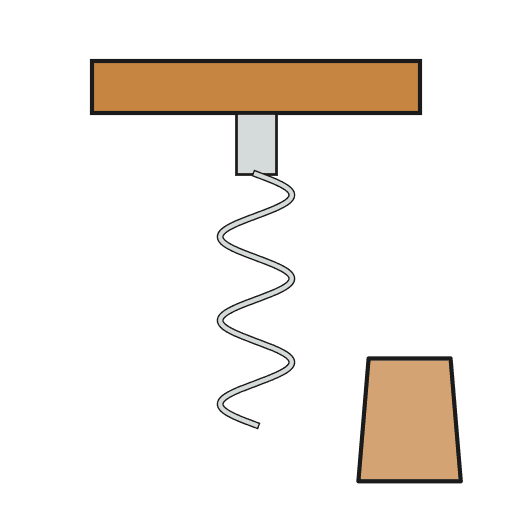
Joseph P. Miers and John Groendyke of Lebanon, New Jersey, received US 41,385, dated 26 January 1864, for a machine that stands on the counter: a frame with a cross-bar that holds the bottle down, a carriage sliding in the frame's grooved uprights, a shaft turning in the carriage with a corkscrew on its end, a spring that presses them down, and a hand-lever whose forked end lifts the carriage. A few turns set the screw, "a slight pressure or tap of the hand on the lever F causes the cork to fly out", and blades on the shank split each cork when the next one pushes it up, so it drops off by itself.
This rung works out the lift of the lever against the spring, with a work check, then builds the machine in hardwood and steel and draws a run of corks.
Ilọsíwájú
About 8 hours
Ìlànà
1
1
Lever against spring
Lever against spring
Ń ṣí ìwé Jupyter…
2
2
A frame corkscrew before it
A frame corkscrew before it
The embedded blueprint stands a frame on the bottle and lifts the cork with the screw itself. Miers and Groendyke fix the frame to the counter and lift with a lever.
3
3
Read US 41,385
Read US 41,385
"D is the corkscrew, which is rigidly attached to or made solid with the shaft C, and the stem or shank of this corkscrew terminates in two or more cutting-blades, E, intended to split the corks after they have been removed from the bottle, and to cause them to drop off from the corkscrew spontaneously and without the aid of the operator. F is a hand-lever, which is pivoted to one of the uprights a, and the forked end of which straddles the shaft C and bears on the under side of the carriage B."
"The operation is as follows: The bottle from which the cork is to be removed is adjusted under the cross-bar b, and the shaft C and the carriage are raised to the position shown in Fig. 1. The point of the corkscrew being depressed by the action of the spring d will readily enter the cork as soon as a rotary motion is imparted to the shaft C. A few revolutions of this shaft are sufficient to give to the corkscrew a firm hold in the cork, and a slight pressure or tap of the hand on the lever F causes the cork to fly out, the bottle being retained by the cross-bar b. The next cork to be removed forces the first up against the cutting-blades E, so that the same is split and caused to drop off spontaneously and without the aid of the operator."
4
4
Build the machine and draw a run of corks
Build the machine and draw a run of corks
**Frame.** Screw two 45 cm hardwood uprights to a hardwood base 8 cm apart and join their tops with a cross piece. Glue hardwood strips inside the uprights' upper half as grooves for the carriage. Fix a cross-bar between them at the height of a bottle's lip, with a hole the cork passes through but the neck does not.
**Carriage and shaft.** Cut a hardwood block that slides in the grooves and drill it for a 10 mm steel rod. Pass the rod through the top piece and the carriage, and fix a nut and washer on each side of the carriage so the rod turns in it but cannot slide through it. Bend or fix a flat-bar crank at the rod's top. Fit a compression spring round the rod between the top piece and the carriage.
**Corkscrew and blades.** Wind 2 mm steel wire round the rod's lower end as a helix and silver-solder it on. Silver-solder two small flat-bar blades across the shank just above it and file their upper edges sharp.
**Lever.** Cut a 40 cm hardwood lever, fork one end round the rod under the carriage, and pivot it on a bolt through one upright.
**Test.** Cork several bottles of water with the corking kit. Stand one under the cross-bar, lift the carriage with the lever and let the spring set the screw on the cork, turn the crank a few times, then tap the lever. Draw the next cork and see the first split on the blades and drop off.
Àwọn ohun èlò fún ìgbésẹ̀ yìí:
 Pátákó Igi Líle2 ẹyọ
 Ìṣù Igi Líle1 ẹyọ
 Ìṣó igi12 ẹyọ
 Ìdìpọ̀ Igi1 ẹyọ
 Ọ̀pá Róbótó Irin Rírọ̀0.6 mítà
 Nọ́ọ̀tì Onígun Mẹ́fà2 ẹyọ
 Wáṣà Pẹrẹsẹ2 ẹyọ
 Àkójọpọ̀ orísun ìtẹ̀mọ́lẹ̀1 ẹyọ
 Okun waya irin0.4 mítà
 Sọ́ldà Fàdákà1 ẹyọ
 Fúlọ́ksì1 ẹyọ
 Ọ̀pá Pẹrẹsẹ Irin Pẹ́lẹ́0.2 mítà
 Àkójọ bọ́ọ̀lù onígun mẹ́fà1 ẹyọ
 Ìgò dígí (tí ó mọ́)4 ẹyọ
 Àwọn kọ́ọ̀kì4 ẹyọ
 Omi3 lítà
Àwọn irinṣẹ́ tí a nílò:
 Ayùn Ọwọ́
 Ìdìpọ̀ àyà igi
 Ẹ̀rọ Ìlùkòkò Aláìlókùn
 Àkójọ Orí Ìlùkòkò
 Ìṣù àwọn ohun ìyí skurú
 Àwọn clamp
 Ayùn Irin
 Àwọn Ìfá (Ìfá Ọwọ́)
 Ìdìmú Tábìlì
 Ọ̀pá Iná Pùróféènì
 Kọ́kọ́rọ́ tí a lè ṣàtúnṣe
 Ìdìpọ̀ ìdídí ìgò wáìnì
 Gílásì Ààbò Tí Ó Mọ́
 Ìbọ̀wọ́ Iṣẹ́ Awọ
5
5
A machine that jams, slips or will not throw the cork
A machine that jams, slips or will not throw the cork
Counter lever cork extractor troubleshooting.
Flow
Loading...
6
6
History and honest limits
History and honest limits
**Joseph P. Miers and John Groendyke** of Lebanon, Hunterdon County, New Jersey, received US 41,385, dated 26 January 1864. Their frame A of wood or other material was fastened to the counter, and they allowed a weight in place of the spring, or its place changed. Their claims cover the hand-lever with the corkscrew on the sliding rotary spring-shaft, the sliding carriage with the shaft, corkscrew and lever, and the cutting blades with the corkscrew.
**Honest limits.** Hardwood, a steel rod and a wound wire helix stand in for their machine's parts, and the sizes are not theirs. The notebook ignores friction and the cork's own grip; its forces, lengths and spring are examples. Your run of corks is the result.
Àwọn ohun-èlò
16- 2 ẹyọÀyè
- 1 ẹyọÀyè
- 12 ẹyọÀyè
- 1 ẹyọÀyè
- 0.6 mítàÀyè
- 2 ẹyọÀyè
- 2 ẹyọÀyè
- Àyè
- 0.4 mítàÀyè
- 1 ẹyọÀyè
- 1 ẹyọÀyè
- 0.2 mítàÀyè
- Àyè
- 4 ẹyọÀyè
- 4 ẹyọÀyè
- 3 lítàÀyè
Àwọn irinṣẹ́ tó nílò
14- Àyè
- 1 vendor sell this, none ship to you yetÀyè
- Àyè
- Àyè
- Àyè
Ìtọ́nisọ́nà yìí ń ṣe
Blueprint tó jọra
Àwọn blueprint wọ̀nyí pín ìmọ̀ — ọ̀nà, ohun-èlò tàbí ìlànà

The Frame-and-Crank Corkscrew: Once the Shoulder Stops the Screw, the Cork Climbs It
láti ọwọ́ Emma
Àwọn Ohun Mímu
23
0
0
0
0
0

The Adjustable Corkscrew Holder: One Frame for Any Bottle and Any Corkscrew
láti ọwọ́ Martin
Àwọn Ohun Mímu
22
0
0
0
0
0

The Law of the Lever — Archimedes' Balance of Weight and Distance
láti ọwọ́ Martin
Físíkì
60
0
0
0
1
0
CC0 Àgbègbè Gbogbogbò
Blueprint yìí ti jáde lábẹ́ CC0. O lè ṣe àdàkọ, yí padà, pín, àti lò láìsí ìyọ̀ǹda.
Ṣàtìlẹ́yìn Olùṣẹ́dá nípa rírà àwọn ọjà nipasẹ̀ Blueprint wọn Ẹ̀san Olùṣẹ́dá tí àwọn Olùtajà gbé kalẹ̀, tàbí ṣẹ̀dá àtúnṣe tuntun ti Blueprint yìí kí o sì fi sínú Blueprint rẹ gẹ́gẹ́ bí ìsopọ̀ láti pín owó-wíwọlé.