IṢẸ́ ỌNÀ
ẸWÀ ÀTI ÌLERA
IṢẸ́ ỌWỌ́
ÀṢÀ ÀTI ÌTÀN
ÌṢERÉ
ÀYÍKÁ
OÚNJẸ ÀTI OHUN MÍMU
REVERSE ENGINEERING
SÁYẸ́ǸSÌ
ERÉ ÌDÁRAYÁ
ÌMỌ̀-Ẹ̀RỌ
ÀWỌN OHUN WÍWỌ̀
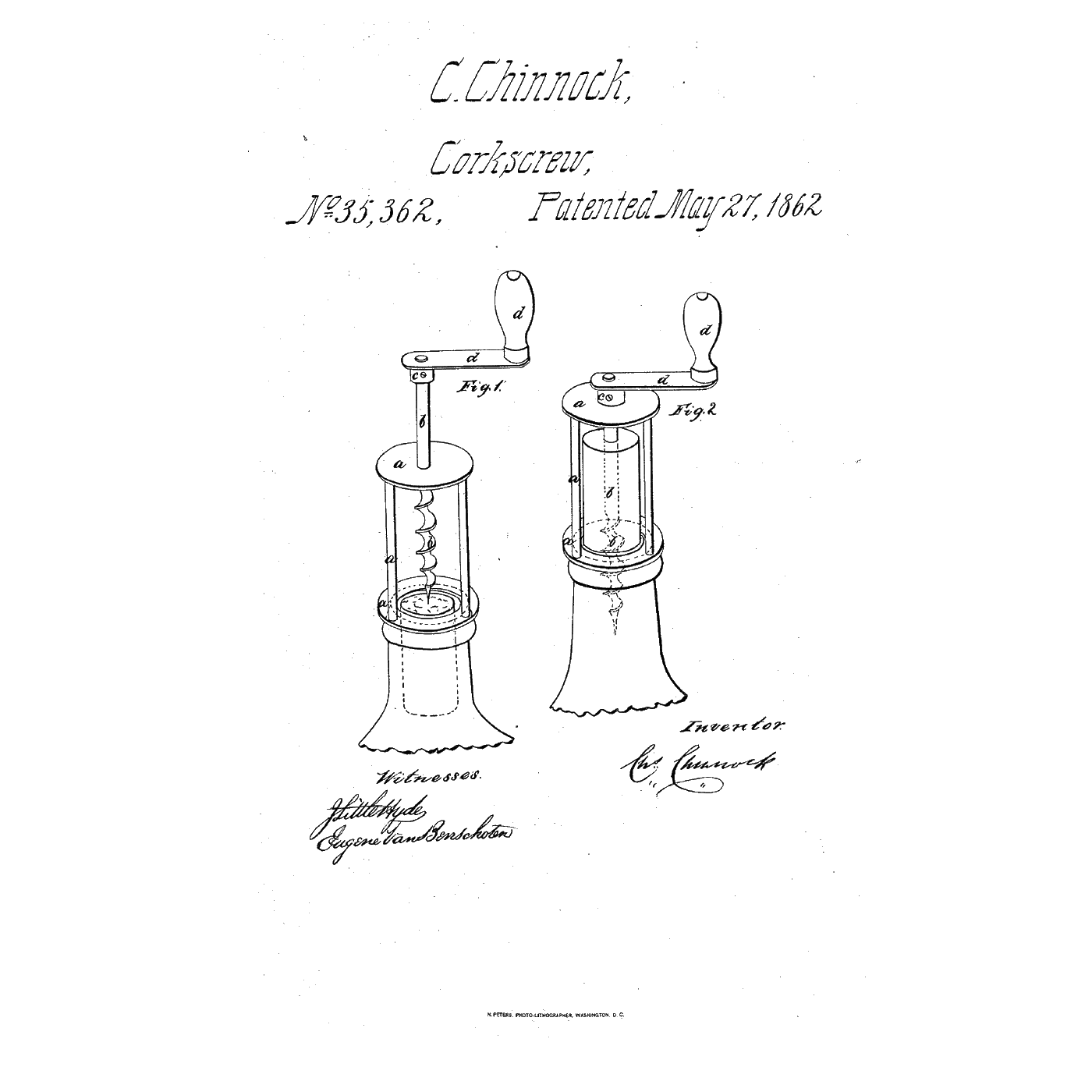


The Frame-and-Crank Corkscrew: Once the Shoulder Stops the Screw, the Cork Climbs It
Mechanical corkscrews multiplied the hand with extra screws, pinions, levers or cams, and every extra part could wear or jam.
Charles Chinnock of Brooklyn, New York, received US 35,362, dated 27 May 1862, for a device that is "a simplification of all mechanical corkscrews, doing away with all combination screws, pinions, levers, or cams and using only the screw which pierces the cork as the power for lifting it." A frame stands on the bottle; the screw and its shaft are one piece, with a shoulder and a crank. The crank drives the screw in until the shoulder strikes the frame's top, and then "the cork rises on the screw till it is drawn."
This rung works out the lift of the screw, with a work check, then makes the frame from two plates and threaded rod and draws corks with the crank.
Àárín
About 4 hours
Ìlànà
1
1
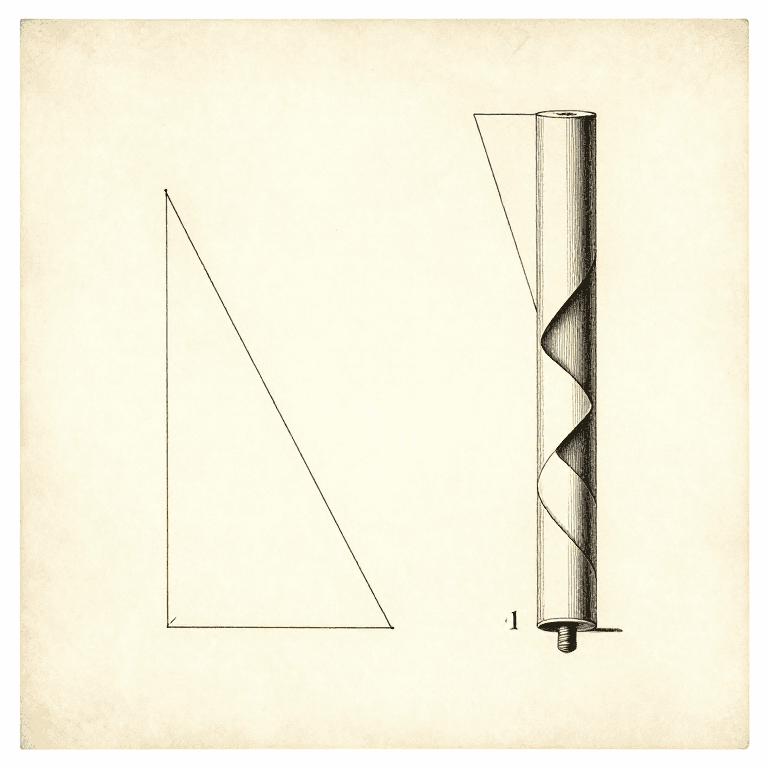
Lift from the screw
Lift from the screw
Ń ṣí ìwé Jupyter…
2
2
A mechanical corkscrew before it
A mechanical corkscrew before it
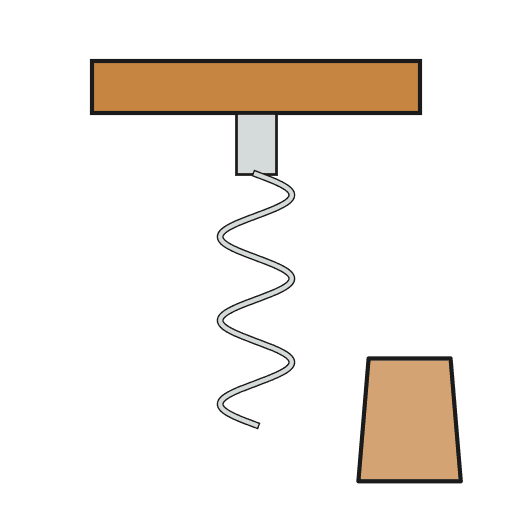
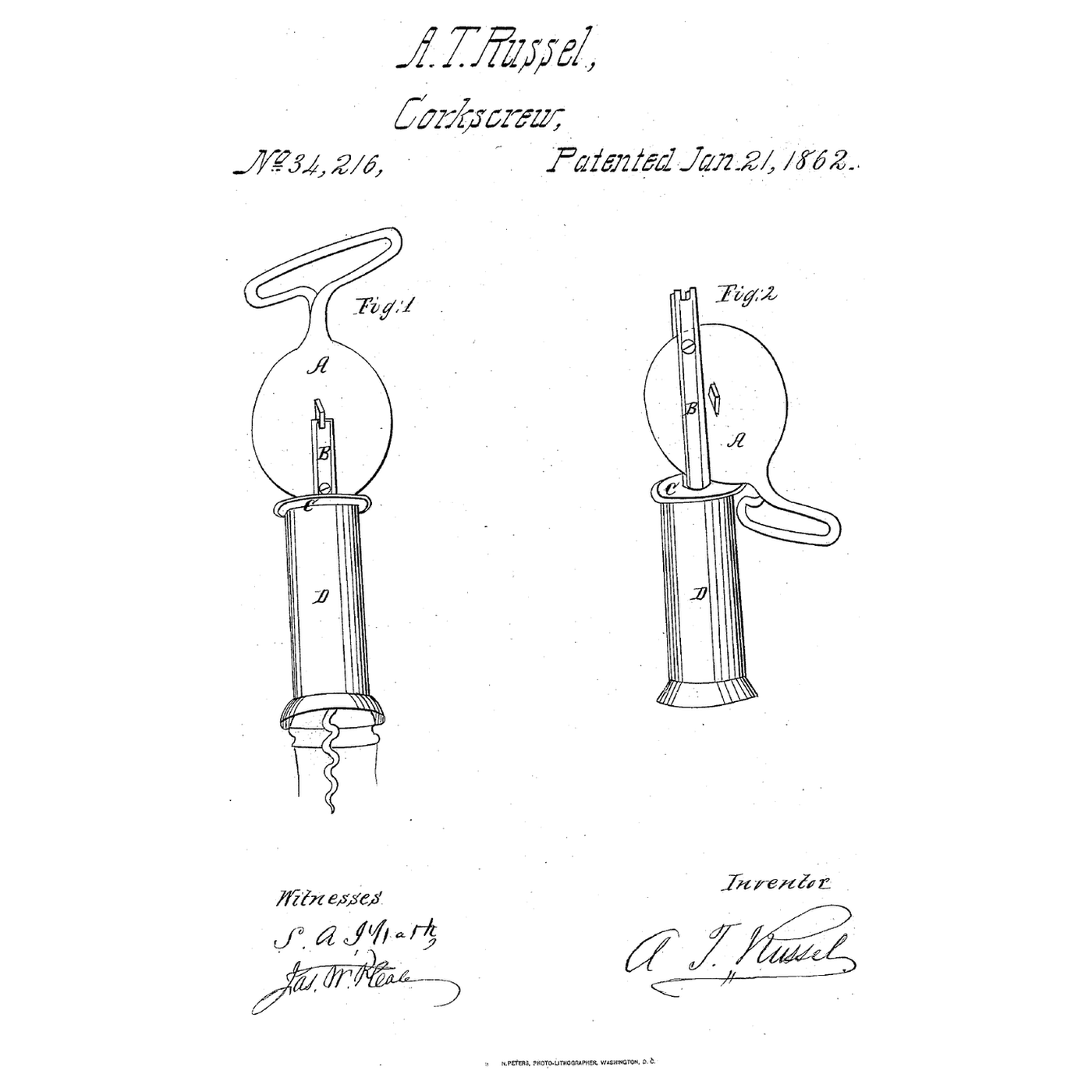
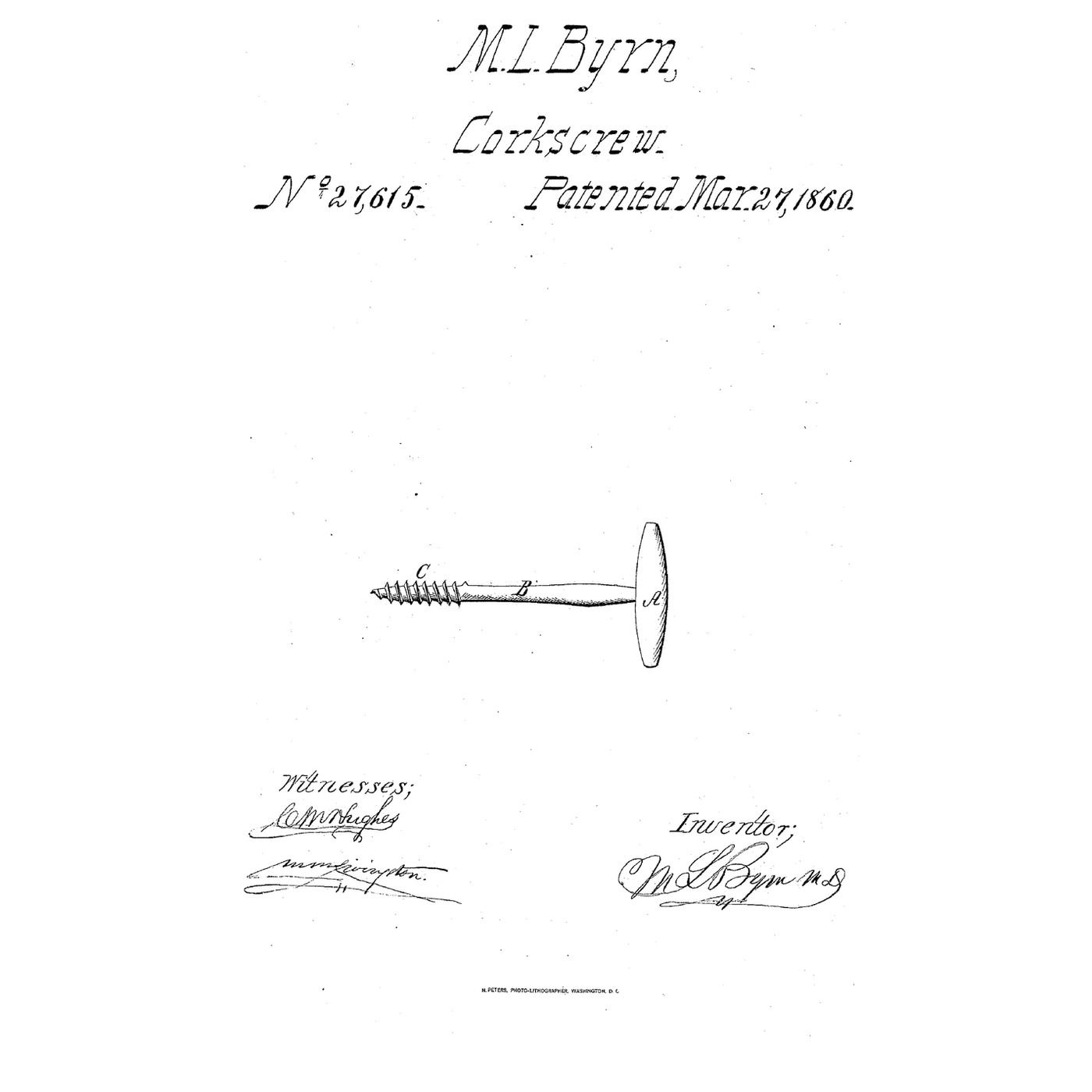
The embedded blueprint lifts the cork with a cam. Chinnock does away with the cam and lets the screw that pierces the cork lift it.
3
3
Read US 35,362
Read US 35,362
"When used, the frame a is placed on the top of the bottle, the shank and screw b is pressed down to enter the cork, and the crank d is then turned around, forcing the screw into the cork till the shoulder c strikes the top of the frame a. As the downward motion of the screw b is then stopped, the cork rises on the screw till it is drawn, as in Fig. 2."
"What I claim as my invention, and desire to secure by Letters Patent, is— The combination of the frame a with the screw b and shoulder c, substantially as and for the purpose specified."
4
4
Make the frame and crank and draw corks
Make the frame and crank and draw corks
**Frame.** Cut two 60 mm hardwood discs. Drill the lower one with a hole the bottle's lip fits into, and the upper one with a clearance hole for the shaft. Join them 9 cm apart with three lengths of threaded rod and nuts.
**Screw and shoulder.** Cut 16 cm of 6 mm mild steel rod. Wind 2 mm steel wire tightly round its lower 5 cm with 8 mm between turns, file a point, and silver-solder the wire along the rod as a coarse thread. Silver-solder a washer round the rod 9 cm up as the shoulder, so it strikes the upper disc when the screw is deep in the cork.
**Crank.** Drill a 10 cm length of flat bar at both ends, fix one end to the shaft's top with a nut on a filed thread or with silver solder, and fit a hardwood knob on a bolt at the other.
**Test.** Cork several bottles of water with the corking kit. Set the frame on a bottle, press the screw into the cork and turn the crank: count the turns until the shoulder stops the screw, then the turns until the cork is out.
Àwọn ohun èlò fún ìgbésẹ̀ yìí:
 Pátákó Igi Líle1 ẹyọ
 Ọ̀pá oníṣọ̀kan0.3 mítà
 Nọ́ọ̀tì Onígun Mẹ́fà8 ẹyọ
 Ọ̀pá Róbótó Irin Rírọ̀0.16 mítà
 Okun waya irin0.5 mítà
 Wáṣà Pẹrẹsẹ1 ẹyọ
 Ìdìpọ̀ wẹ́là fadaka (rírọ̀/àárín/líle)1 ẹyọ
 Ohun ìyọ́1 ẹyọ
 Ọ̀pá Pẹrẹsẹ Irin Pẹ́lẹ́0.1 mítà
 Àkójọ bọ́ọ̀lù onígun mẹ́fà1 ẹyọ
 Ìṣù Igi Líle1 ẹyọ
 Ìgò dígí (tí ó mọ́)4 ẹyọ
 Àwọn kọ́ọ̀kì4 ẹyọ
 Omi3 lítà
Àwọn irinṣẹ́ tí a nílò:
 Ayùn Ọwọ́
 Ayùn Irin
 Ẹ̀rọ Ìlùkòkò Aláìlókùn
 Àkójọ Orí Ìlùkòkò
 Àwọn Ìfá (Ìfá Ọwọ́)
 Ìdìmú Tábìlì
 Ọ̀pá Iná Pùróféènì
 Kọ́kọ́rọ́ tí a lè ṣàtúnṣe
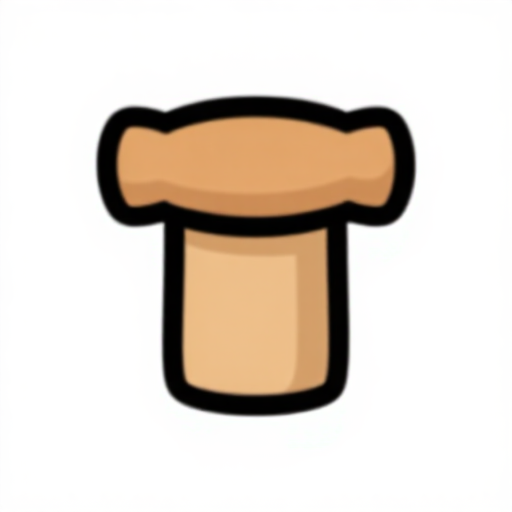 Ìdìpọ̀ ìdídí ìgò wáìnì
 Gílásì Ààbò Tí Ó Mọ́
 Ìbọ̀wọ́ Iṣẹ́ Awọ
5
5
A crank corkscrew that spins, jams or will not lift
A crank corkscrew that spins, jams or will not lift
Frame-and-crank corkscrew troubleshooting.
Flow
Loading...
6
6
History and honest limits
History and honest limits
**Charles Chinnock** of Brooklyn, Kings County, New York, received US 35,362, dated 27 May 1862. His frame a was a pair of plates joined by posts, and the screw and shaft b were in one piece with the shoulder c and the crank d. His claim is the frame combined with the screw and shoulder.
**Honest limits.** Hardwood discs and threaded rod stand in for his frame, and a wire thread soldered to a rod for his screw. The notebook ignores friction, which takes much of the effort in practice; its forces and lengths are examples. Your turn counts are the result.
Àwọn ohun-èlò
14- 1 ẹyọÀyè
- 0.3 mítàÀyè
- 8 ẹyọÀyè
- 0.16 mítàÀyè
- 0.5 mítàÀyè
- 1 ẹyọÀyè
- 1 ẹyọÀyè
- 0.1 mítàÀyè
- Àyè
- 1 ẹyọÀyè
- 4 ẹyọÀyè
- 4 ẹyọÀyè
- 3 lítàÀyè
Àwọn irinṣẹ́ tó nílò
11- Àyè
- Àyè
- 1 vendor sell this, none ship to you yetÀyè
- Àyè
Ìtọ́nisọ́nà yìí ń ṣe
Blueprint tó jọra
Àwọn blueprint wọ̀nyí pín ìmọ̀ — ọ̀nà, ohun-èlò tàbí ìlànà

CC0 Àgbègbè Gbogbogbò
Blueprint yìí ti jáde lábẹ́ CC0. O lè ṣe àdàkọ, yí padà, pín, àti lò láìsí ìyọ̀ǹda.
Ṣàtìlẹ́yìn Olùṣẹ́dá nípa rírà àwọn ọjà nipasẹ̀ Blueprint wọn Ẹ̀san Olùṣẹ́dá tí àwọn Olùtajà gbé kalẹ̀, tàbí ṣẹ̀dá àtúnṣe tuntun ti Blueprint yìí kí o sì fi sínú Blueprint rẹ gẹ́gẹ́ bí ìsopọ̀ láti pín owó-wíwọlé.