IṢẸ́ ỌNÀ
ẸWÀ ÀTI ÌLERA
IṢẸ́ ỌWỌ́
ÀṢÀ ÀTI ÌTÀN
ÌṢERÉ
ÀYÍKÁ
OÚNJẸ ÀTI OHUN MÍMU
REVERSE ENGINEERING
SÁYẸ́ǸSÌ
ERÉ ÌDÁRAYÁ
ÌMỌ̀-Ẹ̀RỌ
ÀWỌN OHUN WÍWỌ̀
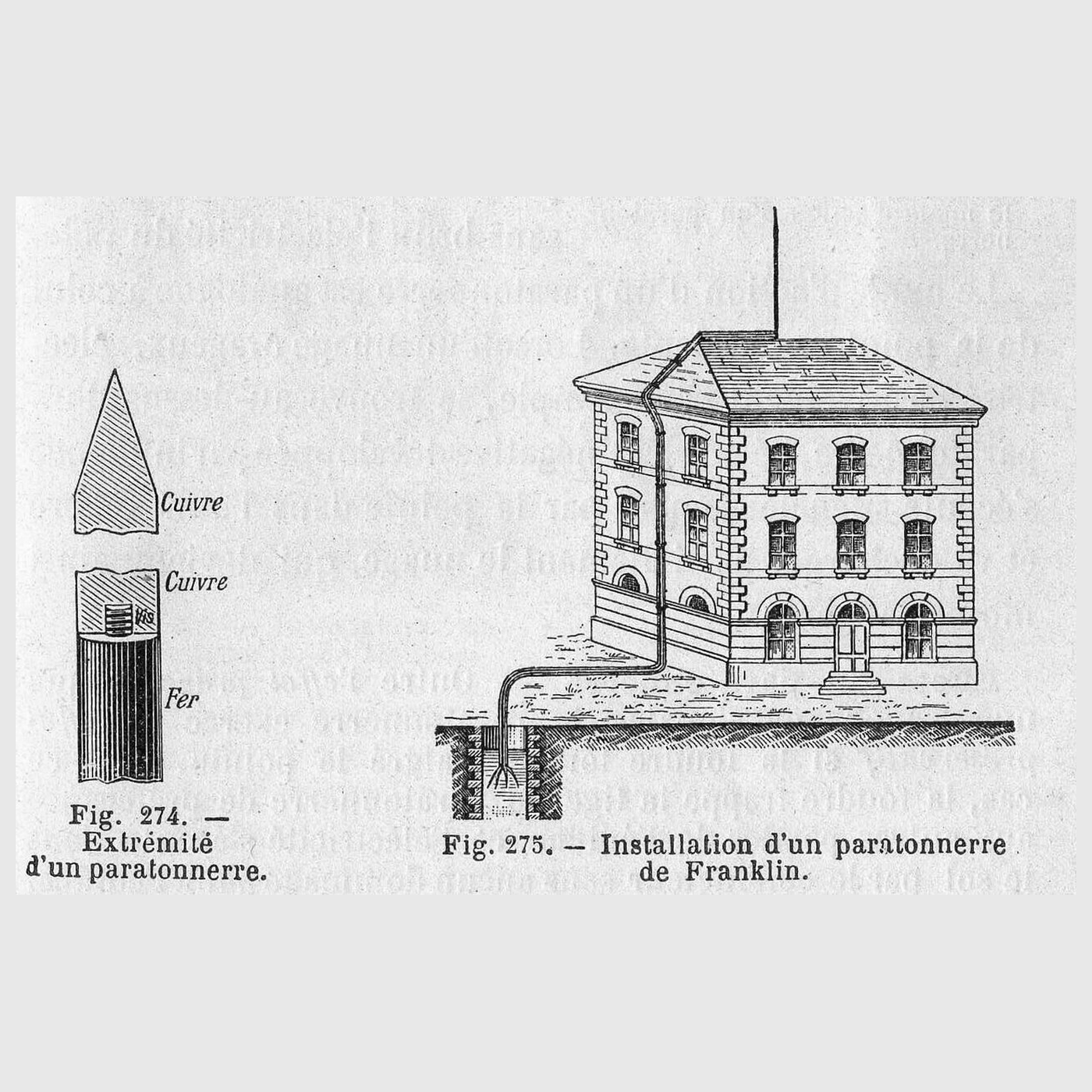


The Lightning Rod: Give the Strike a Path That Survives It
Benjamin Franklin proposed in 1750 that a pointed iron rod on a building, connected by a wire to the ground, would protect it from lightning; by 1752 rods were being put up. He took out no patent on it, or on any of his inventions.
A rod does not stop lightning. It gives the strike a place to land that is not the roof, and a path to earth thick enough to carry tens of thousands of amperes without melting. The sharp point — which Franklin showed would quietly draw charge off a conductor — matters much less than the thickness of the wire and the quality of the earth.
This rung works out both, and repeats Franklin's point-discharge experiment on a charged Leyden jar.
Olùbẹ̀rẹ̀
About 2 hours
Ìlànà
1
1
The power of points, and the size of the conductor
The power of points, and the size of the conductor
Ń ṣí ìwé Jupyter…
2
2
Charge a Leyden jar to test points
Charge a Leyden jar to test points
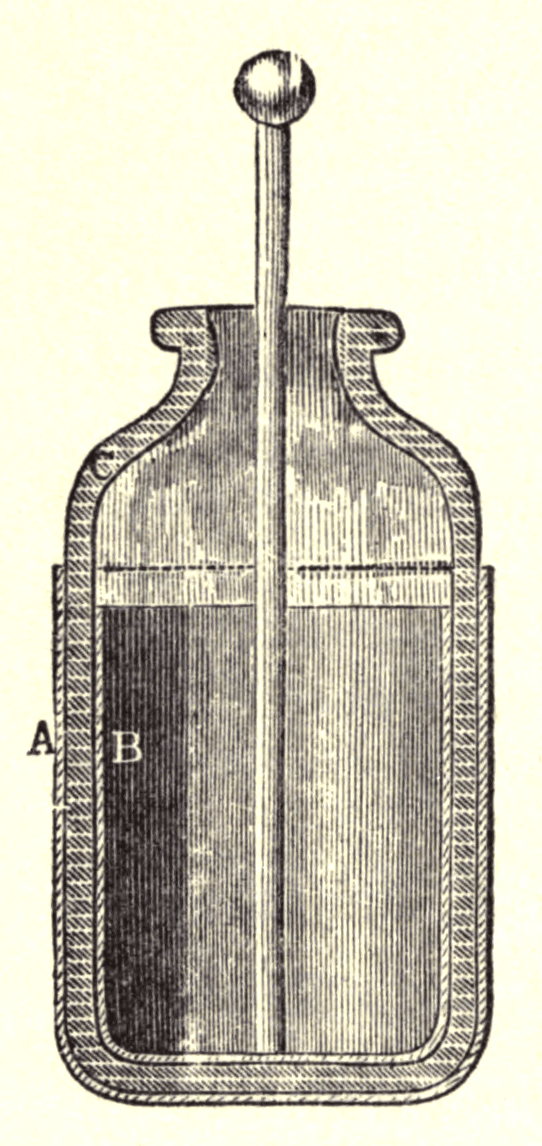
Franklin's experiments used a charged conductor and a Leyden jar. The embedded blueprint builds and charges one; the next step uses it.
3
3
Repeat Franklin's point-discharge experiment
Repeat Franklin's point-discharge experiment
Charge the Leyden jar. Bring a smooth ball — a metal ball on an insulated handle — slowly towards its terminal: nothing happens until it is close, then a single sharp spark jumps.
Charge the jar again and bring a needle, held on an insulated handle and wired to earth, slowly towards it, point first. In the dark you may see a faint glow at the point and hear a hiss; there is no big spark, and when you then test the jar with the ball, it is nearly discharged. The point drew the charge off quietly.
That is the 'power of points' Franklin reported. A modern rod works mainly by where it stands and how well it is earthed; the notebook shows why the wire matters more.
Àwọn ohun èlò fún ìgbésẹ̀ yìí:
 Okùn Bàbà1 mítà
Àwọn irinṣẹ́ tí a nílò:
 Okùn Àdánwò Onídì Ẹnu Ọ̀nì
 Ìbọ̀wọ́ Iṣẹ́ Awọ
4
4
History and context
History and context
**Benjamin Franklin** proposed the pointed, earthed rod in a letter of 1750 and published it in *Poor Richard's Almanack* for 1753; rods were in use from 1752. No patent exists — Franklin declined to patent any of his inventions.
Modern lightning protection (IEC 62305 and its equivalents) keeps his three parts — air terminals, down-conductors, earth electrodes — and sizes them from the stroke statistics the notebook uses.
**Honest limits.** A rod protects a zone, not a whole landscape. It does not prevent surges entering along wires and pipes, which need their own protection. And it is only as good as its earth connection and its joints. **Never experiment with atmospheric electricity** — Georg Richmann was killed in 1753 repeating Franklin's experiment.
Àwọn irinṣẹ́ tó nílò
2Blueprint tó jọra
Àwọn blueprint wọ̀nyí pín ìmọ̀ — ọ̀nà, ohun-èlò tàbí ìlànà


CC0 Àgbègbè Gbogbogbò
Blueprint yìí ti jáde lábẹ́ CC0. O lè ṣe àdàkọ, yí padà, pín, àti lò láìsí ìyọ̀ǹda.
Ṣàtìlẹ́yìn Olùṣẹ́dá nípa rírà àwọn ọjà nipasẹ̀ Blueprint wọn Ẹ̀san Olùṣẹ́dá tí àwọn Olùtajà gbé kalẹ̀, tàbí ṣẹ̀dá àtúnṣe tuntun ti Blueprint yìí kí o sì fi sínú Blueprint rẹ gẹ́gẹ́ bí ìsopọ̀ láti pín owó-wíwọlé.