IṢẸ́ ỌNÀ
ẸWÀ ÀTI ÌLERA
IṢẸ́ ỌWỌ́
ÀṢÀ ÀTI ÌTÀN
ÌṢERÉ
ÀYÍKÁ
OÚNJẸ ÀTI OHUN MÍMU
REVERSE ENGINEERING
SÁYẸ́ǸSÌ
ERÉ ÌDÁRAYÁ
ÌMỌ̀-Ẹ̀RỌ
ÀWỌN OHUN WÍWỌ̀
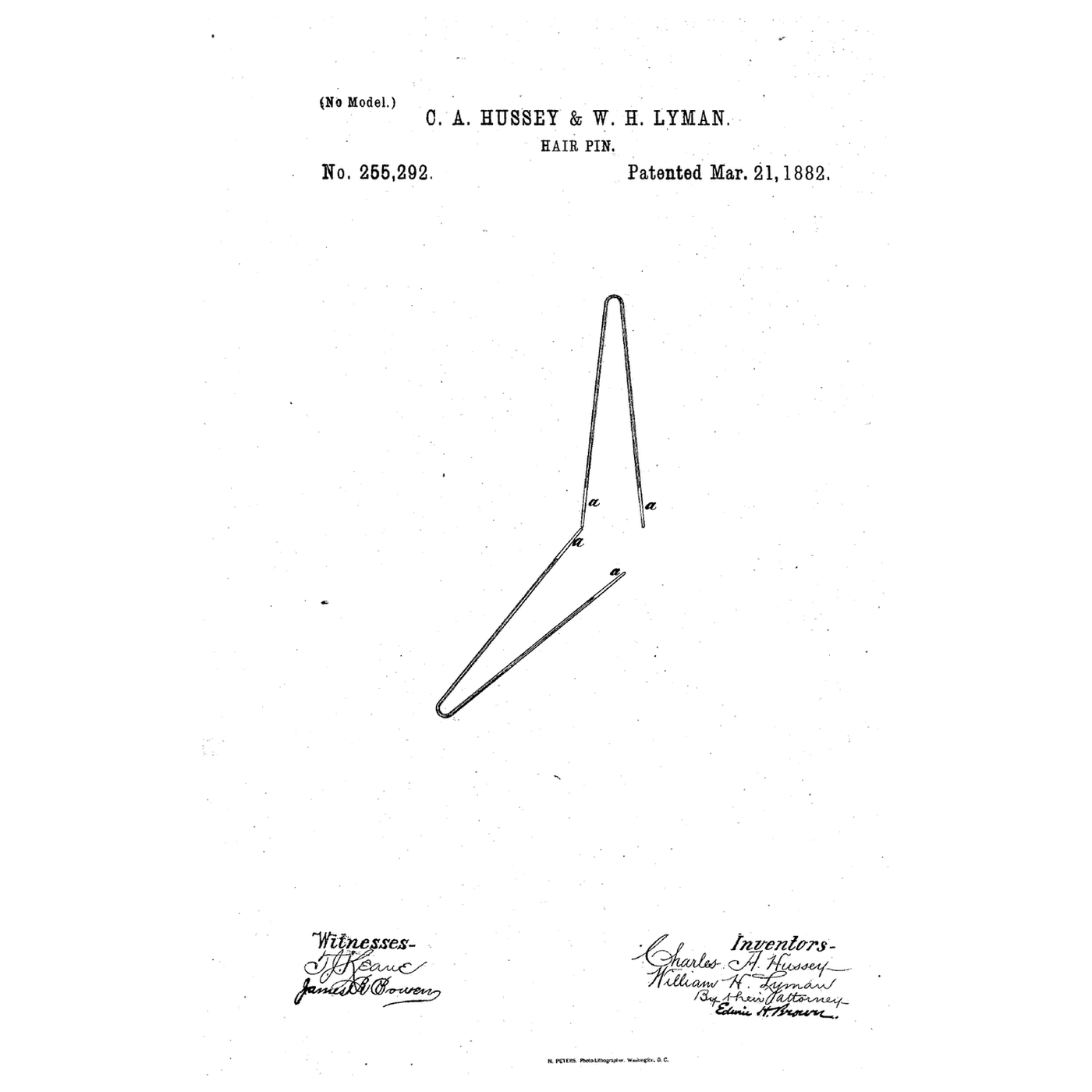


The Magnetised Hairpin: Proving the Steel With a Compass
Steel hairpins hold their spring and last; iron ones bend and rust. The two look the same, so cheap iron could be sold as steel.
Charles A. Hussey and William H. Lyman of New York received US 255,292, dated 21 March 1882 (filed 4 February 1882), for "a new article of manufacture--namely, a magnetized steel hair-pin", so that customers "can demand that hair-pins offered to them as steel shall be tested in their presence by a compass".
This rung computes how a magnetised pin swings a compass with distance, then magnetises a hairpin, a nail and a paper clip and measures what each keeps.
Olùbẹ̀rẹ̀
About 1 hour
Ìlànà
1
1
How close the compass must be
How close the compass must be
Ń ṣí ìwé Jupyter…
2
2
The instrument that does the testing
The instrument that does the testing
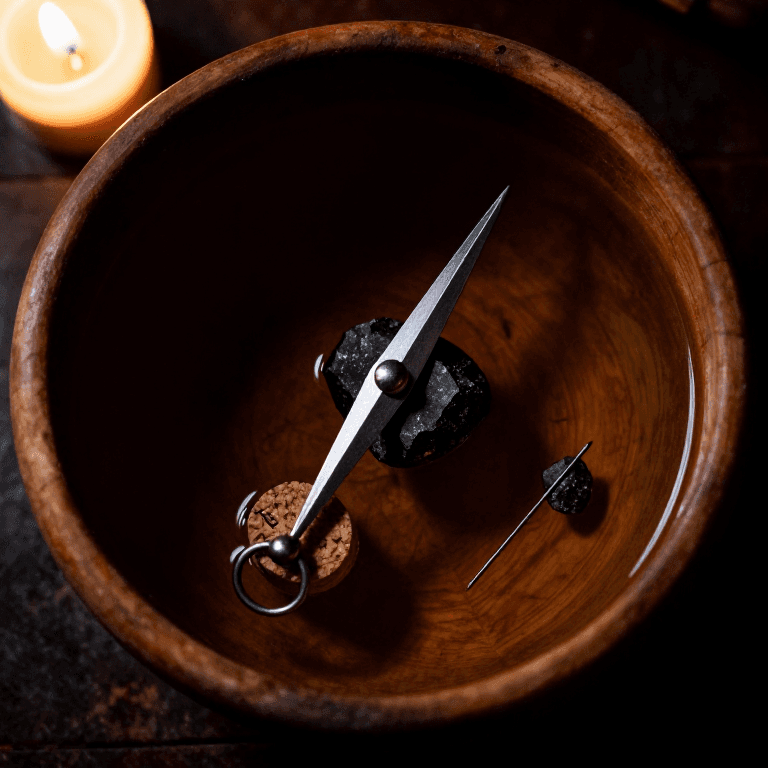
The embedded blueprint magnetises a needle and floats it; the same needle tests the pin.
3
3
Read US 255,292
Read US 255,292
"Hair-pins are commonly made of iron or soft metal; but the better grade of these articles are made of steel. Unscrupulous dealers oftentimes sell the iron and soft-metal hair-pins for those made of steel, thus defrauding their customers".
"The object of our improvement is to produce steel hair-pins which may be easily distinguished from those of inferior quality. To this end our improvement consists in a new article of manufacture--namely, a magnetized steel hair-pin."
The ends are left bare as magnetic poles, and "A hair-pin embodying our improvement can be tested as to being magnetic by its ability to attract another".
4
4
The test, as a program
The test, as a program
Ààyè Iṣẹ́ Blockly
Loading Blockly workspace...
5
5
Steel pin, iron nail, paper clip
Steel pin, iron nail, paper clip
Magnetise a hairpin, an iron nail and a straightened paper clip as in the program, the same number of strokes each. Test each one with the compass at 2, 4 and 8 cm, and count how many paper clips each will lift.
Tap each ten times on the table and test again, then leave them a day and test again. Write down which kept its magnetism. Compare the fall-off with distance against the notebook.
Àwọn ohun èlò fún ìgbésẹ̀ yìí:
 Pinni irun4 ẹyọ
 Ìṣọ Irin1 ẹyọ
 Ohun ìdì ìwé1 ẹyọ
Àwọn irinṣẹ́ tí a nílò:
 Kọmpásì afàmọ́ra
 Ìdìpọ̀ òòfà ọ̀pá
 Ìdíwọ̀n
6
6
A magnet test that gives the wrong answer
A magnet test that gives the wrong answer
Magnetised-pin test troubleshooting.
Flow
Loading...
7
7
History and honest limits
History and honest limits
**Charles A. Hussey** and **William H. Lyman** of New York filed US 255,292 on 4 February 1882; it is dated 21 March 1882.
**Honest limits.** The patent says "steel is the only metal which will retain magnetism". That is not so: cobalt, nickel and some of their alloys also do, and soft iron keeps a little. The test shows a pin is not soft iron, not that it is good steel. The dipole formula is only a rough guide closer than the pin's own length, which is where the 1 and 2 cm rows sit. The earth's field and the magnetisations in the notebook are examples.
Àwọn ohun-èlò
3- 4 ẹyọÀyè
- 1 ẹyọÀyè
- 1 ẹyọÀyè
Àwọn irinṣẹ́ tó nílò
3- Àyè
Blueprint tó jọra
Àwọn blueprint wọ̀nyí pín ìmọ̀ — ọ̀nà, ohun-èlò tàbí ìlànà



CC0 Àgbègbè Gbogbogbò
Blueprint yìí ti jáde lábẹ́ CC0. O lè ṣe àdàkọ, yí padà, pín, àti lò láìsí ìyọ̀ǹda.
Ṣàtìlẹ́yìn Olùṣẹ́dá nípa rírà àwọn ọjà nipasẹ̀ Blueprint wọn Ẹ̀san Olùṣẹ́dá tí àwọn Olùtajà gbé kalẹ̀, tàbí ṣẹ̀dá àtúnṣe tuntun ti Blueprint yìí kí o sì fi sínú Blueprint rẹ gẹ́gẹ́ bí ìsopọ̀ láti pín owó-wíwọlé.