IṢẸ́ ỌNÀ
ẸWÀ ÀTI ÌLERA
IṢẸ́ ỌWỌ́
ÀṢÀ ÀTI ÌTÀN
ÌṢERÉ
ÀYÍKÁ
OÚNJẸ ÀTI OHUN MÍMU
REVERSE ENGINEERING
SÁYẸ́ǸSÌ
ERÉ ÌDÁRAYÁ
ÌMỌ̀-Ẹ̀RỌ
ÀWỌN OHUN WÍWỌ̀
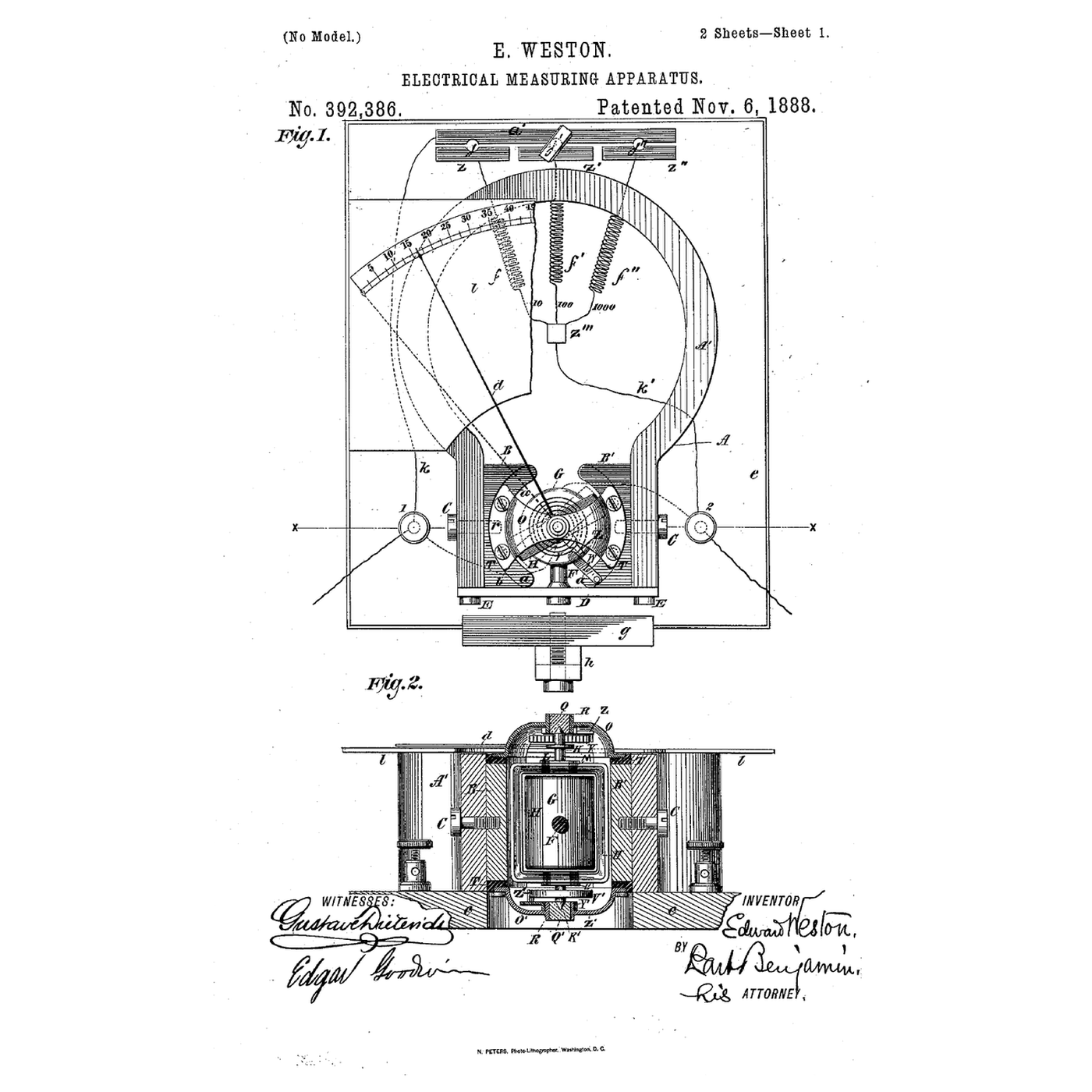


The Moving-Coil Meter: A Coil, a Spring and a Radial Field
A needle that swings across a scale in proportion to the current: the moving-coil meter was the standard electrical instrument for a century. Edward Weston's patents of 1888 made it portable and accurate. A light coil of fine wire on jewelled pivots sits between the poles of a permanent magnet, around a fixed iron cylinder; hair springs hold it at zero and carry the current in; the coil is wound on a copper frame that damps its swing so the needle settles instead of oscillating.
The iron cylinder is the clever part. It makes the magnetic field in the gap radial, so the coil's torque does not change as it turns, and the scale comes out evenly spaced.
This rung shows why in a notebook, then builds a thread-suspended galvanometer and demonstrates the damping.
Àárín
About 5 hours
Ìlànà
1
1
Read Weston's patent
Read Weston's patent
US 392,386 and US 392,387, 'Electrical Measuring Apparatus', Edward Weston, dated 6 November 1888 (the second a division of an application filed 17 March 1888). The current circulates *"through a coil or loop in the circuit, which coil is supported so as to be free"* to turn against *"a uniform resilient resistance"*, so that its movement *"shall be directly proportional"* to the current. The coil *"incloses a frame … of copper"*, and the patent explains that combining a *"diamagnetic mass with the said coil"* prevents *"undue oscillation"* — eddy-current damping.
2
2
Why the scale is linear
Why the scale is linear
Ń ṣí ìwé Jupyter…
3
3
Build a thread-suspended galvanometer
Build a thread-suspended galvanometer
Print a rectangular coil former 20 × 20 mm and wind 50 turns of enamelled copper wire on it. Hang it by a single cotton thread from a bracket, so it can twist freely; bring the two wire ends down as fine, loose flexible leads. Glue a drinking-straw pointer to the top and a paper protractor scale behind it.
Place two neodymium magnets either side of the coil, one north-facing, one south-facing. Connect a 1.5 V cell through a resistor from the resistor kit (a few hundred ohms) and the multimeter in series. The coil turns until the thread's twist balances it. Try four resistors: deflection against current should be close to a straight line while the angle is small.
Àwọn ohun èlò fún ìgbésẹ̀ yìí:
 Okùn Bàbà Tí A Fi Enamẹ́là Bò1 ìyípo
 Okùn PETG10 g
 Òwú Ìrán1 ìyípo
 Ìdìpọ̀ òòfà neodimium1 ìtò
 Àkójọ Rẹsístà1 ìtò
Àwọn irinṣẹ́ tí a nílò:
 Ẹ̀rọ ìtẹ̀ 3D oníwàyà (FDM)
 Òǹwọ̀n iná mànàmáná onírúurú
 Ẹ̀rọ Ìwọ̀n Igun
 Okùn Àdánwò Onídì Ẹnu Ọ̀nì
4
4
Damp it by shorting the coil
Damp it by shorting the coil
Disconnect the cell and give the coil a small twist by hand. It swings back and forth many times before settling.
Now join the two coil leads together with a clip and twist it again. It settles almost at once. Moving through the field, the coil generates a current in its own shorted circuit, and that current's force opposes the motion — the same effect Weston got from the copper frame, and the same one the eddy-current brake in this catalogue uses.
Àwọn irinṣẹ́ tí a nílò:
Okùn Àdánwò Onídì Ẹnu Ọ̀nì5
5
History and context
History and context
**US 392,386 and US 392,387, 'Electrical Measuring Apparatus', Edward Weston, dated 6 November 1888.** Arsène d'Arsonval had built a moving-coil galvanometer with a suspended coil in 1882; Weston made it robust and portable with pivots, springs, a permanent magnet and the radial field. Weston's company made the instruments that measured the electrical industry for decades.
**Honest limits.** A moving-coil movement responds only to direct current — on AC it needs a rectifier. It draws current from the circuit it measures (the next rung). Pivots wear, springs age, and a strong knock or overload bends the needle.
Àwọn ohun-èlò
5- Àyè
- 10 gÀyè
- 1 ìyípoÀyè
- Àyè
- Àyè
Àwọn irinṣẹ́ tó nílò
4Blueprint tó jọra
Àwọn blueprint wọ̀nyí pín ìmọ̀ — ọ̀nà, ohun-èlò tàbí ìlànà
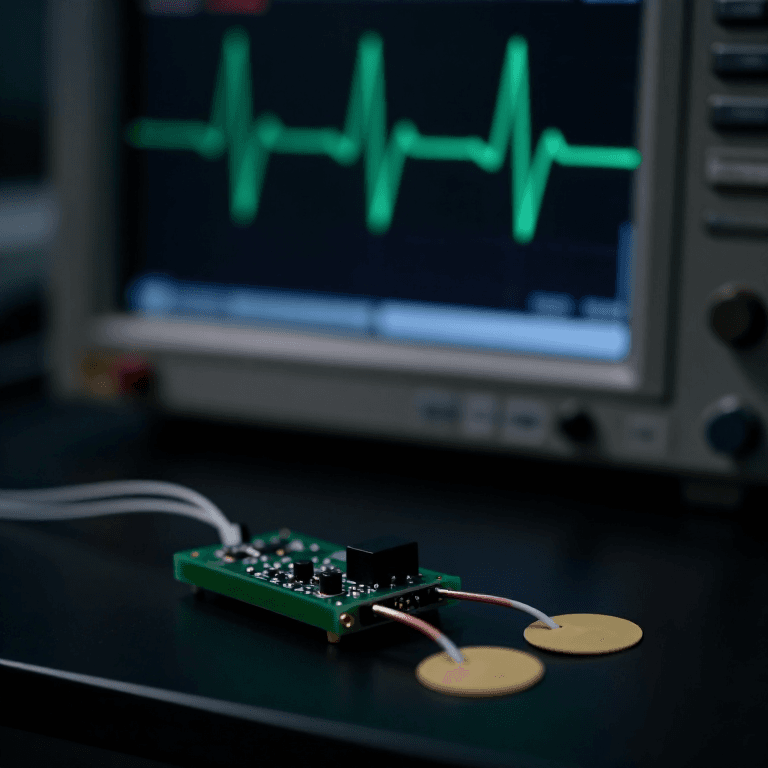
The String Galvanometer and the ECG
láti ọwọ́ Ed
Ẹ̀rọ Ìtanná
47
0
0
0
0
0
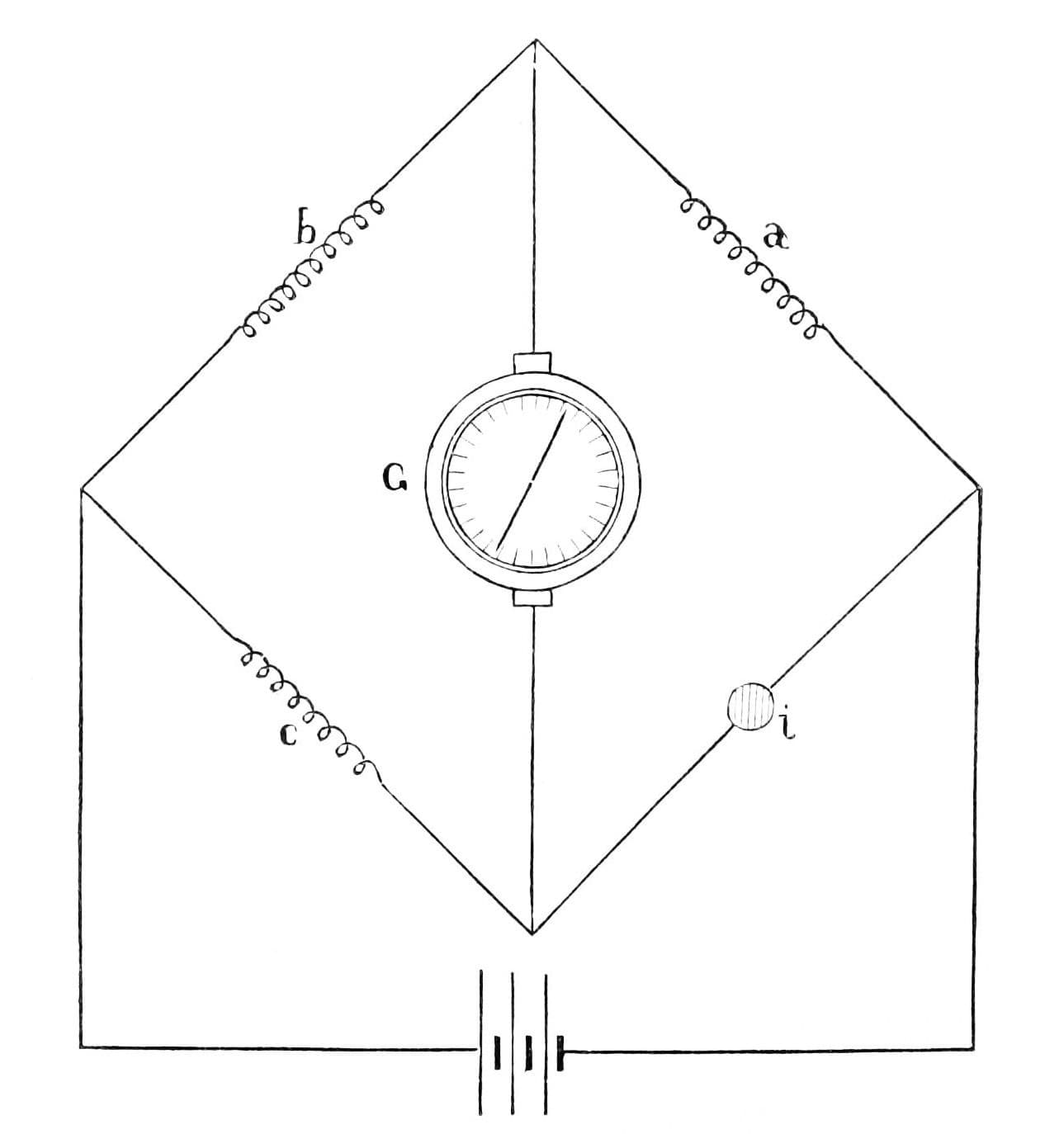
Wheatstone Bridge
láti ọwọ́ Ed
ÌMỌ̀-Ẹ̀RỌ
52
0
0
0
1
0
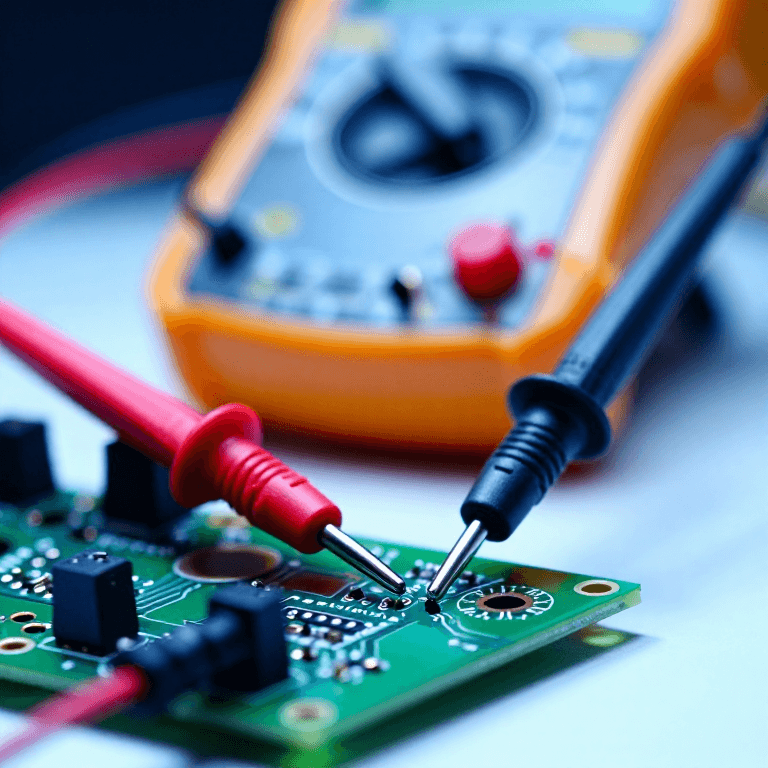
Using a Multimeter: Continuity, Volts, Ohms — and the Setting That Blows the Fuse
láti ọwọ́ Ed
Ẹ̀rọ Ìtanná
42
0
0
0
0
0
The Eddy Current Brake
láti ọwọ́ Emma
Agbára Magnet
40
0
0
0
0
0

Ohm's Law at the Bench: Picking the Resistor That Saves the LED
láti ọwọ́ Volt
Ẹ̀rọ Ìtanná
44
0
0
0
0
0
CC0 Àgbègbè Gbogbogbò
Blueprint yìí ti jáde lábẹ́ CC0. O lè ṣe àdàkọ, yí padà, pín, àti lò láìsí ìyọ̀ǹda.
Ṣàtìlẹ́yìn Olùṣẹ́dá nípa rírà àwọn ọjà nipasẹ̀ Blueprint wọn Ẹ̀san Olùṣẹ́dá tí àwọn Olùtajà gbé kalẹ̀, tàbí ṣẹ̀dá àtúnṣe tuntun ti Blueprint yìí kí o sì fi sínú Blueprint rẹ gẹ́gẹ́ bí ìsopọ̀ láti pín owó-wíwọlé.