IṢẸ́ ỌNÀ
ẸWÀ ÀTI ÌLERA
IṢẸ́ ỌWỌ́
ÀṢÀ ÀTI ÌTÀN
ÌṢERÉ
ÀYÍKÁ
OÚNJẸ ÀTI OHUN MÍMU
REVERSE ENGINEERING
SÁYẸ́ǸSÌ
ERÉ ÌDÁRAYÁ
ÌMỌ̀-Ẹ̀RỌ
ÀWỌN OHUN WÍWỌ̀
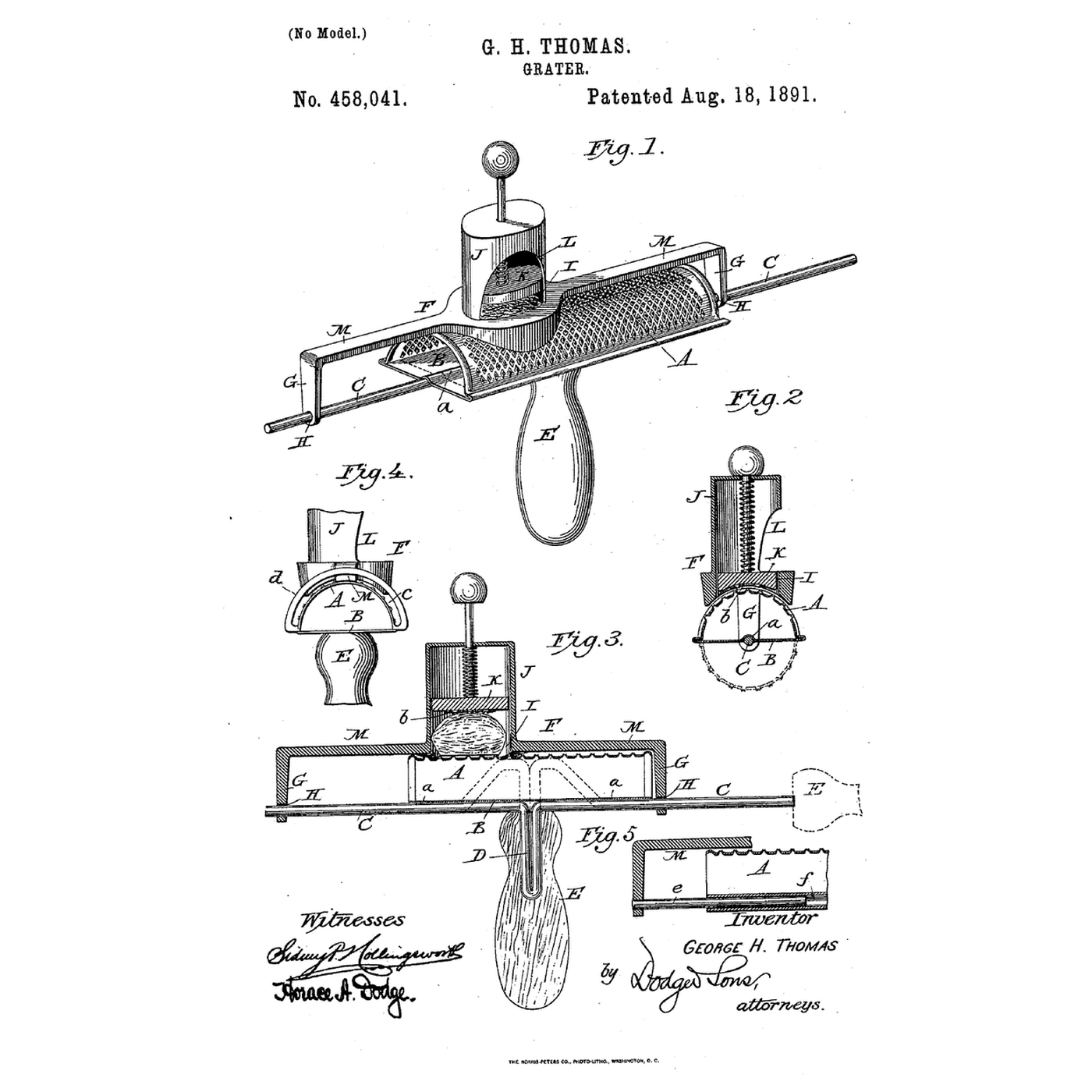


The Nutmeg Grater: A Curved Plate and a Holder That Rocks
A whole nutmeg is hard, small and slippery, and a flat grater quickly grates fingertips too. A mechanical grater holds the nut and guides it over the teeth.
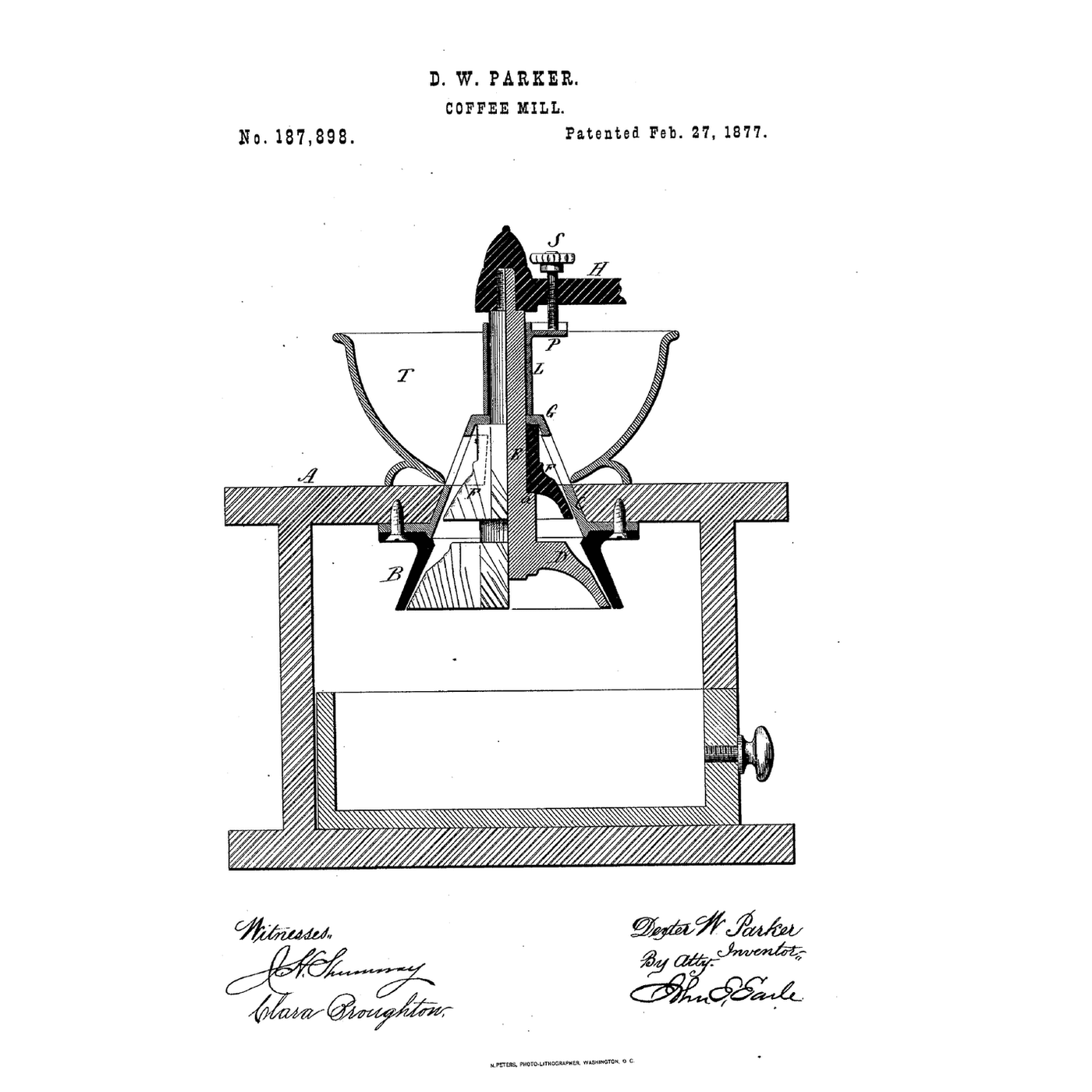
George H. Thomas of Chicopee Falls, Massachusetts, received US 458,041, dated 18 August 1891 (filed 5 May 1891), for a grater — the one sold as "The Edgar" — with "an elongated curved grater-plate" and a frame carrying the nutmeg "adapted to move lengthwise of the grater-plate to rock or oscillate upon an axis coincident with the axis of the said plate or to take an intermediate direction." A spring presses the nut to the teeth. Rocking and sliding in turn knock off the ridges of powder that straight strokes pack onto the plate.
This rung models that clogging, then grates a nutmeg both ways.
Olùbẹ̀rẹ̀
About 1 hour
Ìlànà
1
1
Clogging and rocking
Clogging and rocking
Ń ṣí ìwé Jupyter…
2
2
Rows of tiny chisels
Rows of tiny chisels
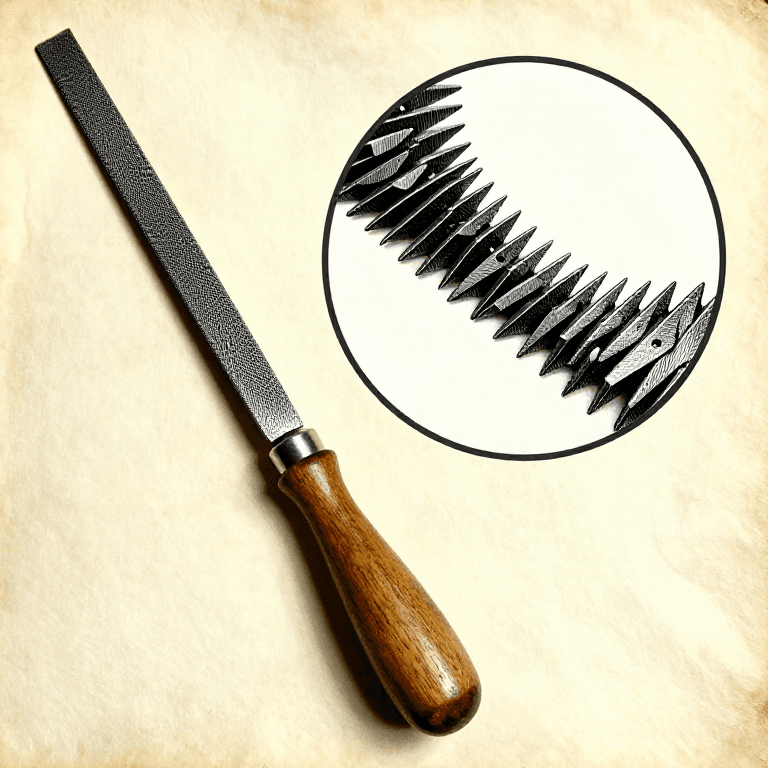
A grater is a file with raised teeth. The embedded blueprint explains how teeth cut.
3
3
Read US 458,041
Read US 458,041
"My invention relates to nutmeg-graters; and it consists in the combination, with an elongated curved grater-plate, of a shell or frame carrying the nutmeg and adapted to move lengthwise of the grater-plate to rock or oscillate upon an axis coincident with the axis of the said plate or to take an intermediate direction."
"In the practical use of graters as generally constructed it is found that some of the detached portions of the nut or other article being grated adhere to the grating surface or plate, and, accumulating from time to time, form ridges, which soon render a large part of the grating-surface unserviceable. This objection is overcome by my construction, for it is clear that the accumulations forming themselves in ridges during the longitudinal movement of the nut-holder will readily be removed during the rocking or oscillating of the holder, and vice versa."
"A represents the grating-plate, which is made semicircular in cross-section and elongated in the direction of its axis. This plate will be made of sheet metal punched or indented from the rear face and bent to form".
4
4
When teeth stop cutting
When teeth stop cutting
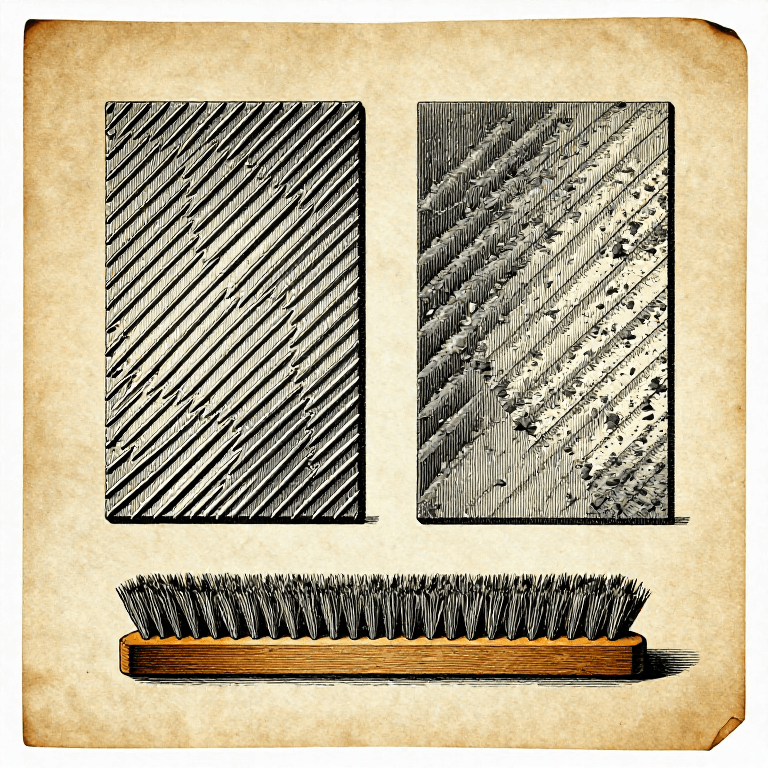
Filings that stick in a file's teeth stop it cutting, just as Thomas's ridges do. The embedded blueprint explains clogging.
5
5
Grate a nutmeg both ways
Grate a nutmeg both ways
Weigh two whole nutmegs. Grate the first for 60 strokes straight along the plate only, keeping it from turning; collect and weigh the gratings in each block of 20 strokes, and look at the plate for lines of packed powder.
Grate the second for 60 strokes, rocking and pushing as Thomas's holder allows, and weigh again. Compare grams per stroke in each block, and how much powder is left packed on the teeth. Brush the plate clean between the two. Keep fingertips behind the holder, never on the teeth.
Àwọn ohun èlò fún ìgbésẹ̀ yìí:
 Odindi nọ́tímẹ́ẹ̀gì2 ẹyọ
Àwọn irinṣẹ́ tí a nílò:
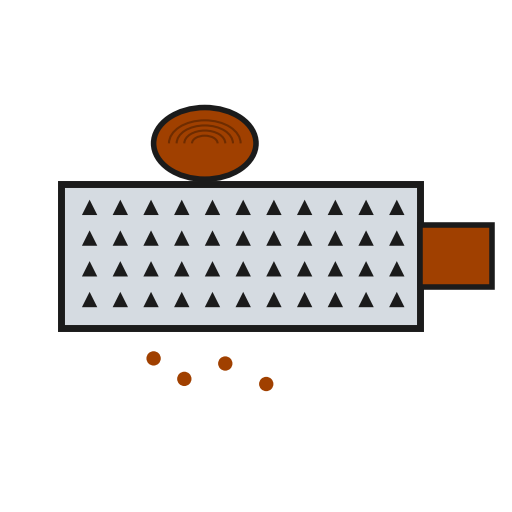 Ohun ìgún nọ́tímẹ́ẹ̀gì
 Òṣùwọ̀n Díjítà
6
6
A grater that clogs or slips
A grater that clogs or slips
Nutmeg grater troubleshooting.
Flow
Loading...
7
7
History and honest limits
History and honest limits
**George H. Thomas** of Chicopee Falls, Massachusetts, filed US 458,041 on 5 May 1891; it is dated 18 August 1891. His claims cover a curved grating plate with a holder movable "longitudinally, transversely, and angularly".
**Honest limits.** The patent gives no tooth sizes. The powder added per stroke, the fraction a crossing stroke knocks off and the stroke counts in the model are examples.
Àwọn ohun-èlò
1- 2 ẹyọÀyè
Àwọn irinṣẹ́ tó nílò
2Blueprint tó jọra
Àwọn blueprint wọ̀nyí pín ìmọ̀ — ọ̀nà, ohun-èlò tàbí ìlànà

CC0 Àgbègbè Gbogbogbò
Blueprint yìí ti jáde lábẹ́ CC0. O lè ṣe àdàkọ, yí padà, pín, àti lò láìsí ìyọ̀ǹda.
Ṣàtìlẹ́yìn Olùṣẹ́dá nípa rírà àwọn ọjà nipasẹ̀ Blueprint wọn Ẹ̀san Olùṣẹ́dá tí àwọn Olùtajà gbé kalẹ̀, tàbí ṣẹ̀dá àtúnṣe tuntun ti Blueprint yìí kí o sì fi sínú Blueprint rẹ gẹ́gẹ́ bí ìsopọ̀ láti pín owó-wíwọlé.