IṢẸ́ ỌNÀ
ẸWÀ ÀTI ÌLERA
IṢẸ́ ỌWỌ́
ÀṢÀ ÀTI ÌTÀN
ÌṢERÉ
ÀYÍKÁ
OÚNJẸ ÀTI OHUN MÍMU
REVERSE ENGINEERING
SÁYẸ́ǸSÌ
ERÉ ÌDÁRAYÁ
ÌMỌ̀-Ẹ̀RỌ
ÀWỌN OHUN WÍWỌ̀


The Oil-Moat Insect Guard: Up the Leg, Out the Flange, Down Into the Oil
Ants find food on a table by walking up its legs. A barrier on each leg can stop them before they reach the top.
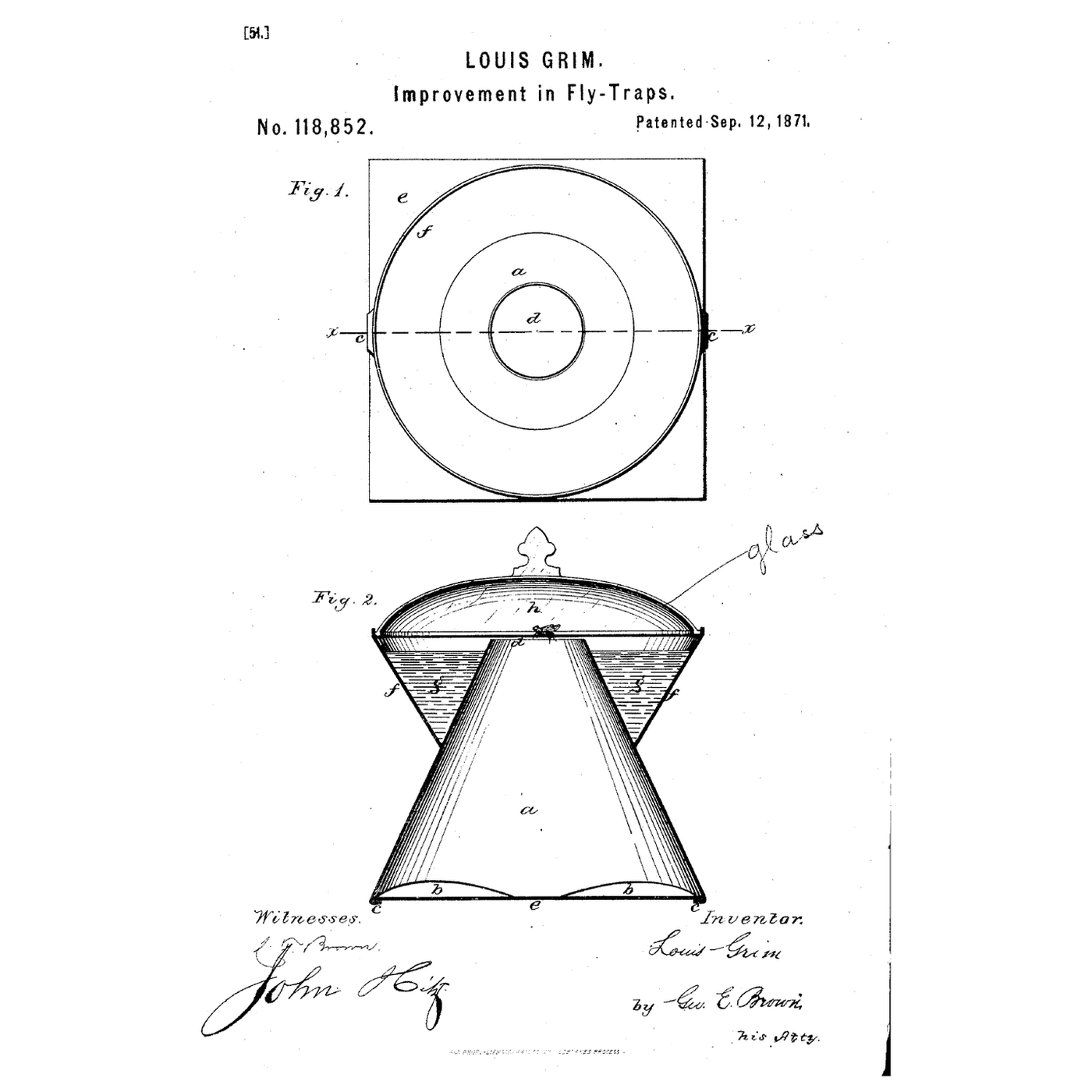
Sterling Walter Conrad of Hanford, California, received US 460,429, dated 29 September 1891, for an insect-guard fitted round the leg of a table or the post of a house, "to prevent ants, mice, or rats and other vermin entering a house or house-safes or getting on a table or after suspended meat". A flange inside the casing turns climbing insects outward, and they walk down into a ring of oil.
This rung works out how much oil the moat holds, then builds a guard on a wooden post and tests it against an unguarded post on an ant trail.
Olùbẹ̀rẹ̀
About 2 hours, then a day outdoors
Ìlànà
1
1
Oil in the moat
Oil in the moat
Ń ṣí ìwé Jupyter…
2
2
A liquid that bars the way
A liquid that bars the way
The embedded blueprint uses a standing pool of water to stop gases coming up a drain. Conrad uses a standing ring of oil to stop insects coming up a leg.
3
3
Read US 460,429
Read US 460,429
"The object of the present invention is to provide a simple and inexpensive insect-trap adapted to be readily applied to the posts of houses, the legs of a table, or the like, to prevent ants, mice, or rats and other vermin entering a house or house-safes or getting on a table or after suspended meat."
"Ants or similar insects in attempting to ascend the leg or the post of a house will ascend the outer face of the tube 3 until they reach the horizontal flange 4, when they will pass to the sides of the casing 1 and descend into the annular space and drown in the oil or return. In either case the insect will be prevented passing up the leg farther than the horizontal flange."
4
4
Build a guard on a post and test it on an ant trail
Build a guard on a post and test it on an ant trail
Glue two dowels upright into holes drilled in two small boards: these are two table legs. Put a spoonful of sugar wetted with a little water on top of each.
Take a tin can with its top removed. Drill a hole in the centre of its bottom that fits the dowel closely. Turn the can upside down, so its bottom is the guard's top, and slide it down one dowel to halfway. Hot-glue it all round the hole so nothing can pass.
Cut a disk from the lid of a second can, about 1 cm smaller than the can, with a hole in its centre for the dowel. Slide it up inside the casing to halfway and glue it round the dowel: this is the flange. Cut a strip of tin 3 cm wide, bend it lengthways into an L, and hot-glue it inside the open rim to make a gutter. Drill a small hole in the top, pour cooking oil through it into the gutter, and seal the hole with tape.
Set both posts on an ant trail outdoors. Count the ants on each sugar after one hour, and again the next day.
Àwọn ohun èlò fún ìgbésẹ̀ yìí:
 Ìgò irin2 ẹyọ
 Èèkàn igi2 ẹyọ
 Pátákó Igi Pẹrẹsẹ2 ẹyọ
 Òróró ìdáná60 ml
 Ṣúgà oníwẹ́wẹ́20 g
 Tẹ́ẹ̀pù aláìdàrú1 ẹyọ
Àwọn irinṣẹ́ tí a nílò:
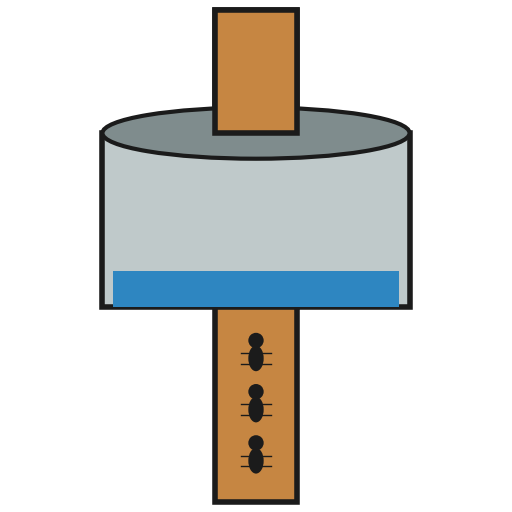 Kòtò ìdènà èèrà
 Ìlàǹkàn irin
 Ẹ̀rọ Ìlùkòkò Aláìlókùn
 Àkójọ Orí Ìlùkòkò
 Ìbọn ìlẹ̀mọ́ gbígbóná
 Ìdíwọ̀n
 Ààmì Tí Kò Ní Parẹ́
 Aago Ìdúró
5
5
Ants that still reach the sugar
Ants that still reach the sugar
Insect guard troubleshooting.
Flow
Loading...
6
6
History and honest limits
History and honest limits
**Sterling Walter Conrad** of Hanford, California, filed US 460,429 on 8 January 1891; it is dated 29 September 1891. The patent names ants, mice and rats. This rung tests it on ants only.
**Honest limits.** The guard only works while nothing else touches the leg or the casing. The oil needs cleaning and topping up. The notebook's sizes are examples. Your ant counts, on the guarded and the unguarded post, are the measurement.
Àwọn ohun-èlò
6- 2 ẹyọÀyè
- 2 ẹyọÀyè
- 2 ẹyọÀyè
- 60 mlÀyè
- 20 gÀyè
- 1 ẹyọÀyè
Àwọn irinṣẹ́ tó nílò
8- Àyè
- 1 vendor sell this, none ship to you yetÀyè
- Àyè
- Àyè
Blueprint tó jọra
Àwọn blueprint wọ̀nyí pín ìmọ̀ — ọ̀nà, ohun-èlò tàbí ìlànà


CC0 Àgbègbè Gbogbogbò
Blueprint yìí ti jáde lábẹ́ CC0. O lè ṣe àdàkọ, yí padà, pín, àti lò láìsí ìyọ̀ǹda.
Ṣàtìlẹ́yìn Olùṣẹ́dá nípa rírà àwọn ọjà nipasẹ̀ Blueprint wọn Ẹ̀san Olùṣẹ́dá tí àwọn Olùtajà gbé kalẹ̀, tàbí ṣẹ̀dá àtúnṣe tuntun ti Blueprint yìí kí o sì fi sínú Blueprint rẹ gẹ́gẹ́ bí ìsopọ̀ láti pín owó-wíwọlé.