IṢẸ́ ỌNÀ
ẸWÀ ÀTI ÌLERA
IṢẸ́ ỌWỌ́
ÀṢÀ ÀTI ÌTÀN
ÌṢERÉ
ÀYÍKÁ
OÚNJẸ ÀTI OHUN MÍMU
REVERSE ENGINEERING
SÁYẸ́ǸSÌ
ERÉ ÌDÁRAYÁ
ÌMỌ̀-Ẹ̀RỌ
ÀWỌN OHUN WÍWỌ̀
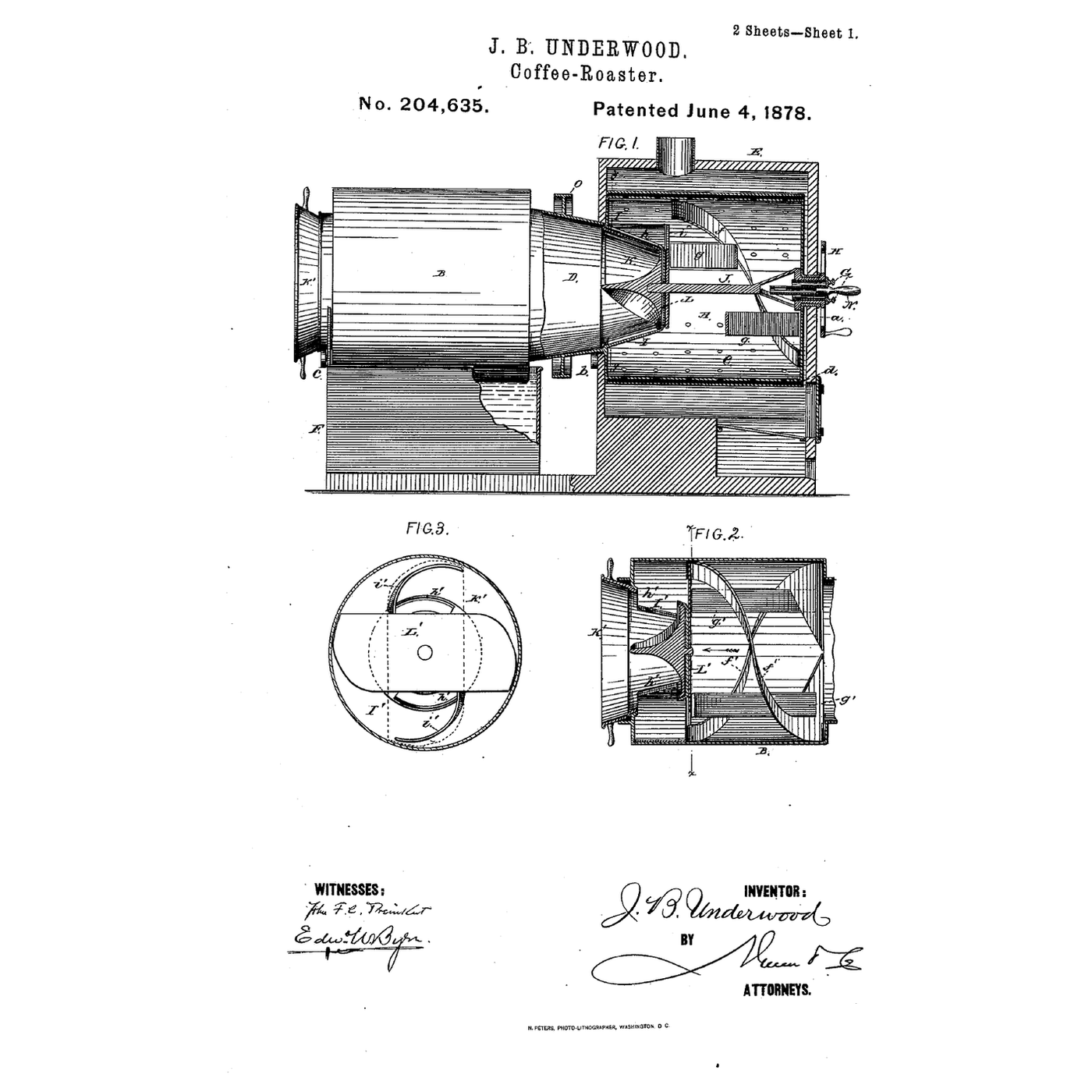


The Roaster and Cooler: Carry the Charge Straight Into Water-Cooled Iron
Roasted coffee goes on roasting in its own heat until it cools. A roaster that cannot cool the beans quickly over-roasts every batch.
Joseph B. Underwood of Fayetteville, North Carolina, received US 204,635, dated 4 June 1878 (filed 23 April 1878), for "a combined coffee roaster and cooler in which the charge of coffee in the roasting-cylinder shall be transferred to the cooling-cylinder without exposure to the air, and in an automatic manner, by the simple rotation of the cylinders", the cooler standing partly in a water tank.
This rung models how fast beans cool in a pile, in air and in a cooled drum, then roasts a small batch and cools half fast and half slow.
Àárín
About 1 hour
Ìlànà
1
1
How fast the beans cool
How fast the beans cool
Ń ṣí ìwé Jupyter…
2
2
Carryover cooking
Carryover cooking
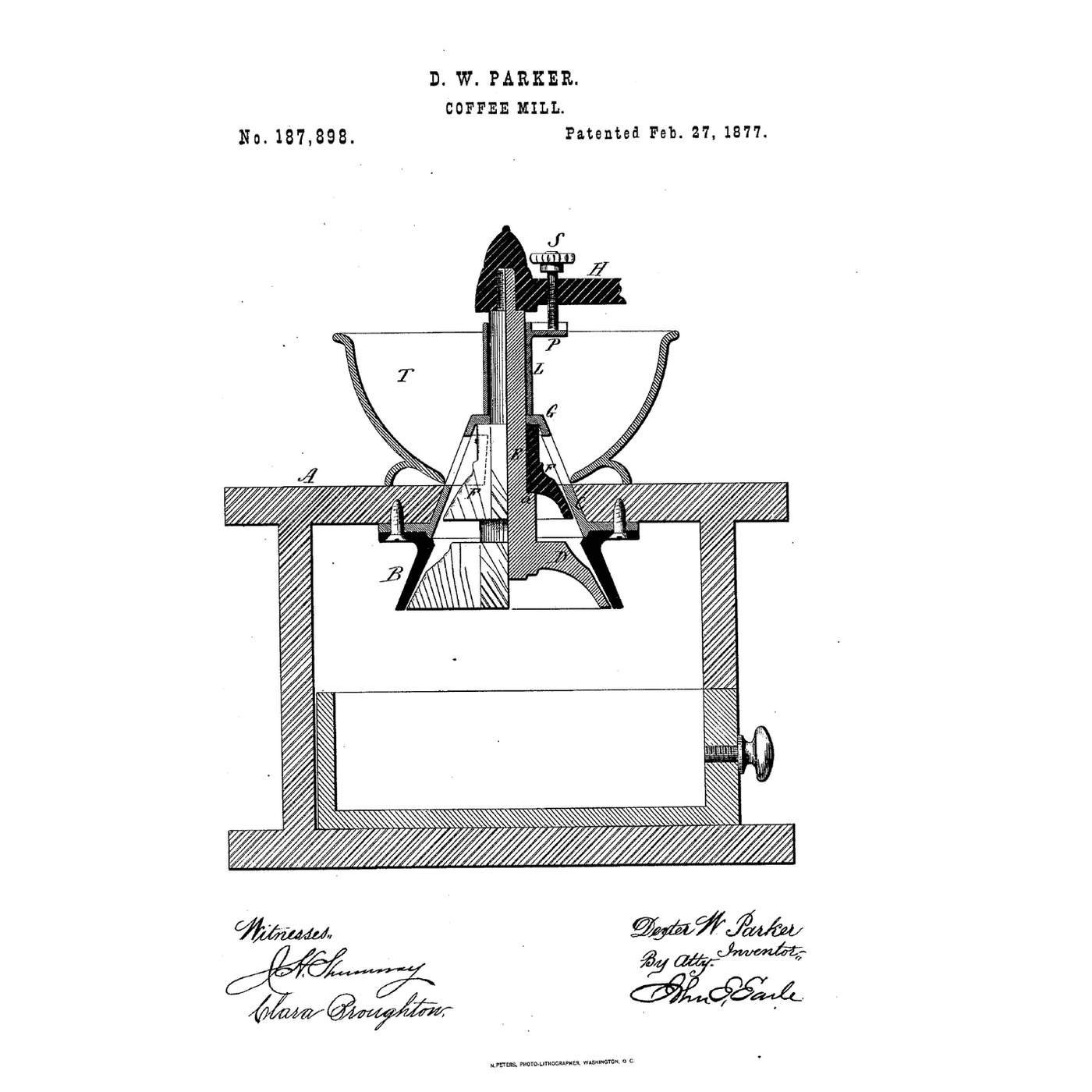
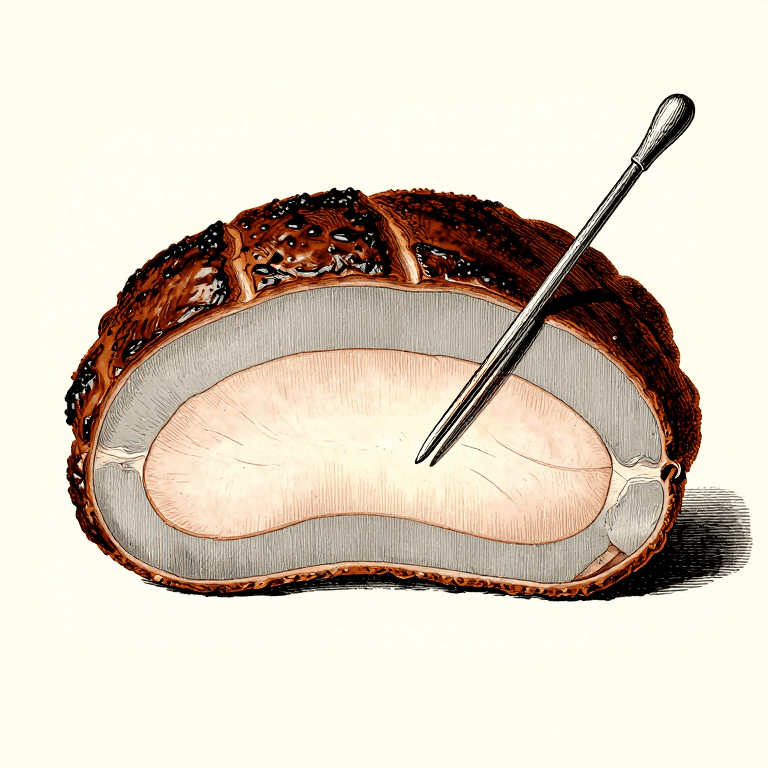
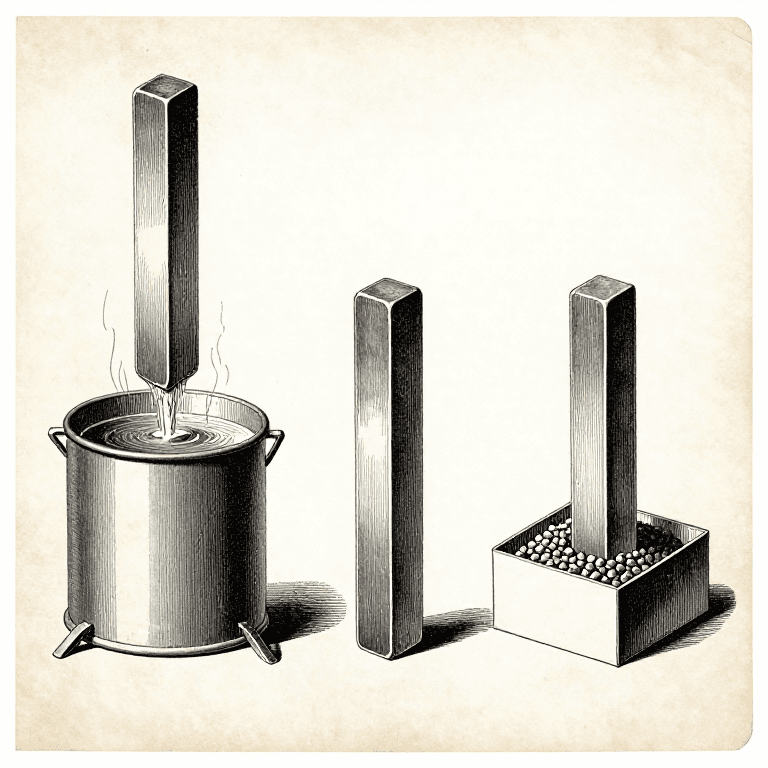
The embedded blueprint shows food going on cooking after it leaves the heat; roasted beans do the same, which is why Underwood cools them at once.
3
3
Read US 204,635
Read US 204,635
"The object of my invention is to provide a combined coffee roaster and cooler in which the charge of coffee in the roasting-cylinder shall be transferred to the cooling-cylinder without exposure to the air, and in an automatic manner, by the simple rotation of the cylinders, without raising the same into a vertical position."
"The roasting-cylinder A is arranged within the combustion-chamber of a furnace, E, so that the hot currents shall circulate around the same, while the cooling-cylinder is partly within a water-tank, F, in which water is placed, so as to partly surround the cooling cylinder and reduce the temperature of the same."
A removable "trier" or "sampler" "is adapted to catch a quantity of the coffee-beans and be pulled out to permit the progress of the roasting to be watched, as heretofore used."
4
4
Roasting, as a program
Roasting, as a program
Ààyè Iṣẹ́ Blockly
Loading Blockly workspace...
5
5
Cool half fast, half slow
Cool half fast, half slow
Roast a single layer of green coffee beans in a heavy pan over a medium flame, stirring all the time, until they are an even brown. Work by an open window.
Tip half onto a cold baking sheet and fan them; leave the other half heaped in the hot pan off the heat. Read both with the infrared thermometer every 15 seconds for three minutes. Compare the colours once both are cool, and the cooling curves with the notebook.
Àwọn ohun èlò fún ìgbésẹ̀ yìí:
 Èso kọfí100 g
Àwọn irinṣẹ́ tí a nílò:
 Ohun ìyan kọfí
 Àwo ìdín
 Àwo ìdáná
 Àbẹ̀bẹ̀ àpótí (ìwọ̀n tí ó ń yípadà)
 Ẹ̀rọ Ìwọ̀n Ooru Infurarẹ́dì
 Aago Ìdúró
6
6
Beans that scorch, stay pale or roast unevenly
Beans that scorch, stay pale or roast unevenly
Roasting troubleshooting.
Flow
Loading...
7
7
History and honest limits
History and honest limits
**Joseph B. Underwood** of Fayetteville, North Carolina, filed US 204,635 on 23 April 1878; it is dated 4 June 1878, assigned to Annie V. Jessup.
**Honest limits.** A bean is treated as a small lump at one temperature with a single heat-transfer coefficient; real beans have a hot core and a cooler skin, and roasting chemistry does not stop at any single temperature. All values are examples. Your thermometer readings are the measurement.
Àwọn irinṣẹ́ tó nílò
6- Àwo ìdínìdá 10%Àyè
- Àyè
- Àyè
Blueprint tó jọra
Àwọn blueprint wọ̀nyí pín ìmọ̀ — ọ̀nà, ohun-èlò tàbí ìlànà

CC0 Àgbègbè Gbogbogbò
Blueprint yìí ti jáde lábẹ́ CC0. O lè ṣe àdàkọ, yí padà, pín, àti lò láìsí ìyọ̀ǹda.
Ṣàtìlẹ́yìn Olùṣẹ́dá nípa rírà àwọn ọjà nipasẹ̀ Blueprint wọn Ẹ̀san Olùṣẹ́dá tí àwọn Olùtajà gbé kalẹ̀, tàbí ṣẹ̀dá àtúnṣe tuntun ti Blueprint yìí kí o sì fi sínú Blueprint rẹ gẹ́gẹ́ bí ìsopọ̀ láti pín owó-wíwọlé.