IṢẸ́ ỌNÀ
ẸWÀ ÀTI ÌLERA
IṢẸ́ ỌWỌ́
ÀṢÀ ÀTI ÌTÀN
ÌṢERÉ
ÀYÍKÁ
OÚNJẸ ÀTI OHUN MÍMU
REVERSE ENGINEERING
SÁYẸ́ǸSÌ
ERÉ ÌDÁRAYÁ
ÌMỌ̀-Ẹ̀RỌ
ÀWỌN OHUN WÍWỌ̀
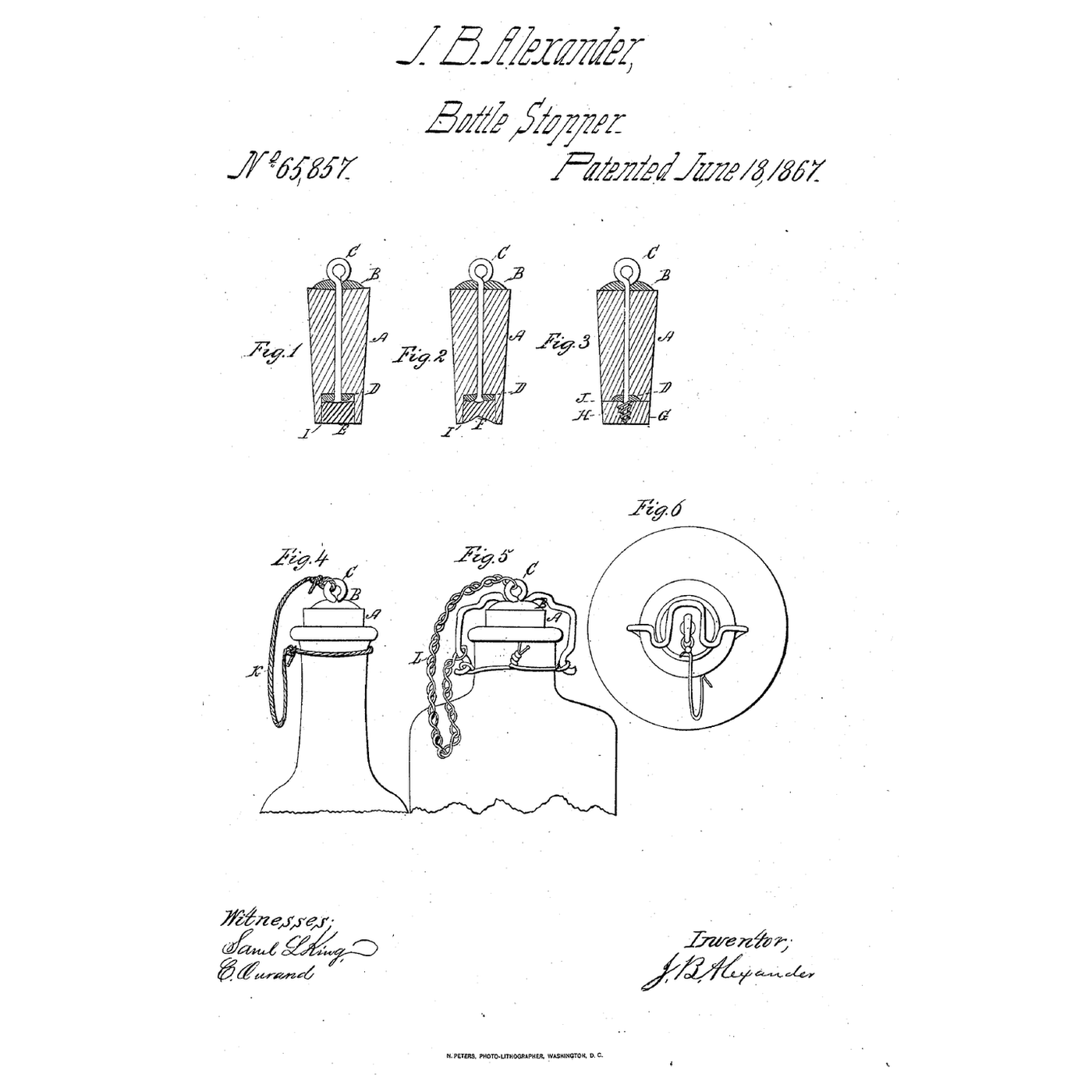

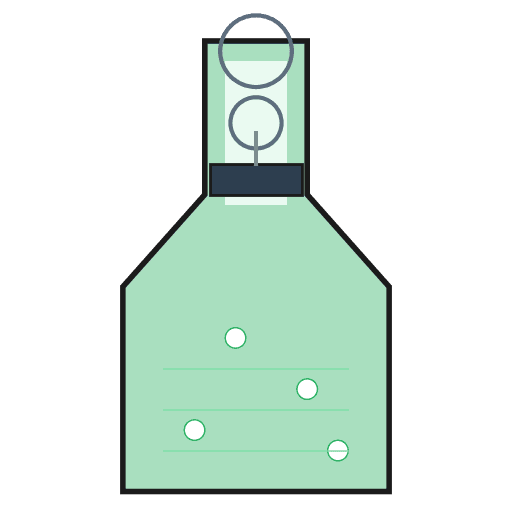
The Rod-and-Eye Stopper: Pull the Eye and the Plate Beneath Pushes the Cork Out Whole
A cork drawn with a corkscrew is pierced and weakened, crumbles after a few uses, and is easily lost.
Joseph Bell Alexander of Washington, District of Columbia, received US 65,857, dated 18 June 1867, for a stopper "which can be easily drawn in a moment without a cork-screw, and which, when in place, will present no corrodible substance to the action of gases or liquors with which it is inserted and may come in contact; and also to so construct the stopper that it will bear continued use without becoming broken or lost." A rod with an eye at its top runs down a bore through the cork, from a washer on top to a plate near the bottom; the bore below the plate is filled with cork, gum or a screwed plug, and the stopper can be tied to the bottle through the eye.
This rung works out the stress the rod saves the cork, then makes the stopper from a cork, wire and washers and draws it many times.
Olùbẹ̀rẹ̀
About 2 hours
Ìlànà
1
1
The cork in compression
The cork in compression
Ń ṣí ìwé Jupyter…
2
2
A stopper drawn by hand before it
A stopper drawn by hand before it
The embedded blueprint makes a rubber stopper drawn by hand. Alexander keeps the cork and draws it by a rod through its middle.
3
3
Read US 65,857
Read US 65,857
"I make the body A (see drawings) of my stopper of cork, India rubber, gutta percha, wood, or any other suitable material, in any of the known forms, externally. Longitudinally through the centre of this body A I make a bore which will admit a metallic rod or wire, C, with an eye or circle bent upon its upper end, and which is first passed through a hole countersunk in the metallic washer or cap B."
"The advantages of this improvement are as follows: The stopper can be instantly drawn by inserting through the eyelet of the rod C a small stick, nail, or piece of twine, doing away with the necessity of a cork-screw. Being supported at each end by the plates B and D, the stopper cannot be broken by ordinary use."
4
4
Make the stopper and draw it again and again
Make the stopper and draw it again and again
**Bore.** Drill a 5 mm hole down the centre of a tapered cork, from its top to 8 mm short of its bottom, then widen the last 8 mm to take a washer.
**Rod.** Bend an eye in the end of a length of stainless steel wire. Pass it through a washer as the cap B, down the bore, and through a second washer as the plate D at the bottom of the bore. Bend the wire's end flat under the plate and trim it.
**Seal.** Fill the bore below the plate with melted paraffin wax, level with the cork's bottom, so the drink touches only cork and wax.
**Test.** Fill a bottle with water and push the stopper in. Tie it to the neck with twine through the eye. Put a nail through the eye and draw the stopper. Repeat twenty times, then compare its surface with an ordinary cork drawn twenty times with a corkscrew.
Àwọn ohun èlò fún ìgbésẹ̀ yìí:
 Àwọn kọ́ọ̀kì2 ẹyọ
 Okùn irin aláìjẹrùn0.2 mítà
 Wáṣà Pẹrẹsẹ2 ẹyọ
 Ìdí parafíìnì1 ẹyọ
 Okùn Òwú0.5 mítà
 Ìṣó1 ẹyọ
 Ìgò dígí (tí ó mọ́)1 ẹyọ
 Omi1 lítà
Àwọn irinṣẹ́ tí a nílò:
 Ẹ̀rọ Ìlùkòkò Aláìlókùn
 Àkójọ Orí Ìlùkòkò
 Ẹ̀mú Olórí Yíká
 Ẹ̀mú ìgé okùn
 Ọ̀bẹ ilé ìdáná
 Òǹwọ̀n ooru ilé ìdáná
 Ìdìpọ̀ ìdídí ìgò wáìnì
5
5
A stopper that crumbles, sticks or pulls apart
A stopper that crumbles, sticks or pulls apart
Rod-and-eye stopper troubleshooting.
Flow
Loading...
6
6
History and honest limits
History and honest limits
**Joseph Bell Alexander** of Washington, District of Columbia, received US 65,857, dated 18 June 1867. He filled the bore below the plate with cork, india-rubber, gutta-percha or wood, or with shellac, wax or a gummy substance, or closed it with a screw and a plug of cork; the stopper could be tied on with twine or a chain. He wrote that a stopper pierced by a wire with washers riveted on its ends was already old for some perfume and ink bottles, and claimed his bore and plugs combined with the rod, plates and body.
**Honest limits.** A drilled cork, stainless wire, steel washers and paraffin wax stand in for his parts. The notebook gives the average stress only; its pulls and sizes are examples. Your twenty draws are the result.
Àwọn ohun-èlò
8- 2 ẹyọÀyè
- 0.2 mítàÀyè
- 2 ẹyọÀyè
- 1 ẹyọÀyè
- 0.5 mítàÀyè
- 1 ẹyọÀyè
- 1 ẹyọÀyè
- 1 lítàÀyè
Àwọn irinṣẹ́ tó nílò
7- 1 vendor sell this, none ship to you yetÀyè
Ìtọ́nisọ́nà yìí ń ṣe
Blueprint tó jọra
Àwọn blueprint wọ̀nyí pín ìmọ̀ — ọ̀nà, ohun-èlò tàbí ìlànà
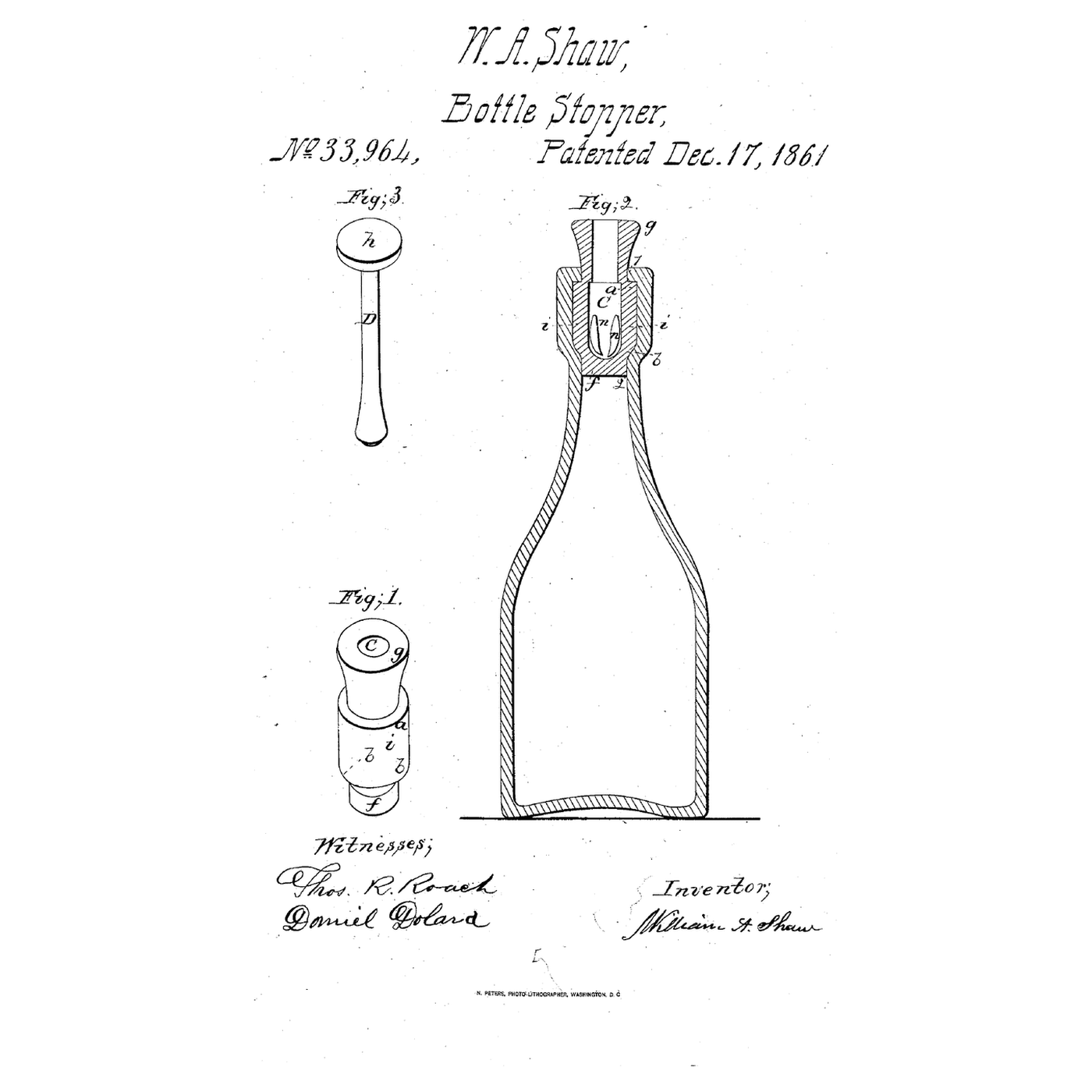
The Hollow Rubber Stopper: Stretch It Thin to Put It In, and the Gas Seats It Tighter
láti ọwọ́ Charlie
Àwọn Ohun Mímu
20
0
0
0
0
0
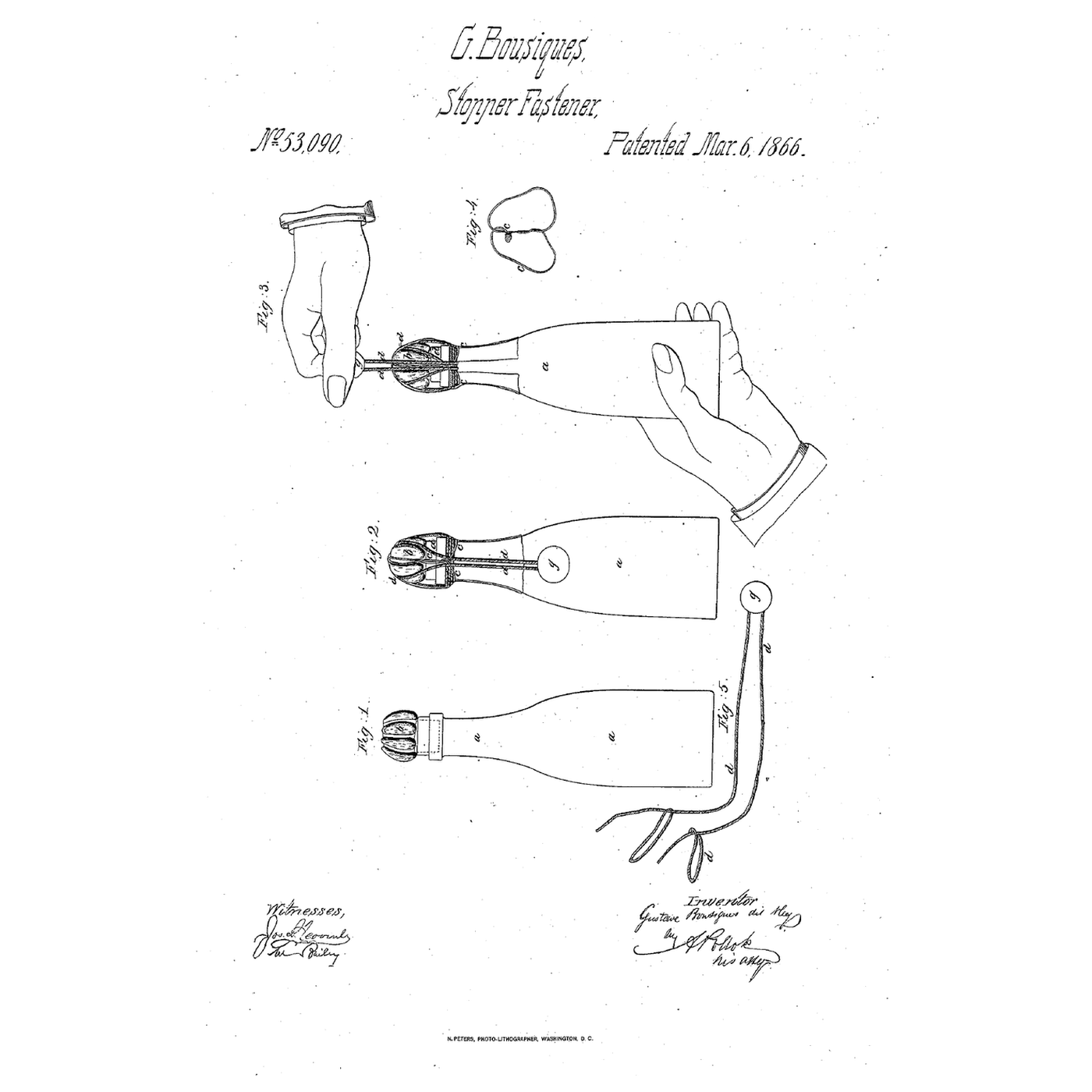
The Pull-String Champagne Fastening: One Pull Lifts the Wire and Frees the Cork
láti ọwọ́ TheChef
Àwọn Ohun Mímu
10
0
0
0
0
0

The Cork-Lined Screw Cap: A Rigid Cap Whose Lining Takes the Shape of the Thread
láti ọwọ́ Mary
Àwọn Ohun Mímu
11
0
0
0
0
0
CC0 Àgbègbè Gbogbogbò
Blueprint yìí ti jáde lábẹ́ CC0. O lè ṣe àdàkọ, yí padà, pín, àti lò láìsí ìyọ̀ǹda.
Ṣàtìlẹ́yìn Olùṣẹ́dá nípa rírà àwọn ọjà nipasẹ̀ Blueprint wọn Ẹ̀san Olùṣẹ́dá tí àwọn Olùtajà gbé kalẹ̀, tàbí ṣẹ̀dá àtúnṣe tuntun ti Blueprint yìí kí o sì fi sínú Blueprint rẹ gẹ́gẹ́ bí ìsopọ̀ láti pín owó-wíwọlé.