IṢẸ́ ỌNÀ
ẸWÀ ÀTI ÌLERA
IṢẸ́ ỌWỌ́
ÀṢÀ ÀTI ÌTÀN
ÌṢERÉ
ÀYÍKÁ
OÚNJẸ ÀTI OHUN MÍMU
REVERSE ENGINEERING
SÁYẸ́ǸSÌ
ERÉ ÌDÁRAYÁ
ÌMỌ̀-Ẹ̀RỌ
ÀWỌN OHUN WÍWỌ̀


The Rolling Dough Cutter: Pieces That Share Their Edges
Round cutters leave scraps between them, and every scrap must be rolled out and cut again.
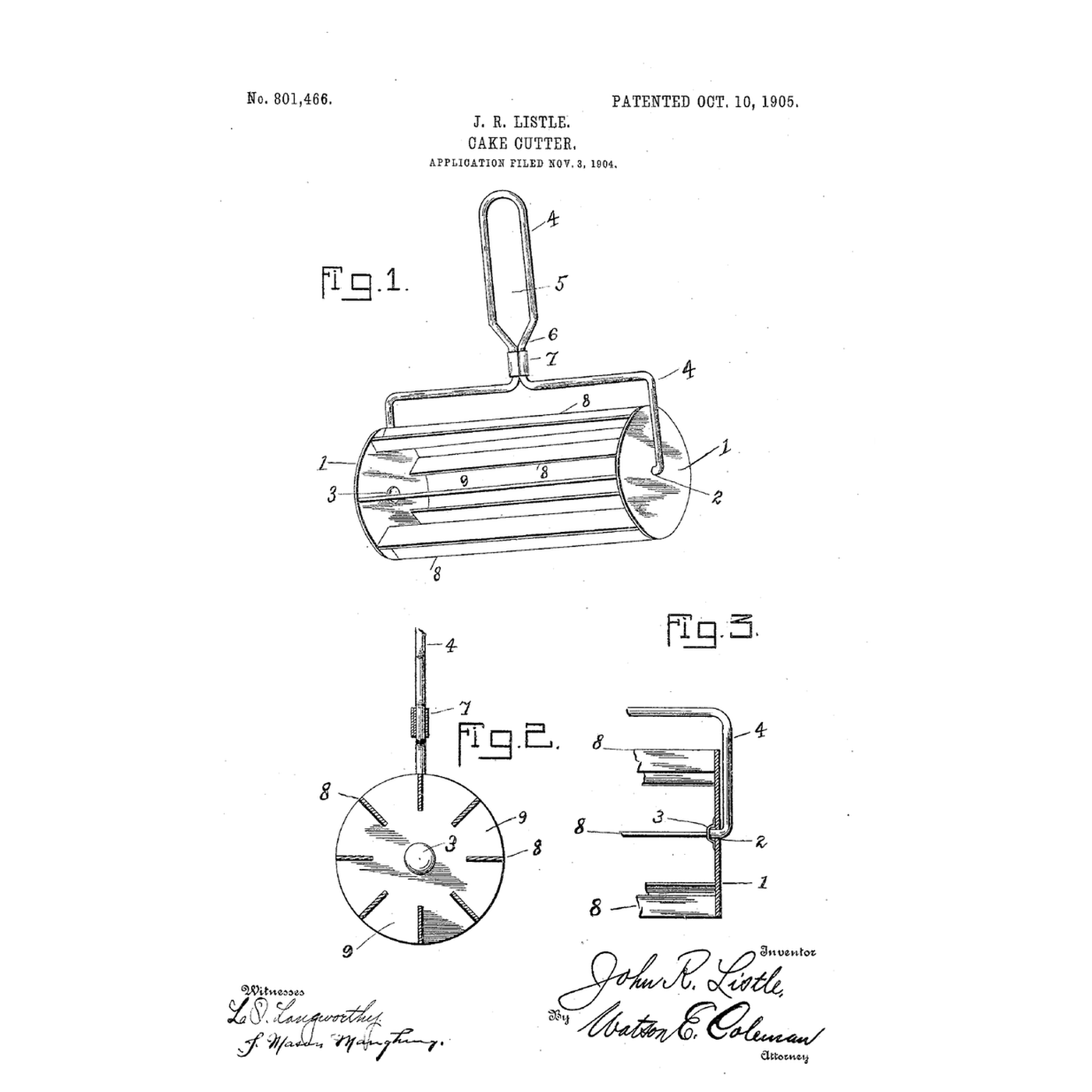
John R. Listle of Kalispell, Montana, received US 801,466, dated 10 October 1905, for a cake-cutter made of two tin disks joined by narrow tin blades set radially between them, rolled over the dough on a wire handle, "leaving a minimum amount of material to be worked over the second time".
This rung works out how much dough round cutters waste, then builds a rolling cutter from tin cans and compares its scraps with a round cutter's.
Àárín
About 3 hours
Ìlànà
1
1
Scraps: round against rolling
Scraps: round against rolling
Ń ṣí ìwé Jupyter…
2
2
A roller with still handles
A roller with still handles
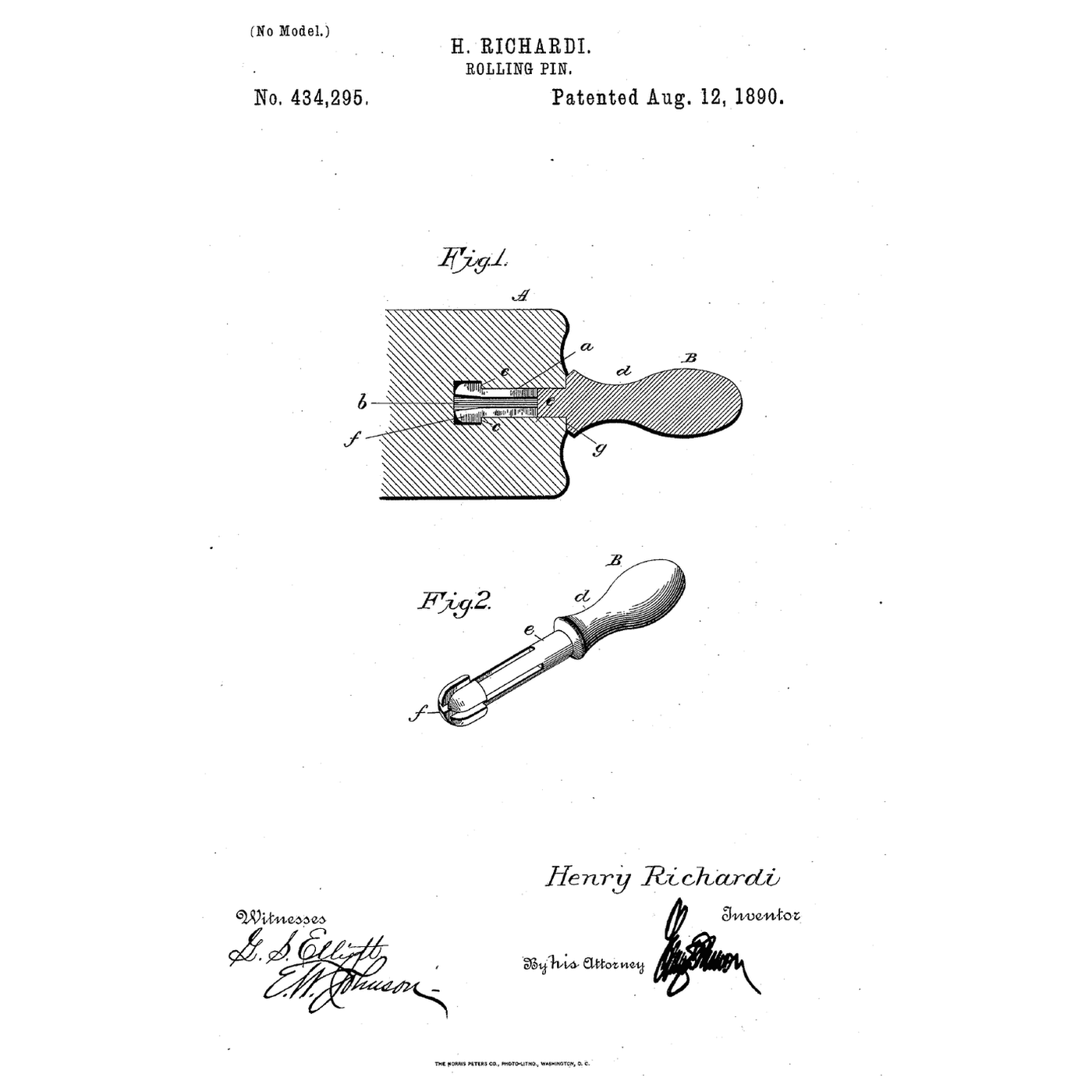
The embedded blueprint rolls dough flat with a pin that turns inside still handles. Listle's drum turns on a wire handle and cuts the sheet the pin has rolled.
3
3
Read US 801,466
Read US 801,466
"A further object is to provide a device by which cakes of a uniform size may be cut from the dough, leaving a minimum amount of material to be worked over the second time".
"The strips of tin being narrow, this arrangement of parts leaves a blank space back of the blades, which is adapted to receive the dough when cut, thus avoiding the difficulty heretofore experienced in cake-cutters of the dough sticking between the blades or in the pocket formed by the rear edges of the blades coming together."
4
4
Build a rolling cutter and cut a sheet
Build a rolling cutter and cut a sheet
Take the lids of two tin cans as the disks and punch a hole in the centre of each. Cut six strips of tin 8 cm long and 1.5 cm wide, with a tab 5 mm long at each end. Cut six short slots round the edge of each disk, evenly spaced and pointing at the centre. Push each strip's tabs through a slot in each disk, with its edge flush with the rims, and fold the tabs flat. File every edge smooth.
Bend steel wire into a long loop for a handle, with its two ends bent inward through the holes in the disks, so the drum turns freely.
Rub 200 g of butter into 300 g of flour with 100 g of sugar and press it into a dough. Roll half into a sheet 24 cm wide, three drum widths, roll the cutter over it and lift the pieces onto a baking sheet. Cut the other half with a round cutter and weigh the scraps from each. Bake at about 180 °C until pale golden.
Àwọn ohun èlò fún ìgbésẹ̀ yìí:
 Ìgò irin2 ẹyọ
 Okun waya irin1 ẹyọ
 Ìyẹ̀fun àlòpọ̀300 g
 Bọ́tà200 g
 Ṣúgà oníwẹ́wẹ́100 g
Àwọn irinṣẹ́ tí a nílò:
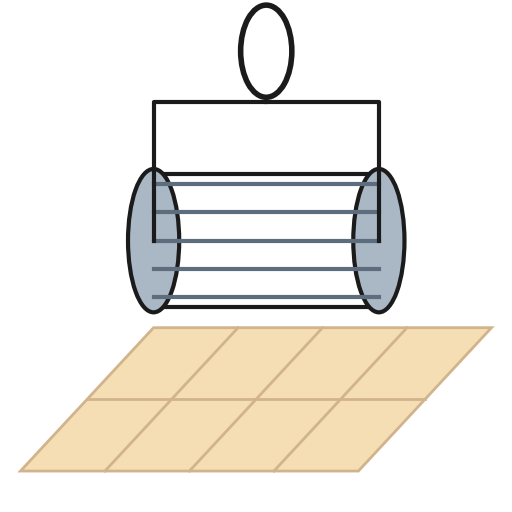 Ohun ìgé ìyẹ̀fun oníyípo
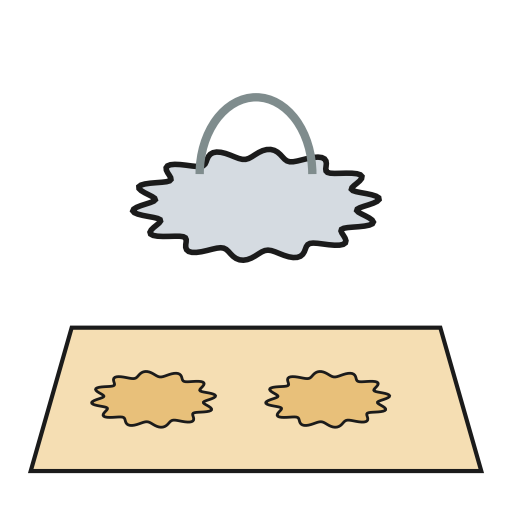 Ohun ìgé bisikíìtì
 Ìlàǹkàn irin
 Ẹ̀mú imú gígùn
 Ọ̀kọ̀ Ìlùhò
 Òòlù
Òòlù Ìfá Irin
 Ọ̀pá ìtẹ̀ ìyẹ̀fun
 Àwo ìdáná
 Ààrò
Ààrò Òṣùwọ̀n Díjítà Ilé Ìdáná
5
5
A rolling cutter that drags, sticks or cuts unevenly
A rolling cutter that drags, sticks or cuts unevenly
Rolling cutter troubleshooting.
Flow
Loading...
6
6
History and honest limits
History and honest limits
**John R. Listle** of Kalispell, Montana, filed US 801,466 on 3 November 1904; it was patented 10 October 1905. His blades were narrow strips of tin rigidly secured at each end to the disks, and his handle a single bent wire whose two strands were held together by a sleeve.
**Honest limits.** The notebook treats the sheet as a perfect rectangle; a rolled sheet has ragged edges, so both methods leave some edge scraps. Sizes are examples. Your two weighings of scraps are the measurement.
Àwọn ohun-èlò
5- 2 ẹyọÀyè
- 1 ẹyọÀyè
- 300 gÀyè
- 200 gÀyè
- 100 gÀyè
Àwọn irinṣẹ́ tó nílò
11- Àyè
- Àyè
- Àyè
- Àyè
- Àyè
- Àyè
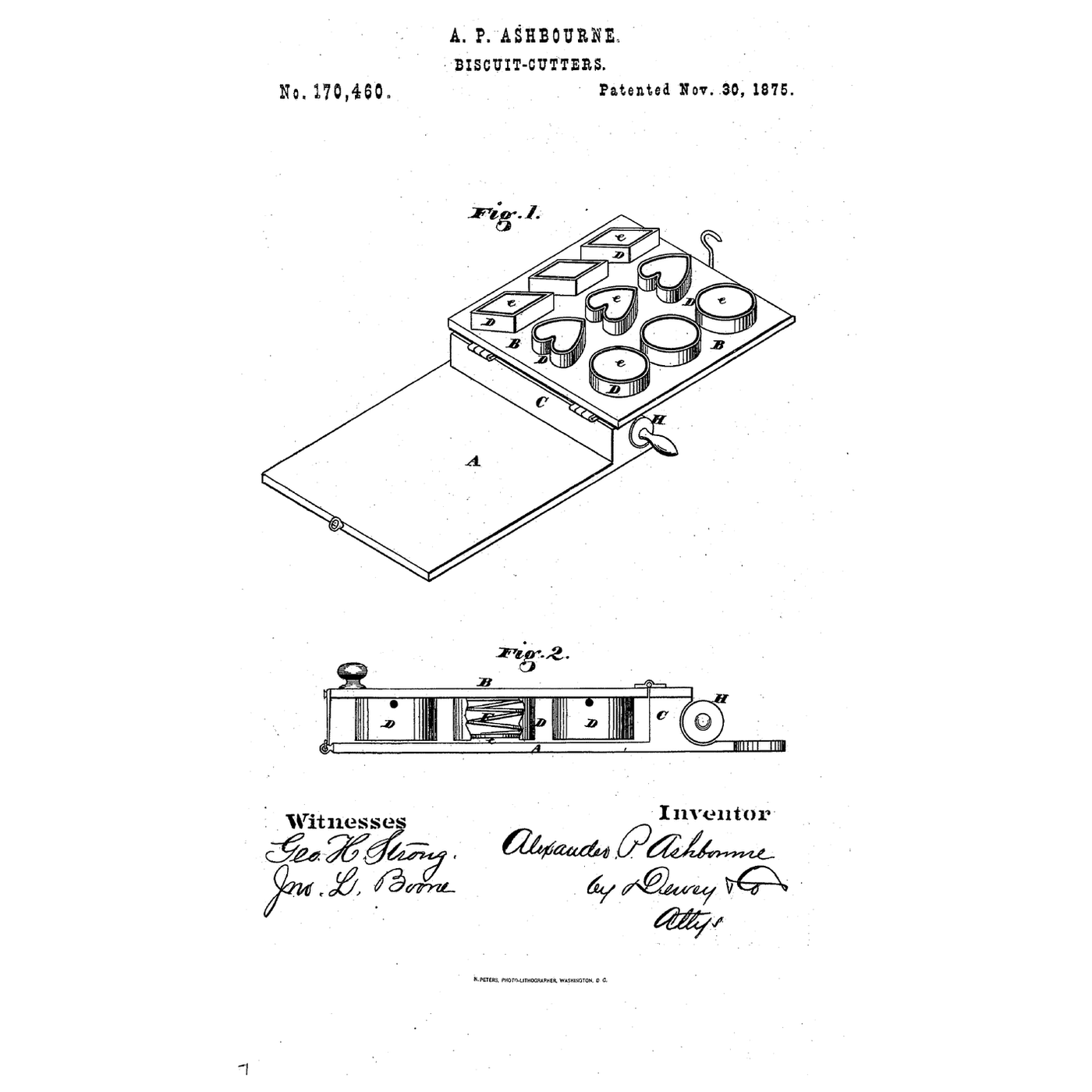
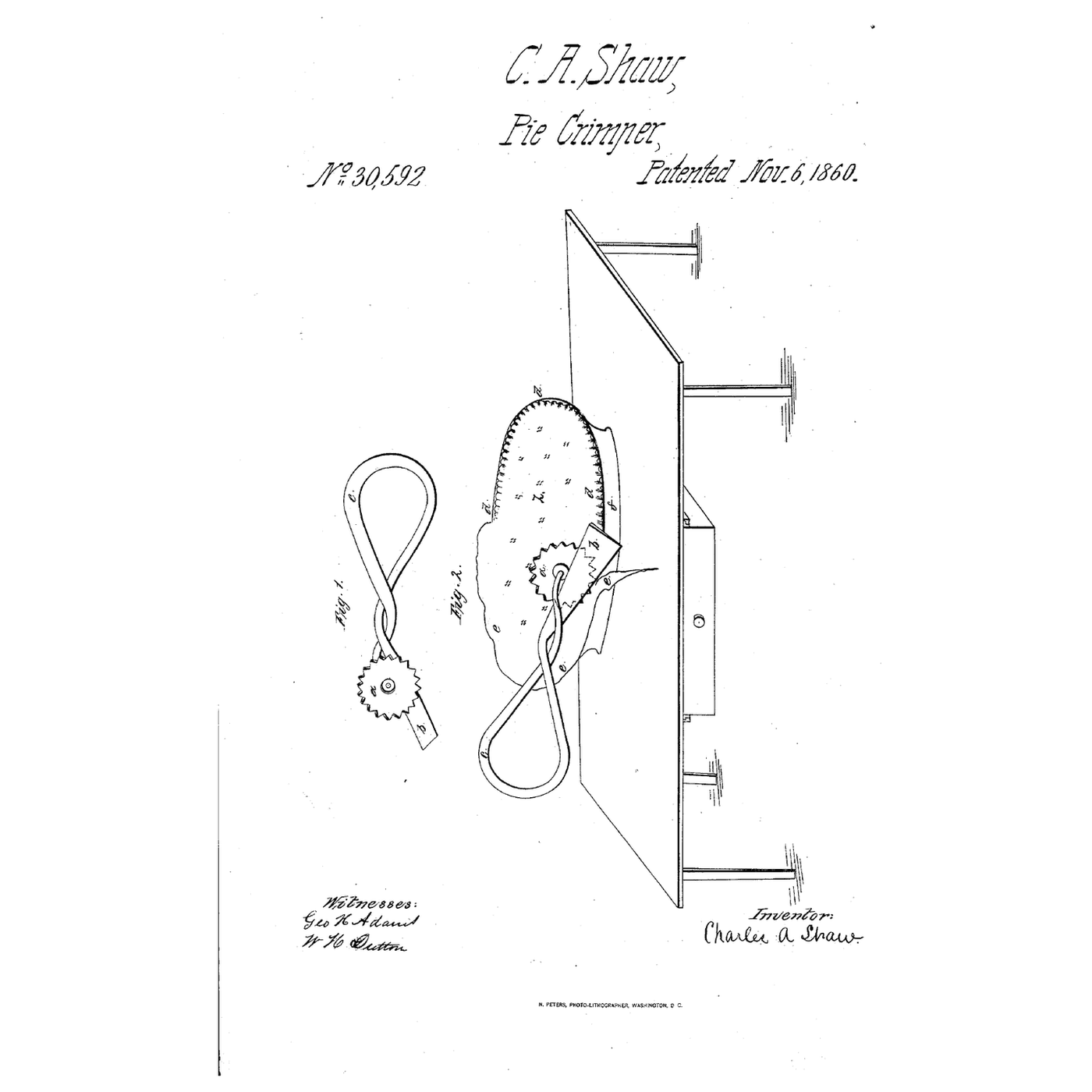
Blueprint tó jọra
Àwọn blueprint wọ̀nyí pín ìmọ̀ — ọ̀nà, ohun-èlò tàbí ìlànà
CC0 Àgbègbè Gbogbogbò
Blueprint yìí ti jáde lábẹ́ CC0. O lè ṣe àdàkọ, yí padà, pín, àti lò láìsí ìyọ̀ǹda.
Ṣàtìlẹ́yìn Olùṣẹ́dá nípa rírà àwọn ọjà nipasẹ̀ Blueprint wọn Ẹ̀san Olùṣẹ́dá tí àwọn Olùtajà gbé kalẹ̀, tàbí ṣẹ̀dá àtúnṣe tuntun ti Blueprint yìí kí o sì fi sínú Blueprint rẹ gẹ́gẹ́ bí ìsopọ̀ láti pín owó-wíwọlé.