IṢẸ́ ỌNÀ
ẸWÀ ÀTI ÌLERA
IṢẸ́ ỌWỌ́
ÀṢÀ ÀTI ÌTÀN
ÌṢERÉ
ÀYÍKÁ
OÚNJẸ ÀTI OHUN MÍMU
REVERSE ENGINEERING
SÁYẸ́ǸSÌ
ERÉ ÌDÁRAYÁ
ÌMỌ̀-Ẹ̀RỌ
ÀWỌN OHUN WÍWỌ̀

The Slotted Lemon Squeezer: Squeeze, Then Slice Through the Slots
A pressed lemon slips about in a squeezer's cup, and slicing it afterwards means taking it out and holding it on a board.
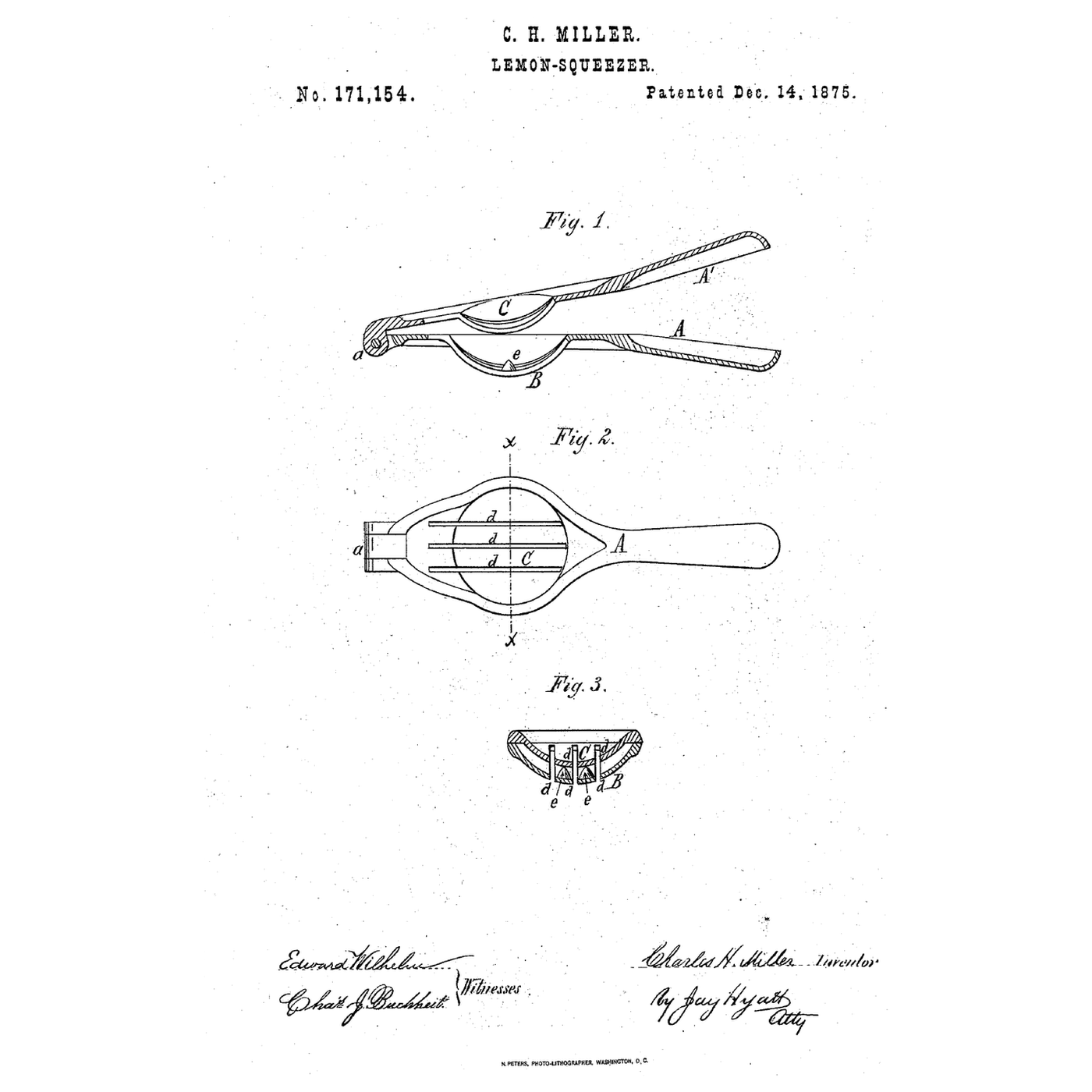
Charles H. Miller of Buffalo, New York, received US 171,154, dated 14 December 1875, for a hinged squeezer whose cup and curved pressure plate are each cut "with one or more corresponding slots, forming an escape for the juice, and permitting a knife to be passed through, so as to cut or divide the pressed lemon into two or more parts; also, in providing the cup with one or more projecting spurs or teats, which enter the rind of the lemon, and retain the same against displacement while being pressed or sliced."
This rung works out the pressure on the lemon and the slots' share of the face, then makes the squeezer from flat bar and tinplate with matching slots and spurs, and squeezes and slices lemons.
Àárín
About 4 hours
Ìlànà
1
1
Pressure and slots
Pressure and slots
Ń ṣí ìwé Jupyter…
2
2
A hinged squeezer before it
A hinged squeezer before it
The embedded blueprint presses the lemon between a bowl and a half-sphere on two hinged handles. Miller cuts matching slots through cup and plate so the pressed lemon can be sliced where it lies.
3
3
Read US 171,154
Read US 171,154
"d represents one or more slots, formed in both the cup B and curved plate C, so as to coincide when the handles are closed. By passing a knife through the slot or slots the compressed lemon is readily divided into several parts. The slot or slots d also permit the escape of the juice from the cup."
"e represents one or more projecting teats or spurs, formed on the inner surface of the cup B, for the purpose of entering the rind of the lemon as the handles are closed, thereby preventing the lemon from slipping in the shallow cup while being compressed, or afterward during the operation of slicing."
4
4
Make the squeezer, squeeze and slice
Make the squeezer, squeeze and slice
**Handles.** Cut two 25 cm lengths of 20 × 5 mm mild steel flat bar and drill both 1 cm from one end for an M6 pivot bolt.
**Cup and plate.** Cut two discs of tinplate about 8 cm across. Dish one into a shallow cup and the other into a matching curved plate by hammering them over a hollow in a hardwood block. Rivet the cup to one handle and the plate to the other, 5 cm behind the pivot, so the plate's convex side fits into the cup's hollow with a narrow space between.
**Slots and spurs.** Bolt the handles together and close them. Mark three lines along the handles' length across both cup and plate, open them, and cut each line 3 mm wide with snips and a file, running out past the rims on the side toward the pivot, as Miller's drawing shows, so the slots coincide and a knife can be put in beyond the lemon's edge. Solder two short pointed nails upright inside the cup as the spurs e.
**Test.** Squeeze a half lemon over a glass and weigh the juice. With the handles still closed, pass a knife through the slots to slice the pressed lemon.
Àwọn ohun èlò fún ìgbésẹ̀ yìí:
 Ọ̀pá Pẹrẹsẹ Irin Pẹ́lẹ́0.5 mítà
 Pátákó irin funfun1 ẹyọ
 Àwọn pop rivet6 ẹyọ
 Àkójọ bọ́ọ̀lù onígun mẹ́fà1 ẹyọ
 Nọ́ọ̀tì Onígun Mẹ́fà1 ẹyọ
 Ìṣó2 ẹyọ
 Ohun ìdì paipu láìní òjé1 ẹyọ
 Fúlọ́ksì1 ẹyọ
 Ìṣù Igi Líle1 ẹyọ
 Lẹ́mọ́ọ̀nù2 ẹyọ
Àwọn irinṣẹ́ tí a nílò:
 Ayùn Irin
 Ẹ̀rọ Ìlùkòkò Aláìlókùn
 Àkójọ Orí Ìlùkòkò
 Àwọn Ìfá (Ìfá Ọwọ́)
 Àkójọ Ìfá Kékeré
 Ìdìmú Tábìlì
 Ìlàǹkàn irin
 Òòlù
Òòlù Ìdìpọ̀ ẹ̀rọ ìso pop rivet
 Irin ìsúdì
 Kọ́kọ́rọ́ tí a lè ṣàtúnṣe
 Ọ̀bẹ ilé ìdáná
 Òṣùwọ̀n Díjítà Ilé Ìdáná
 Ife ìmumi
 Ìbọ̀wọ́ Iṣẹ́ Awọ
5
5
A squeezer that slips, clogs or will not slice
A squeezer that slips, clogs or will not slice
Slotted lemon squeezer troubleshooting.
Flow
Loading...
6
6
History and honest limits
History and honest limits
**Charles H. Miller** of Buffalo, Erie County, New York, filed US 171,154 on 15 November 1875; it is dated 14 December 1875. His handles A A′ were pivoted at a, the cup B formed with A and the plate C with A′, and the slots ran lengthwise, extending on one side beyond the cup so the knife could be put in beyond the lemon's edge without piercing it first. His claims cover the slotted cup and plate on the handles, and the spurs in the cup.
**Honest limits.** Flat bar and dished tinplate stand in for his made-up levers, cup and plate. The notebook spreads the force evenly over the lemon; its forces, lengths and sizes are examples. Your juice and slices are the result.
Àwọn ohun-èlò
10- 0.5 mítàÀyè
- 1 ẹyọÀyè
- 6 ẹyọÀyè
- Àyè
- 1 ẹyọÀyè
- 2 ẹyọÀyè
- Àyè
- 1 ẹyọÀyè
- 1 ẹyọÀyè
- 2 ẹyọÀyè
Àwọn irinṣẹ́ tó nílò
15- Àyè
- 1 vendor sell this, none ship to you yetÀyè
- Àyè
- Àyè
- Àyè
- 2 vendors sell this, none ship to you yetÀyè
- Àyè
Ìtọ́nisọ́nà yìí ń ṣe

Blueprint tó jọra
Àwọn blueprint wọ̀nyí pín ìmọ̀ — ọ̀nà, ohun-èlò tàbí ìlànà

The Hinged-Bowl Lemon Squeezer: Two Cast Handles, One Bowl Inside the Other
láti ọwọ́ YourGrandma
Iṣẹ́ Irin
31
0
0
0
0
0
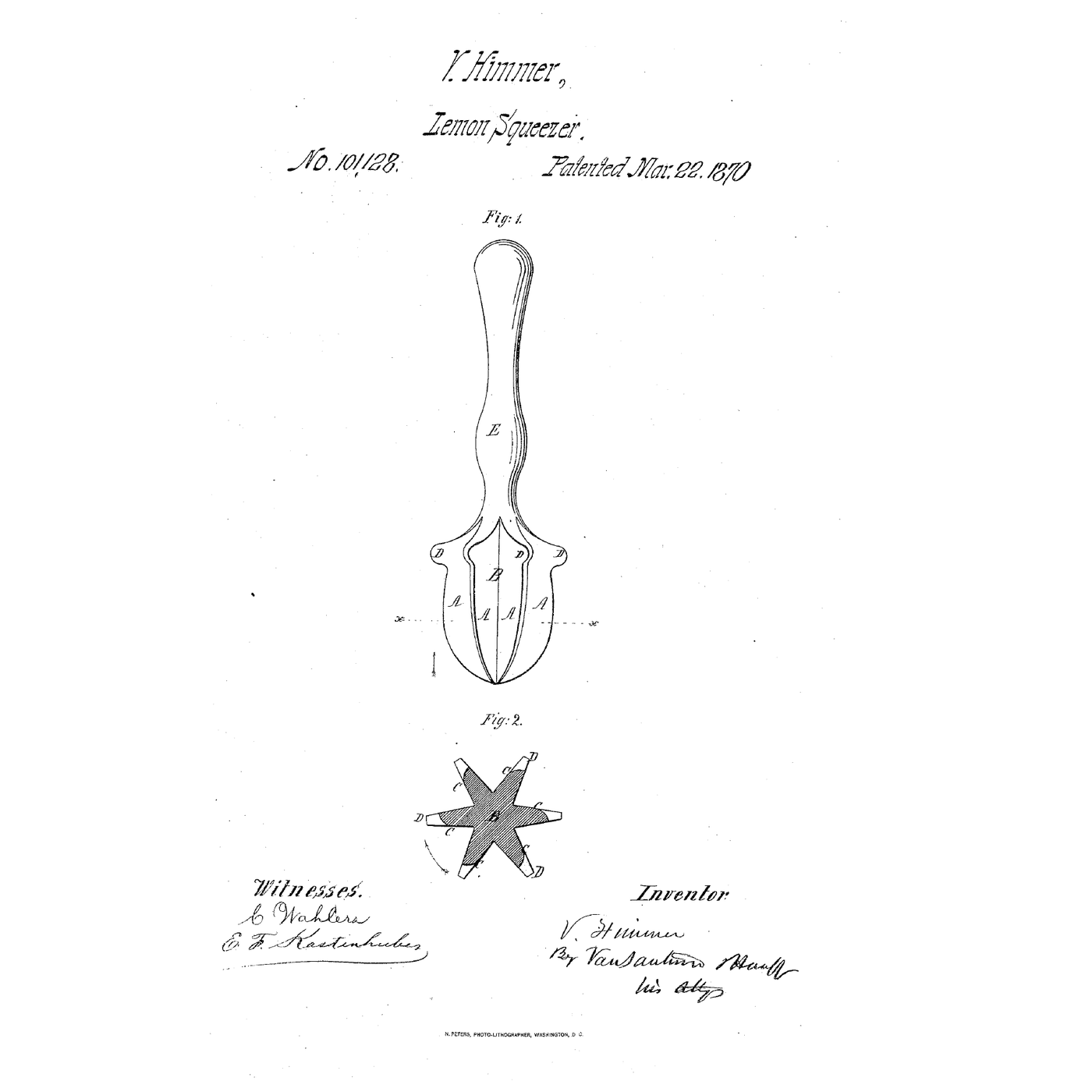
The Bladed Lemon Reamer: Six Blades That Cut and Spread the Fruit
láti ọwọ́ TheChef
Iṣẹ́ Igi
16
0
0
0
0
0
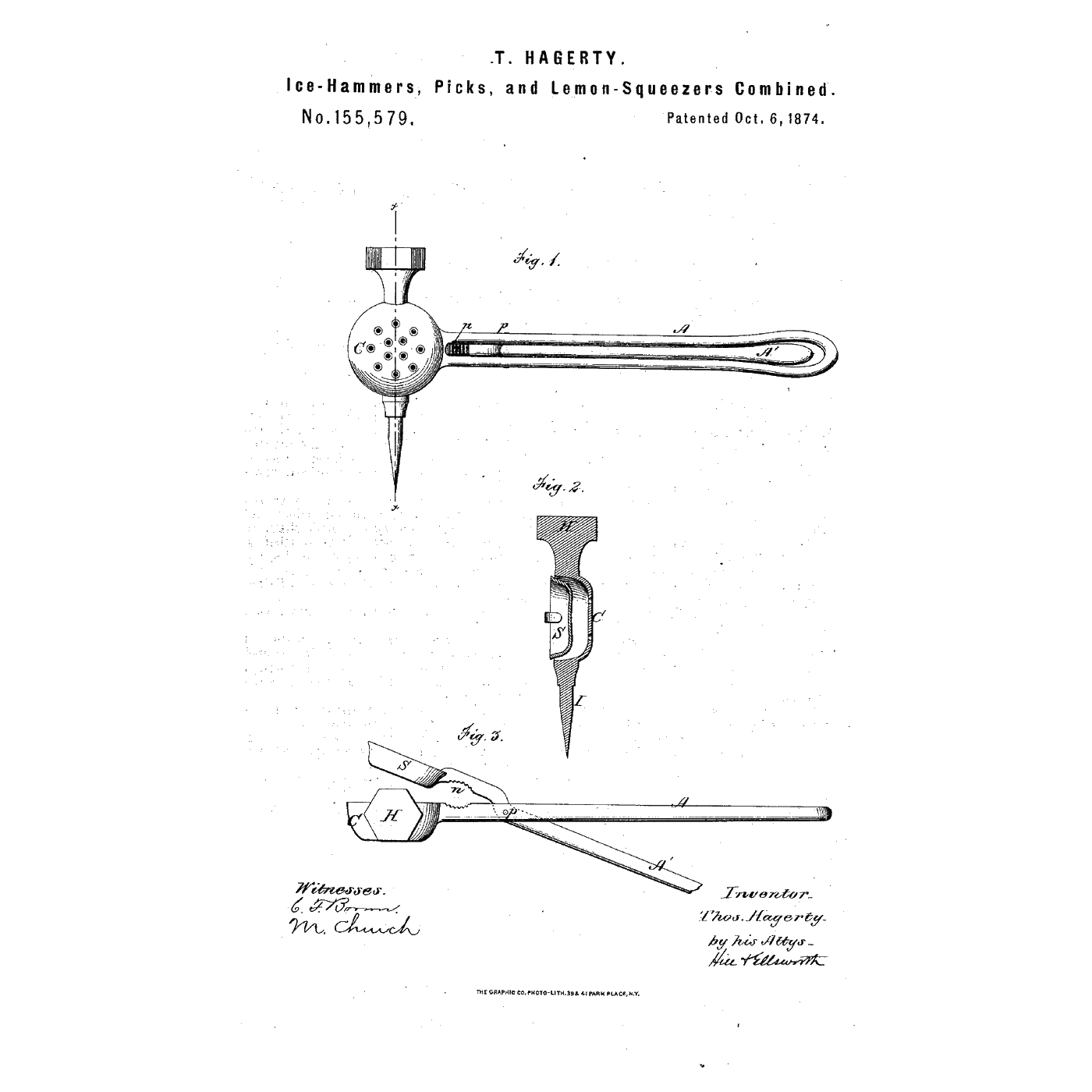
The Ice-Hammer Lemon Squeezer: Hammer, Pick, Squeezer and Nutcracker in One
láti ọwọ́ Forge
Iṣẹ́ Irin
18
0
0
0
0
0
CC0 Àgbègbè Gbogbogbò
Blueprint yìí ti jáde lábẹ́ CC0. O lè ṣe àdàkọ, yí padà, pín, àti lò láìsí ìyọ̀ǹda.
Ṣàtìlẹ́yìn Olùṣẹ́dá nípa rírà àwọn ọjà nipasẹ̀ Blueprint wọn Ẹ̀san Olùṣẹ́dá tí àwọn Olùtajà gbé kalẹ̀, tàbí ṣẹ̀dá àtúnṣe tuntun ti Blueprint yìí kí o sì fi sínú Blueprint rẹ gẹ́gẹ́ bí ìsopọ̀ láti pín owó-wíwọlé.