IṢẸ́ ỌNÀ
ẸWÀ ÀTI ÌLERA
IṢẸ́ ỌWỌ́
ÀṢÀ ÀTI ÌTÀN
ÌṢERÉ
ÀYÍKÁ
OÚNJẸ ÀTI OHUN MÍMU
REVERSE ENGINEERING
SÁYẸ́ǸSÌ
ERÉ ÌDÁRAYÁ
ÌMỌ̀-Ẹ̀RỌ
ÀWỌN OHUN WÍWỌ̀


The Spring-Jaw Seam Ripper: One Wire and an Oblique Blade
Taking a seam apart stitch by stitch takes a long time, and a careless blade cuts the cloth as well as the thread.
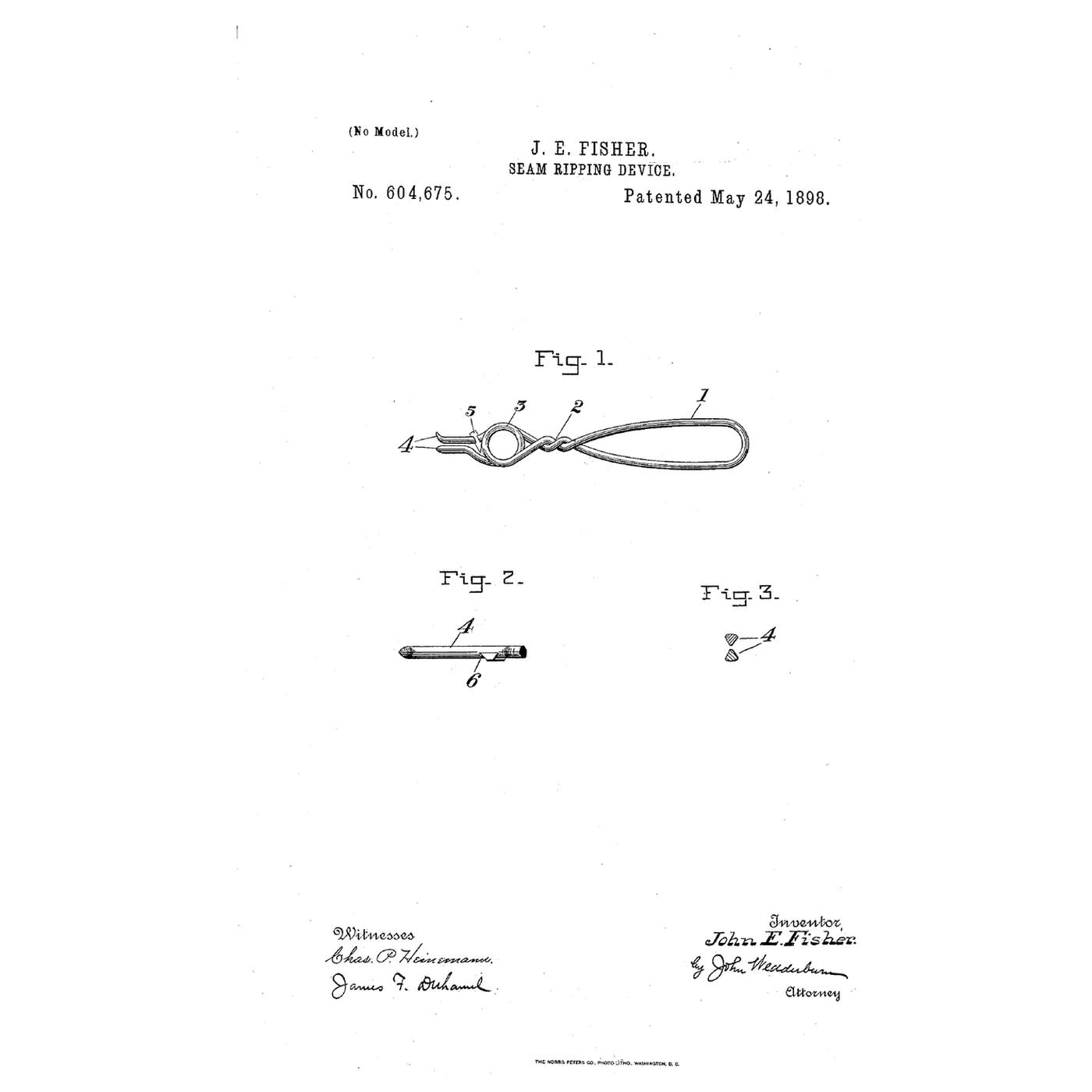
John Edward Fisher of Elmsdale, Nova Scotia, received US 604,675, dated 24 May 1898 (filed 10 June 1897), for a seam-ripping device with "a pair of yielding jaws adapted to grasp and follow the seam and a cutter or knife applied to one of said jaws and crossing obliquely the line of the opposing edge of the jaws for cutting the thread forming the seam". Handle, springs and jaws are one bent wire.
This rung counts the stitches in a metre of seam and compares picking with ripping, then bends a spring-jaw ripper from wire and times it against a plain seam ripper.
Àárín
About 2 hours
Ìlànà
1
1
Stitches in a metre, and the time to take them out
Stitches in a metre, and the time to take them out
Ń ṣí ìwé Jupyter…
2
2
Spring jaws from bent wire
Spring jaws from bent wire
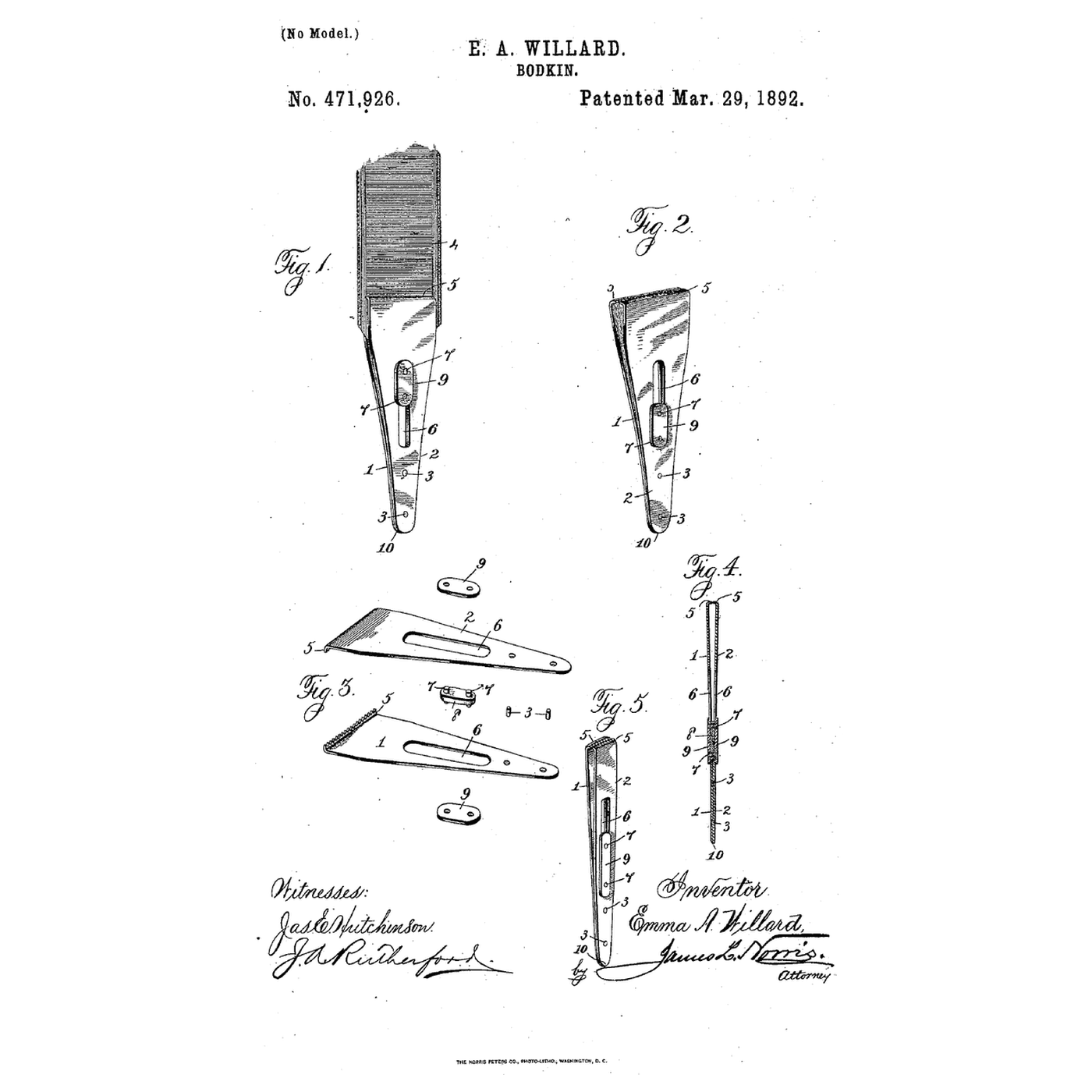
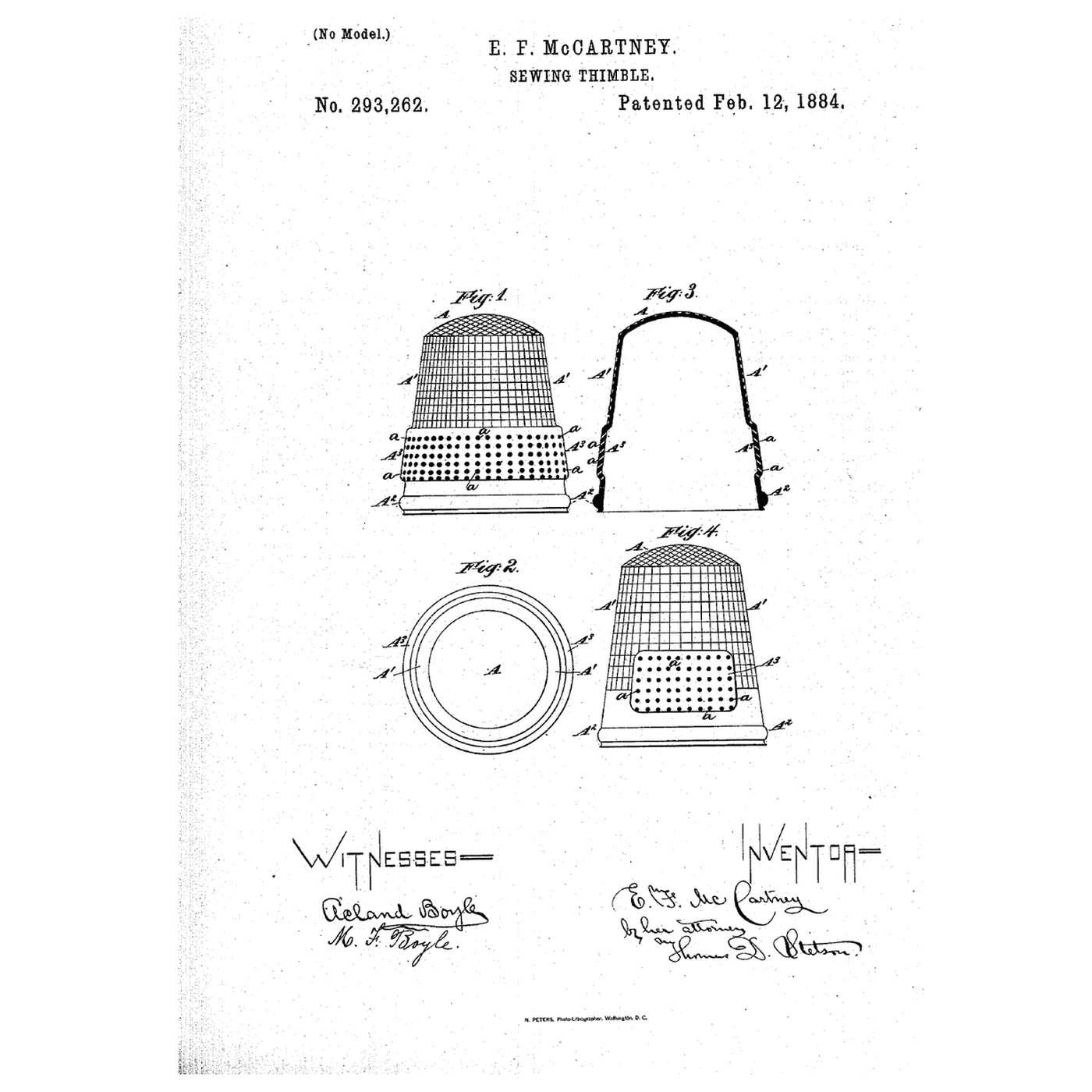
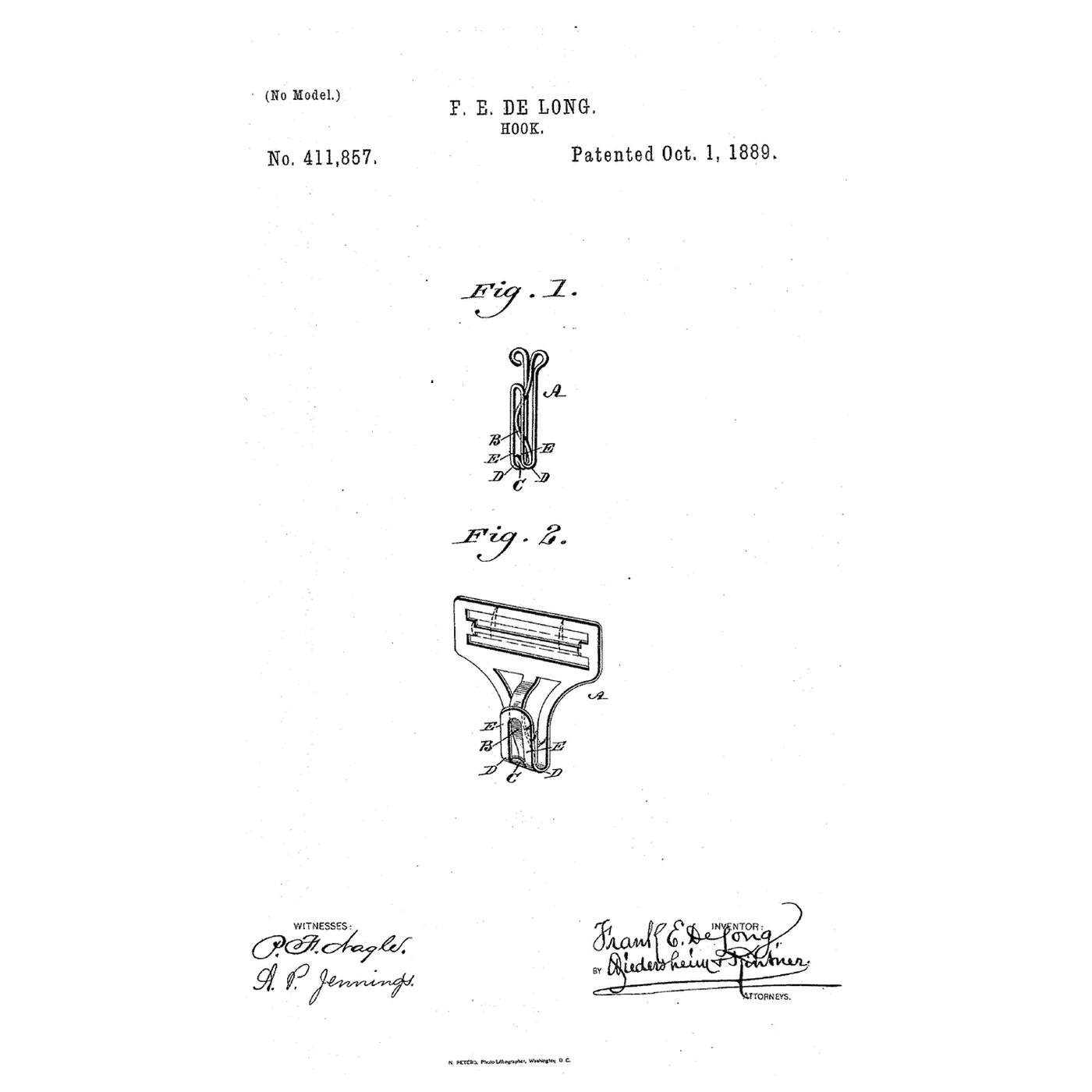
The embedded blueprint grips a tape with sprung jaws. Fisher's jaws grip the seam the same way.
3
3
Read US 604,675
Read US 604,675
"The fabric to be operated upon for ripping the seam is placed between the jaws 4 4, the latter grasping them in a line with the seam, and the handle serves to force the implement forward following the line of the seam. The thread forming such seam as it reaches the cutter 5 will be readily severed thereby, the latter being set obliquely and crossing the line of contact of the jaws and serving to act upon the threads with a drawing cut."
"From the foregoing description it will be seen that the jaws, the spring-coils for controlling them, and the handle for operating the device are all formed from a single rod or wire, the only separate piece being the blade or cutter, which can be attached as needed for sharpening or other purposes."
4
4
Bend a spring-jaw ripper and time it
Bend a spring-jaw ripper and time it
Sew a test seam on doubled scrap cloth with a known stitch length.
Bend spring steel wire into a loop handle and twist its ends together. Wind each end once round a pen to form a coil, then bring the ends forward side by side as two jaws, flared apart at the tip. File the jaw edges blunt so they grip without cutting. Bind a small piece of craft-knife blade across one jaw at a slant.
Push the jaws along the seam. Time 20 cm with the stopwatch, then time 20 cm with a plain seam ripper and 20 cm picked out with a needle. Check the cloth for cuts. Compare with the notebook.
Àwọn ohun èlò fún ìgbésẹ̀ yìí:
 Okùn irin kámánì1 ẹyọ
 Aṣọ òwú (fúyẹ́)1 ẹyọ
 Òwú ìránṣọ1 ẹyọ
Àwọn irinṣẹ́ tí a nílò:
 Ohun èlò ìtú ìránṣọ
 Ẹ̀mú imú gígùn
 Ìfá Irin
 Ọ̀bẹ Iṣẹ́ Ọwọ́
 Abẹ́rẹ́ ìránṣọ ọwọ́
 Aago Ìdúró
 Ìdíwọ̀n
5
5
A ripper that cuts cloth, misses threads or slips off
A ripper that cuts cloth, misses threads or slips off
Seam ripper troubleshooting.
Flow
Loading...
6
6
History and honest limits
History and honest limits
**John Edward Fisher** of Elmsdale, Hants County, Nova Scotia, filed US 604,675 on 10 June 1897; it is dated 24 May 1898.
**Honest limits.** The notebook counts stitches only; knotted, overlocked or back-tacked seams take longer. The ripper time assumes the same push speed whatever the stitch length, which short stitches may not allow. The picking time and ripper speed are examples. Your stopwatch times are the measurement.
Àwọn ohun-èlò
3- 1 ẹyọÀyè
- 1 ẹyọÀyè
- 1 ẹyọÀyè
Àwọn irinṣẹ́ tó nílò
7- Àyè
- Àyè
- Àyè
Blueprint tó jọra
Àwọn blueprint wọ̀nyí pín ìmọ̀ — ọ̀nà, ohun-èlò tàbí ìlànà

CC0 Àgbègbè Gbogbogbò
Blueprint yìí ti jáde lábẹ́ CC0. O lè ṣe àdàkọ, yí padà, pín, àti lò láìsí ìyọ̀ǹda.
Ṣàtìlẹ́yìn Olùṣẹ́dá nípa rírà àwọn ọjà nipasẹ̀ Blueprint wọn Ẹ̀san Olùṣẹ́dá tí àwọn Olùtajà gbé kalẹ̀, tàbí ṣẹ̀dá àtúnṣe tuntun ti Blueprint yìí kí o sì fi sínú Blueprint rẹ gẹ́gẹ́ bí ìsopọ̀ láti pín owó-wíwọlé.