IṢẸ́ ỌNÀ
ẸWÀ ÀTI ÌLERA
IṢẸ́ ỌWỌ́
ÀṢÀ ÀTI ÌTÀN
ÌṢERÉ
ÀYÍKÁ
OÚNJẸ ÀTI OHUN MÍMU
REVERSE ENGINEERING
SÁYẸ́ǸSÌ
ERÉ ÌDÁRAYÁ
ÌMỌ̀-Ẹ̀RỌ
ÀWỌN OHUN WÍWỌ̀


The Tube-in-the-Back Fountain Brush: Turn the Tube and the Jets Become a Soak
A scrubbing brush dipped in a bucket runs dry in seconds, and a hose beside it floods the floor.
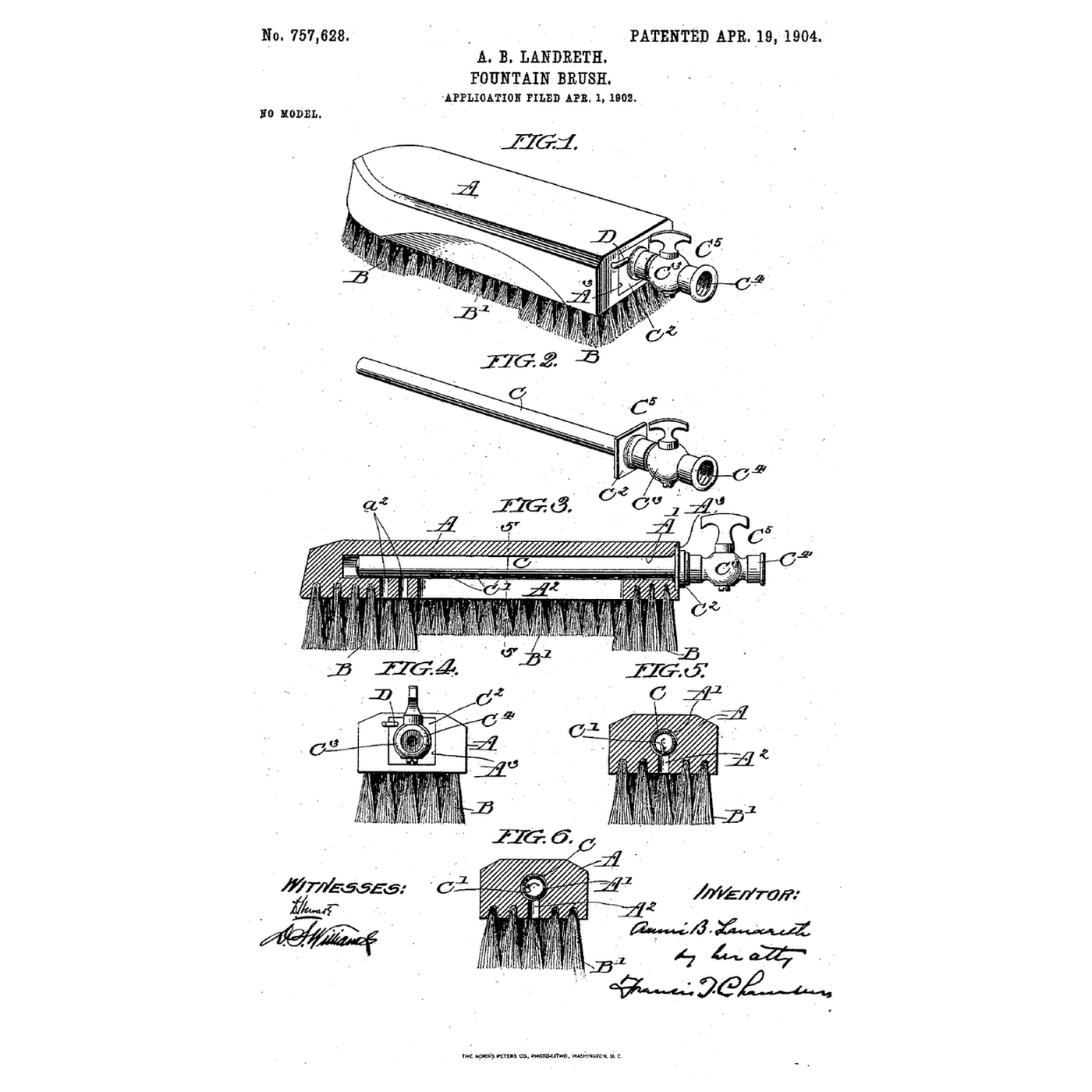
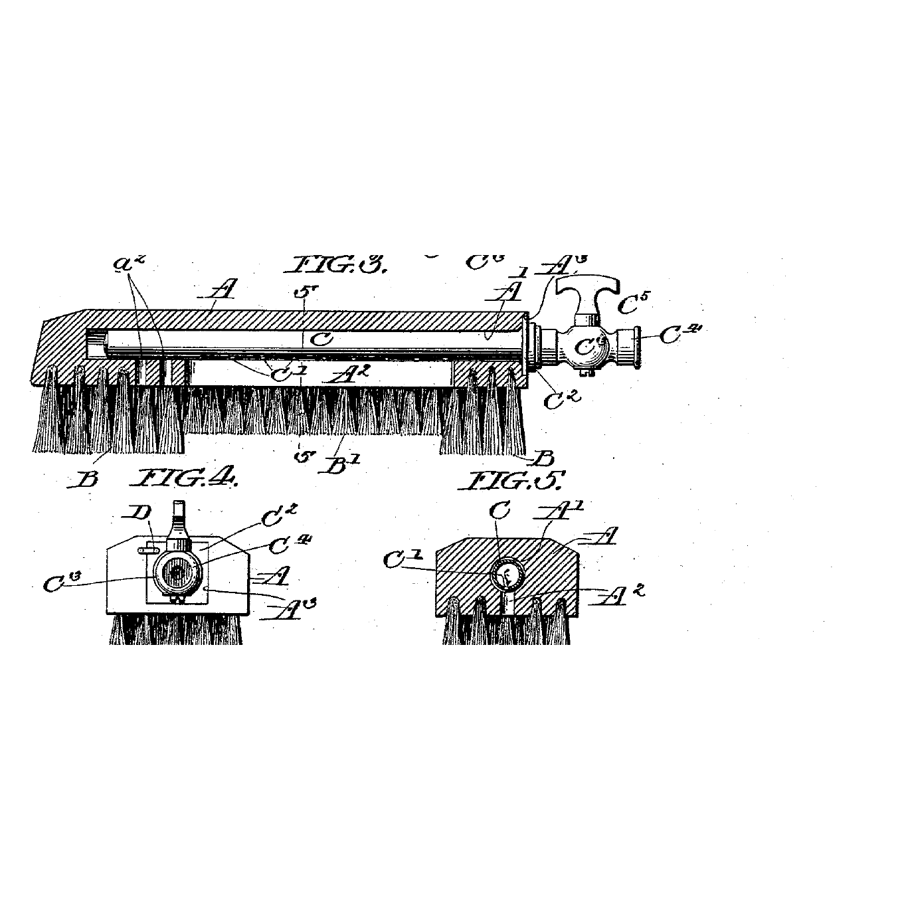
Annie B. Landreth of Bristol, Pennsylvania, received US 757,628, dated 19 April 1904, for a fountain brush "of great simplicity of construction": a recess bored lengthwise into an ordinary brush's back with openings to its face, and a perforated tube on a cock that slides in; a square plate on the tube sits in a square depression, so the holes can face the openings or be turned a quarter turn against the recess walls.
This rung compares the jet with the turned-away flow, then bores a scrub brush, fits a tube and tap, and measures both settings.
Àárín
About 3 hours
Ìlànà
1
1
Jet against soak
Jet against soak
Ń ṣí ìwé Jupyter…
2
2
A scrubbing brush improved before it
A scrubbing brush improved before it
The embedded blueprint holds two brush heads on a sprung holder. Landreth leaves the brush ordinary and feeds water through a bore in its back.
3
3
Read US 757,628
Read US 757,628
"Thus the perforations may register with the openings a² a², as indicated in Fig. 5, or the fountain-tube may be turned to an angle of ninety degrees, so that the perforations C' face the lateral sides of the recess A', as indicated in Fig. 6, and in this way the force due to the pressure of the water-supply is broken and the water will pass out of the openings without force."
4
4
Bore the back
Bore the back
Clamp a scrub brush with a back at least 22 mm thick, bristles down. Drill a 12 mm hole 160 mm deep along the back's centre from one end, keeping the bit level.
Àwọn ohun èlò fún ìgbésẹ̀ yìí:
 Búrọ́ọ̀ṣì ìfọ̀1 ẹyọ
Àwọn irinṣẹ́ tí a nílò:
 Ìdìmú Tábìlì
 Ẹ̀rọ Ìlùkòkò Aláìlókùn
 Ìdì orí ìlù onígun-àárín
 Ìdíwọ̀n
 Gílásì Ààbò Tí Ó Mọ́
5
5
Drill the openings
Drill the openings
From the bristle face, between rows, drill seven 3 mm holes into the bore, 20 mm apart.
Àwọn irinṣẹ́ tí a nílò:
Ẹ̀rọ Ìlùkòkò Aláìlókùn Àkójọ Orí Ìlùkòkò
 Ààmì Tí Kò Ní Parẹ́
6
6
Cut the square depression
Cut the square depression
Round the bore's mouth, chisel a 30 mm square 2 mm deep.
Àwọn irinṣẹ́ tí a nílò:
 Ìdìpọ̀ àyà igi
 ÒòlùÌdíwọ̀n
7
7
Make the tube
Make the tube
Cut 160 mm of 10 mm copper tube. Squeeze one end shut in the vice and solder it. Drill seven 1.8 mm holes in a line to match the openings.
Àwọn ohun èlò fún ìgbésẹ̀ yìí:
 Ọ̀pá bàbà1 ẹyọ
 Ohun ìdì paipu láìní òjé1 ẹyọ
 Flux iṣẹ́ páìpù1 ẹyọ
Àwọn irinṣẹ́ tí a nílò:
 Ohun èlò ìgé òpóÌdìmú Tábìlì
 Ọ̀pá Iná PùróféènìẸ̀rọ Ìlùkòkò AláìlókùnÀkójọ Orí Ìlùkòkò
 Ìbọ̀wọ́ Tí Ń Fara Da Ooru
8
8
Solder on the square plate
Solder on the square plate
Cut a 28 mm square of brass sheet, drill it 10 mm in the centre, slide it on 160 mm from the closed end with one edge square to the holes, and solder it.
Àwọn ohun èlò fún ìgbésẹ̀ yìí:
 Pẹlẹbẹ Bronse1 ẹyọOhun ìdì paipu láìní òjé1 ẹyọFlux iṣẹ́ páìpù1 ẹyọ
Àwọn irinṣẹ́ tí a nílò:
 Ìlàǹkàn irinẸ̀rọ Ìlùkòkò AláìlókùnÀkójọ Orí ÌlùkòkòỌ̀pá Iná PùróféènìÌbọ̀wọ́ Tí Ń Fara Da Ooru
9
9
Fit the tap and button
Fit the tap and button
Fit the ball valve and a hose connector to the open end with brass fittings and PTFE tape. Screw a 10 × 40 mm brass strip beside the depression as a turn-button.
Àwọn ohun èlò fún ìgbésẹ̀ yìí:
 Fáàlù bọ́ọ̀lù1 ẹyọ
 Ohun ìsopọ̀ idẹ1 ẹyọ
 Okùn PTFE ìdí ìṣàn1 ẹyọPẹlẹbẹ Bronse1 ẹyọ
 Ìsúrù igi #8 x 1"1 ẹyọ
Àwọn irinṣẹ́ tí a nílò:
 Kọ́kọ́rọ́ tí a lè ṣàtúnṣe
 Ìṣù àwọn ohun ìyí skurú
10
10
The build in 3D
The build in 3D
FreeCAD model of this build, not of the patent: a 200 × 60 × 26 mm back with a 12 mm bore 160 mm deep, seven 3 mm openings, a 30 mm square depression, the perforated tube with its square plate, valve and turn-button.
11
11
Compare the two settings
Compare the two settings
Connect the garden hose. With the holes facing the openings, hold the brush face-up and measure how high the jets rise; time a litre into the jug. Turn the tube 90°, lock it, and repeat.
Àwọn ohun èlò fún ìgbésẹ̀ yìí:
 Òpó omi ọgbà1 ẹyọ
 Omi1 ẹyọ
Àwọn irinṣẹ́ tí a nílò:
Ìdíwọ̀n Ìgò ìwọ̀n
 Aago Ìdúró
12
12
A brush that sprays, leaks or will not lock
A brush that sprays, leaks or will not lock
Tube-in-the-back fountain brush troubleshooting.
Flow
Loading...
13
13
History and honest limits
History and honest limits
**Annie B. Landreth** of Bristol, Pennsylvania, filed US 757,628 on 1 April 1902; it is dated 19 April 1904. The nozzle carries a cock and the usual hose coupling; the square plate and depression may be any shape that holds the tube at the chosen angle, and a turn-button holds it in use. The attachment can be inserted and withdrawn instantly, leaving the sides and back free to hold the brush in the ordinary way.
**Honest limits.** She gives no sizes; ours are examples. The notebook ignores the loss in the bore. Your jet heights and times are the result.
Àwọn ohun-èlò
11- 1 ẹyọÀyè
- 1 ẹyọÀyè
- Àyè
- 2 ẹyọÀyè
- 1 ẹyọÀyè
- 1 ẹyọÀyè
- 1 ẹyọÀyè
- 1 ẹyọÀyè
- 1 ẹyọÀyè
- Òpó omi ọgbàìdá 10%1 ẹyọÀyè
- 1 ẹyọÀyè
Àwọn irinṣẹ́ tó nílò
17- Àyè
- 1 vendor sell this, none ship to you yetÀyè
- Àyè
- Àyè
- Àyè
- Àyè
- Àyè
Àwọn fáìlì àpẹrẹ
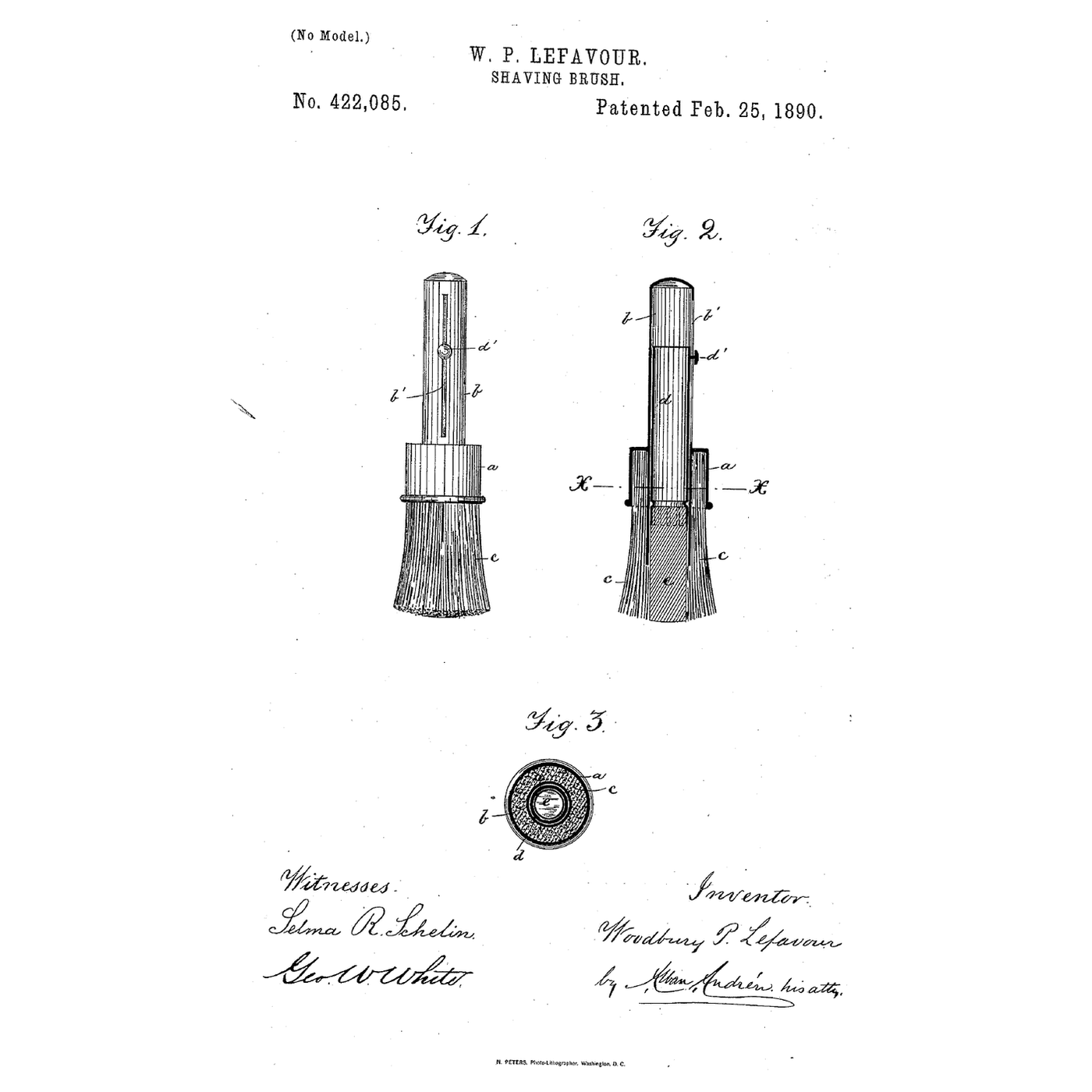
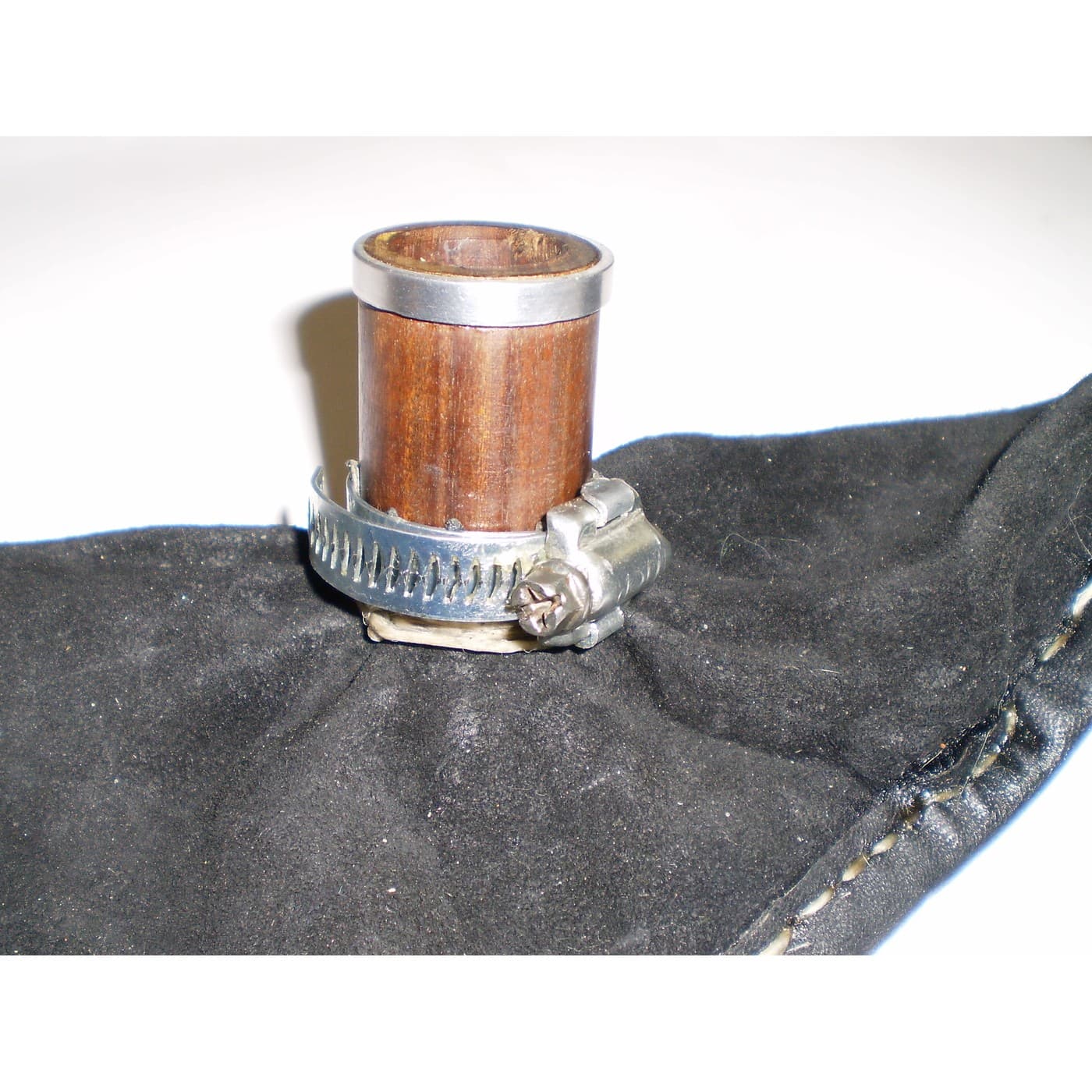
1Blueprint tó jọra
Àwọn blueprint wọ̀nyí pín ìmọ̀ — ọ̀nà, ohun-èlò tàbí ìlànà


CC0 Àgbègbè Gbogbogbò
Blueprint yìí ti jáde lábẹ́ CC0. O lè ṣe àdàkọ, yí padà, pín, àti lò láìsí ìyọ̀ǹda.
Ṣàtìlẹ́yìn Olùṣẹ́dá nípa rírà àwọn ọjà nipasẹ̀ Blueprint wọn Ẹ̀san Olùṣẹ́dá tí àwọn Olùtajà gbé kalẹ̀, tàbí ṣẹ̀dá àtúnṣe tuntun ti Blueprint yìí kí o sì fi sínú Blueprint rẹ gẹ́gẹ́ bí ìsopọ̀ láti pín owó-wíwọlé.