IṢẸ́ ỌNÀ
ẸWÀ ÀTI ÌLERA
IṢẸ́ ỌWỌ́
ÀṢÀ ÀTI ÌTÀN
ÌṢERÉ
ÀYÍKÁ
OÚNJẸ ÀTI OHUN MÍMU
REVERSE ENGINEERING
SÁYẸ́ǸSÌ
ERÉ ÌDÁRAYÁ
ÌMỌ̀-Ẹ̀RỌ
ÀWỌN OHUN WÍWỌ̀
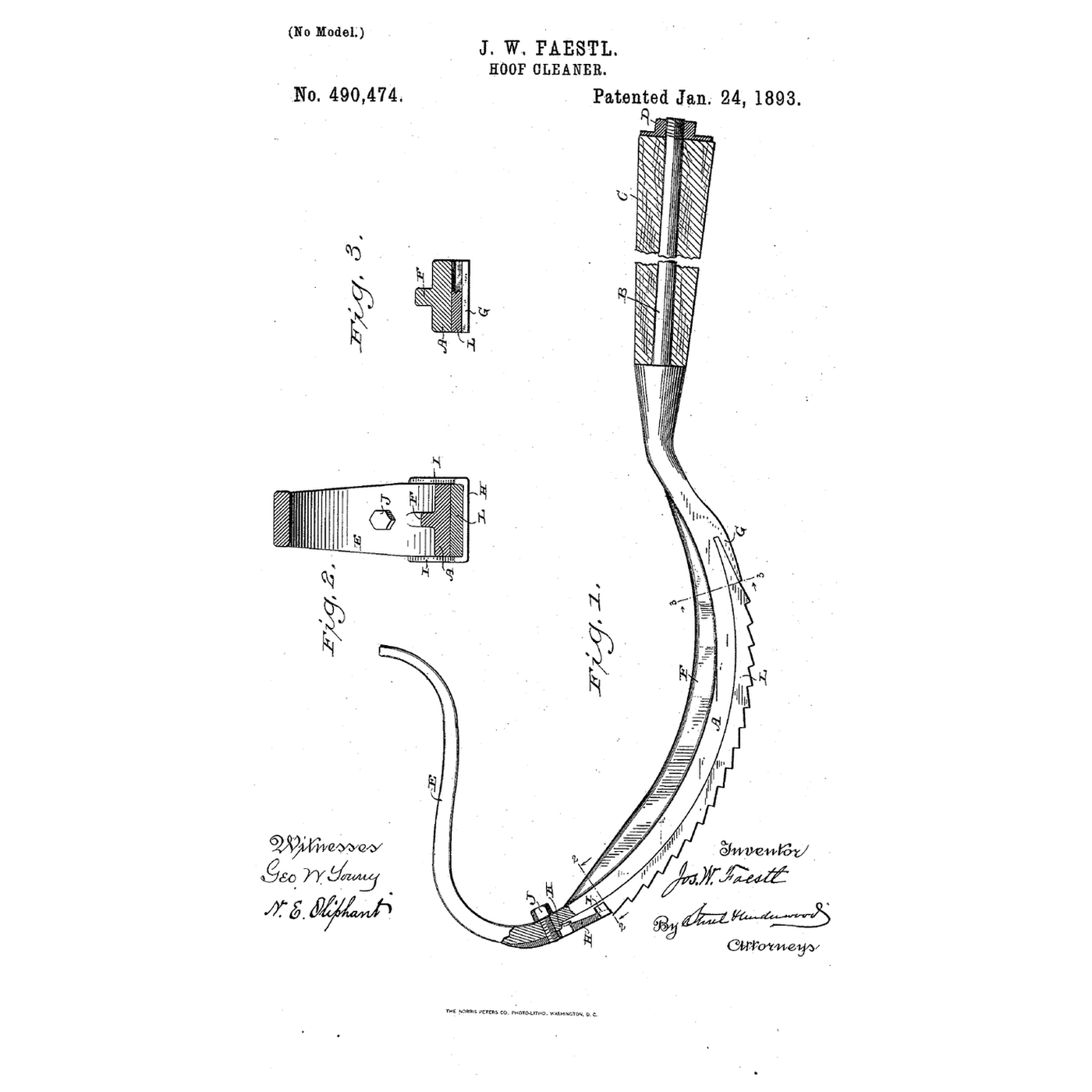


The Two-Handed Hoof Cleaner: A Curved File Between Two Handles
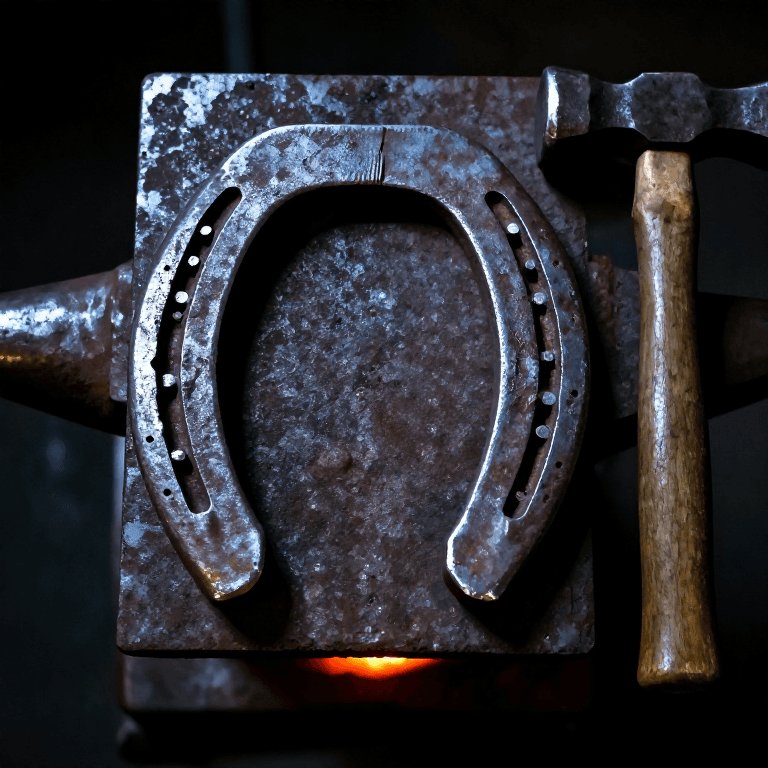
Hard matter packs in between the frog and the crust of a horse's hoof, and in 1888 it was sometimes softened by burning.
Joseph W. Faestl of Troy, Wisconsin, received US 490,474, dated 24 January 1893, for a hoof-cleaner "specially designed for cleaning hard hoofs, and by its use I do away with the injurious practice of burning a hoof in order to soften the accumulations that get in between the frog and crust": a curved back-piece with a wooden handle at one end and a bent hand-grip at the other, holding a curved file between two lips, one fixed by a set screw so a worn file can be changed.
This rung works out the curve that fits the sole, then bends a two-handled back-piece from flat bar and clears clay from a shod test board with an abrasive strip held under its lips.
Àárín
About 4 hours
Ìlànà
1
1
Radius of the back-piece
Radius of the back-piece
Ń ṣí ìwé Jupyter…
2
2
The cutting part
The cutting part
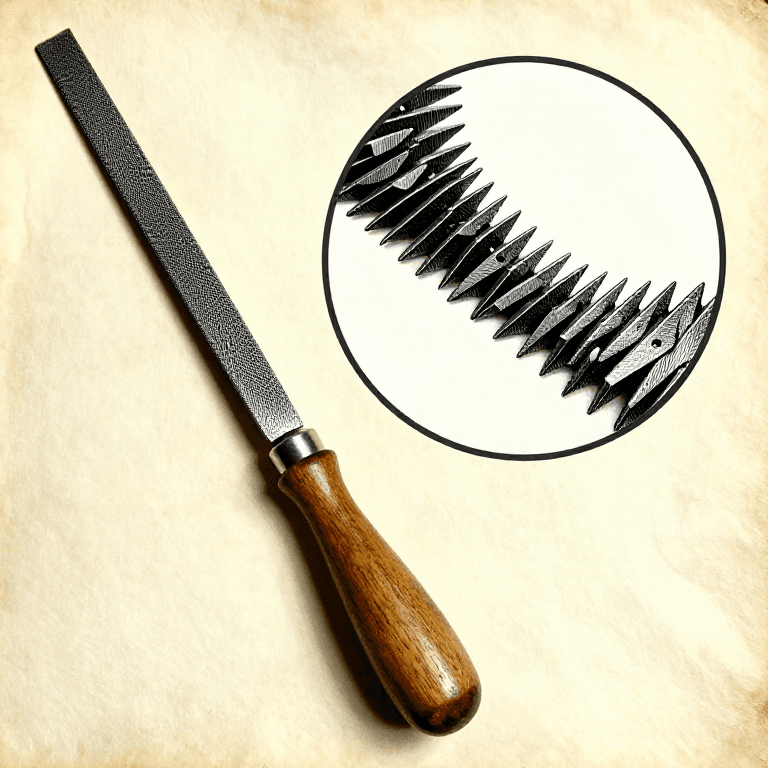
The embedded blueprint explains a file's teeth. Faestl's tool is a holder that curves a file to the hoof and lets it be changed when worn.
3
3
Read US 490,474
Read US 490,474
"Referring by letter to the drawings A represents a curved back-piece that is preferably made of malleable iron and reduced at its rear end to form a shank B for a wooden handle C".
"Should the file L break, or be worn out it is only necessary to detach the lip H in order to remove said file, this operation being very easily effected."
"The operator uses the tool with both hands and said tool being curved all parts of the hoof between the frog and crust can be acted upon and thoroughly cleaned."
4
4
Bend the cleaner and clear a shod board
Bend the cleaner and clear a shod board
Measure the chord and depth of the curve you want on the test board and run the notebook. Cut 40 cm of 25 × 3 mm mild steel flat bar. Heat the middle with the torch and bend it over a steel tube in the vice to the notebook's radius. Bend the front 8 cm up and outward into a hand-grip. Cut a thread on the rear 5 cm with the die, push it through a drilled hardwood handle and hold it with a nut, as Faestl held his.
Cut two short lips from the same bar. Bend the fixed lip and screw it near the handle; drill and tap the other for a machine screw near the grip. Slide a strip of emery cloth under both lips so it lies along the outside of the curve, and tighten the screw.
Nail a horseshoe to a hardwood board, pack its inside with modelling clay and let it stiffen for a day. Hold the cleaner in both hands and work the clay out; time it and note how many times the strip has to be changed.
Àwọn ohun èlò fún ìgbésẹ̀ yìí:
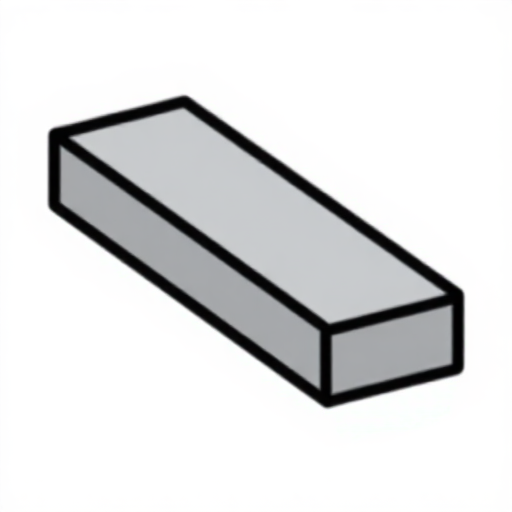 Ọ̀pá Pẹrẹsẹ Irin Pẹ́lẹ́1 ẹyọ
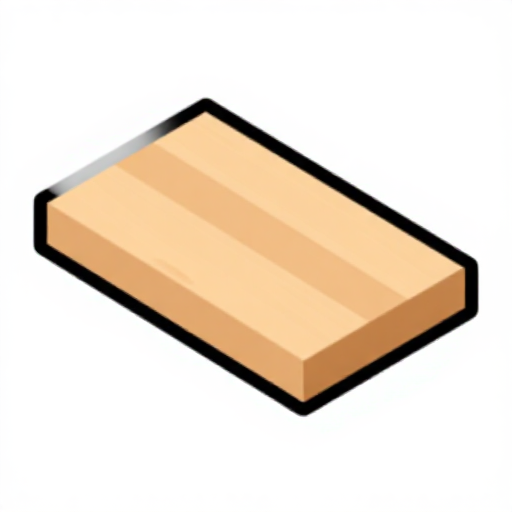 Pátákó Igi Líle1 ẹyọ
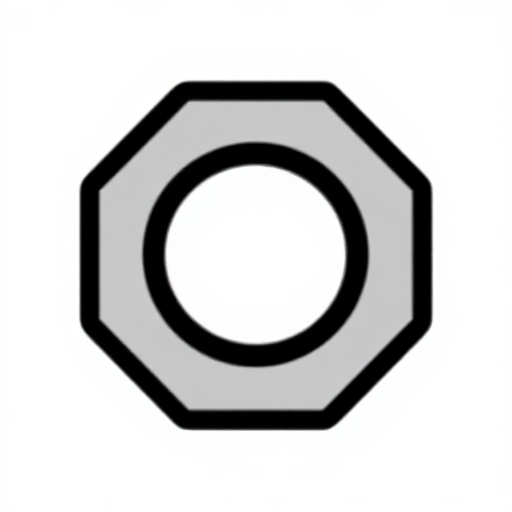 Nọ́ọ̀tì Onígun Mẹ́fà1 ẹyọ
 Skurú ẹ̀rọ2 ẹyọ
 Aṣọ emery1 ẹyọ
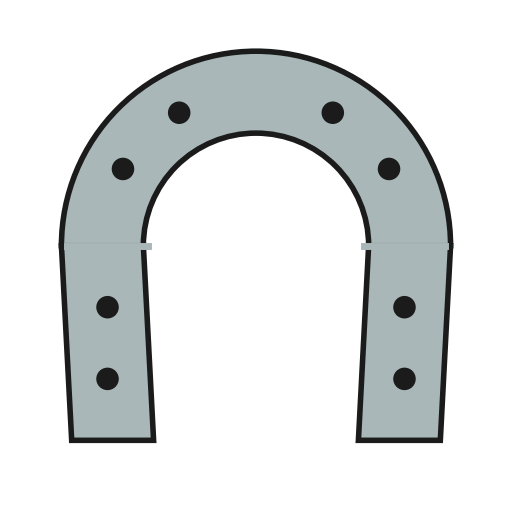 Bàtà irin ẹṣin1 ẹyọ
 Ìṣó bàtà ẹṣin4 ẹyọ
 Amọ̀ ìṣe àwòrán1 ẹyọ
Àwọn irinṣẹ́ tí a nílò:
 Ọ̀pá Iná Pùróféènì
 Ìdìmú Tábìlì
 Ọ̀pá yíká irin rírọ̀
 Ayùn Irin
 Ẹ̀rọ ìgé ihá ìdábùú
 Ẹ̀rọ Ìlùkòkò Aláìlókùn
 Àkójọ Orí Ìlùkòkò
 Òòlù
Òòlù Fáìlì èékánná ẹṣin
 Aago Ìdúró
 Ìbọ̀wọ́ Iṣẹ́ Awọ
 Gílásì Ààbò Tí Ó Mọ́
5
5
A cleaner that skids, slips its strip or will not reach
A cleaner that skids, slips its strip or will not reach
Two-handed hoof cleaner troubleshooting.
Flow
Loading...
6
6
History and honest limits
History and honest limits
**Joseph W. Faestl** of Troy, Walworth County, Wisconsin, filed US 490,474 on 24 May 1888; it is dated 24 January 1893. He signed it at Eagle, Waukesha County. He preferred malleable iron for the back-piece and added a strengthening rib on its rear side.
**Honest limits.** A strip of emery cloth stands in for Faestl's curved file, and mild steel for malleable iron. The notebook treats the groove as part of a circle. Sizes are examples; your clearing time is the result.
Àwọn ohun-èlò
8- Àyè
- 1 ẹyọÀyè
- 1 ẹyọÀyè
- 2 ẹyọÀyè
- 1 ẹyọÀyè
- 1 ẹyọÀyè
- 4 ẹyọÀyè
- 1 ẹyọÀyè
Àwọn irinṣẹ́ tó nílò
12- Àyè
- Àyè
- 1 vendor sell this, none ship to you yetÀyè
- Àyè
- Àyè
Blueprint tó jọra
Àwọn blueprint wọ̀nyí pín ìmọ̀ — ọ̀nà, ohun-èlò tàbí ìlànà
CC0 Àgbègbè Gbogbogbò
Blueprint yìí ti jáde lábẹ́ CC0. O lè ṣe àdàkọ, yí padà, pín, àti lò láìsí ìyọ̀ǹda.
Ṣàtìlẹ́yìn Olùṣẹ́dá nípa rírà àwọn ọjà nipasẹ̀ Blueprint wọn Ẹ̀san Olùṣẹ́dá tí àwọn Olùtajà gbé kalẹ̀, tàbí ṣẹ̀dá àtúnṣe tuntun ti Blueprint yìí kí o sì fi sínú Blueprint rẹ gẹ́gẹ́ bí ìsopọ̀ láti pín owó-wíwọlé.