IṢẸ́ ỌNÀ
ẸWÀ ÀTI ÌLERA
IṢẸ́ ỌWỌ́
ÀṢÀ ÀTI ÌTÀN
ÌṢERÉ
ÀYÍKÁ
OÚNJẸ ÀTI OHUN MÍMU
REVERSE ENGINEERING
SÁYẸ́ǸSÌ
ERÉ ÌDÁRAYÁ
ÌMỌ̀-Ẹ̀RỌ
ÀWỌN OHUN WÍWỌ̀

Twisted-Strip Egg Beater: Faces Beat and Edges Cut
A wire beater passes through the egg and leaves a wake without much froth.
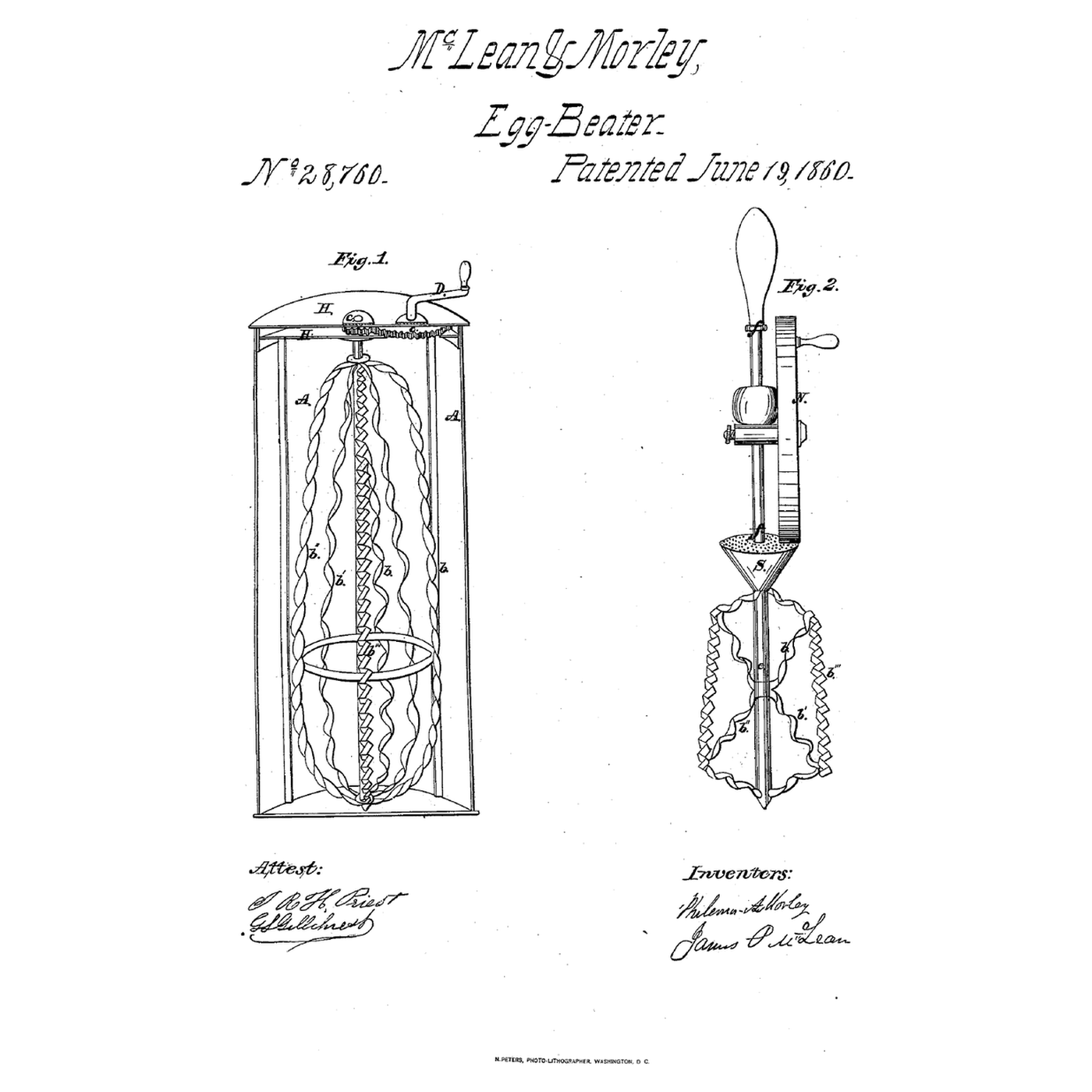
James P. McLean and Philemon A. Morley of Brooklyn received US 28,760, dated 19 June 1860, for an egg beater of corrugated or twisted strips of tin turned inside a can by a large and a small cog gear set between the double heads of its lid: "by means of twisted or corrugated strips of metal the gelatin mass is beaten by the flat surfaces as well as being broken or cut by the sharp edges thereof."
This rung works out how much of a twisted face pushes, then prints the gears and a cage of twisted strips, builds the lid drive on a can, and times a beating.
Àárín
About 4 hours, plus printing
Ìlànà
1
1
How a twisted face beats
How a twisted face beats
Ń ṣí ìwé Jupyter…
2
2
A geared wire beater before it
A geared wire beater before it
The embedded blueprint beats with bent wires. McLean and Morley use twisted strips with faces and edges.
3
3
Read US 28,760
Read US 28,760
"The superiority of our arrangement of egg beaters over those that are in common use, is that by means of twisted or corrugated strips of metal the gelatin mass is beaten by the flat surfaces as well as being broken or cut by the sharp edges thereof, hence the action is analogous to the motion produced by the hand and spoon, whereas an ordinary wire beater simply passes through the egg like the rudder of a boat, leaving a simple wake behind it without producing an immediate fomentation as is the case with our beater."
4
4
Print the gears and cage
Print the gears and cage
Print the 36-tooth gear (/uploads/blueprints/twisted-strip-egg-beater-gear-36.stl), the 12-tooth gear (/uploads/blueprints/twisted-strip-egg-beater-gear-12.stl) and the cage of four twisted strips (/uploads/blueprints/twisted-strip-egg-beater-cage.stl). Print in PETG at 0.2 mm layers, 30 % infill, 4 walls.
Àwọn ohun èlò fún ìgbésẹ̀ yìí:
 Okùn PETG1 ẹyọ
Àwọn irinṣẹ́ tí a nílò:
 Ẹ̀rọ ìtẹ̀ 3D oníwàyà (FDM)
5
5
Make the double lid
Make the double lid
Cut two plywood disks to the can's mouth. Space them 20 mm apart on three M5 screws with nuts, and drill both for the crank shaft and the cage shaft 48 mm apart.
Àwọn ohun èlò fún ìgbésẹ̀ yìí:
 Àwo igi tí a lẹ̀ pọ̀1 ẹyọ
 Skurú ẹ̀rọ1 ẹyọ
 Nọ́ọ̀tì Onígun Mẹ́fà1 ẹyọ
 Wáṣà Pẹrẹsẹ1 ẹyọ
Àwọn irinṣẹ́ tí a nílò:
 Ayùn Kópìngì
 Ẹ̀rọ Ìlùkòkò Aláìlókùn
 Àkójọ Orí Ìlùkòkò
 Kọ́kọ́rọ́ tí a lè ṣàtúnṣe
 Òṣùwọ̀n Kálípà Díjítà Ìnṣì 6
6
6
Fit the shafts and gears
Fit the shafts and gears
Epoxy the large gear on a crank shaft of 5 mm rod with a bent handle, and the small gear on the cage shaft, both between the heads. Epoxy the cage on the cage shaft's lower end.
Àwọn ohun èlò fún ìgbésẹ̀ yìí:
 Ọ̀pá Róbótó Irin Rírọ̀1 ẹyọ
 Ẹpọ́ksì Ẹ̀yà Méjì1 ẹyọ
Àwọn irinṣẹ́ tí a nílò:
 Ayùn Irin
 Ìdìmú Tábìlì
 Ẹmú Ẹnu Pẹrẹsẹ
7
7
The patent drawing
The patent drawing
US 28,760 drawing sheet, public domain (expired patent).
8
8
Beat egg whites
Beat egg whites
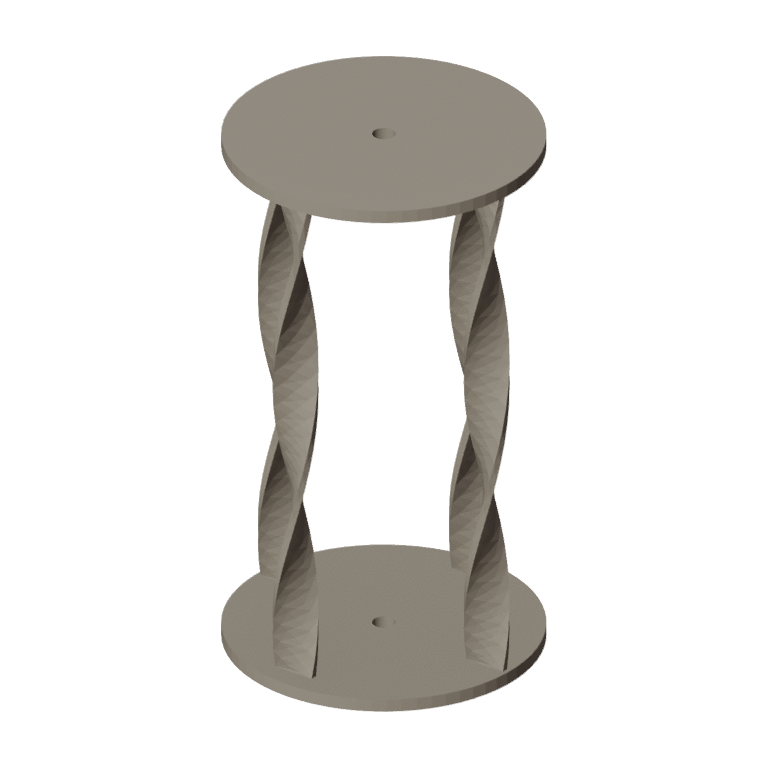
Put two egg whites in the can, fit the lid, and crank about once a second; time to stiff peaks.
Àwọn ohun èlò fún ìgbésẹ̀ yìí:
 Ìgò irin1 ẹyọ
 Ẹyin2 ẹyọ
Àwọn irinṣẹ́ tí a nílò:
 Aago Ìdúró
9
9
Gears that skip, a cage that scrapes
Gears that skip, a cage that scrapes
Twisted-strip egg beater troubleshooting.
Flow
Loading...
10
10
History and honest limits
History and honest limits
**James P. McLean** and **Philemon A. Morley** of Brooklyn, assignors to P. A. Morley, received US 28,760, dated 19 June 1860. Their Fig. 2, for bakers, puts the strips on a vertical water-tight cylinder turning round a stationary handle, driven by a hand wheel whose rubber band grips the cylinder's grater-like funnel top instead of cog wheels. They claimed the twisted beaters in combination with the cylinder.
**Honest limits.** FDM prints hold food in their layer lines, so wash well and replace when worn. Printed strips and plywood heads stand in for tin. Your times are the result.
Àwọn ohun-èlò
9- 1 ẹyọÀyè
- 1 ẹyọÀyè
- 1 ẹyọÀyè
- 1 ẹyọÀyè
- 1 ẹyọÀyè
- Àyè
- 1 ẹyọÀyè
- 1 ẹyọÀyè
- 2 ẹyọÀyè
Àwọn irinṣẹ́ tó nílò
10- Àyè
- 1 vendor sell this, none ship to you yetÀyè
- Àyè
- Àyè
- Àyè
Ìtọ́nisọ́nà yìí ń ṣe
Blueprint tó jọra
Àwọn blueprint wọ̀nyí pín ìmọ̀ — ọ̀nà, ohun-èlò tàbí ìlànà
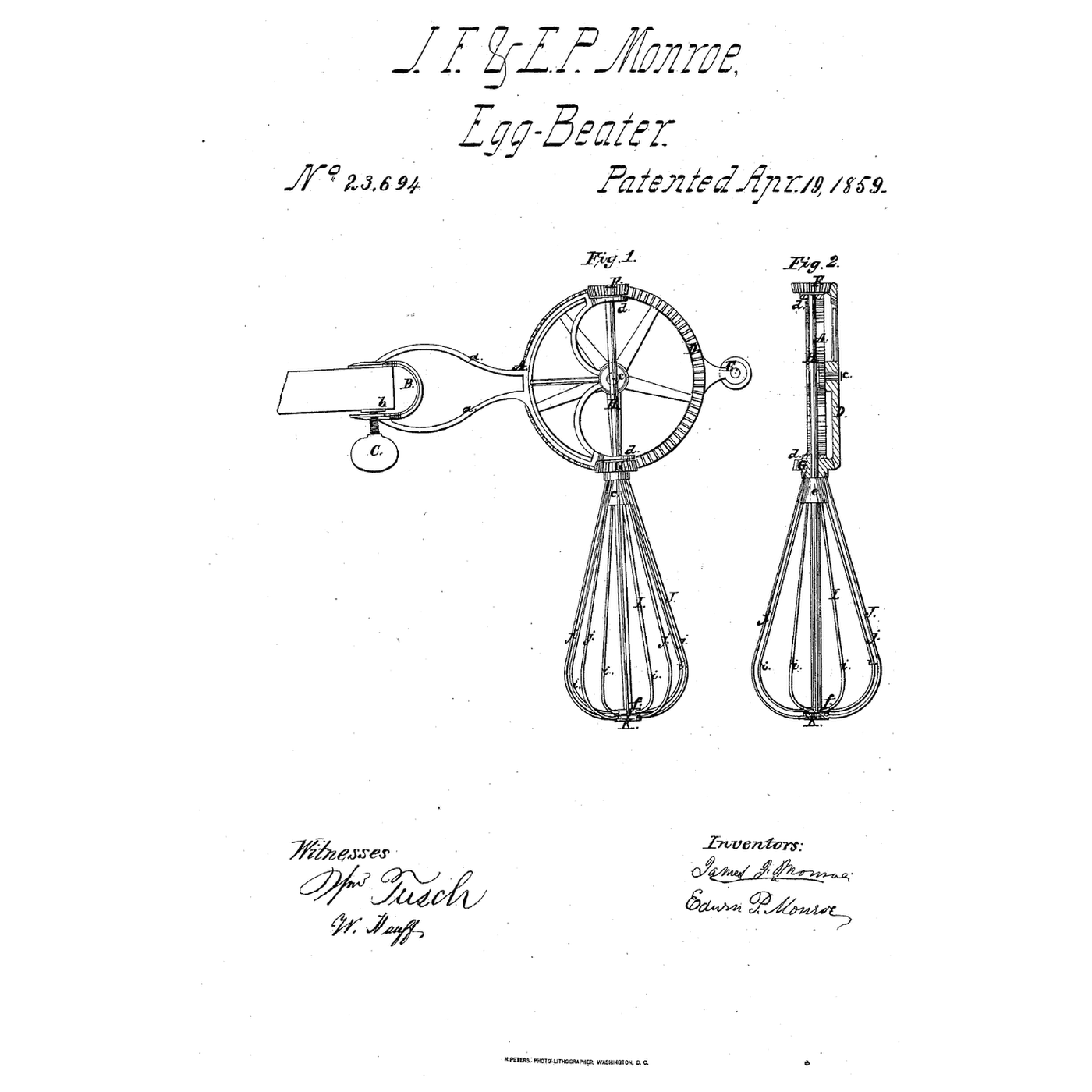
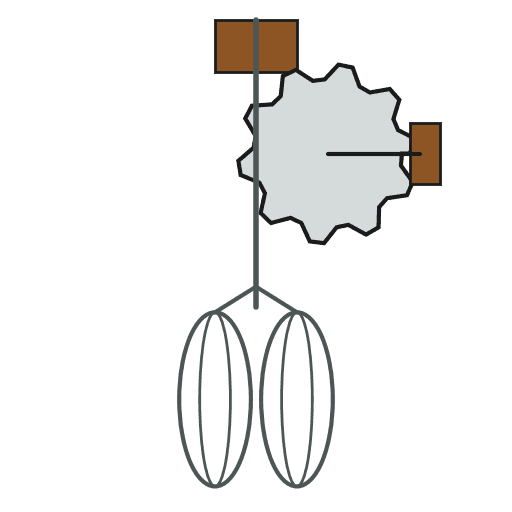
Counter-Rotating Egg Beater: One Wheel, Two Beaters Turning Opposite Ways
láti ọwọ́ Martin
OÚNJẸ ÀTI OHUN MÍMU
29
0
0
0
0
0
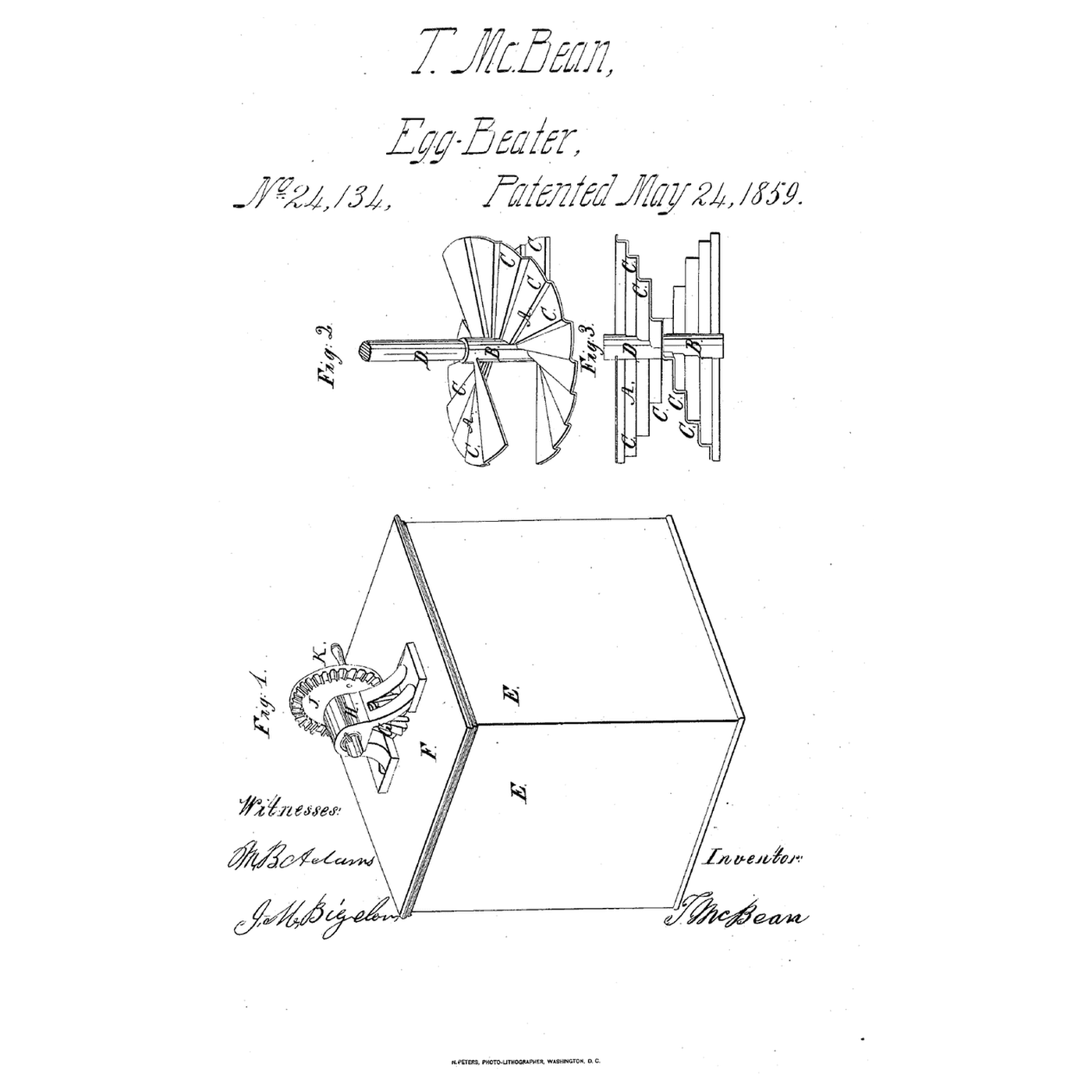
Stepped Spiral Egg Beater: A Stepped Dasher Spun in a Square Box
láti ọwọ́ Martin
OÚNJẸ ÀTI OHUN MÍMU
22
0
0
0
0
0
Gear Trains: Idlers, Compounding and Hitting a Given Ratio
láti ọwọ́ Martin
Ìmọ̀ Ẹ̀rọ
38
0
0
0
0
0
CC0 Àgbègbè Gbogbogbò
Blueprint yìí ti jáde lábẹ́ CC0. O lè ṣe àdàkọ, yí padà, pín, àti lò láìsí ìyọ̀ǹda.
Ṣàtìlẹ́yìn Olùṣẹ́dá nípa rírà àwọn ọjà nipasẹ̀ Blueprint wọn Ẹ̀san Olùṣẹ́dá tí àwọn Olùtajà gbé kalẹ̀, tàbí ṣẹ̀dá àtúnṣe tuntun ti Blueprint yìí kí o sì fi sínú Blueprint rẹ gẹ́gẹ́ bí ìsopọ̀ láti pín owó-wíwọlé.