IṢẸ́ ỌNÀ
ẸWÀ ÀTI ÌLERA
IṢẸ́ ỌWỌ́
ÀṢÀ ÀTI ÌTÀN
ÌṢERÉ
ÀYÍKÁ
OÚNJẸ ÀTI OHUN MÍMU
REVERSE ENGINEERING
SÁYẸ́ǸSÌ
ERÉ ÌDÁRAYÁ
ÌMỌ̀-Ẹ̀RỌ
ÀWỌN OHUN WÍWỌ̀
Understanding Lanthanum from Monazite — The Hidden Element That Bends Light
Àárín
Ìlànà
1
1
Understand Lanthanum's Discovery
Understand Lanthanum's Discovery
Carl Gustaf Mosander discovered lanthanum in 1839 by carefully reprocessing cerium oxide, which earlier chemists had assumed was pure. He separated a new oxide that he named lanthanum from Greek 'lanthanein' (to lie hidden) — because it had been hiding inside cerium oxide for decades. This pattern repeated throughout the 19th century as chemists discovered one rare earth after another lurking inside supposedly pure samples of their neighbors.
2
2
Identify Lanthanum Sources in Monazite and Bastnasite
Identify Lanthanum Sources in Monazite and Bastnasite
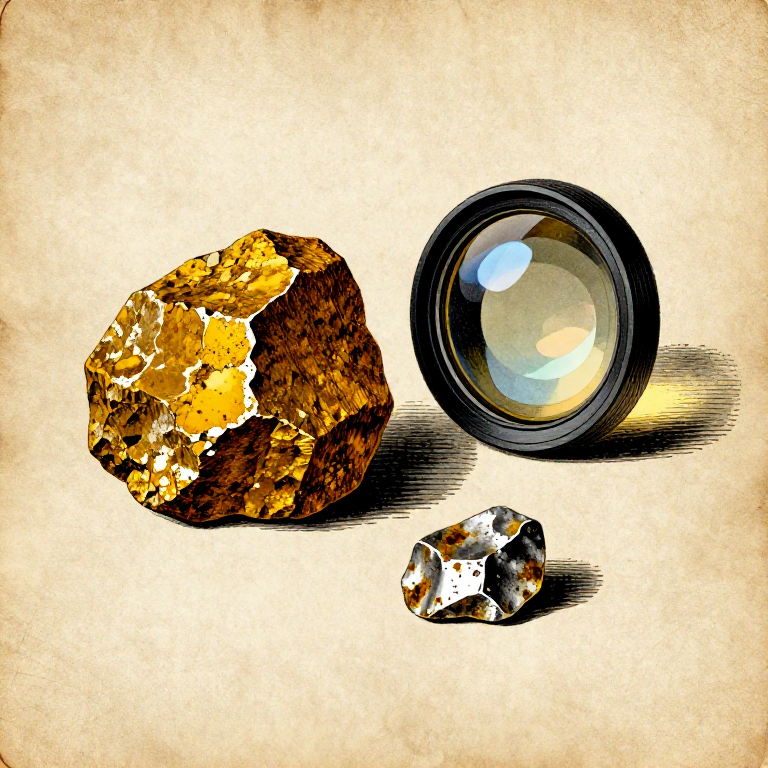
Lanthanum is the third most abundant rare earth element at 39 ppm in Earth's crust — more common than lead or tin. Bastnasite (La,Ce)CO₃F at Bayan Obo (China) and Mountain Pass (California) contains 25-30% lanthanum oxide. Monazite (Ce,La,Nd)PO₄ from beach sands in Australia, India, and Brazil carries 20-25% La₂O₃. These two minerals account for over 95% of rare earth production worldwide.
Àwọn ohun èlò fún ìgbésẹ̀ yìí:
 Àpẹẹrẹ monazite
Àwọn irinṣẹ́ tí a nílò:
 Gílásì Ìgbéga Ọwọ́ 10xGílásì Ìgbéga Ọwọ́ 10x
 Àwo Ìlà (Pọ́sílénì Tí Kò Ní Ìtàn)
 Àwọn Igi Líle Mohs
3
3
Trace the Rare Earth Extraction Process
Trace the Rare Earth Extraction Process
Bastnasite is roasted to remove CO₂, then leached with hydrochloric acid. Monazite requires hot sodium hydroxide attack to break down the phosphate matrix. The resulting rare earth chloride or hydroxide solution contains all 15 lanthanides mixed together. Solvent extraction with organophosphoric acids in counter-current mixer-settler cascades separates individual elements. Lanthanum, being the lightest, emerges first from the cascade.
Àwọn irinṣẹ́ tí a nílò:
 Gílásì Ààbò Tí Ó Sé
 Ìbọ̀wọ́ Tí Ń Kojú Kẹ́míkà
4
4
Examine Lanthanum Metal Properties
Examine Lanthanum Metal Properties
Lanthanum is a soft, silvery-white metal that tarnishes rapidly in air, forming a white oxide coating. It is the softest lanthanide — easily cut with a knife. Melting point is 920°C, density 6.15 g/cm³. Unlike most rare earths, lanthanum has no unpaired 4f electrons and is therefore diamagnetic and colorless in solution. Lanthanum metal powder is pyrophoric and must be handled under inert atmosphere.
5
5
Explore Optical Glass Applications
Explore Optical Glass Applications
Lanthanum oxide (La₂O₃) is the most important rare earth in optics — adding 20-40% to glass produces high-refractive-index, low-dispersion lenses essential for camera objectives, telescopes, and binoculars. Lanthanum glass bends light strongly without splitting colors, enabling sharper images with fewer lens elements. Every high-quality camera lens from Canon, Nikon, and Leica contains multiple lanthanum glass elements.
6
6
Understand Fluid Catalytic Cracking
Understand Fluid Catalytic Cracking
Lanthanum-exchanged zeolite Y is the primary catalyst for fluid catalytic cracking (FCC) — the refinery process that converts heavy crude oil fractions into gasoline. Lanthanum stabilizes the zeolite crystal structure at the 700°C cracking temperatures and increases catalytic activity. Every oil refinery on Earth uses lanthanum-containing FCC catalysts. This single application consumes approximately 25% of global lanthanum production.
7
7
Discover Nickel-Metal Hydride Batteries
Discover Nickel-Metal Hydride Batteries
Lanthanum-nickel alloy (LaNi₅) absorbs hydrogen reversibly at room temperature and moderate pressure — the basis of nickel-metal hydride (NiMH) battery negative electrodes. The Toyota Prius and other hybrid vehicles used NiMH batteries containing 10-15 kg of lanthanum-rich mischmetal per pack. Though lithium-ion batteries are replacing NiMH in full EVs, NiMH remains preferred for hybrids due to superior safety and cycle life.
8
8
Survey Mischmetal and Lighter Flint Uses
Survey Mischmetal and Lighter Flint Uses
Mischmetal — an unseparated alloy of cerium (50%), lanthanum (25%), neodymium (18%), and praseodymium (5%) — is the cheapest rare earth product because it requires no separation. Alloyed with 30% iron, it forms ferrocerium, the 'flint' in cigarette lighters and fire steels. Striking ferrocerium shears off particles that oxidize instantly at 3,000°C. Mischmetal is also added to steel and cast iron to remove sulfur and oxygen impurities.
9
9
Examine Phosphor and Ceramic Uses
Examine Phosphor and Ceramic Uses
Lanthanum phosphate (LaPO₄) doped with cerium and terbium creates the green phosphor in fluorescent lamps. Lanthanum chromite (LaCrO₃) is a high-temperature electronic conductor used as interconnects in solid oxide fuel cells. Lanthanum manganite serves as the cathode material. Lanthanum-barium-copper oxide was among the first high-temperature superconductors discovered in 1986, earning Bednorz and Müller the Nobel Prize.
10
10
Document Findings and Market Position
Document Findings and Market Position
Record lanthanum's key data: atomic number 57, density 6.15 g/cm³, melting point 920°C, soft silvery-white metal. Lanthanum is the most abundant and cheapest rare earth — priced at $2-5 per kilogram of oxide, compared to $200+ for dysprosium or terbium. China controls 70% of global rare earth production. Lanthanum's abundance makes it the 'workhorse' rare earth: applications that can use lanthanum instead of scarcer lanthanides should.
Àwọn irinṣẹ́ tí a nílò:
 Òṣùwọ̀n Pípé
11
11
Ore grade: how much monazite per kilogram
Ore grade: how much monazite per kilogram
Ń ṣí ìwé Jupyter…
Àwọn ohun-èlò
1- 1 ẹyọÀyè
Àwọn irinṣẹ́ tó nílò
6- Àyè
Àwọn Ohun Èlò Ìtọ́nisọ́nà Tí A So Pọ̀

Léwu
10% Ìpín
Extracting Neodymium-Rich Rare Earth Oxide from Monazite — The Magnet Metal That Reshaped Technology
láti ọwọ́ Peter
Ìwakùsà
37
0
0
0
11
0
Léwu
10% Ìpín
Understanding Yttrium from Xenotime — The Rare Earth That Lights Red Screens
láti ọwọ́ Peter
Ìwakùsà
42
0
0
0
12
0
10% Ìpín
Understanding Barium from Baryte — The Heavy Earth That Glows in the Dark
láti ọwọ́ Peter
Ìwakùsà
45
0
0
0
3
0
10% Ìpín
Understanding Strontium from Celestine — The Element That Paints Fireworks Red
láti ọwọ́ Peter
Ìwakùsà
58
0
0
0
3
0

10% Ìpín
Burning Quicklime from Limestone — The Element That Built Civilization
láti ọwọ́ Peter
Ìgbà Àtijọ́
77
0
0
0
6
0
Blueprint tó jọra
Àwọn blueprint wọ̀nyí pín ìmọ̀ — ọ̀nà, ohun-èlò tàbí ìlànà
Extracting Iron from Hematite — Bloomery Smelting from Ore to Bloom
láti ọwọ́ Peter
Iṣẹ́ Irin
149
0
0
0
12
0
Léwu
Extracting Nickel from Pentlandite — The Devil's Copper That Wouldn't Behave
láti ọwọ́ Peter
Iṣẹ́ Irin
51
0
0
0
5
0
Generating Hydrogen Gas from Acid and Metal — The Lightest Element in the Universe
láti ọwọ́ Peter
Ìgbà Àtijọ́
78
0
0
0
3
0
CC0 Àgbègbè Gbogbogbò
Blueprint yìí ti jáde lábẹ́ CC0. O lè ṣe àdàkọ, yí padà, pín, àti lò láìsí ìyọ̀ǹda.
Ṣàtìlẹ́yìn Olùṣẹ́dá nípa rírà àwọn ọjà nipasẹ̀ Blueprint wọn Ẹ̀san Olùṣẹ́dá tí àwọn Olùtajà gbé kalẹ̀, tàbí ṣẹ̀dá àtúnṣe tuntun ti Blueprint yìí kí o sì fi sínú Blueprint rẹ gẹ́gẹ́ bí ìsopọ̀ láti pín owó-wíwọlé.