IṢẸ́ ỌNÀ
ẸWÀ ÀTI ÌLERA
IṢẸ́ ỌWỌ́
ÀṢÀ ÀTI ÌTÀN
ÌṢERÉ
ÀYÍKÁ
OÚNJẸ ÀTI OHUN MÍMU
REVERSE ENGINEERING
SÁYẸ́ǸSÌ
ERÉ ÌDÁRAYÁ
ÌMỌ̀-Ẹ̀RỌ
ÀWỌN OHUN WÍWỌ̀


Roman Sun-Dried Bricks: Chalky or Red Clay with Straw, Moulded in Spring or Autumn, Dried Two Years (Vitruvius)
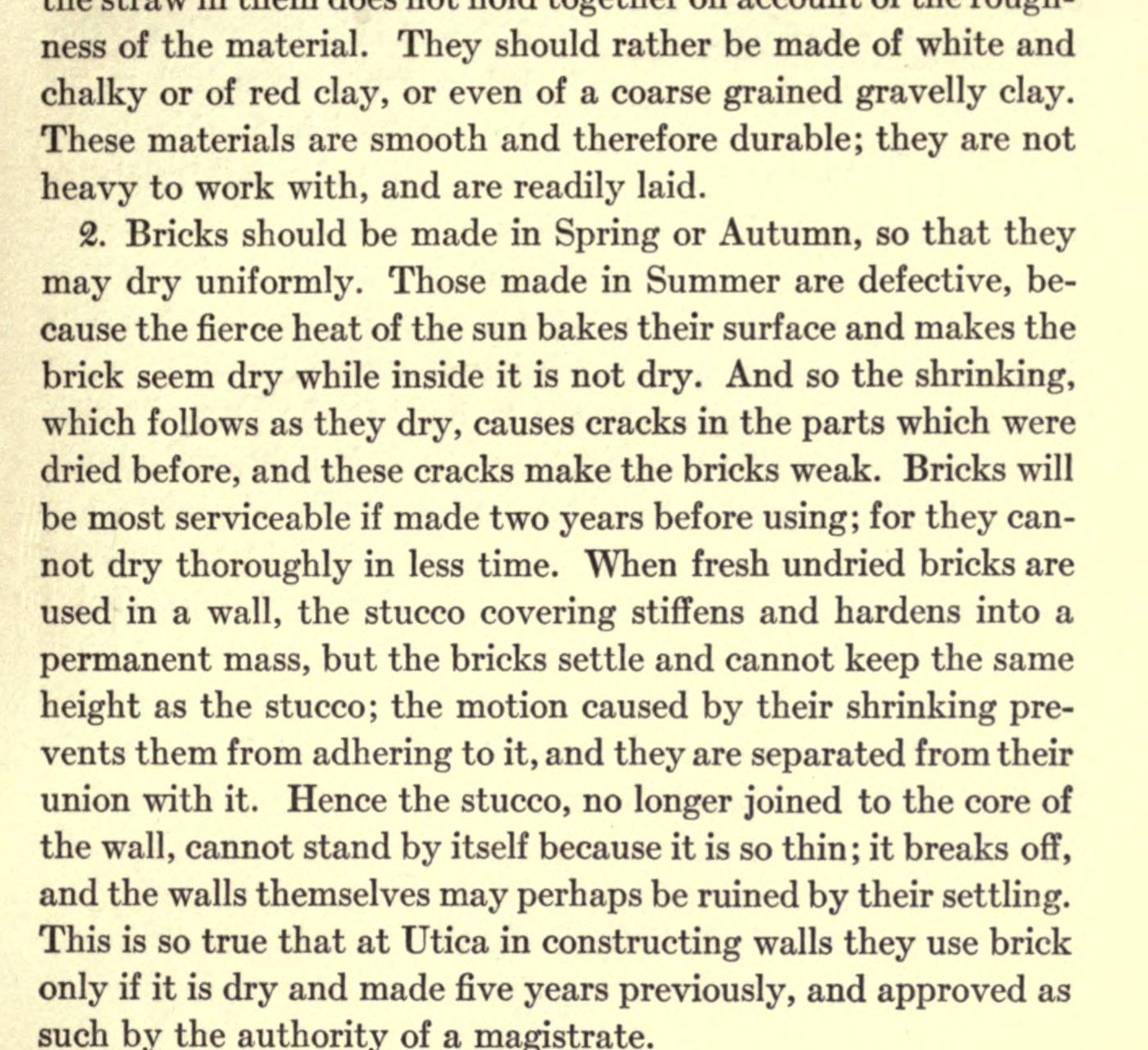
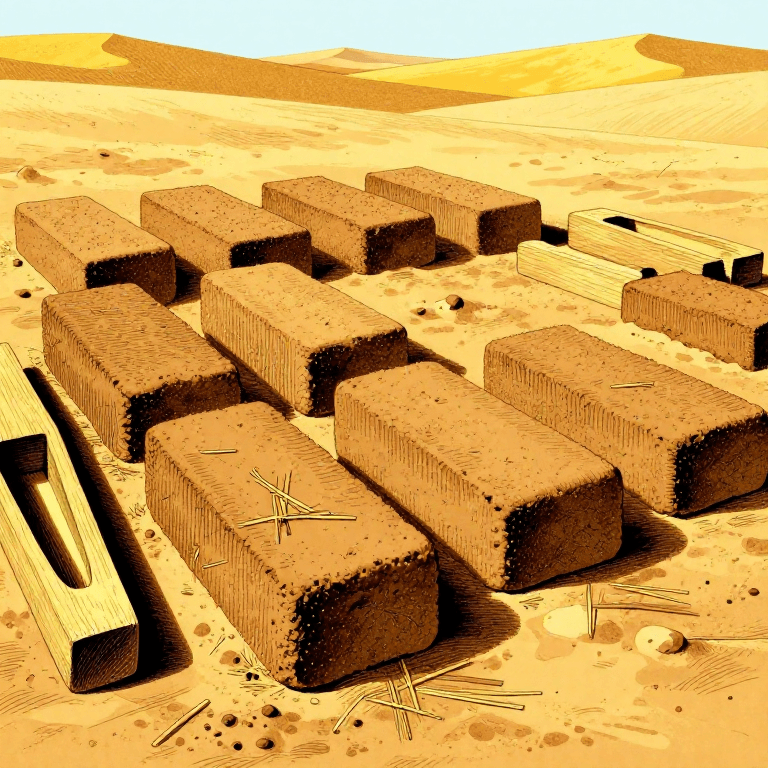
Unburnt brick as Vitruvius describes it in Book II: smooth white-chalky or red clay (never sandy or pebbly) with straw, moulded in spring or autumn so it dries evenly, and left two years before building, in the Roman Lydian size of 1 1/2 by 1 foot or the Greek four- and five-palm squares.
Olùbẹ̀rẹ̀
A day to mould; two years to dry
Ìlànà
1
1
His sizes
His sizes
Ń ṣí ìwé Jupyter…
2
2
Read Vitruvius
Read Vitruvius
"Bricks will be most serviceable if made two years before using; for they cannot dry thoroughly in less time."
3
3
Choose the clay
Choose the clay
Use white chalky clay, red clay, or even a coarse-grained gravelly clay. Not sandy or pebbly clay or fine gravel: such bricks are heavy, break up in the rain, and the straw will not hold in them.
Àwọn ohun èlò fún ìgbésẹ̀ yìí:
 Amọ̀1 ẹyọ
Àwọn irinṣẹ́ tí a nílò:
 Ọkọ́
4
4
Temper with straw
Temper with straw
Work the clay with water and straw into a stiff mass (amounts ours).
Àwọn ohun èlò fún ìgbésẹ̀ yìí:
Amọ̀1 ẹyọ Koríko Gbígbẹ Gígé1 ẹyọ
 Omi1 ẹyọ
Àwọn irinṣẹ́ tí a nílò:
 Ọkọ́
 Bàkẹ́ẹ̀tì
5
5
Mould in spring or autumn
Mould in spring or autumn
Mould the bricks in spring or autumn, never summer, when the sun bakes the face dry over a wet core and the shrinking cracks them. Size: Lydian 1 1/2 x 1 ft (about 440 x 300 mm) for Roman work, or the Greek tetradoron (4 palms square) and pentadoron (5 palms square). Make half-bricks too.
Àwọn irinṣẹ́ tí a nílò:
 Àwòṣe igi fún bíríkì
6
6
Dry two years
Dry two years
Stack and let them dry two years before building. Fresh bricks shrink and settle in the wall, the stucco parts from them and breaks off. (At Utica only bricks five years old, passed by a magistrate, were allowed.)
Àwọn irinṣẹ́ tí a nílò:
Ọkọ́7
7
Troubleshooting
Troubleshooting
Brick troubleshooting.
Flow
Loading...
8
8
History and honest limits
History and honest limits
From Vitruvius, **The Ten Books on Architecture**, Book II ch. III, tr. M. H. Morgan (1914), pp. 42-44 (checked on the archive.org scan vitruviustenbook00vitruoft). He gives no thickness, mould or straw amount; those and the metric sizes (Roman foot taken as about 296 mm) are ours.
Ìtọ́nisọ́nà yìí ń ṣe
Blueprint tó jọra
Àwọn blueprint wọ̀nyí pín ìmọ̀ — ọ̀nà, ohun-èlò tàbí ìlànà

CC0 Àgbègbè Gbogbogbò
Blueprint yìí ti jáde lábẹ́ CC0. O lè ṣe àdàkọ, yí padà, pín, àti lò láìsí ìyọ̀ǹda.
Ṣàtìlẹ́yìn Olùṣẹ́dá nípa rírà àwọn ọjà nipasẹ̀ Blueprint wọn Ẹ̀san Olùṣẹ́dá tí àwọn Olùtajà gbé kalẹ̀, tàbí ṣẹ̀dá àtúnṣe tuntun ti Blueprint yìí kí o sì fi sínú Blueprint rẹ gẹ́gẹ́ bí ìsopọ̀ láti pín owó-wíwọlé.