IṢẸ́ ỌNÀ
ẸWÀ ÀTI ÌLERA
IṢẸ́ ỌWỌ́
ÀṢÀ ÀTI ÌTÀN
ÌṢERÉ
ÀYÍKÁ
OÚNJẸ ÀTI OHUN MÍMU
REVERSE ENGINEERING
SÁYẸ́ǸSÌ
ERÉ ÌDÁRAYÁ
ÌMỌ̀-Ẹ̀RỌ
ÀWỌN OHUN WÍWỌ̀
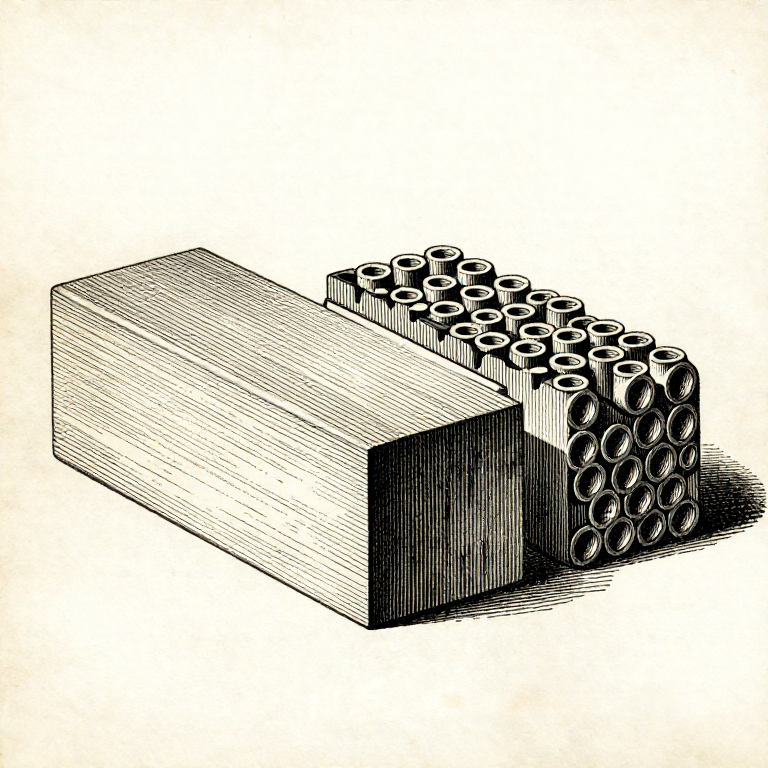


Why a Butt Joint Fails: End Grain Does Not Glue
Glue two long-grain faces together properly and the joint is stronger than the wood — break it and it tears out fibres either side. Glue two END-grain faces together and it comes apart in your hands.
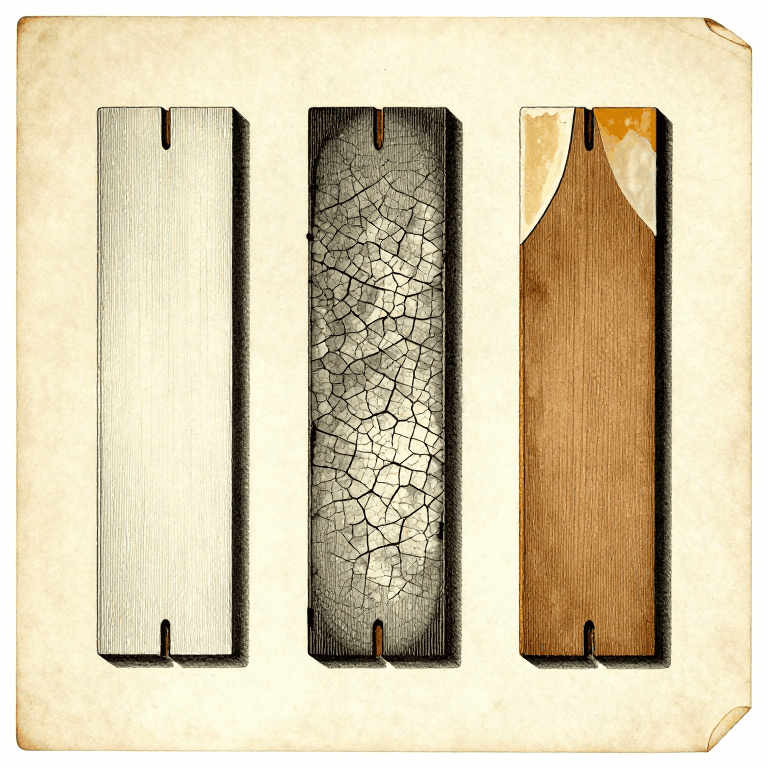
The reason is the cell structure. Long grain presents cell WALLS to be bonded; end grain presents the open ends of hollow tubes, which drink the glue away from the surface and leave a starved joint over very little real contact area.
Every traditional joint in woodworking is, at bottom, a way of turning an end-grain meeting into a long-grain glue surface, a mechanical interlock, or both. Knowing that makes the whole catalogue of joints look less like tradition and more like solutions.
Olùbẹ̀rẹ̀
2 hours
Ìlànà
1
1
What end grain does to glue
What end grain does to glue
End grain wicks glue into the open tubes by capillary action. The surface is left starved, so the bond line has too little adhesive exactly where it is needed — the starvation failure the glue batch describes, produced by the timber rather than by the clamps.
The contact area is also far smaller than it looks. A long-grain surface is a field of cell walls to bond to; an end-grain surface is mostly open holes, and glue bridging a hole is not holding anything.
SIZING helps and does not cure it: brush on thinned glue, let it soak in and become tacky, then glue normally. That fills the tubes first so the real joint is not starved. It typically gets an end-grain joint to a useful fraction of long-grain strength — better than nothing, nowhere near enough to rely on.
Àwọn ohun èlò fún ìgbésẹ̀ yìí:
 Ìṣù Igi Líle1 ẹyọ
 Ìdìpọ̀ Igi PVA1 ẹyọ
Àwọn irinṣẹ́ tí a nílò:
 Ìdìmú oní-ọ̀pá
2
2
The three cures, and every joint is one of them
The three cures, and every joint is one of them
**Add long grain.** A mortise and tenon works because the tenon's cheeks are long grain glued to the mortise's long-grain walls. The end grain at the bottom of the tenon contributes nothing and is not asked to.
**Add mechanical interlock.** A dovetail resists being pulled apart by its shape alone — the glue is a bonus, which is why antique dovetailed drawers survive with the glue long since failed.
**Add a separate piece of long grain.** A dowel, a loose tenon, a biscuit, a spline. Each one crosses the joint with its own grain running the useful way, turning two end-grain faces into several long-grain glue surfaces.
Àwọn ohun èlò fún ìgbésẹ̀ yìí:
 Òpó Igi Dòwẹ̀lì1 ẹyọÌdìpọ̀ Igi PVA1 ẹyọ
 Pátákó Igi Líle1 ẹyọ
Àwọn irinṣẹ́ tí a nílò:
 Àwọn ìtànná igi
 Ayùn oníkèké
 Ohun èlò ìsàmì
3
3
Long grain to long grain is the joint that needs nothing
Long grain to long grain is the joint that needs nothing
An edge joint — two boards glued edge to edge to make a wider panel — is long grain to long grain the whole way. Properly made it needs no dowels, no biscuits and no splines, and it will not be where the panel breaks.
Dowels and biscuits in an edge joint are for ALIGNMENT during glue-up, not strength. That is a perfectly good reason to use them, but adding them for strength is effort spent on the one part of the joint that was never going to fail.
What an edge joint does need is a straight, square, well-fitted edge and even clamping. That is the clamping-pressure rung, and it is where edge joints actually go wrong.
Àwọn ohun èlò fún ìgbésẹ̀ yìí:
Pátákó Igi Líle2 ẹyọÌdìpọ̀ Igi PVA1 ẹyọÀwọn irinṣẹ́ tí a nílò:
 Ohun èlò ìfárí igi (pìlánì)Ìdìmú oní-ọ̀pá
 Igun Àpapọ̀
4
4
Cross-grain gluing: the mistake that waits a year
Cross-grain gluing: the mistake that waits a year
Gluing one board ACROSS another's width — a solid batten glued across a panel, a wide top glued to a wide rail — puts one piece's several millimetres of seasonal movement against the other's near zero. One of them will give.
It never fails during the build, which is what makes it so common. The glue holds perfectly, the piece looks fine for a season, and it splits in the first dry winter — by which time the cause is not obvious.
The cures are all forms of letting it slide: glue only the middle few centimetres and let the rest float, use slotted screw holes, use tabletop buttons that hook into a groove. A breadboard end does all three at once, and the last rung of this batch is that joint in detail.
Àwọn ohun èlò fún ìgbésẹ̀ yìí:
Pátákó Igi Líle1 ẹyọÌdìpọ̀ Igi PVA1 ẹyọÀwọn irinṣẹ́ tí a nílò:
Ìdìmú oní-ọ̀páOhun èlò ìsàmìÀwọn ohun-èlò
4- 1 ẹyọÀyè
- 4 ẹyọÀyè
- 1 ẹyọÀyè
- 2 ẹyọÀyè
Àwọn irinṣẹ́ tó nílò
6- Àyè
- Àyè
Blueprint tó jọra
Àwọn blueprint wọ̀nyí pín ìmọ̀ — ọ̀nà, ohun-èlò tàbí ìlànà


CC0 Àgbègbè Gbogbogbò
Blueprint yìí ti jáde lábẹ́ CC0. O lè ṣe àdàkọ, yí padà, pín, àti lò láìsí ìyọ̀ǹda.
Ṣàtìlẹ́yìn Olùṣẹ́dá nípa rírà àwọn ọjà nipasẹ̀ Blueprint wọn Ẹ̀san Olùṣẹ́dá tí àwọn Olùtajà gbé kalẹ̀, tàbí ṣẹ̀dá àtúnṣe tuntun ti Blueprint yìí kí o sì fi sínú Blueprint rẹ gẹ́gẹ́ bí ìsopọ̀ láti pín owó-wíwọlé.