IṢẸ́ ỌNÀ
ẸWÀ ÀTI ÌLERA
IṢẸ́ ỌWỌ́
ÀṢÀ ÀTI ÌTÀN
ÌṢERÉ
ÀYÍKÁ
OÚNJẸ ÀTI OHUN MÍMU
REVERSE ENGINEERING
SÁYẸ́ǸSÌ
ERÉ ÌDÁRAYÁ
ÌMỌ̀-Ẹ̀RỌ
ÀWỌN OHUN WÍWỌ̀


Wire-Coil Potato Masher: A Flat Spiral of Wire on Five Braces
A solid masher has nowhere for the potato to go but sideways.
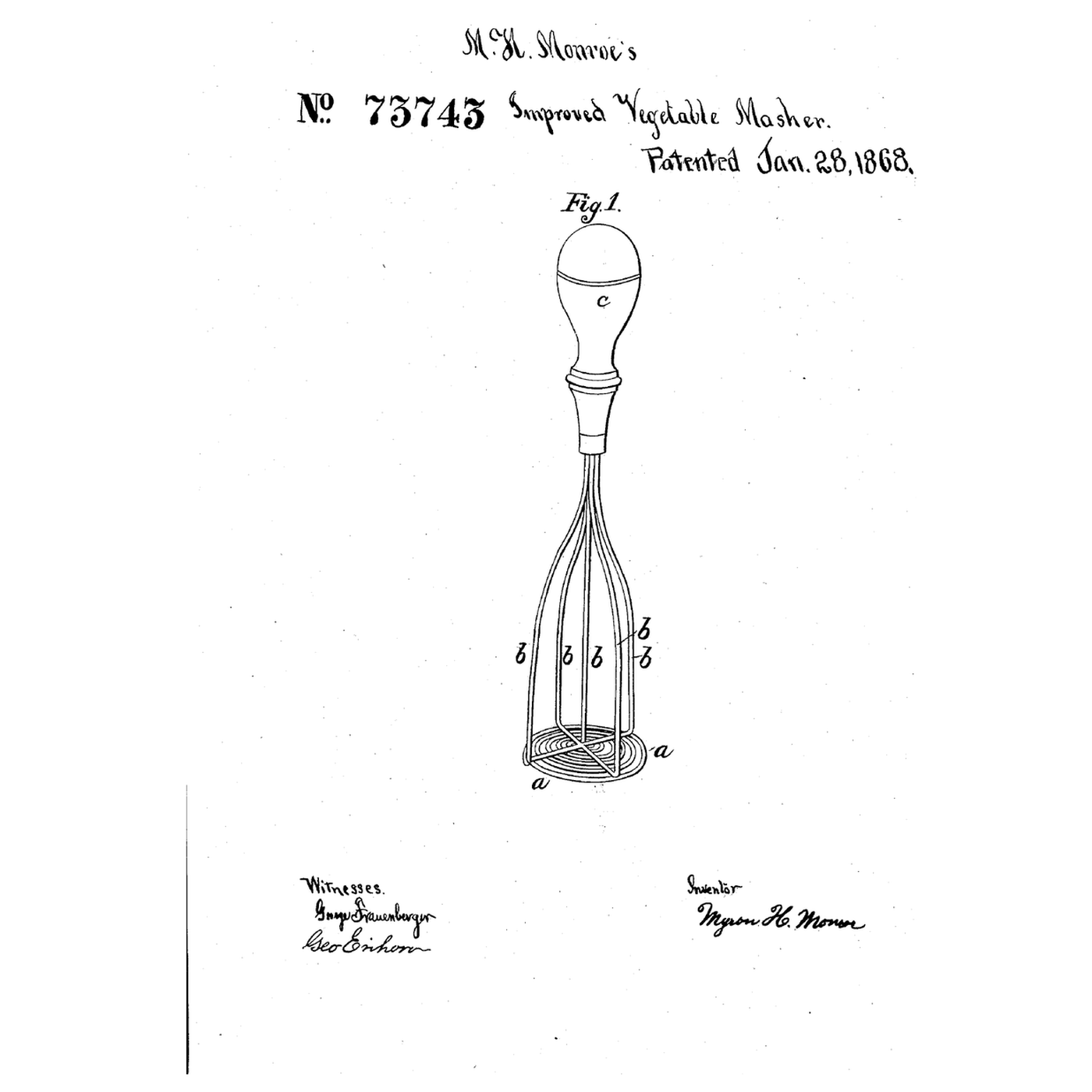
Myron H. Monroe of Rochester, New York, received US 73,743, dated 28 January 1868, for an article for mashing potatoes or other vegetables made of tinned or plated wire: a coil "leaving a space between the wires ... for the purpose of allowing the vegetables to pass through the coil when used," with five braces soldered to it — one at the centre and four round the outer circle — brought together into a handle.
This rung works out the wire needed, then bends the coil and braces from stainless wire, prints the handle, and mashes a pan of potatoes.
Àárín
About 2 hours, plus printing
Ìlànà
1
1
Wire for the coil
Wire for the coil
Ń ṣí ìwé Jupyter…
2
2
Wire kitchen tools before it
Wire kitchen tools before it
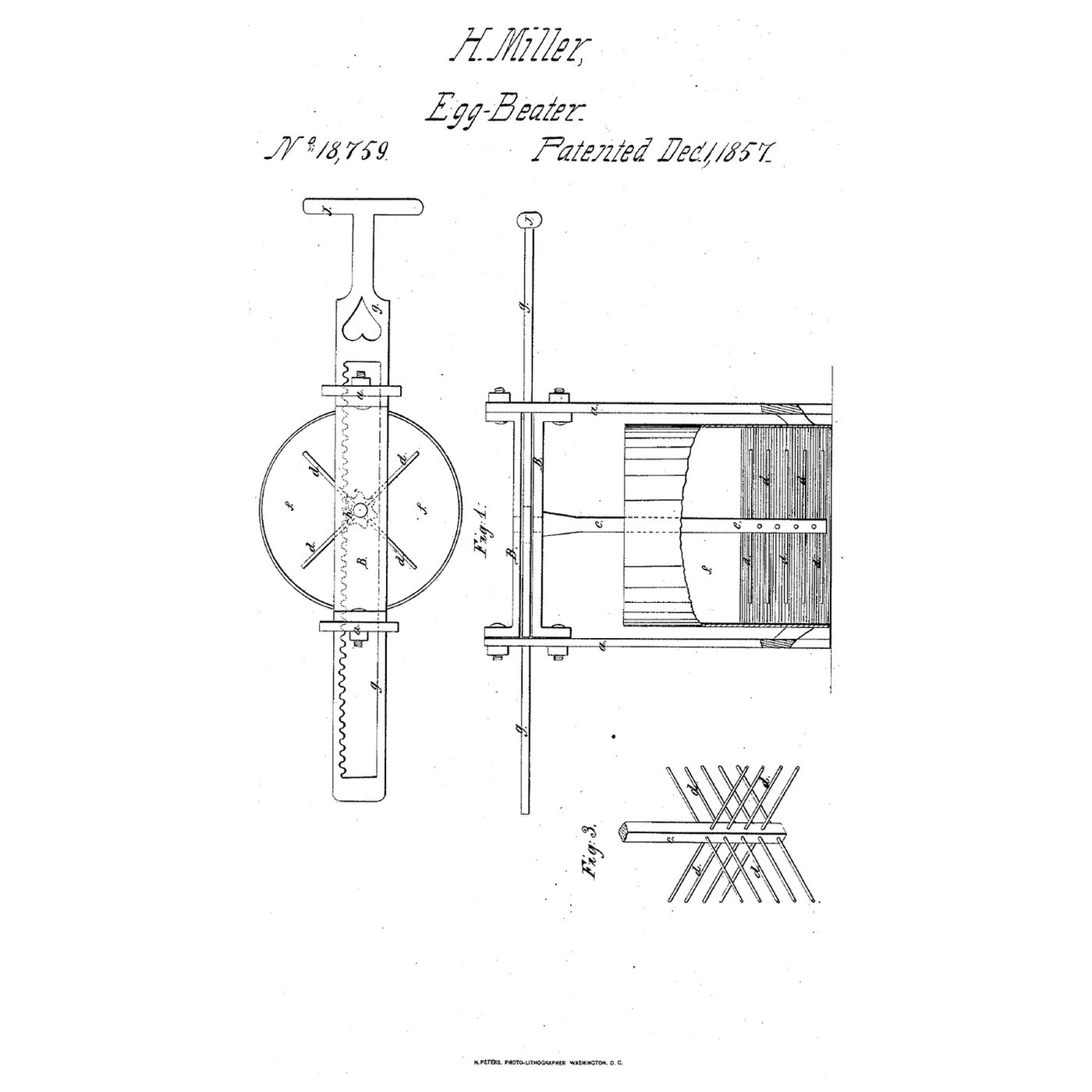
The embedded blueprint beats eggs with wire floats. Monroe bends one wire into a flat coil to mash through.
3
3
Read US 73,743
Read US 73,743
"I construct my vegetable-masher of tinned or plated wire, of suitable size, forming a coil, a, of sufficient size, leaving a space between the wires, as seen in drawing, at a, for the purpose of allowing the vegetables to pass through the coil when used."
4
4
Bend the coil
Bend the coil
From 3 mm stainless wire, bend a flat spiral 3.5 turns from 16 mm across at the centre, about 9 mm between turns, leaving both ends long.
Àwọn ohun èlò fún ìgbésẹ̀ yìí:
 Okùn irin aláìjẹrùn1 ẹyọ
Àwọn irinṣẹ́ tí a nílò:
 Ẹ̀mú Olórí Yíká
 Ẹmú Ẹnu Pẹrẹsẹ
 Ìdìmú Tábìlì
 Ìbọ̀wọ́ Iṣẹ́ Awọ
5
5
Bend the braces
Bend the braces
Bend the two long ends up at right angles as two braces. Add a centre wire and two more to the outer turn, wrapping each round the coil, so five braces meet 150 mm above it.
Àwọn ohun èlò fún ìgbésẹ̀ yìí:
Okùn irin aláìjẹrùn1 ẹyọÀwọn irinṣẹ́ tí a nílò:
Ẹmú Ẹnu Pẹrẹsẹ Ayùn IrinÌbọ̀wọ́ Iṣẹ́ Awọ
 Gílásì Ààbò Tí Ó Mọ́
6
6
Print and fit the handle
Print and fit the handle
Print the handle (/uploads/blueprints/wire-coil-potato-masher-handle.stl). Print in PETG at 0.2 mm layers, 30 % infill, 4 walls; wash before first use. Twist the five ends together, file them, and epoxy them into the handle's bore.
Àwọn ohun èlò fún ìgbésẹ̀ yìí:
 Okùn PETG1 ẹyọ
 Ẹpọ́ksì Ẹ̀yà Méjì1 ẹyọ
Àwọn irinṣẹ́ tí a nílò:
 Ẹ̀rọ ìtẹ̀ 3D oníwàyà (FDM)
 Àwọn Ìfá (Ìfá Ọwọ́)
7
7
The build in 3D
The build in 3D
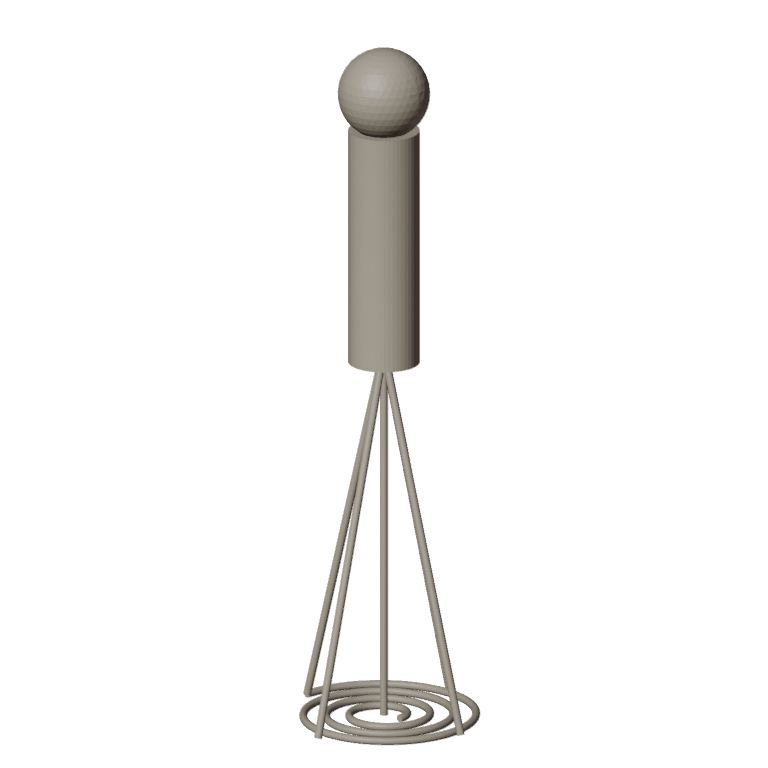
FreeCAD model of this build, not of the patent: the flat 3.5-turn coil of 3 mm wire, a centre brace and four outer braces meeting 150 mm up, and the printed handle.
8
8
Cook and mash
Cook and mash
Boil 500 g of potatoes, peeled and quartered, in salted water for about 20 minutes until a knife slides in; drain. Mash them with the coil and time it to no lumps.
Àwọn ohun èlò fún ìgbésẹ̀ yìí:
 Ọ̀dùnkún1 ẹyọ
 Omi1 ẹyọ
Àwọn irinṣẹ́ tí a nílò:
 Ìkòkò olódi gíga
 Òṣùwọ̀n Díjítà Ilé Ìdáná
 Aago Ìdúró
9
9
A coil that bends, braces that loosen
A coil that bends, braces that loosen
Wire-coil potato masher troubleshooting.
Flow
Loading...
10
10
History and honest limits
History and honest limits
**Myron H. Monroe** of Rochester, New York, received US 73,743, dated 28 January 1868. Two of the braces are the ends of the coil bent at right angles; one is at the centre and the others are soldered at equal distances round the outer circle; their upper ends are joined by solder and set in the handle. He claimed the coil, braces and handle in combination.
**Honest limits.** Wrapped stainless wire stands in for his soldered tinned wire, and a printed handle for his. Your times are the result.
Àwọn ohun-èlò
5- 2 ẹyọÀyè
- 1 ẹyọÀyè
- 1 ẹyọÀyè
- 1 ẹyọÀyè
- 1 ẹyọÀyè
Àwọn irinṣẹ́ tó nílò
11- Àyè
- Àyè
- Àyè
Àwọn fáìlì àpẹrẹ
1Ìtọ́nisọ́nà yìí ń ṣe
Blueprint tó jọra
Àwọn blueprint wọ̀nyí pín ìmọ̀ — ọ̀nà, ohun-èlò tàbí ìlànà



CC0 Àgbègbè Gbogbogbò
Blueprint yìí ti jáde lábẹ́ CC0. O lè ṣe àdàkọ, yí padà, pín, àti lò láìsí ìyọ̀ǹda.
Ṣàtìlẹ́yìn Olùṣẹ́dá nípa rírà àwọn ọjà nipasẹ̀ Blueprint wọn Ẹ̀san Olùṣẹ́dá tí àwọn Olùtajà gbé kalẹ̀, tàbí ṣẹ̀dá àtúnṣe tuntun ti Blueprint yìí kí o sì fi sínú Blueprint rẹ gẹ́gẹ́ bí ìsopọ̀ láti pín owó-wíwọlé.