IṢẸ́ ỌNÀ
ẸWÀ ÀTI ÌLERA
IṢẸ́ ỌWỌ́
ÀṢÀ ÀTI ÌTÀN
ÌṢERÉ
ÀYÍKÁ
OÚNJẸ ÀTI OHUN MÍMU
REVERSE ENGINEERING
SÁYẸ́ǸSÌ
ERÉ ÌDÁRAYÁ
ÌMỌ̀-Ẹ̀RỌ
ÀWỌN OHUN WÍWỌ̀
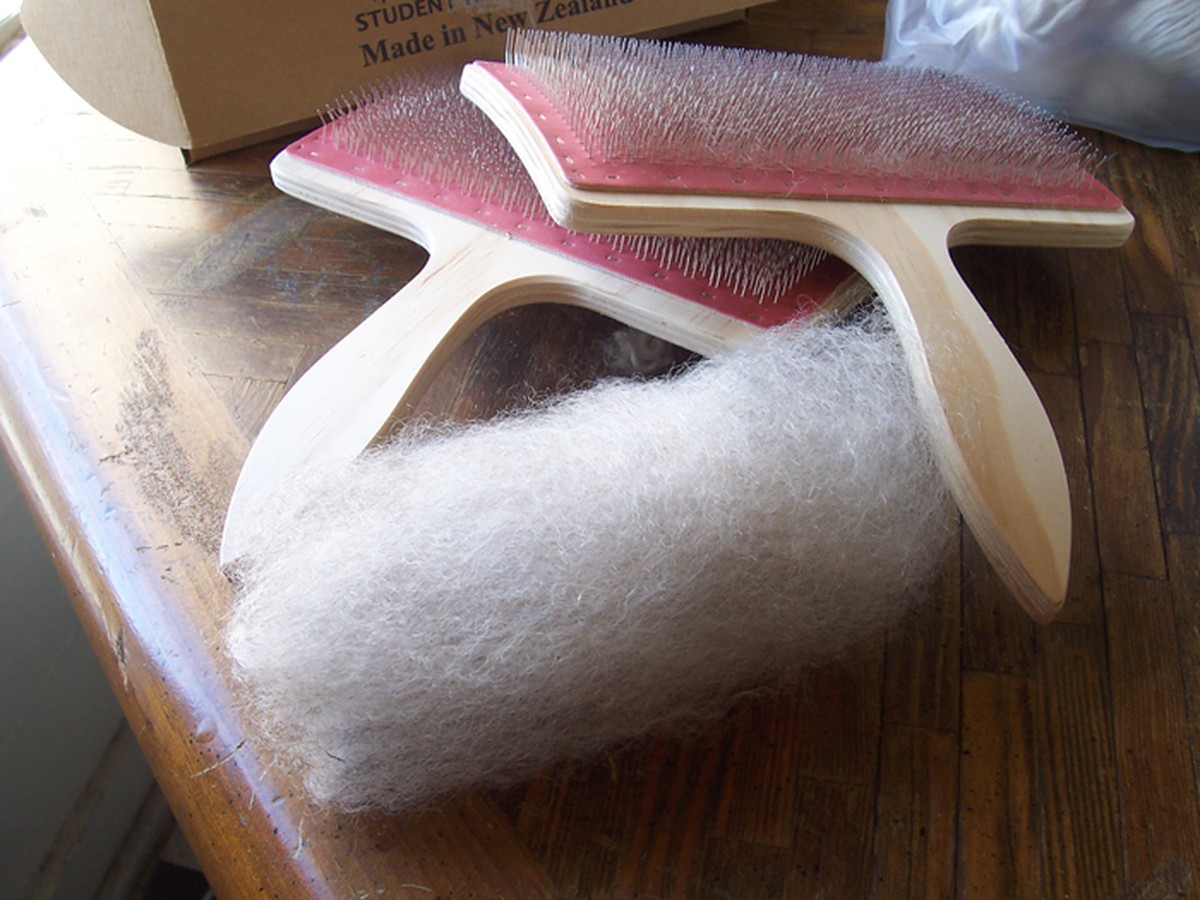


Wool Flock: Raw Wool Scoured in Soda Suds and Hand-Carded for Stuffing (USDA, 1933)
Loose wool stuffing for saddle panels, collars and pads from your own raw fleece: picked over, scoured in warm soap and sal-soda suds without stirring, rinsed, dried in the sun and carded open. The method is the U.S. Bureau of Home Economics leaflet of 1933 for preparing raw wool at home.
Olùbẹ̀rẹ̀
One day, plus drying
Ìlànà
1
1
Scouring a raw fleece
Scouring a raw fleece
A raw fleece washed by hand (Marina Skua). The USDA method below uses three soap suds and three rinses.
2
2
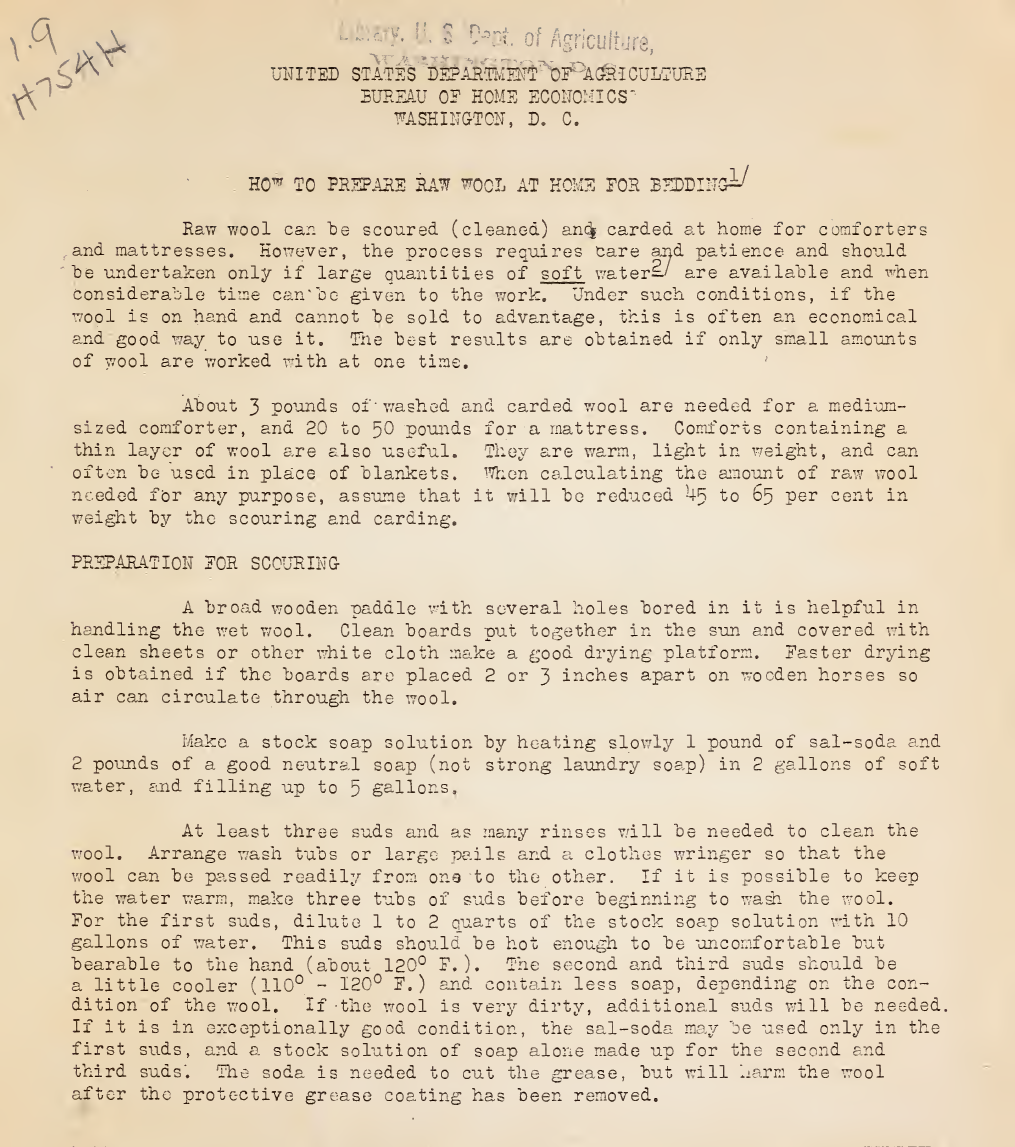
The 1933 leaflet
The 1933 leaflet
USDA Bureau of Home Economics, "How to Prepare Raw Wool at Home for Bedding" (1933): scour small lots in soft water, never stir or squeeze, rinse three times, dry thoroughly and card. Expect the wool to lose 45 to 65 per cent of its weight.
3
3
Read the leaflet
4
4
Pick the fleece over
Pick the fleece over
Take only the cleanest of the fleece. Pick it apart, shaking out all the dirt you can, and remove all tags and dung locks; stained wool will not scour white.
Àwọn ohun èlò fún ìgbésẹ̀ yìí:
 Irun àgùtàn tútù1 kg
5
5
Make the stock soap
Make the stock soap
Heat slowly 1 lb (450 g) sal-soda and 2 lb (900 g) of a good neutral soap, not strong laundry soap, in 2 gallons (7.6 l) of soft water, then fill up to 5 gallons (19 l).
Àwọn ohun èlò fún ìgbésẹ̀ yìí:
 Sódà ìfọ̀450 g
 Ọṣẹ900 g
 Omi19 l
Àwọn irinṣẹ́ tí a nílò:
 Bàkẹ́ẹ̀tì
6
6
Scour in three suds
Scour in three suds
First suds: 1 to 2 quarts (1-2 l) of stock soap in 10 gallons (38 l) of water at about 120 F (49 C), uncomfortable but bearable. Second and third: a little cooler, 110-120 F (43-49 C), with less soap; if the wool is very clean, soda in the first only. Use about 6 gallons of suds per pound of wool (50 l per kg) and never crowd it. Push the wool under with the paddle, let it stand about 10 minutes without stirring or squeezing, lift small amounts, drain and pass them through the wringer.
Àwọn ohun èlò fún ìgbésẹ̀ yìí:
Omi150 lÀwọn irinṣẹ́ tí a nílò:
Bàkẹ́ẹ̀tì Ọ̀pá ìrú igi
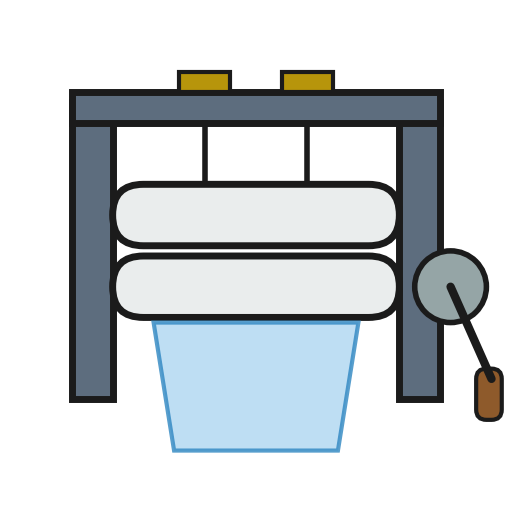 Ẹ̀rọ ìfúnpọ̀ aṣọ oníyìpo
 Òǹwọ̀n ooru ilé ìdáná
7
7
Rinse and dry
Rinse and dry
Rinse at least three times in soft water at the temperature of the last suds, handled the same way; add 1 to 2 pints (0.5-1 l) of vinegar to the last rinse. Spread it thinly on boards covered with clean sheets in the sun, raised on horses with gaps for air, and dry it thoroughly.
Àwọn ohun èlò fún ìgbésẹ̀ yìí:
Omi120 l Ọtí kíkan1 l
Àwọn irinṣẹ́ tí a nílò:
Bàkẹ́ẹ̀tìỌ̀pá ìrú igiẸ̀rọ ìfúnpọ̀ aṣọ oníyìpo Àká Ìgbẹ
8
8
Card it open
Card it open
Card the dry wool with hand cards to straighten the fibres and take out the small bits of chaff. Store it loose, protected from moths, and use it as stuffing.
Àwọn irinṣẹ́ tí a nílò:
 Ohun ìfá irun ọwọ́
9
9
Troubleshooting
Troubleshooting
Wool problems and fixes.
Flow
Loading...
10
10
History and honest limits
History and honest limits
From the U.S. Department of Agriculture, Bureau of Home Economics leaflet 478R, "How to Prepare Raw Wool at Home for Bedding" (21 October 1933), written for comforters and mattresses; the same clean carded wool is the flock harness makers stuff panels with. Ours: the metric figures. Photo: Wikipedista:Ryj, public domain. Not made by us yet.
Àwọn ohun-èlò
5- 1 kgÀyè
- 450 gÀyè
- 900 gÀyè
- 289 lÀyè
- 1 lÀyè
Àwọn irinṣẹ́ tó nílò
6- Àyè
- Àyè
- Àyè
Àwọn fáìlì àpẹrẹ
1Ìtọ́nisọ́nà yìí ń ṣe
Blueprint tó jọra
Àwọn blueprint wọ̀nyí pín ìmọ̀ — ọ̀nà, ohun-èlò tàbí ìlànà
CC0 Àgbègbè Gbogbogbò
Blueprint yìí ti jáde lábẹ́ CC0. O lè ṣe àdàkọ, yí padà, pín, àti lò láìsí ìyọ̀ǹda.
Ṣàtìlẹ́yìn Olùṣẹ́dá nípa rírà àwọn ọjà nipasẹ̀ Blueprint wọn Ẹ̀san Olùṣẹ́dá tí àwọn Olùtajà gbé kalẹ̀, tàbí ṣẹ̀dá àtúnṣe tuntun ti Blueprint yìí kí o sì fi sínú Blueprint rẹ gẹ́gẹ́ bí ìsopọ̀ láti pín owó-wíwọlé.