
IṢẸ́ ỌNÀ
ẸWÀ ÀTI ÌLERA
IṢẸ́ ỌWỌ́
ÀṢÀ ÀTI ÌTÀN
ÌṢERÉ
ÀYÍKÁ
OÚNJẸ ÀTI OHUN MÍMU
REVERSE ENGINEERING
SÁYẸ́ǸSÌ
ERÉ ÌDÁRAYÁ
ÌMỌ̀-Ẹ̀RỌ
ÀWỌN OHUN WÍWỌ̀
Easter Egg Dyeing Stand: a Crank-Turned Rubber Roller Spins the Egg Under the Brush (Young, 1943)
Woody

Ṣẹ́dá nipasẹ̀

Woody

13. Oṣù Kọkànlá 2026NO
11
0
0
0
0

Easter Egg Dyeing Stand: a Crank-Turned Rubber Roller Spins the Egg Under the Brush (Young, 1943)

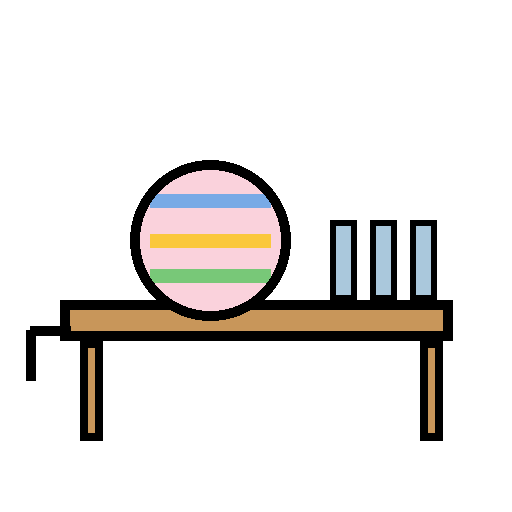
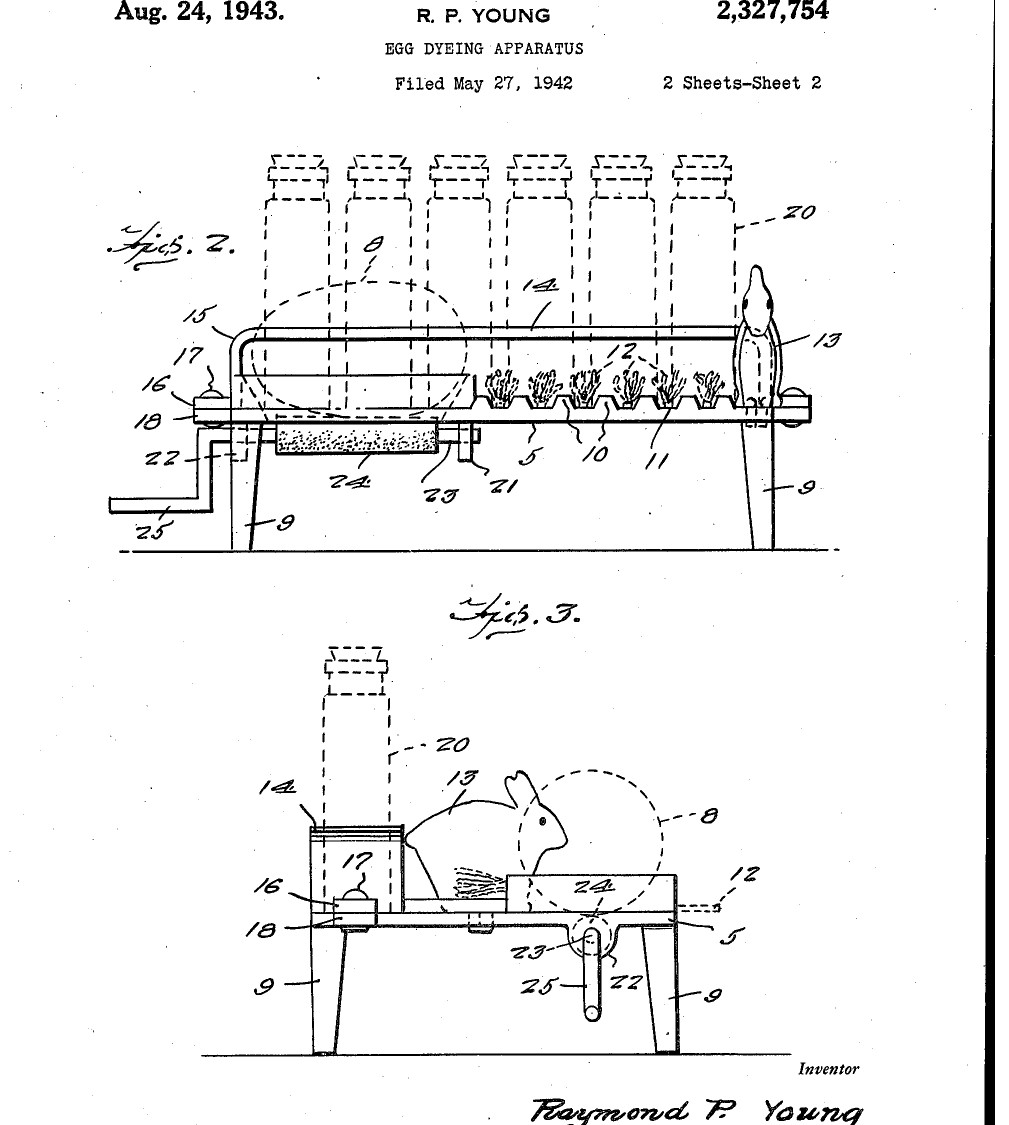
Raymond P. Young of Wrightsville, Pennsylvania, received US 2,327,754, dated 24 August 1943, for a little table for dyeing Easter eggs. The egg sits in an oval opening on a rubber roller turned by a crank; hold a dye brush against it and the colour goes on evenly all round. Grooves hold the brushes, a rack holds the dye bottles, and a rabbit stands at one end. We make it from plywood and dowel. All sizes are ours.
Olùbẹ̀rẹ̀
About 4 hours

Ìlànà

1

Opening and roll

Ń ṣí ìwé Jupyter…
2

Read US 2,327,754

"If a dye containing brush is held against the object 8, application of the dye to the object 8 will take place uniformly and in a convenient manner."
3

Cut the platform

Cut a platform of 12 mm plywood about 300 x 180 mm (ours). Near one corner cut an oval opening 70 x 40 mm with a coping saw, his opening 6. Glue a strip of thin plywood or a ring of dowel round it to make the rise 7, so the egg cannot roll off.

Àwọn ohun èlò fún ìgbésẹ̀ yìí:

Àwo igi tí a lẹ̀ pọ̀Àwo igi tí a lẹ̀ pọ̀1 ẹyọ
Ìdìpọ̀ IgiÌdìpọ̀ Igi1 ẹyọ

Àwọn irinṣẹ́ tí a nílò:
GègéGègé
Ayùn Ọwọ́Ayùn Ọwọ́
Ìlù ọwọ́Ìlù ọwọ́
Ayùn KópìngìAyùn Kópìngì
Bébà ÌfáBébà Ìfá
4

Make the brush grooves

Glue short dowels across the top of the platform beside the opening, a little apart, so the gaps between them (his ribs 10 and grooves 11) hold the brushes.

Àwọn ohun èlò fún ìgbésẹ̀ yìí:

Àwọn dowel igi líleÀwọn dowel igi líle1 ẹyọ
Ìdìpọ̀ IgiÌdìpọ̀ Igi1 ẹyọ

Àwọn irinṣẹ́ tí a nílò:

Ayùn Ọwọ́Ayùn Ọwọ́
Bébà ÌfáBébà Ìfá
5

Fit the legs

Drill the corners and glue in four dowel legs, his legs 9, long enough to clear the crank below (ours).

Àwọn ohun èlò fún ìgbésẹ̀ yìí:

Àwọn dowel igi líleÀwọn dowel igi líle1 ẹyọ
Ìdìpọ̀ IgiÌdìpọ̀ Igi1 ẹyọ

Àwọn irinṣẹ́ tí a nílò:

Ìlù ọwọ́Ìlù ọwọ́
Ayùn Ọwọ́Ayùn Ọwọ́
6

Make the roller

Slide rubber tubing over a steel rod for the roll 24 (his roll is rubber, "or any other suitable material"). Bend the rod's long end twice at right angles in the vice to make the crank handle 25.

Àwọn ohun èlò fún ìgbésẹ̀ yìí:

Páìpù Rọ́bàPáìpù Rọ́bà1 ẹyọ
Ọ̀pá Róbótó Irin Rírọ̀Ọ̀pá Róbótó Irin Rírọ̀1 ẹyọ

Àwọn irinṣẹ́ tí a nílò:

Ìdìmú TábìlìÌdìmú Tábìlì
Ayùn IrinAyùn Irin
7

Hang the roller

Cut two bearing brackets from flat bar (ours, his bearings 21 and 22), drill each for the rod at the depth the notebook gives, bend them to hang below the platform and screw them on either side of the opening, so the roll sits under the opening as his Fig. 4. The egg should rest on the roll inside the rise and turn when the crank turns.

Àwọn ohun èlò fún ìgbésẹ̀ yìí:

Ọ̀pá Pẹrẹsẹ Irin Pẹ́lẹ́Ọ̀pá Pẹrẹsẹ Irin Pẹ́lẹ́1 ẹyọ
Ìṣó igiÌṣó igi1 ẹyọ

Àwọn irinṣẹ́ tí a nílò:

Ayùn IrinAyùn Irin
Ẹ̀rọ Ìlùkòkò OnídúróẸ̀rọ Ìlùkòkò Onídúró
Àkójọ Orí ÌlùkòkòÀkójọ Orí Ìlùkòkò
Ìdìmú TábìlìÌdìmú Tábìlì
Ìṣù àwọn ohun ìyí skurúÌṣù àwọn ohun ìyí skurú
8

Make the bottle rack

Bend a strip of flat bar (his rack bar 14, "preferably strap iron") down and out at each end, drill a row of holes in it to hold the dye bottles, and screw its ends to the back edge of the platform.

Àwọn ohun èlò fún ìgbésẹ̀ yìí:

Ọ̀pá Pẹrẹsẹ Irin Pẹ́lẹ́Ọ̀pá Pẹrẹsẹ Irin Pẹ́lẹ́1 ẹyọ
Ìṣó igiÌṣó igi1 ẹyọ

Àwọn irinṣẹ́ tí a nílò:

Ayùn IrinAyùn Irin
Ẹ̀rọ Ìlùkòkò OnídúróẸ̀rọ Ìlùkòkò Onídúró
Àkójọ Orí ÌlùkòkòÀkójọ Orí Ìlùkòkò
Ìdìmú TábìlìÌdìmú Tábìlì
Ìṣù àwọn ohun ìyí skurúÌṣù àwọn ohun ìyí skurú
9

Add the rabbit

Cut a rabbit from plywood with the coping saw, sand it and glue it upright at the far end, his figure 13.

Àwọn ohun èlò fún ìgbésẹ̀ yìí:

Àwo igi tí a lẹ̀ pọ̀Àwo igi tí a lẹ̀ pọ̀1 ẹyọ
Ìdìpọ̀ IgiÌdìpọ̀ Igi1 ẹyọ

Àwọn irinṣẹ́ tí a nílò:

Ayùn KópìngìAyùn Kópìngì
Bébà ÌfáBébà Ìfá
10

Dye an egg

Fill the bottles with food colouring (ours) and put them in the rack. Set a hard-boiled egg in the opening on the roll, turn the crank, and hold a dye-filled brush against the egg: the colour goes on in an even band. Move the brush across to stripe it.

Àwọn ohun èlò fún ìgbésẹ̀ yìí:

ẸyinẸyin1 ẹyọ
Awọ̀ oúnjẹAwọ̀ oúnjẹ1 ẹyọ
Ìgò dígí tí ó ní ìdéríÌgò dígí tí ó ní ìdérí1 ẹyọ

Àwọn irinṣẹ́ tí a nílò:

Ìdìpọ̀ búrọ́ọ̀ṣìÌdìpọ̀ búrọ́ọ̀ṣì
11

Troubleshooting

Egg dyeing stand troubleshooting.

Flow

Loading...
12

History and honest limits

**Raymond P. Young** of Wrightsville, Pennsylvania, US 2,327,754, dated 24 August 1943, filed 27 May 1942. He claimed "dyeing apparatus comprising a platform having an opening therein, a rotatable roller mounted at the underside of the platform and partly protruding into said opening, means for rotating the roller, and an upstanding article confining wall on the platform surrounding said opening". He gives no sizes or dye: the plywood, dowels, all sizes, the bracket bearings, the rubber tube on a rod, and food colouring are ours.

Àwọn ohun-èlò

10

Àwọn irinṣẹ́ tó nílò

11

Ìtọ́nisọ́nà yìí ń ṣe

CC0 Àgbègbè Gbogbogbò

Blueprint yìí ti jáde lábẹ́ CC0. O lè ṣe àdàkọ, yí padà, pín, àti lò láìsí ìyọ̀ǹda.

Ṣàtìlẹ́yìn Olùṣẹ́dá nípa rírà àwọn ọjà nipasẹ̀ Blueprint wọn Ẹ̀san Olùṣẹ́dá tí àwọn Olùtajà gbé kalẹ̀, tàbí ṣẹ̀dá àtúnṣe tuntun ti Blueprint yìí kí o sì fi sínú Blueprint rẹ gẹ́gẹ́ bí ìsopọ̀ láti pín owó-wíwọlé.

Ìfọ̀rọ̀wérọ̀

(0)

Wọlé láti dara pọ̀ mọ́ ìfọ̀rọ̀wérọ̀

Ń gbé àwọn ọ̀rọ̀ wọlé...