IṢẸ́ ỌNÀ
ẸWÀ ÀTI ÌLERA
IṢẸ́ ỌWỌ́
ÀṢÀ ÀTI ÌTÀN
ÌṢERÉ
ÀYÍKÁ
OÚNJẸ ÀTI OHUN MÍMU
REVERSE ENGINEERING
SÁYẸ́ǸSÌ
ERÉ ÌDÁRAYÁ
ÌMỌ̀-Ẹ̀RỌ
ÀWỌN OHUN WÍWỌ̀
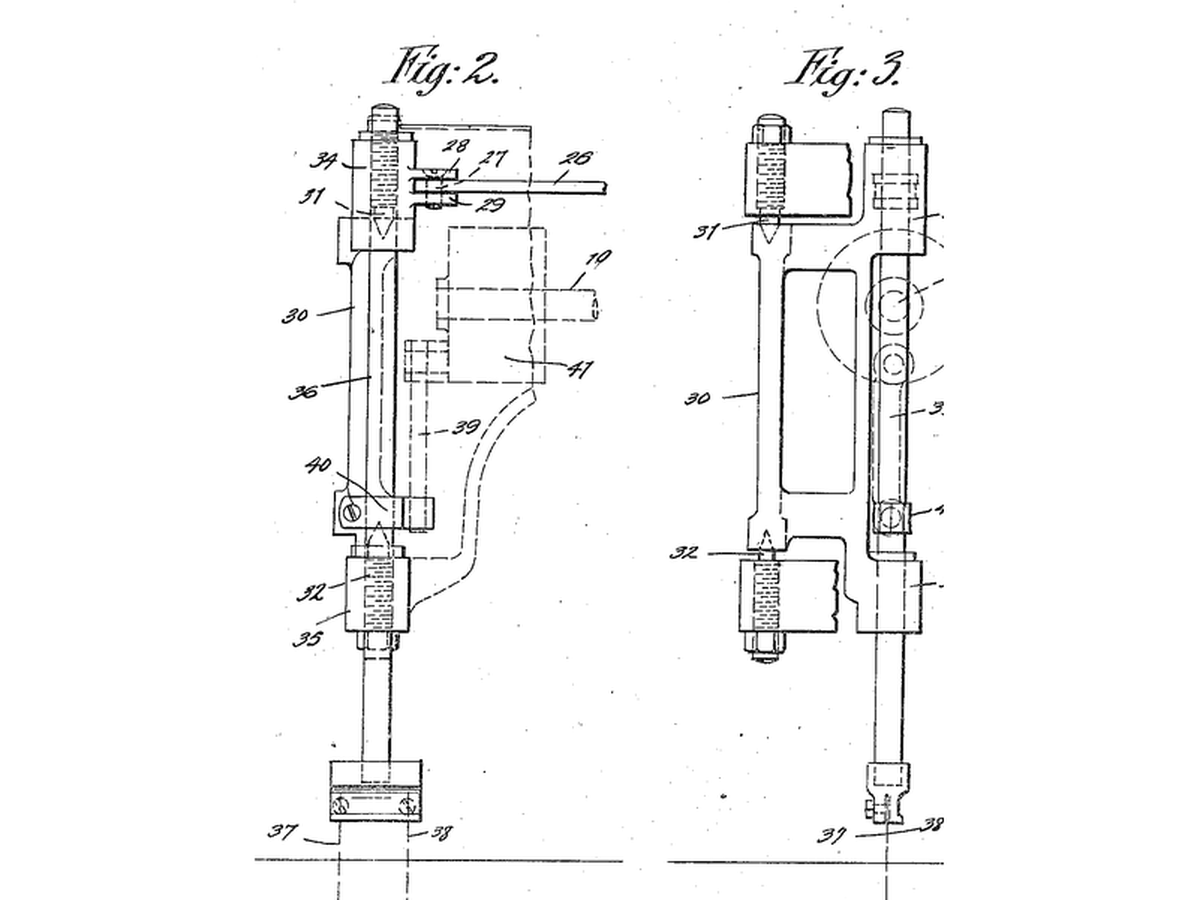


Zigzag Stitch Mechanism
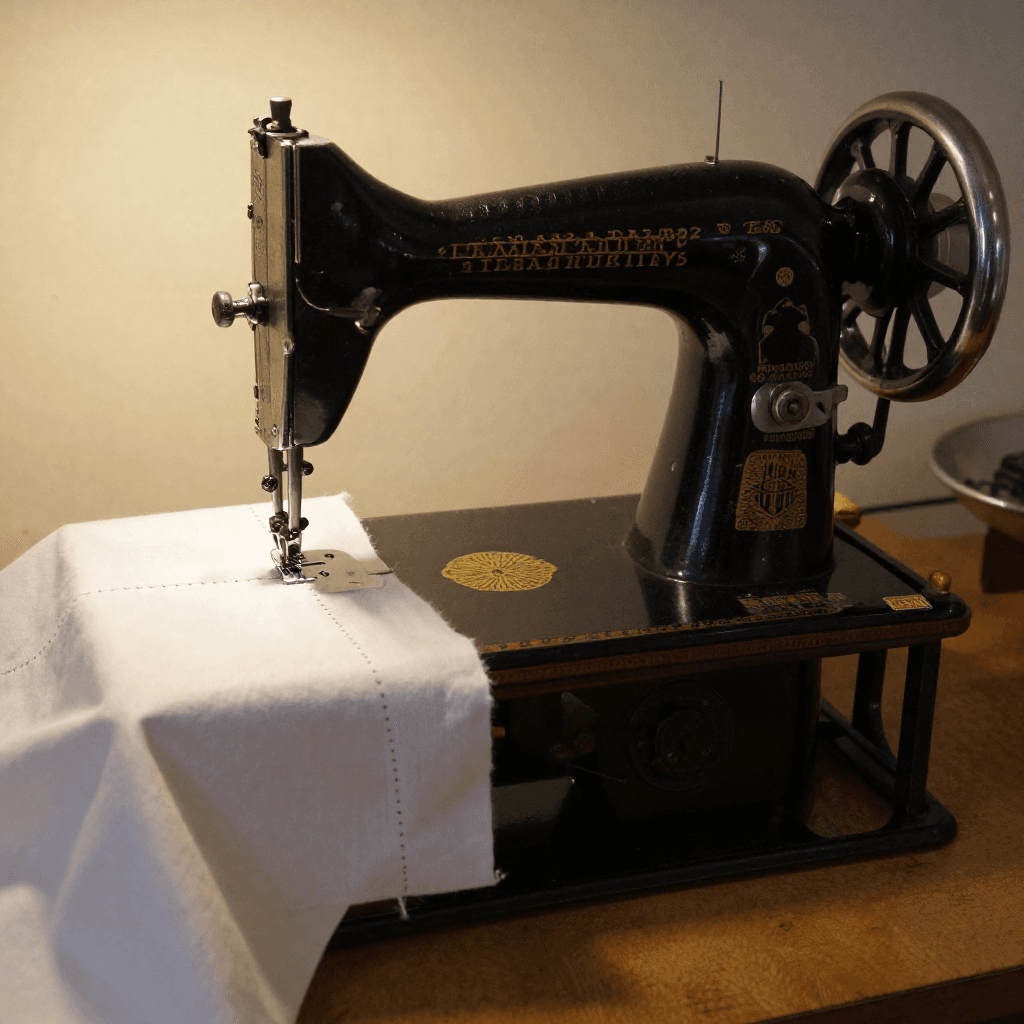
The lock-stitch machine already published sews a straight line, and a straight line of thread cannot stretch - which is why early machines could not sew knitted cloth, finish a raw edge, or work a buttonhole. The next rung is a mechanism that swings the needle bar sideways between stitches, driven by a cam turning with the main shaft.
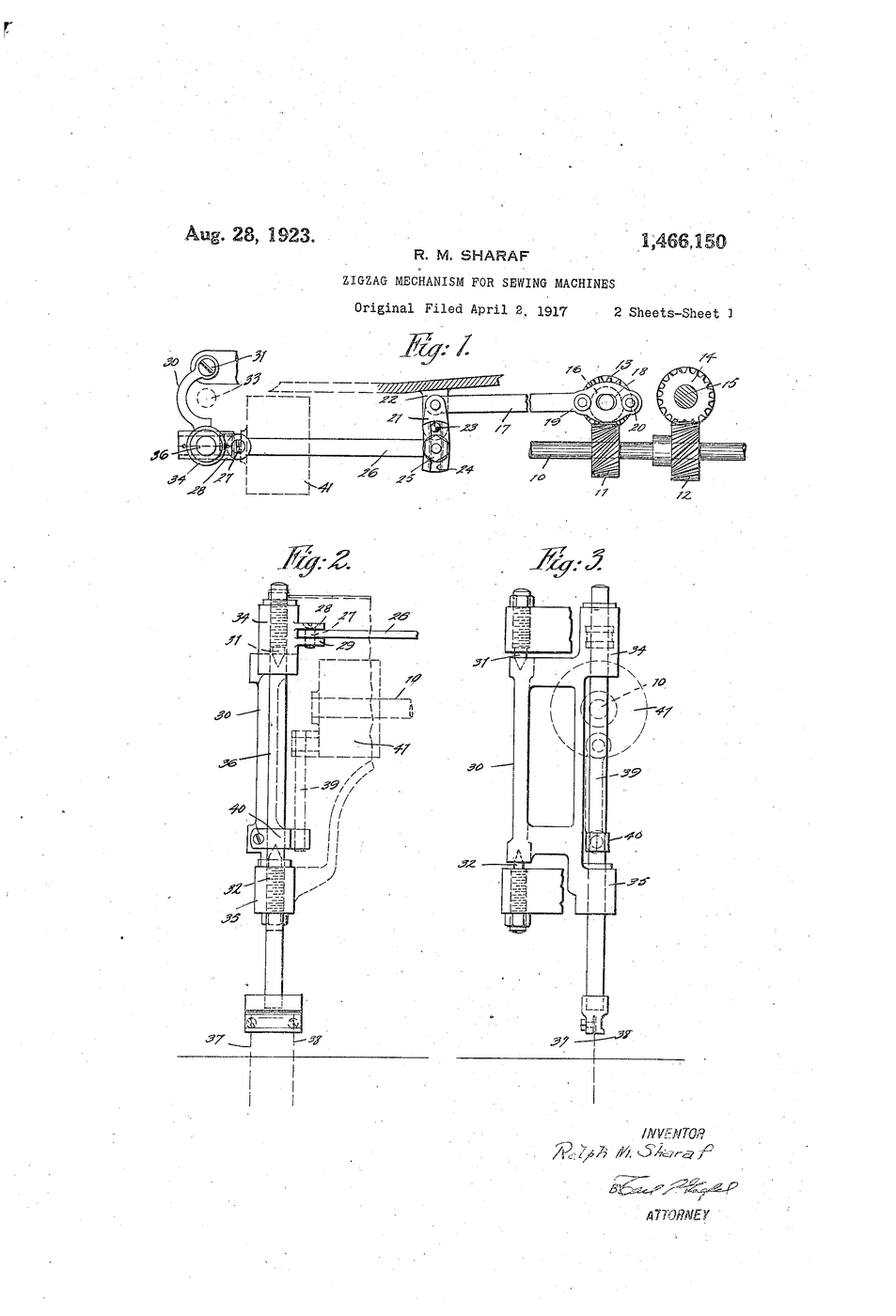
**US 1,466,150**, "Zigzag mechanism for sewing machines", Ralph M. Sharaf, filed 2. April 1917, granted 28. August 1923: a cam-driven vibration of the needle bar while the machine stitches, with the throw adjustable. Domestic zigzag machines followed in the 1950s.
**You build the motion in wood** - a cam, a follower and a pen drawing the needle's path - then sew both stitches on jersey and pull them until something gives.
Àárín
3 hours
Ìlànà
1
1
Cut a cam
Cut a cam
From 18 mm plywood cut a 60 mm disc and drill its pivot hole 5 mm off centre: that offset is half the zigzag width. Cut a second disc with a 10 mm offset for a wider stitch.
Àwọn ohun èlò fún ìgbésẹ̀ yìí:
 Àwo igi tí a lẹ̀ pọ̀1 ẹyọ
Àwọn irinṣẹ́ tí a nílò:
 Ayùn Ọwọ́
 Ẹ̀rọ Ìlùkòkò Aláìlókùn
 Ìdíwọ̀n
2
2
Follower and needle bar
Follower and needle bar
Screw a pivoted arm to the board so one end rides on the cam's edge and the other carries a dowel - the needle bar. A spring keeps the follower against the cam. Tape a marker to the dowel.
Àwọn ohun èlò fún ìgbésẹ̀ yìí:
 Skurú ẹ̀rọ4 ẹyọ
 Àkójọpọ̀ orísun ìtẹ̀mọ́lẹ̀1 ìtò
 Òpó Igi Dòwẹ̀lì1 ẹyọ
 Ààmì Tí Kò Ní Parẹ́1 ẹyọ
Àwọn irinṣẹ́ tí a nílò:
 Ìbọn ìlẹ̀mọ́ gbígbóná
 Ìdìmú Tábìlì
3
3
Draw the stitch
Draw the stitch
Pull a strip of graph paper steadily under the pen while turning the cam by hand, one turn per stitch. Measure the width of the trace; swap cams and repeat. Lock the follower to draw a straight line for comparison.
Àwọn ohun èlò fún ìgbésẹ̀ yìí:
 Bébà Àwòrán1 ewé
 Tépù ìbòmọ́lẹ̀1 ìyípo
Àwọn irinṣẹ́ tí a nílò:
Ìdíwọ̀n4
4
Sew the real thing
Sew the real thing
Cut six 200 x 50 mm jersey strips. Join them in pairs with a 100 mm seam: straight stitch, zigzag 3 mm, zigzag 5 mm, all at 2.5 mm stitch length.
Àwọn ohun èlò fún ìgbésẹ̀ yìí:
 Àdàpọ̀ Aṣọ Jásì T-ṣáàtì1 ẹyọ
 Okùn polyester10 mítà
Àwọn irinṣẹ́ tí a nílò:
 Ẹ̀rọ ìránṣọ
 Ìkẹ́rẹ́ aṣọ
5
5
Pull until it gives
Pull until it gives
Mark 100 mm across each seam. Pull each pair apart steadily by hand and note the marked length when the thread snaps - or when it does not, and the cloth simply stretches.
Àwọn irinṣẹ́ tí a nílò:
Ìdíwọ̀n Okùn Ìdíwọ̀n
6
6
Thread geometry and your results
Thread geometry and your results
Ń ṣí ìwé Jupyter…
7
7
History & Context
History & Context
**What the patent specifies:** a cam-driven mechanism that vibrates the needle bar laterally during stitching, with adjustable throw. **Modern build (derived):** a plywood cam and follower drawing the path, plus real seams for the test.
The same sideways swing gave overcast edges, buttonholes and decorative stitches, and cam stacks later let a machine select a pattern. Its limits: a zigzag uses more thread, can tunnel thin cloth if the tension is wrong, and the needle bar's sideways travel puts a limit on machine speed.
Àwọn ohun-èlò
9- 1 ẹyọÀyè
- 4 ẹyọÀyè
- Àyè
- 1 ẹyọÀyè
- 1 ẹyọÀyè
- 1 ewéÀyè
- 1 ìyípoÀyè
- Àyè
- 10 mítàÀyè
Àwọn irinṣẹ́ tó nílò
8- Àyè
- 1 vendor sell this, none ship to you yetÀyè
- Àyè
- Àyè
- Àyè
- Àyè
- 1 vendor sell this, none ship to you yetÀyè
Blueprint tó jọra
Àwọn blueprint wọ̀nyí pín ìmọ̀ — ọ̀nà, ohun-èlò tàbí ìlànà
CC0 Àgbègbè Gbogbogbò
Blueprint yìí ti jáde lábẹ́ CC0. O lè ṣe àdàkọ, yí padà, pín, àti lò láìsí ìyọ̀ǹda.
Ṣàtìlẹ́yìn Olùṣẹ́dá nípa rírà àwọn ọjà nipasẹ̀ Blueprint wọn Ẹ̀san Olùṣẹ́dá tí àwọn Olùtajà gbé kalẹ̀, tàbí ṣẹ̀dá àtúnṣe tuntun ti Blueprint yìí kí o sì fi sínú Blueprint rẹ gẹ́gẹ́ bí ìsopọ̀ láti pín owó-wíwọlé.