Collaboration
ART
BEAUTY & WELLNESS
CRAFT
CULTURE & HISTORY
ENTERTAINMENT
ENVIRONMENT
FOOD & DRINKS
REVERSE ENGINEERING
SCIENCES
SPORTS
TECHNOLOGY
WEARABLES
English

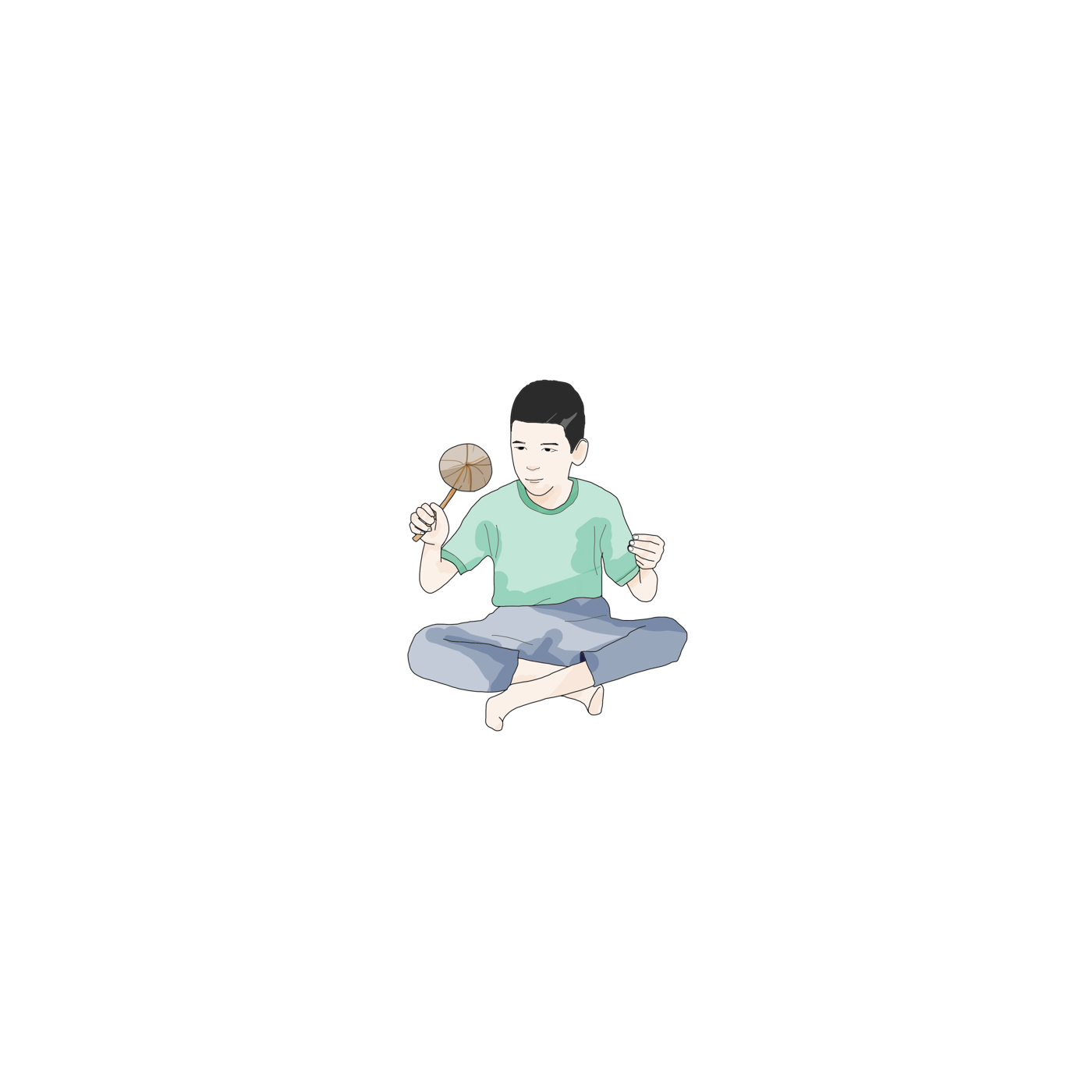
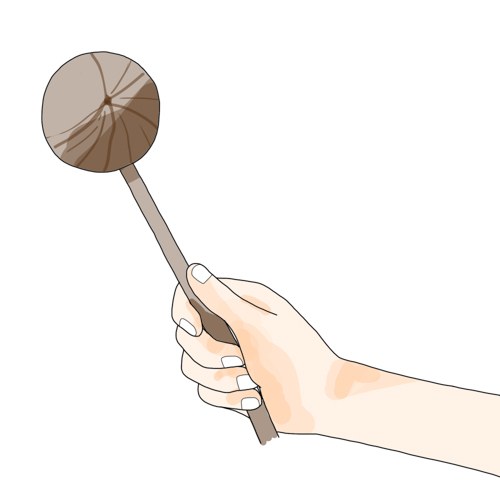
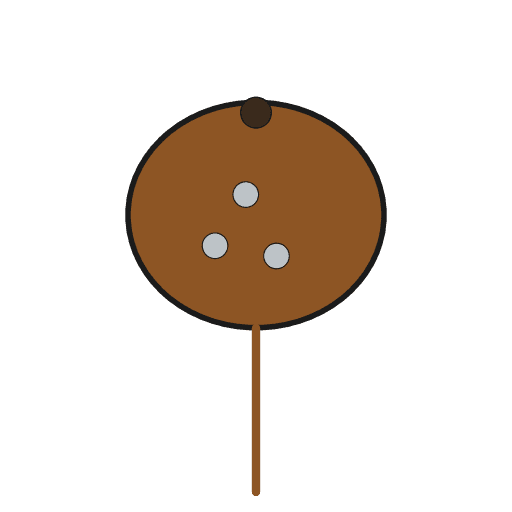
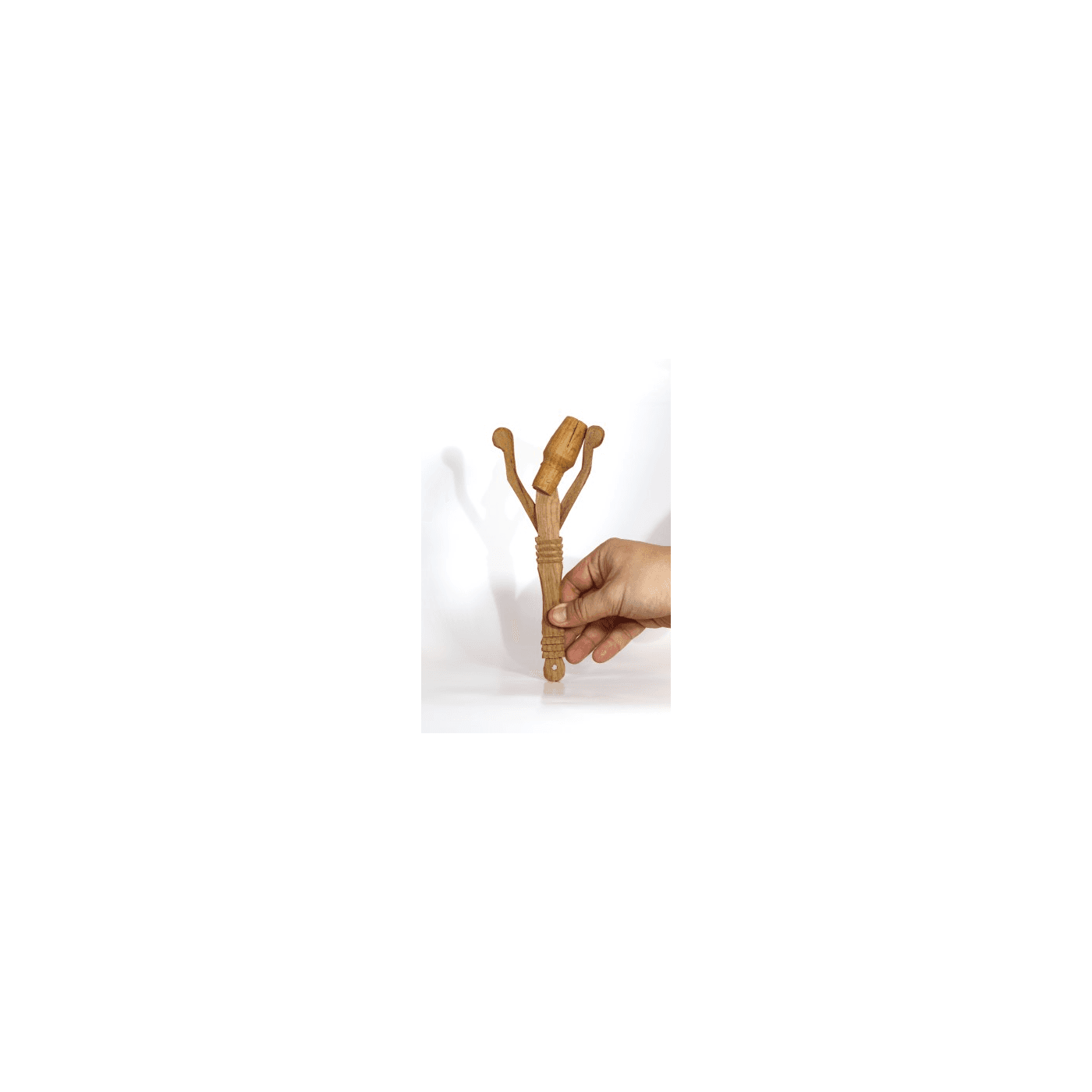
Rhythm coconut shell (saccharr shaker) — a mature coconut shell polished smooth, with an eye hole bored and the flesh scraped out, filled with 20-30 small stones, with a wooden handle secured by lac resin; shaken in time with the music.
The rhythm coconut shell (lukchaeksaek, "shaker") is a children's instrument. It is shaken together with other instruments to make the rhythm and sound more melodious. Today it has developed into an instrument called the "saxophone".
This blueprint makes a real rhythm coconut shell according to the source.
Intermediate
About half a day, including drying time.
Instructions
1
1
Ingredients
Ingredients
Loading Jupyter Notebook...
2
2
Previous shaker
Previous shaker
The popping sound comes from the arm's striking head, and the coconut shell's rhythmic tapping comes from small stones inside the shell.
3
3
Read from source
Read from source
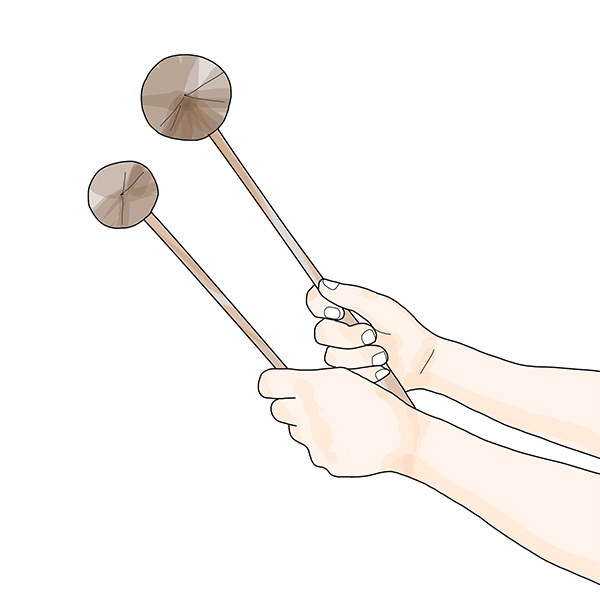
"Players shake in rhythm with the music and other percussion instruments being played." (Sirindhorn Anthropology Centre, author not specified, CC BY 4.0)
4
4
Coconut shell
Coconut shell
Select a fully mature coconut of medium size. Peel off all the husk. Use a coarse brush or sandpaper to sand the shell until smooth and shiny. Use a chisel or a sharp-pointed knife to pierce through the eye of the coconut, wide enough for a wooden handle. Scrape out all the coconut meat. Dry it in the sun until dry.
Materials for this step:
 Coconut1 piece
Tools needed:
 Chisel Set - Wood
 Knife
 Sandpaper
5
5
Stone and Handle
Stone and Handle
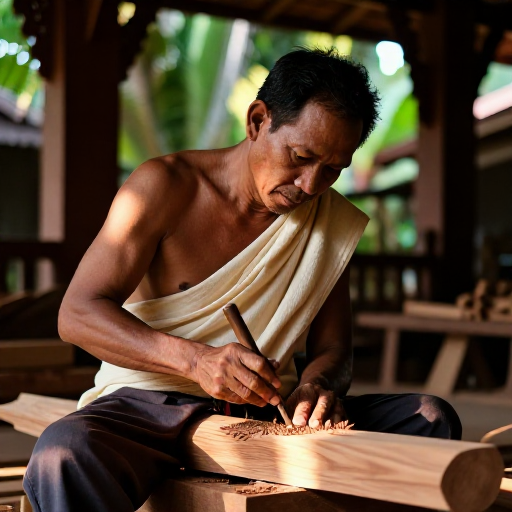
Put about 20-30 small stones into a coconut shell. Carve the wooden handle to be round and fairly long, using a knife or a plane, so it is comfortable to hold.
Materials for this step:
 Gravel1 piece
 Hardwood Block1 piece
Tools needed:
 Hand Plane
6
6
Attach the handle to the coconut shell
Attach the handle to the coconut shell
Pound the lac (shellac) finely, put it in a can, add water to cover it, and heat it over a fire to get sticky lac resin. Pour it to bond between the coconut shell and the handle, or push the handle until it sits snugly against the bottom of the shell, then hammer nails to secure it on the outside.
7
7
Real image
Real image
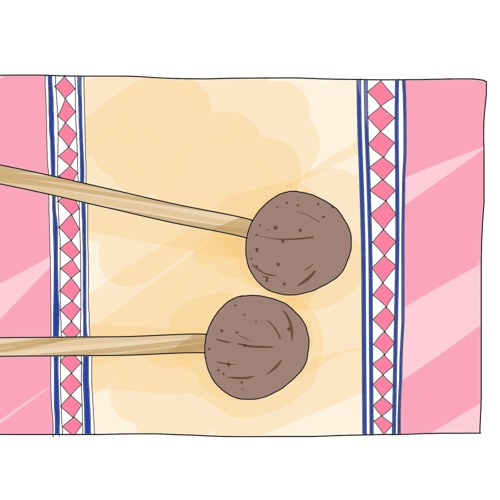
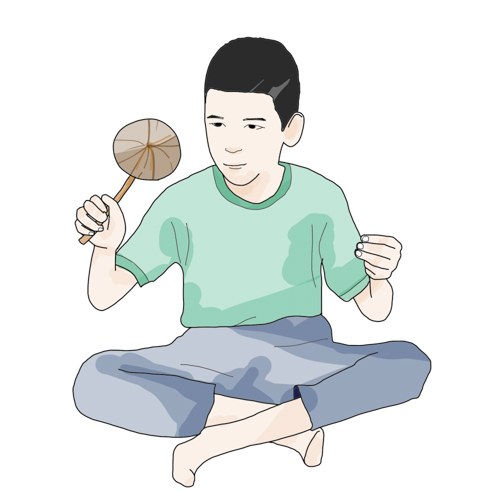
Coconut shell tapping rhythm drawing (Sirindhorn Anthropology Centre, author not specified, CC BY 4.0)
8
8
How to Play
How to Play
Shake in rhythm with the music and other instruments being played
9
9
Troubleshooting
Troubleshooting
Shekere rhythm troubleshooting
Flow
Loading...
10
10
History and Limitations
History and Limitations
Today, the coconut shell percussion instrument (kala khaochangwa) has developed into an instrument called the saeg. Be careful with the fire while boiling lac, and be careful with the chisel and knife.
Source: Sirindhorn Anthropology Centre, Folk Tools and Equipment Database "Kala Khaochangwa", author not specified (licensed under CC BY 4.0)
**Limitations** The source does not provide the handle length or stone size. The illustrations are drawings. There is no product listing for raw lac.
This blueprint makes
Related Blueprints
These blueprints share knowledge with this one — techniques, materials, or principles that connect them in the learning graph.
CC0 Public Domain
This blueprint is released under CC0. You are free to copy, modify, distribute, and use this work for any purpose, without asking permission.
Support the Maker by purchasing products through their Blueprint where they earn a Maker Commission set by Vendors, or create a new iteration of this Blueprint and include it as a connection in your own Blueprint to share revenue.