कला
सुन्दरता र कल्याण
हस्तकला
संस्कृति र इतिहास
मनोरञ्जन
वातावरण
खाना र पेय
रिभर्स इन्जिनियरिङ
विज्ञान
खेलकुद
प्रविधि
पहिर्न मिल्ने
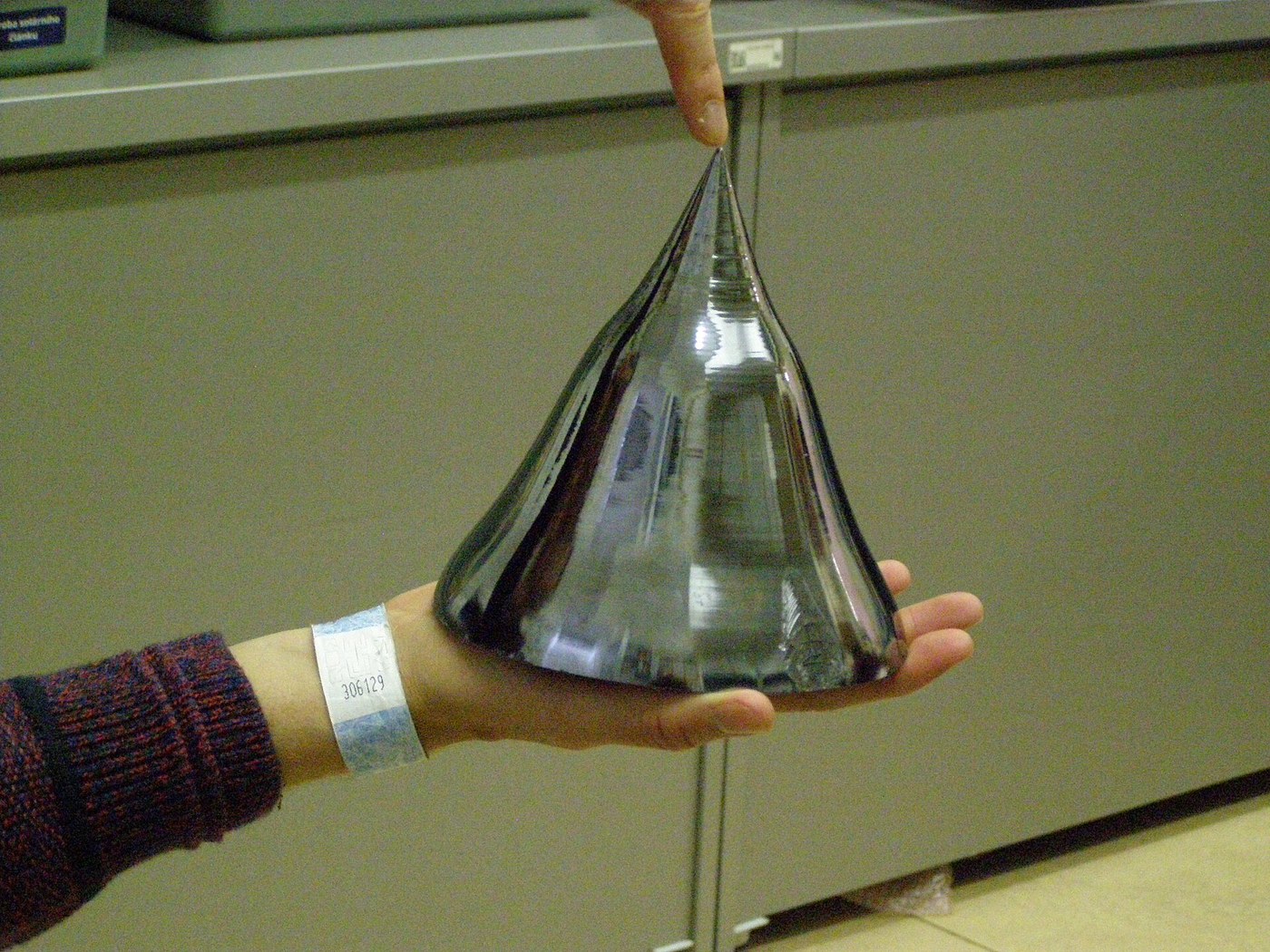


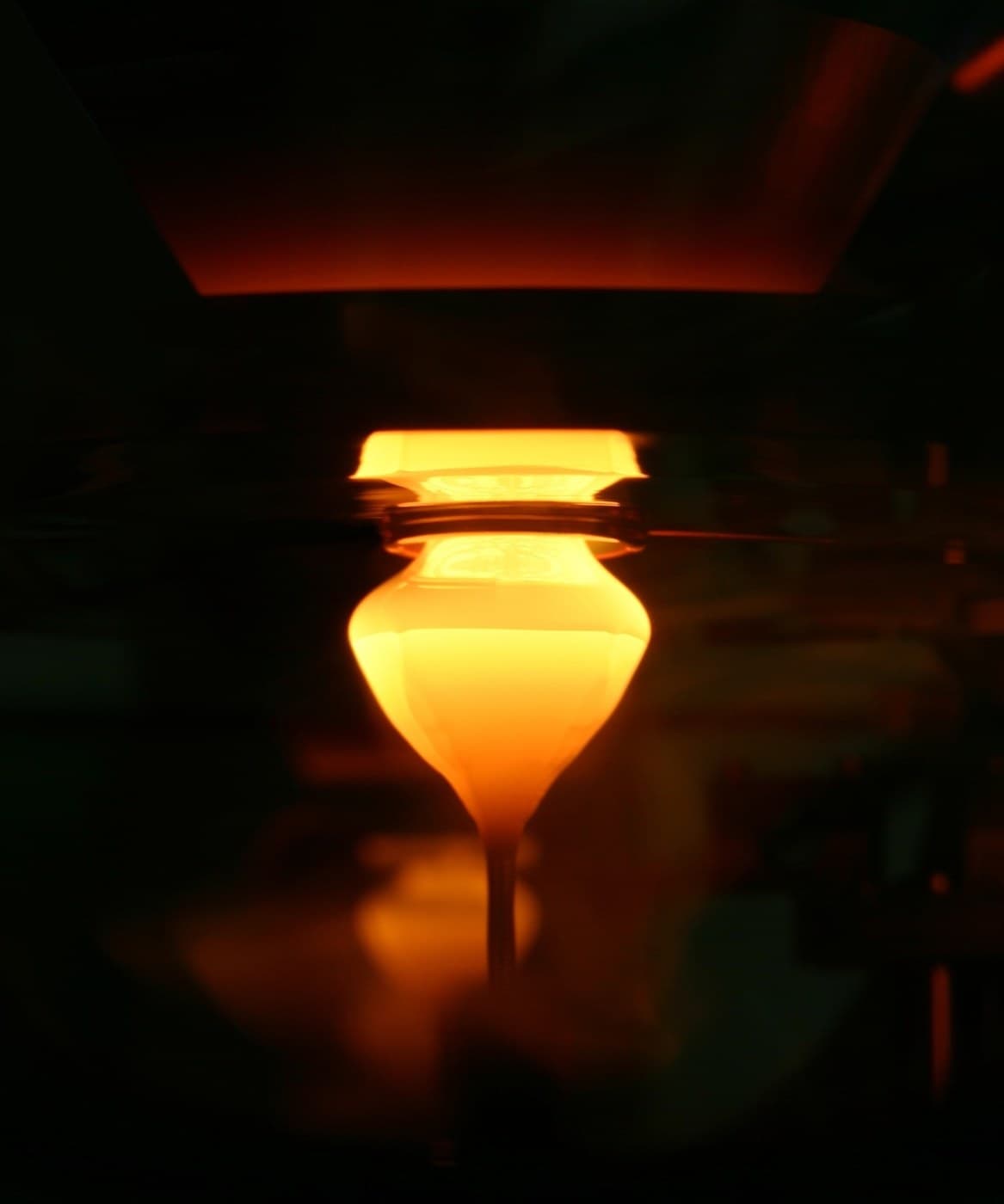
Czochralski Crystal Pulling
Zone refining gives you silicon that is clean and useless. Clean, because the impurities have been swept to one end and cut off. Useless, because it is polycrystalline — a mass of crystal grains packed together in random orientations, with a boundary between every pair of them.
Grain boundaries are the problem. A boundary is a plane where the lattice breaks and restarts at a new angle, and it does three things a device cannot tolerate: it scatters charge carriers, so mobility falls; it acts as a fast diffusion path, so dopants that were placed carefully in one region leak along it into another; and it collects impurities, so the very contaminants you spent a day removing reconvene at the boundaries. A transistor built across a grain boundary behaves differently from one built beside it, and a process that cannot make two identical devices is not a process.
So the crystal must be single — one continuous lattice, one orientation, from end to end of a boule weighing a hundred kilograms.
Jan Czochralski found the method in 1916, and famously by accident: he dipped his pen into a crucible of molten tin instead of his inkwell, drew it out, and found a thin filament of solidified metal hanging from the nib that proved to be a single crystal. He published the pulling-rate work in 1918. It sat as a metallurgical curiosity for three decades until Gordon Teal and John Little at Bell Labs applied it to germanium in 1950, and the semiconductor industry has used it ever since.
The method is disarmingly simple to state. Touch a small seed crystal to the surface of a melt held just above its freezing point, and withdraw it slowly while rotating. Atoms attach to the seed in the orientation the seed dictates, and the crystal grows downward into the melt as you pull upward out of it. Everything difficult is in the word slowly, and in holding a temperature to within a degree for a day and a half.
You will pull a real single crystal from a real melt, control its diameter deliberately, and see the facets that prove it is one crystal and not many.
मध्यम
6 hours
निर्देशनहरू
1
1
Choose a melt you can actually hold at temperature
Choose a melt you can actually hold at temperature
The material choice is the whole difference between a demonstration that works and an afternoon of frustration, because the hard requirement is not the temperature, it is the STABILITY of the temperature.
Use salol — phenyl salicylate — which melts at 41 to 43 degrees Celsius. That is a temperature a water bath holds to a tenth of a degree without any effort, and salol grows large, clear, obviously faceted single crystals that look like the thing they are modelling. It is the standard choice for crystal-growth teaching and it is not a toy: the growth physics is the same.
The alternatives, and why they are worse for a first attempt. Potassium alum from saturated solution grows beautiful crystals but grows them from solution rather than from a melt, so the rate is set by evaporation and diffusion rather than by your pull, and you lose the control that makes this Czochralski rather than ordinary crystallisation. Tin melts at 232 degrees and pulls well, but you cannot see into the melt and the seed is difficult. Silicon at 1414 degrees is not bench work under any circumstances.
The crucible: a 250 ml borosilicate beaker, standing in a water bath on a hotplate with a magnetic stirrer beneath it. Do NOT stir the melt itself during growth; the stirrer is for the bath. Fill the beaker with about 150 g of salol and melt it, then hold the bath at 44 degrees — one to two degrees above the melting point and no more.
That superheat figure is the single most important number in the build. Too hot and the crystal dissolves as fast as it grows and the string comes out bare. Too cold and the melt nucleates spontaneously all over the beaker, you get a slush of a thousand small crystals, and the whole point is lost. One to two degrees above melting is the window, and holding it is why you are using a water bath rather than direct heat.
The puller: a small geared motor with a threaded rod, or a clock motor and a spool, lifting at 1 to 10 millimetres per HOUR. That is not a typo. Add a second small motor to rotate the seed at 5 to 20 rpm.
Rotation is not decoration. It does two jobs. It stirs the melt immediately under the growing interface, which keeps the temperature and composition uniform there and stops the crystal growing lopsided towards the hotter side of the beaker. And it averages out any asymmetry in the thermal field, which is what makes the boule round rather than an irregular lump.
यस चरणका सामग्री:
 स्यालोल (फिनाइल स्यालिसिलेट)250 gram
 सिसाको बिकर2 टुक्रा
 गियर भएको डीसी मोटर2 टुक्रा
 PWM मोटर गति नियन्त्रक2 टुक्रा
 धाँजे डन्डा1 metre
 माछा मार्ने धागो (एकतारे)1 टुक्रा
चाहिने औजार:
 चुम्बकीय चलाउने यन्त्र भएको तातो प्लेट
 प्रयोगशाला तापमापक
 Digital Calipers - 152.4 mm
 रोकघडी
 प्रयोगशालाको सुरक्षा चस्मा
2
2
Get a seed, neck it down, then let it grow out
Get a seed, neck it down, then let it grow out
The sequence is seed, neck, shoulder, body, tail, and every industrial boule is grown in exactly those five phases for exactly the reasons you are about to meet.
SEED. You need one small single crystal to start from. Make it by letting a drop of molten salol cool slowly on a glass slide and picking the best-formed individual crystal out of what forms — you want one with clean flat faces, three to five millimetres across. Glue it to the end of your fishing line or a thin glass rod. Its orientation becomes the orientation of everything you grow; industry cuts seeds to a specified crystal direction for exactly this reason, because the electrical properties of a device depend on which crystal plane it is built on.
NECK. Lower the seed until it just touches the melt surface, and watch. If it starts to melt back, you are too hot — drop the bath half a degree. If crystal instantly races outward across the surface, you are too cold. What you want is a seed that sits there, neither growing nor shrinking, in equilibrium with the melt.
Now raise the pull rate deliberately high for a few millimetres so the crystal grows THINNER than the seed — down to a millimetre or two. This is the Dash neck, introduced by William Dash at General Electric in 1958, and it is one of the most elegant tricks in the industry. Dislocations — line defects in the lattice — propagate along particular crystal directions, and in a very thin neck those directions run into the free surface within a few millimetres and the dislocation simply terminates there. Grow a thin enough neck for long enough and you emerge with a crystal that is not merely single but dislocation-free, from a seed that was neither. Every silicon boule ever grown for a microchip starts with a neck a few millimetres across supporting a mass that will eventually reach a hundred kilograms.
SHOULDER. Slow the pull rate down and the crystal grows outward as well as downward, flaring to the diameter you want. Watch the meniscus at the melt surface: a bright ring of reflected light there is the signature the operators use, and its shape tells you whether the diameter is growing or shrinking before the crystal itself shows it.
BODY. Now hold it. Constant pull rate, constant rotation, constant temperature, and the diameter should stay constant. It will not, quite, and correcting it is the skill: pull faster or cool slightly to shrink the diameter, pull slower or warm slightly to grow it. Aim for 60 to 90 minutes of steady body.
TAIL. Do not simply yank the finished crystal out. Increase the pull rate gradually to taper the crystal to a point before it separates. Breaking a crystal off the melt abruptly gives it a thermal shock that sends dislocations running back up into the body you spent an hour growing.
यस चरणका सामग्री:
स्यालोल (फिनाइल स्यालिसिलेट)250 gramमाछा मार्ने धागो (एकतारे)1 टुक्रा सूक्ष्मदर्शीका स्लाइड र ढकनी10 टुक्रा
चाहिने औजार:
चुम्बकीय चलाउने यन्त्र भएको तातो प्लेटप्रयोगशाला तापमापकDigital Calipers - 152.4 mm अङ्क सूक्ष्मदर्शकरोकघडी
3
3
Pull rate, diameter and the heat that has to leave
Pull rate, diameter and the heat that has to leave
Jupyter नोटबुक लोड हुँदैछ…
चाहिने औजार:
 टेबुल कम्प्युटरDigital Calipers - 152.4 mmरोकघडी
4
4
Prove it is one crystal, not a hundred
Prove it is one crystal, not a hundred
You have pulled something out of a beaker. Now establish whether it is a single crystal, because a lumpy polycrystalline mass looks similar to the naked eye and the whole exercise turns on the difference.
FACETS AND THEIR ANGLES. A single crystal grows flat faces, and the ANGLES BETWEEN THOSE FACES are fixed by the crystal structure and are identical on every crystal of that substance — the law of constant interfacial angles, which Nicolas Steno established in 1669. Photograph your crystal against a plain background and measure the angles between adjacent facets with a protractor on the photograph. Now do the same on a second crystal grown separately. If they are single crystals of the same substance the angles agree, whatever the sizes and shapes. If your crystal shows facets meeting at angles that vary along its length, you have grown more than one grain.
RE-ENTRANT ANGLES ARE THE TELL. Look for a place where two flat faces meet in a valley rather than a ridge — a notch. A single crystal growing freely does not produce those. They mark a grain boundary, where two differently-oriented crystals have grown into each other.
EXTINCTION UNDER CROSSED POLARISERS. This is the definitive bench test and it costs almost nothing. Take two polarising filters — two lenses from cheap polarised sunglasses will do — and cross them so no light passes. Put your crystal between them and rotate the crystal slowly. Salol is optically anisotropic, meaning light travels through it at different speeds depending on direction, so a single crystal brightens and goes dark FOUR TIMES in a full rotation, uniformly across its whole body, going completely dark at four positions ninety degrees apart. That uniform, whole-body extinction is the signature of one lattice.
A polycrystalline lump does something unmistakably different: different regions go dark at different rotation angles, so the crystal looks like a patchwork of light and dark zones that shift independently as you turn it. Each patch is one grain. You can literally count the grains this way, and the boundaries between them are visible as lines.
WHAT TO DO WITH A FAILURE. Almost every first pull is polycrystalline, and the cause is usually one of three things. The melt was too cold, so spontaneous nucleation started crystals that had nothing to do with your seed. The seed was itself polycrystalline, so it handed on several orientations from the start. Or the pull was jerky, and the interruption let a new grain nucleate. Look at where the polycrystalline region starts along the length of your crystal — that tells you when it went wrong, which usually tells you why.
यस चरणका सामग्री:
 ध्रुवीकरण फिल्टरको पाता2 टुक्रासूक्ष्मदर्शीका स्लाइड र ढकनी10 टुक्रा
चाहिने औजार:
अङ्क सूक्ष्मदर्शकDigital Calipers - 152.4 mm कोणमापक
5
5
Compendium — from a beaker of salol to a 300 mm wafer
Compendium — from a beaker of salol to a 300 mm wafer
WHAT IS ACTUALLY DIFFERENT ABOUT A SILICON PULLER? Scale and atmosphere, mostly, plus one material problem. The furnace is a graphite heater around a fused-quartz crucible, under argon at reduced pressure. The melt is 100 to 300 kg. The pull runs for one to three days without interruption, and a power glitch of a few seconds ends it. The crystal rotates one way and the crucible the other, to control the convection pattern in a melt that is deep enough for buoyancy to drive vigorous flows.
The material problem is the crucible. Molten silicon slowly dissolves the fused quartz that holds it, so oxygen enters the melt continuously and ends up in the crystal at around 10^18 atoms per cubic centimetre. Sometimes that is useful — oxygen precipitates getter metallic impurities away from the device region, a trick called internal gettering — and sometimes it is fatal, which is when you use float-zone silicon instead and accept its higher cost.
WHY DOES ORIENTATION MATTER? Silicon is cut on the (100) or (111) plane, and the choice is not arbitrary. The density of atoms, and therefore of unsatisfied bonds, differs between planes, which changes the density of electrically active states at the silicon-oxide interface. (100) has fewer, which is why MOS devices are built on it. (111) etches and cleaves differently and was standard for early bipolar work. The seed's orientation decides this for the entire boule.
WHY IS THE FLAT OR NOTCH ON A WAFER? So that automated equipment knows the crystal orientation and, historically, the doping type. Small wafers carry ground flats whose relative angles encode both; from 200 mm the convention changed to a single notch, because a flat wastes usable area.
WHY 300 MM AND NOT LARGER? Because cost scales awkwardly. A bigger boule needs a bigger crucible, a bigger furnace, a deeper melt with more violent convection, and far more mass hanging from that few-millimetre Dash neck. 450 mm was specified and prototyped and the industry declined to move, judging that the yield and equipment costs exceeded the gain from more dies per wafer. That is a straightforwardly economic answer to a physics question, and it is worth noticing that the limit is not physical.
WHY IS ROUND THE RIGHT SHAPE FOR A CRYSTAL AND WRONG FOR A CHIP? The boule is round because it is grown by rotation about an axis; nothing else would be stable. Chips are rectangular because they are sawn on a grid and because rectangles tile a plane without waste. Squaring the circle costs real area at the wafer edge, and the arithmetic of how much is one of the topics of the wafer-dicing blueprint later in this chain.
WHAT DOES THIS MAKE POSSIBLE? A slab of material in which every atom sits where the lattice says it should, with impurities present only where and in the amount you chose. That is a blank sheet. Everything after this — oxide, diffusion, lithography, the planar process — is the business of writing on it.
सामग्री
8- 250 gramप्लेसहोल्डर
- 2 टुक्राप्लेसहोल्डर
- प्लेसहोल्डर
- 2 टुक्राप्लेसहोल्डर
- 1 metreप्लेसहोल्डर
- 1 टुक्राप्लेसहोल्डर
- 10 टुक्राप्लेसहोल्डर
- 2 टुक्राप्लेसहोल्डर
आवश्यक उपकरणहरू
8- प्लेसहोल्डर
- प्लेसहोल्डर
- Digital Calipers - 152.4 mm10% कमिसन$14.06
- प्लेसहोल्डर
- प्लेसहोल्डर
- प्लेसहोल्डर
- प्लेसहोल्डर
- प्लेसहोल्डर
सम्बन्धित ब्लुप्रिन्ट
यी ब्लुप्रिन्टहरूले ज्ञान साझा गर्छन् — प्रविधि, सामग्री वा सिद्धान्त


CC0 सार्वजनिक डोमेन
यो ब्लुप्रिन्ट CC0 अन्तर्गत जारी गरिएको छ। तपाईं अनुमति नसोधी प्रतिलिपि, परिमार्जन, वितरण र प्रयोग गर्न सक्नुहुन्छ।
ब्लुप्रिन्ट मार्फत उत्पादनहरू किनेर सिर्जनाकर्तालाई सहयोग गर्नुहोस् सिर्जनाकर्ता कमिसन विक्रेताले तोकेको, वा यो ब्लुप्रिन्टको नयाँ संस्करण बनाउनुहोस् र आम्दानी बाँड्न आफ्नो ब्लुप्रिन्टमा जडानको रूपमा समावेश गर्नुहोस्।