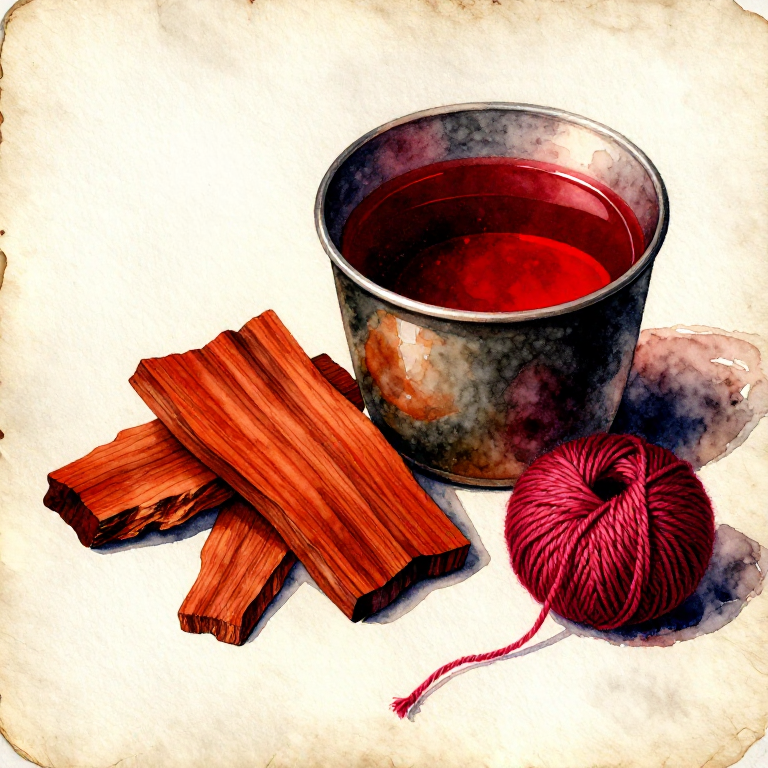


Dyeing Red with Brazilwood — The Dyewood That Named a Nation
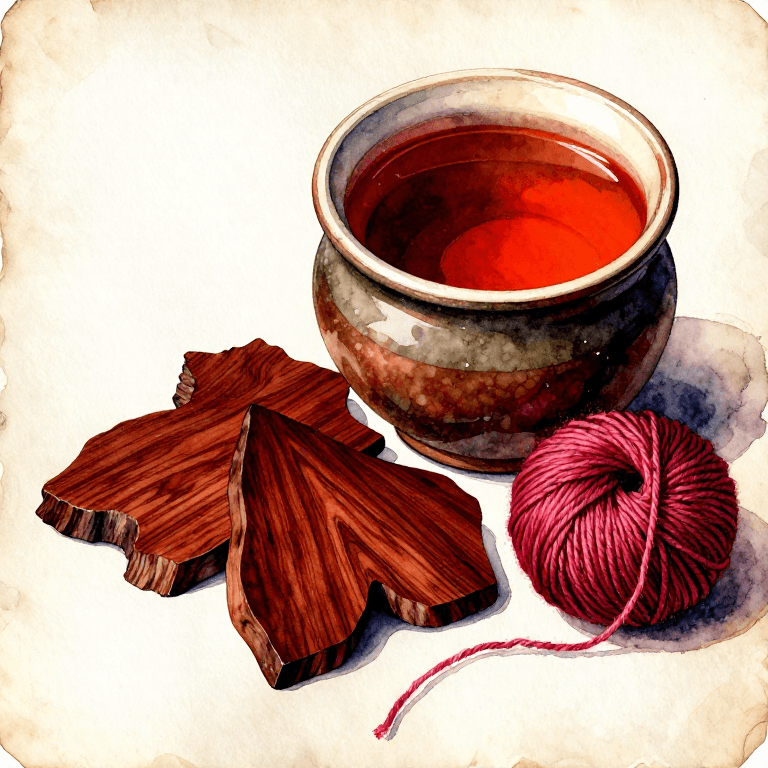
Brazilwood (Caesalpinia echinata) is the tropical tree whose heartwood gave Brazil its name — not the other way around. When Portuguese explorers reached the coast of South America in 1500, they found vast forests of a tree that produced red dye virtually identical to the sappanwood (Caesalpinia sappan) that Europeans had been importing from Asia at great expense. They called the land 'Terra do Brasil' — Land of the Brazilwood — and the name stuck. The red dyewood trade became the first major export industry of colonial Brazil.
Like its Asian cousin sappanwood, brazilwood heartwood contains brazilin, which oxidises to brazilein — the active red pigment. The chemistry is identical. On alum-mordanted wool, brazilwood produces warm rose-red to deep crimson, virtually indistinguishable from sappanwood. The key historical difference was economics: brazilwood was far more abundant than Asian sappanwood and could be harvested in enormous quantities from the coastal Atlantic Forest. By the 16th century, brazilwood had largely replaced sappanwood in European dye houses.
The ecological cost of this trade was severe. Centuries of intensive harvesting reduced Caesalpinia echinata to critically endangered status. The tree is now protected under CITES Appendix II. Modern dyers seeking brazilwood colour should use sappanwood (Caesalpinia sappan) instead — it is sustainably cultivated across Southeast Asia and produces identical colour chemistry. This blueprint documents the historical process for educational and reference purposes.
निर्देशनहरू
Weigh the brazilwood chips
Weigh the brazilwood chips
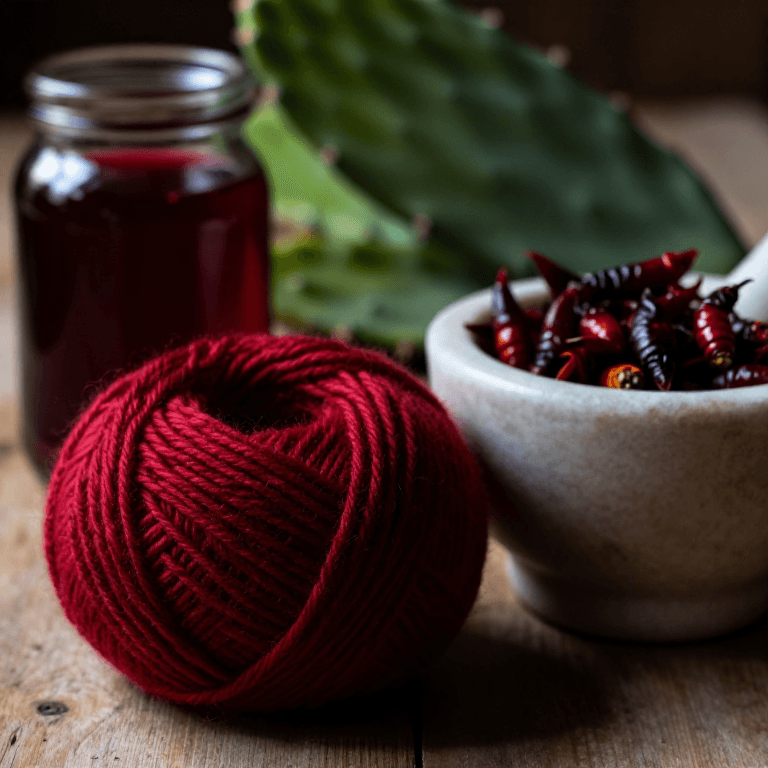
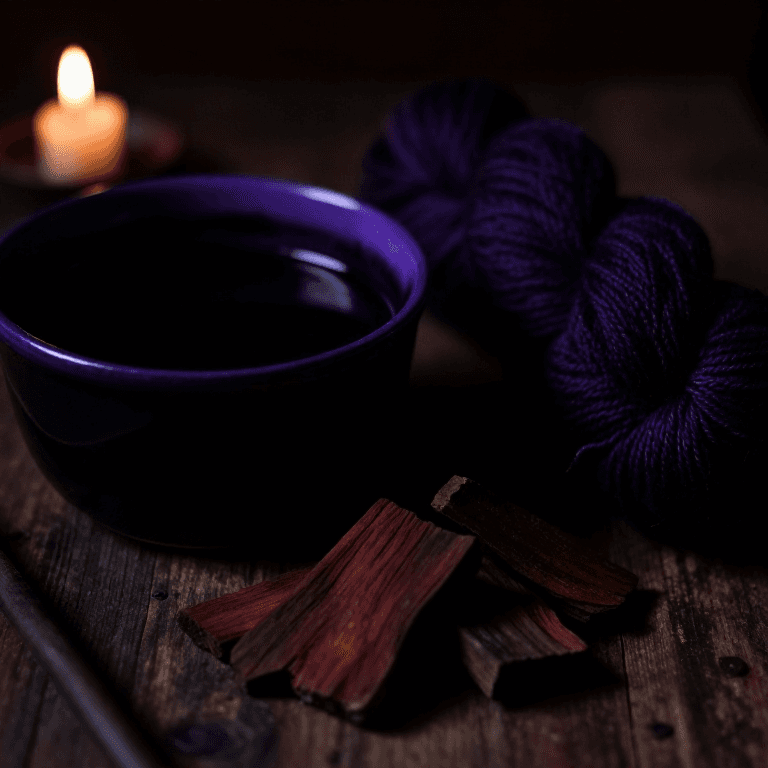
Use 50-100% WOF of heartwood chips. For 100 g of wool, weigh out 50-100 g of chips. Brazilwood heartwood is a dense, reddish-orange wood — similar in appearance to sappanwood. The chips should be a vivid red-orange, indicating high brazilin content. Note: due to the endangered status of Caesalpinia echinata, commercially available brazilwood chips are typically sourced from managed stocks or old salvage. For identical colour results, sappanwood chips (Caesalpinia sappan) can be substituted directly — the dye chemistry is the same.
यस चरणका सामग्री:
 सप्पन काठका टुक्रा80 ग्राम
चाहिने औजार:
 डिजिटल भान्साको तराजु
Soak the chips overnight in warm water
Soak the chips overnight in warm water
Place the heartwood chips in a dye pot with 4 litres of warm water and soak overnight (8-12 hours). The chips will begin releasing brazilin slowly — the water will turn a deep orange-red during soaking. The dense tropical heartwood releases dye gradually, making the overnight soak essential for full extraction. By morning, the soaking liquid will be a vivid red-orange.
चाहिने औजार:
 झोल पकाउने ठूलो भाँडो
Simmer the chips for 60 minutes
Simmer the chips for 60 minutes
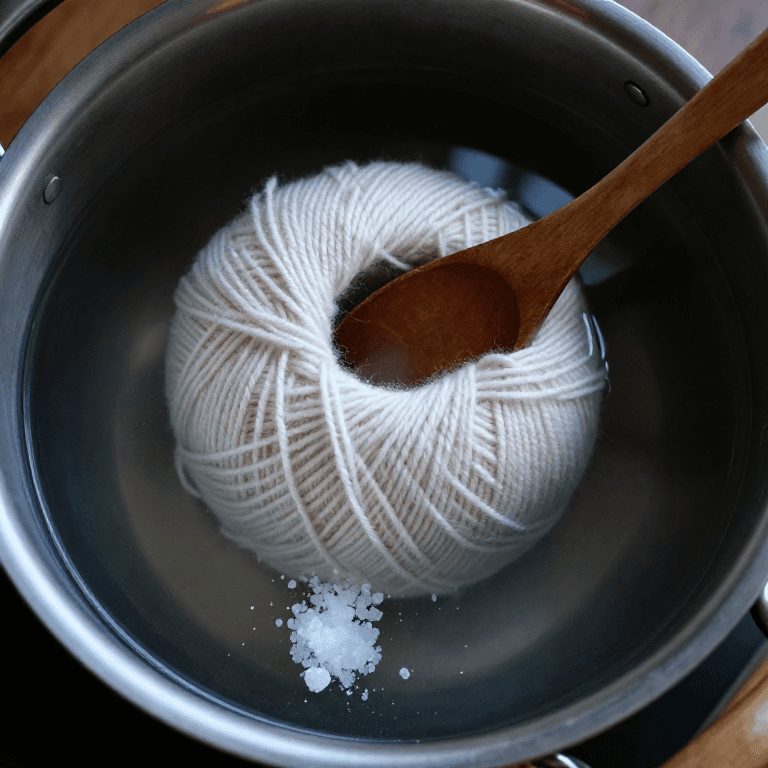
Bring the pot to a gentle simmer (80-85°C) and hold for 60 minutes. Do not boil — excessive heat dulls the red. Stir occasionally. The liquid will deepen to an intensely vivid red as brazilin oxidises to brazilein. Colonial dyers extracted brazilwood chips multiple times — the spent chips were simmered in fresh water for a second and third bath, each progressively lighter, to extract every trace of dye from the expensive imported wood.
चाहिने औजार:
 पकाउने तापमापक
 काठको डाडु
Strain out the chips
Strain out the chips
Strain the dye liquor through a fine mesh strainer into a clean pot. Press the chips to extract all the red liquid. The strained dye bath should be a brilliant, clear red — one of the most vivid reds achievable from a plant source. Wood chips left in the dye bath during dyeing can cause uneven colour at contact points.
चाहिने औजार:
 मसिनो चाल्नी
Dye alum-mordanted wool at 80°C for 45 minutes
Dye alum-mordanted wool at 80°C for 45 minutes
Pre-wet the alum-mordanted wool in lukewarm water for 15 minutes, squeeze gently, and lower it into the brazilwood dye bath at room temperature. Slowly raise to 80°C over 20 minutes, then hold for 45 minutes. Turn gently every 10 minutes. The alum mordant forms a complex with brazilein, producing a warm rose-red to crimson. With alkaline modifiers (washing soda), the colour shifts to deep crimson-purple. With acid (vinegar), it shifts to bright orange-red. This pH sensitivity was exploited by colonial dyers to produce a range of reds from a single dye bath.
यस चरणका सामग्री:
 ऊनी धागोको लट्ठा100 ग्राम
 फिटकिरी (पोटासियम एलम)10 ग्राम
Cool overnight, rinse, and dry
Cool overnight, rinse, and dry
Turn off the heat and let the wool cool in the dye bath overnight. Remove, squeeze gently, and rinse in lukewarm water until the runoff is mostly clear. The final colour is a warm rose-red to soft crimson. Like sappanwood, brazilwood red is not the most lightfast dye — it fades noticeably with prolonged sunlight exposure. For this reason, brazilwood was considered inferior to cochineal and madder for high-value textiles, but its low cost and vivid fresh colour made it the workhorse red dye of the colonial textile industry. Dry in shade.
सामग्री
3- 80 ग्रामप्लेसहोल्डर
- 100 ग्रामप्लेसहोल्डर
- 10 ग्रामप्लेसहोल्डर
आवश्यक उपकरणहरू
5- प्लेसहोल्डर
- प्लेसहोल्डर
- प्लेसहोल्डर
- प्लेसहोल्डर
- प्लेसहोल्डर
जोडिएका खाकाका सामग्री
यो खाकाले बनाउँछ

सम्बन्धित ब्लुप्रिन्ट
यी ब्लुप्रिन्टहरूले ज्ञान साझा गर्छन् — प्रविधि, सामग्री वा सिद्धान्त
CC0 सार्वजनिक डोमेन
यो ब्लुप्रिन्ट CC0 अन्तर्गत जारी गरिएको छ। तपाईं अनुमति नसोधी प्रतिलिपि, परिमार्जन, वितरण र प्रयोग गर्न सक्नुहुन्छ।
ब्लुप्रिन्ट मार्फत उत्पादनहरू किनेर सिर्जनाकर्तालाई सहयोग गर्नुहोस् सिर्जनाकर्ता कमिसन विक्रेताले तोकेको, वा यो ब्लुप्रिन्टको नयाँ संस्करण बनाउनुहोस् र आम्दानी बाँड्न आफ्नो ब्लुप्रिन्टमा जडानको रूपमा समावेश गर्नुहोस्।