कला
सुन्दरता र कल्याण
हस्तकला
संस्कृति र इतिहास
मनोरञ्जन
वातावरण
खाना र पेय
रिभर्स इन्जिनियरिङ
विज्ञान
खेलकुद
प्रविधि
पहिर्न मिल्ने
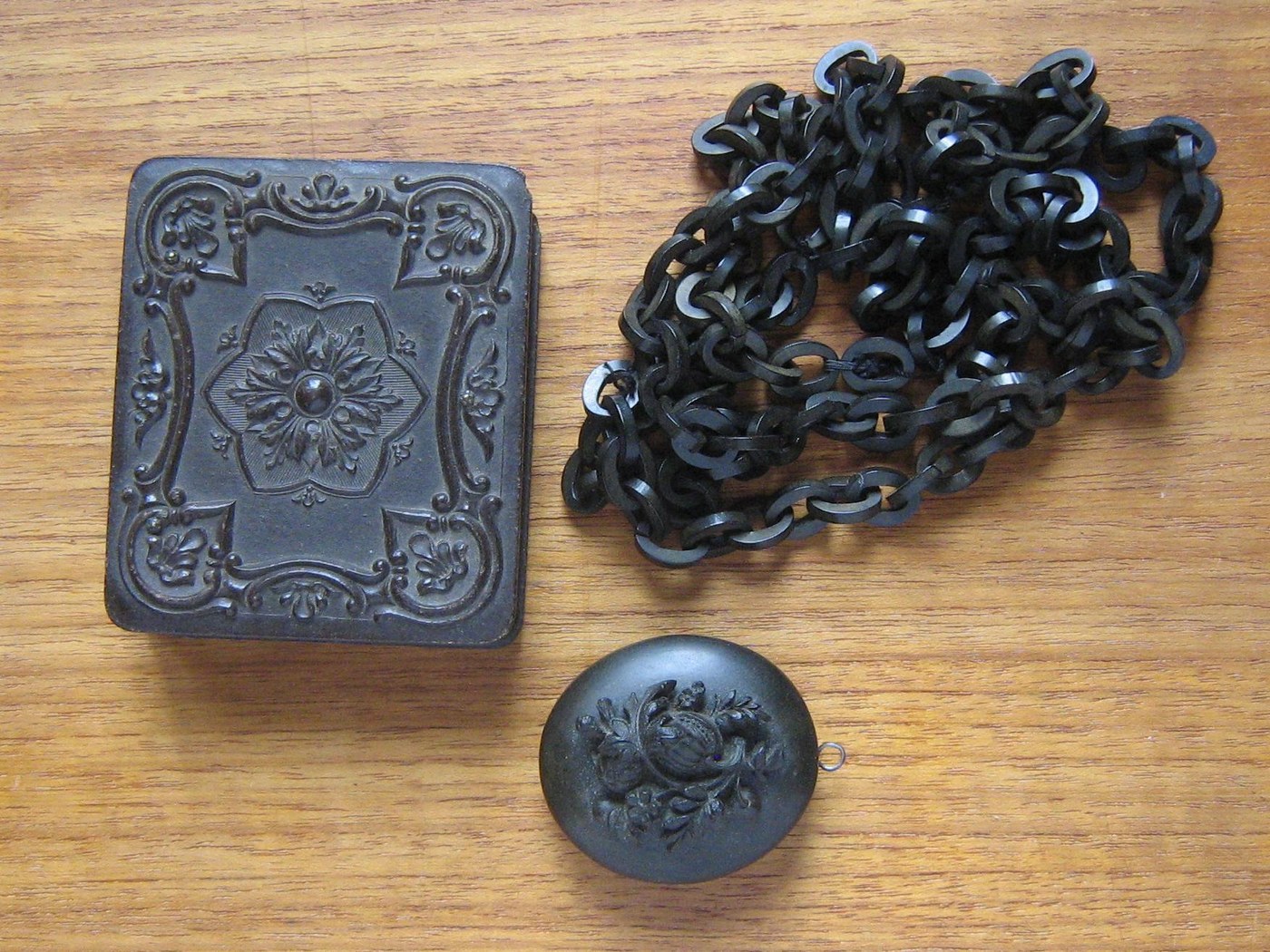


Ebonite (Hard Rubber)
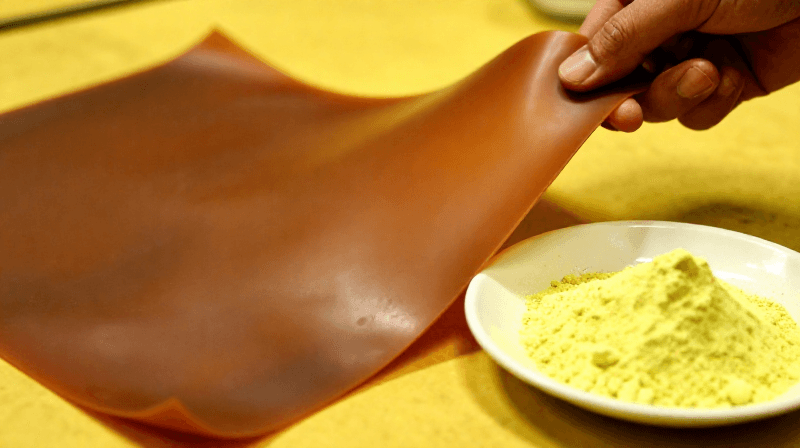
Vulcanised rubber is rubber with a few sulphur bridges between its chains. Keep adding sulphur and the bridges multiply until the chains cannot move at all: the soft, stretchy material turns into a hard black solid you can turn on a lathe, polish like ebony and use as an electrical insulator.
**US 8,075**, "Improvement in the Manufacture of India Rubber", Nelson Goodyear (brother of Charles), granted 6. May 1851, claims "the combining of india-rubber and sulphur… for making a hard and inflexible substance hitherto unknown": about equal parts by weight, heated to 260–275 °F for three to six hours. It was one of the first rigid materials made by chemically changing a natural polymer, over half a century before Bakelite.
**You turn a part from commercial ebonite rod and measure what the sulphur did** — its density, and its charge when rubbed. Curing ebonite needs a heated press and releases hydrogen sulphide, so the blueprint starts from finished rod; the notebook does the chemistry.
मध्यम
3 hours
निर्देशनहरू
1
1
Cut the blank
Cut the blank
Clamp 20 mm ebonite rod in the vise between soft jaws. Saw off 60 mm. Ebonite chips like hard wood; saw slowly to avoid cracking the end.
यस चरणका सामग्री:
 एबोनाइट डन्डी1 टुक्रा
चाहिने औजार:
 फलाम काट्ने आरा
 बेन्चको भाइस
 फलामे रुल
 सफा सुरक्षा चस्मा
2
2
Chuck and face
Chuck and face
Grip 20 mm of the blank in the lathe's 3-jaw chuck. Face the end square with a sharp HSS tool at about 800 rpm, light cuts.
चाहिने औजार:
 धातुको खराद
 खराद औजार सेट (HSS)सफा सुरक्षा चस्मा
 धूलोको मास्क
3
3
Turn to 16 mm
Turn to 16 mm
Turn 40 mm of length down to 16.0 mm. Check with the caliper every pass. The chips smell of sulphur - that is the bonded sulphur you measure later.
चाहिने औजार:
धातुको खरादखराद औजार सेट (HSS) डिजिटल क्यालिपर ६ इन्च
4
4
Drill the bore
Drill the bore
Spot the centre with a centre drill, then drill 3 mm through 35 mm from the tailstock. Clear chips every 5 mm - ebonite heats and gums if packed.
चाहिने औजार:
 सेन्टर ड्रिल सेट
 बाकसमा ड्रिल बिटको सेटधातुको खराद
5
5
Taper the grip
Taper the grip
Set the compound to a shallow angle and taper 25 mm from 16 mm down to 10 mm. This is a fountain-pen grip section, the job ebonite still does today.
चाहिने औजार:
धातुको खरादखराद औजार सेट (HSS)डिजिटल क्यालिपर ६ इन्च6
6
Sand and polish
Sand and polish
At low speed, sand 400 then 800 grit, then run the Micro-Mesh grits in order. Finish with polishing compound on a cloth. Ebonite takes a deep gloss without lacquer.
यस चरणका सामग्री:
 गिट्टी कागज2 पाना
 टल्काउने लेप5 ग्राम
चाहिने औजार:
 सूक्ष्म जालीको रेगमाल किट (९ किसिमका दाना)धातुको खरादधूलोको मास्क
7
7
Part off
Part off
Part off at 45 mm with the parting tool. Chamfer the cut end by hand with 800 grit.
चाहिने औजार:
खराद औजार सेट (HSS)धातुको खराद8
8
Measure the density
Measure the density
Weigh the part. Drop it into 50 ml of water in the graduated cylinder and read the rise. Do the same with a bundle of rubber bands. Enter both in the notebook.
यस चरणका सामग्री:
 रबर ब्यान्ड1 प्याक
चाहिने औजार:
 सूक्ष्म डिजिटल तराजु
 अङ्कित सिलिन्डर
9
9
Rub it and pick up paper
Rub it and pick up paper
Tear tissue into 5 mm scraps. Rub the ebonite 10 strokes on wool felt and hold it 2 cm above the scraps. Repeat with an acrylic offcut. Count scraps lifted by each.
यस चरणका सामग्री:
 अम्लविहीन पातलो कागज1 पाना
 एक्रिलिक पाता1 टुक्रा
चाहिने औजार:
 ऊनी नाम्दा
10
10
The sulphur arithmetic
The sulphur arithmetic
Jupyter नोटबुक लोड हुँदैछ…
11
11
History & Context
History & Context
**What the patent specifies:** rubber and sulphur in about equal parts (or 2 : 1 with magnesia or lime), 260–275 °F, three to six hours. **Modern build (derived):** commercial ebonite rod, typically 25–32 % sulphur - the notebook shows why more than about 32 % cannot bond.
Ebonite was named for ebony, which it replaced in combs, pipe stems and instrument parts. It became a standard insulator of the electrical age and is still preferred for fountain-pen feeds because ink wets it. Its limits: it softens with heat, fades to brown and smells of sulphur in sunlight as the surface oxidises, and is brittle under impact.
सामग्री
6- 1 टुक्राप्लेसहोल्डर
- 2 पानाप्लेसहोल्डर
- 5 ग्रामप्लेसहोल्डर
- 1 प्याकप्लेसहोल्डर
- 1 पानाप्लेसहोल्डर
- 1 टुक्राप्लेसहोल्डर
आवश्यक उपकरणहरू
14- प्लेसहोल्डर
- प्लेसहोल्डर
- प्लेसहोल्डर
- प्लेसहोल्डर
- प्लेसहोल्डर
- प्लेसहोल्डर
- प्लेसहोल्डर
- प्लेसहोल्डर
- सेन्टर ड्रिल सेट10% कमिसनप्लेसहोल्डर
- प्लेसहोल्डर
- प्लेसहोल्डर
- प्लेसहोल्डर
- प्लेसहोल्डर
- प्लेसहोल्डर
सम्बन्धित ब्लुप्रिन्ट
यी ब्लुप्रिन्टहरूले ज्ञान साझा गर्छन् — प्रविधि, सामग्री वा सिद्धान्त

CC0 सार्वजनिक डोमेन
यो ब्लुप्रिन्ट CC0 अन्तर्गत जारी गरिएको छ। तपाईं अनुमति नसोधी प्रतिलिपि, परिमार्जन, वितरण र प्रयोग गर्न सक्नुहुन्छ।
ब्लुप्रिन्ट मार्फत उत्पादनहरू किनेर सिर्जनाकर्तालाई सहयोग गर्नुहोस् सिर्जनाकर्ता कमिसन विक्रेताले तोकेको, वा यो ब्लुप्रिन्टको नयाँ संस्करण बनाउनुहोस् र आम्दानी बाँड्न आफ्नो ब्लुप्रिन्टमा जडानको रूपमा समावेश गर्नुहोस्।