कला
सुन्दरता र कल्याण
हस्तकला
संस्कृति र इतिहास
मनोरञ्जन
वातावरण
खाना र पेय
रिभर्स इन्जिनियरिङ
विज्ञान
खेलकुद
प्रविधि
पहिर्न मिल्ने
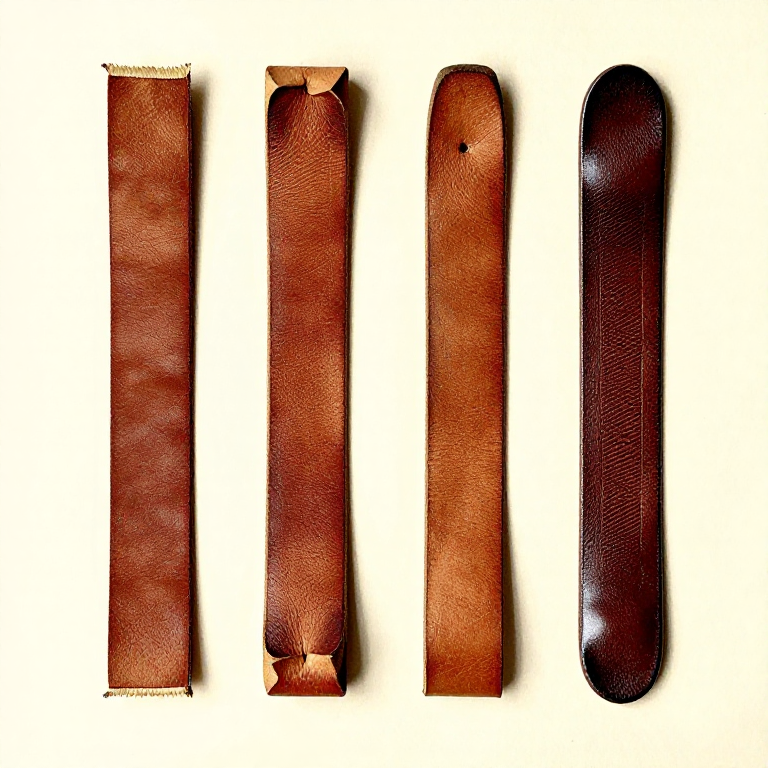


Edges That Last: The Part Everyone Sees and Nobody Plans For
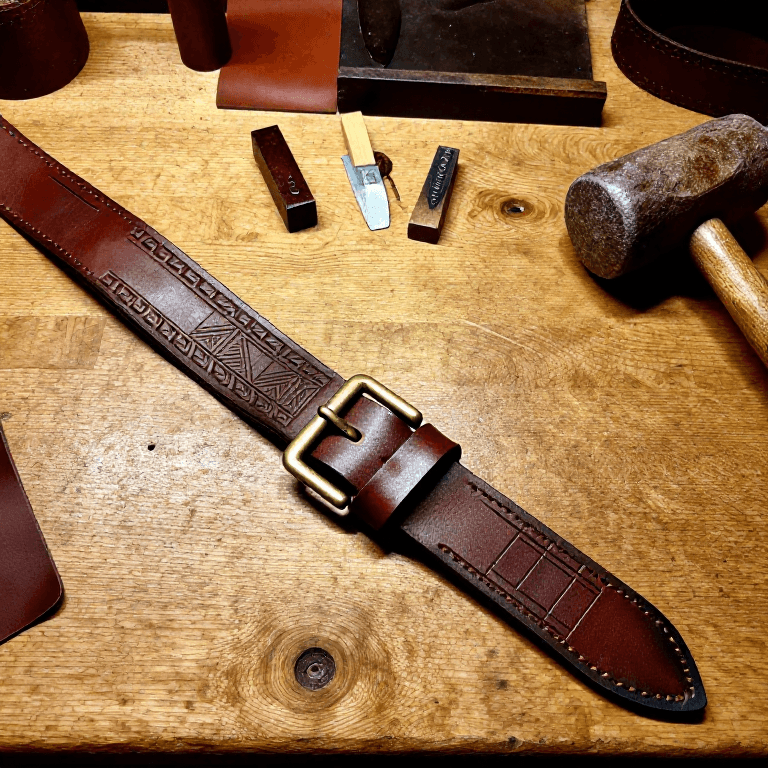
A cut edge in leather is a raw edge. The fibres of the flesh side run straight out into the air, and they fray, absorb dirt and darken. It is the first thing that makes a handmade piece look handmade in the wrong way.
Finishing an edge closes those fibres back down into a smooth dense surface that is nearly as hard as the grain. On vegetable-tanned leather this is done with water, friction and heat — no product is strictly required — and it takes about five minutes per edge to do properly.
It is also the operation that cannot be done later: once a seam is stitched shut, its edges are as good as they will ever be.
मध्यम
3 hours
निर्देशनहरू
1
1
Sand square, then bevel both sides
Sand square, then bevel both sides
**Start square.** If the edge is not straight and perpendicular, no amount of burnishing fixes it. Sand along the edge with a block — 220 grit, then 400 — until it is flat and the two faces meet it at right angles.
On a glued and stitched assembly, sand the two layers down together so they become one edge. A step between layers will be visible for ever.
**Then bevel.** An edge beveller is a small gouge that shaves a consistent chamfer off the corner. Run it along both the grain side and the flesh side, in one smooth pull, with the tool held at a steady angle.
Bevellers come in sizes — a #1 for thin leather up to about 4 oz, #2 for 5 to 7 oz, #3 and up for heavy. Too large a beveller on thin leather removes most of the edge; too small on thick leather leaves a corner.
The bevel does two things: it rounds the edge so it takes a burnish, and it removes the sharp corner that would otherwise scuff pale and ragged in a month's use.
यस चरणका सामग्री:
 वनस्पतिले पकाइएको छाला2 टुक्रा
चाहिने औजार:
 किनारा च्याम्फर गर्ने औजार
 छालाको किनारा खुर्कने औजार
 रुलर
रुलर2
2
Burnishing: water, friction, heat
Burnishing: water, friction, heat
Burnishing works because vegetable-tanned leather is collagen fibre that can be wetted, compressed and dried in a new shape. Friction supplies heat, the heat drives out the water, and the fibres set as a hard smooth layer.
**Wet the edge only.** A damp finger, a cotton bud, a sponge. Damp, not soaked — water spreading onto the grain side leaves a permanent mark.
**Rub hard and fast** with a burnisher: a slicker of hardwood or bone with grooves of different sizes, an agate, a piece of canvas, or a wooden dowel in a drill. Back and forth along the edge, with real pressure.
**The edge tells you when it is done.** It goes from fuzzy and matt to smooth and glossy, and it darkens. It should feel hard and slightly warm.
**Repeat.** Two or three cycles of wet, burnish, let dry beat one long session. Each one sets the fibres a little harder.
**Chrome-tanned leather will not do this.** The tannage does not set with water and heat, so its edges are finished with paint instead — several thin coats of edge paint, sanded between. That is why most modern bags have a painted edge and a saddler's belt has a burnished one.
यस चरणका सामग्री:
वनस्पतिले पकाइएको छाला2 टुक्रा क्रोमले पकाएको छाला1 टुक्रा
चाहिने औजार:
 अकीकको घोटनीकिनारा च्याम्फर गर्ने औजार
3
3
What to burnish with, and whether it is needed
What to burnish with, and whether it is needed
**Water alone** works, and on good firm leather it is enough. It is also reversible: a water-burnished edge that gets soaked will lift again.
**Gum tragacanth** is the traditional edge dressing — a plant gum that lays the fibres down and holds them while they set. Brush a thin coat on, let it soak in, burnish while damp. It gives a harder, more durable edge than water and is still breathable.
**Beeswax or saddle soap** rubbed into the edge before the final burnish gives the highest gloss and the best water resistance. The friction melts the wax into the fibres. This is the finish on a good belt.
**Edge paint** is a flexible acrylic that sits on top rather than soaking in. Necessary on chrome tan, optional on vegetable tan, and the usual choice when the edge must be a colour the leather is not.
Order matters: **dye first, then burnish.** Dye will not penetrate a burnished edge, so an edge burnished before dyeing stays pale. This is the commonest order-of-operations mistake after trying to punch holes in a finished piece.
यस चरणका सामग्री:
 गुँद कतिरा (कित्रे)1 टुक्रा
 मौरीको मैन1 टुक्रा
 छालाको रङ1 टुक्रावनस्पतिले पकाइएको छाला1 टुक्रा
चाहिने औजार:
अकीकको घोटनी4
4
Reading a bad edge
Reading a bad edge
Every edge fault has one cause, and they are worth knowing because the fix is usually to go back a step rather than to burnish harder.
**Fuzzy and will not shine.** Either the leather is not vegetable tanned, or the edge was too dry, or there was not enough friction. Try more water and more speed first.
**Shiny in patches.** Uneven pressure, or the edge was not sanded flat before starting. Sand it back and begin again.
**Dark spots spreading onto the grain.** Too much water. It will mostly dry out on vegetable tan and it may not go entirely.
**A visible step between two glued layers.** They were not sanded together. Sand them as one edge before bevelling.
**A ragged edge that will not sand true.** The original cut was bevelled — the knife was leaning. Nothing fixes that except cutting the piece narrower, which is why the cutting rung insists on a vertical blade.
**Cracked after a few months.** Over-burnished and dried too hard, with no oil in the leather. A light dressing of oil before the final burnish prevents it.
यस चरणका सामग्री:
वनस्पतिले पकाइएको छाला2 टुक्राचाहिने औजार:
अकीकको घोटनीकिनारा च्याम्फर गर्ने औजारसामग्री
5- 2 टुक्राप्लेसहोल्डर
- 1 टुक्राप्लेसहोल्डर
- 1 टुक्राप्लेसहोल्डर
- 1 टुक्राप्लेसहोल्डर
- 1 टुक्राप्लेसहोल्डर
सम्बन्धित ब्लुप्रिन्ट
यी ब्लुप्रिन्टहरूले ज्ञान साझा गर्छन् — प्रविधि, सामग्री वा सिद्धान्त
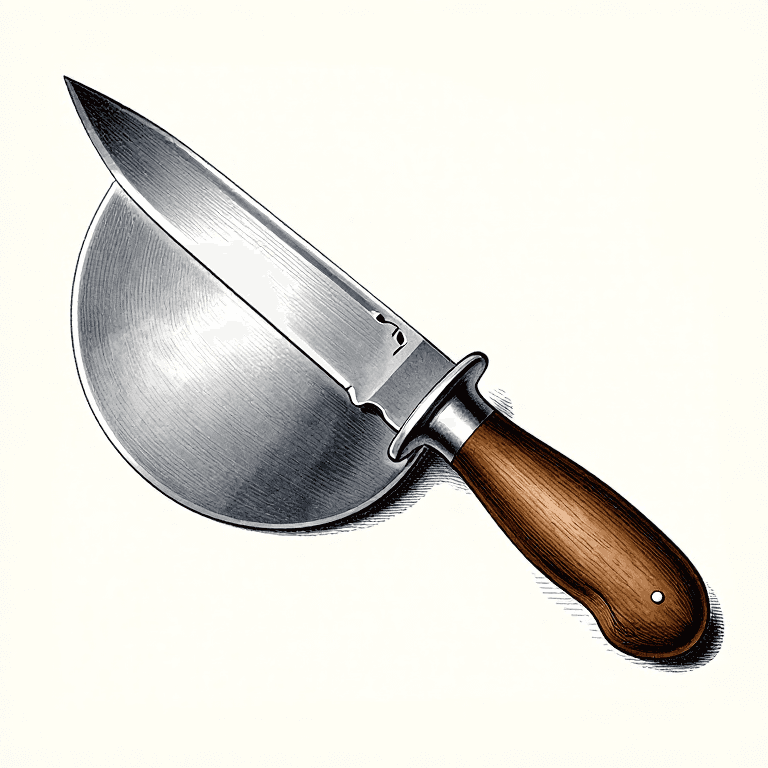
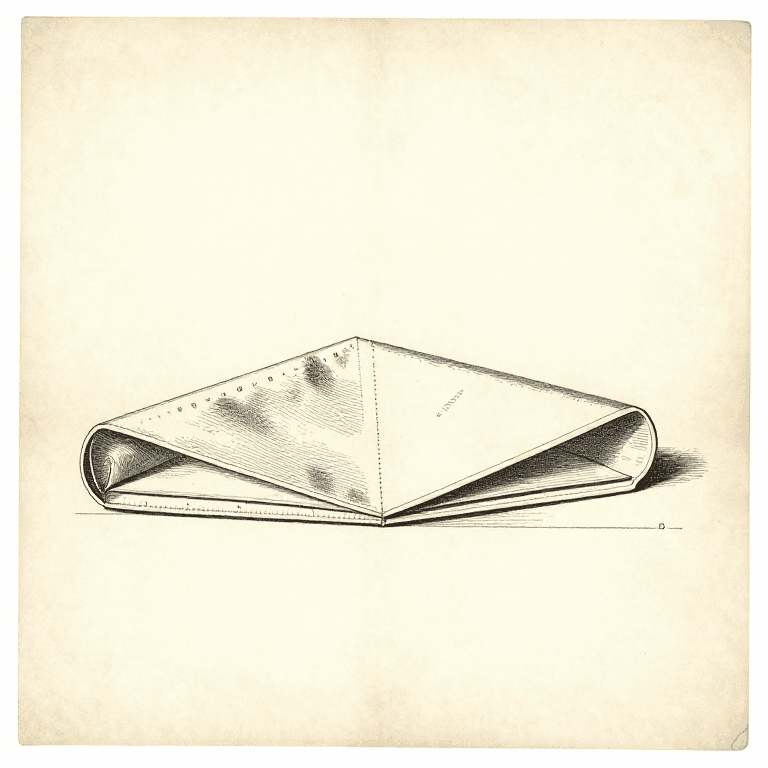
CC0 सार्वजनिक डोमेन
यो ब्लुप्रिन्ट CC0 अन्तर्गत जारी गरिएको छ। तपाईं अनुमति नसोधी प्रतिलिपि, परिमार्जन, वितरण र प्रयोग गर्न सक्नुहुन्छ।
ब्लुप्रिन्ट मार्फत उत्पादनहरू किनेर सिर्जनाकर्तालाई सहयोग गर्नुहोस् सिर्जनाकर्ता कमिसन विक्रेताले तोकेको, वा यो ब्लुप्रिन्टको नयाँ संस्करण बनाउनुहोस् र आम्दानी बाँड्न आफ्नो ब्लुप्रिन्टमा जडानको रूपमा समावेश गर्नुहोस्।