कला
सुन्दरता र कल्याण
हस्तकला
संस्कृति र इतिहास
मनोरञ्जन
वातावरण
खाना र पेय
रिभर्स इन्जिनियरिङ
विज्ञान
खेलकुद
प्रविधि
पहिर्न मिल्ने
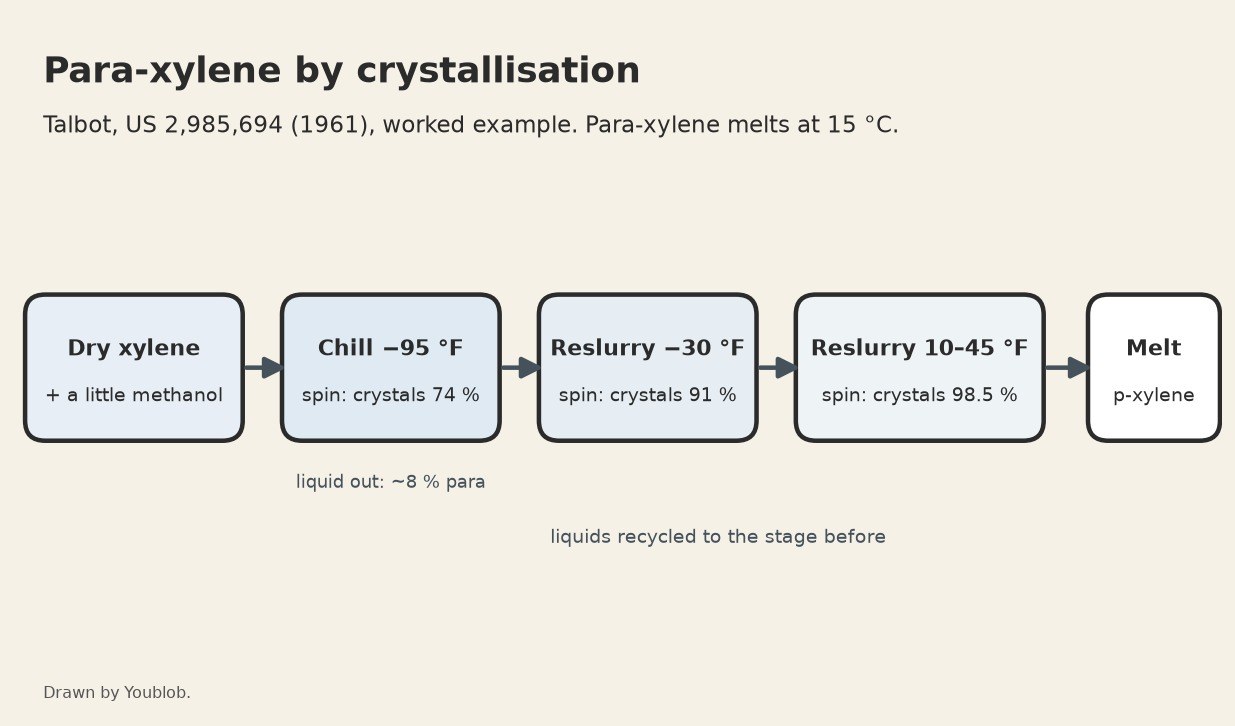


Para-Xylene by Three-Stage Crystallisation from Xylene
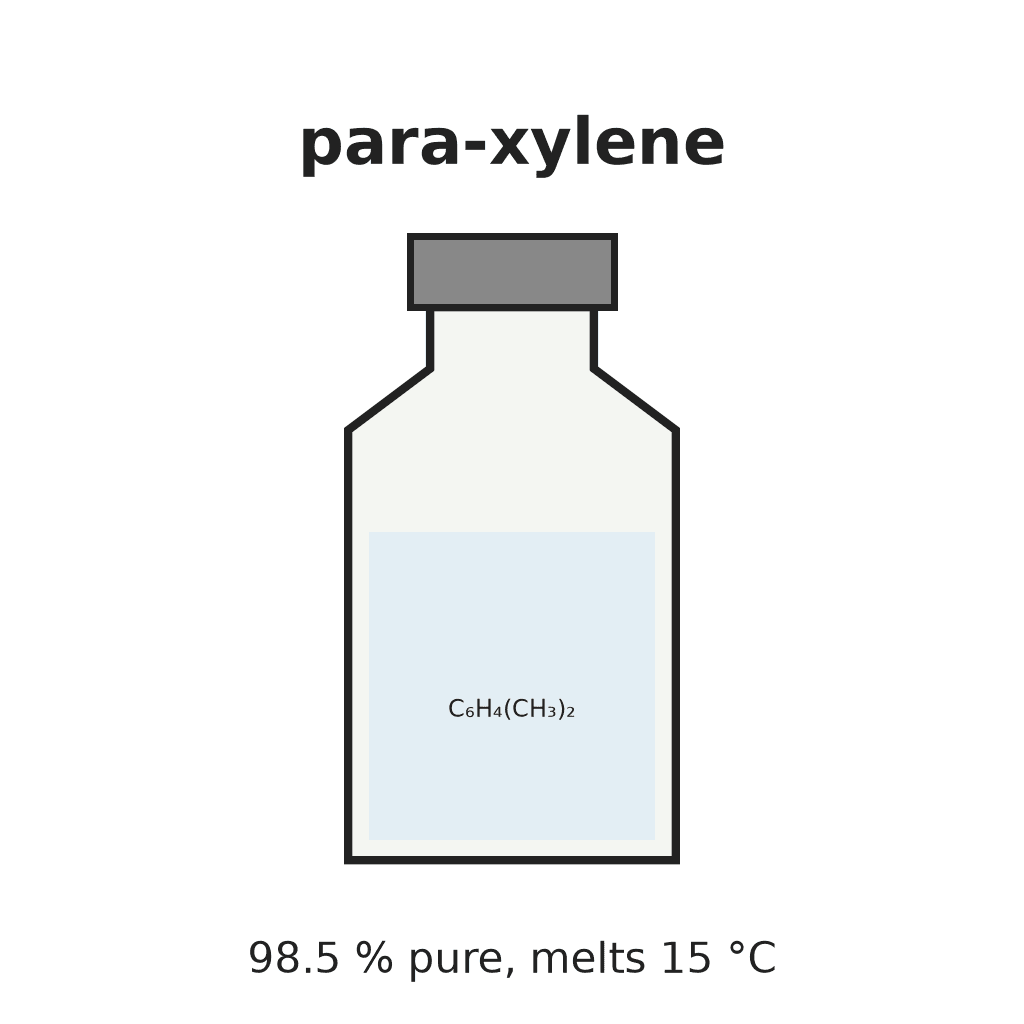
Para-xylene melts at 15 °C (Lunge, 1887), so it crystallises out of mixed xylene when this is chilled hard. This is Talbot's three-stage process (US 2,985,694, 1961): chill the dry feed to about −95 °F and spin off the crystals, then warm them in stages in their own recycled liquor and spin again, until they are 98.5 % para-xylene. Para-xylene is the raw material for terephthalic acid and so for PET.
The picture: our diagram of the three stages.
उन्नत
1 day
निर्देशनहरू
1
1
Take out the ortho-xylene (preferred)
Take out the ortho-xylene (preferred)
If you can, first distil off ortho-xylene as the bottoms of a tall column: more than 35, better about 60, theoretical plates. The patent prefers this but does not require it.
यस चरणका सामग्री:
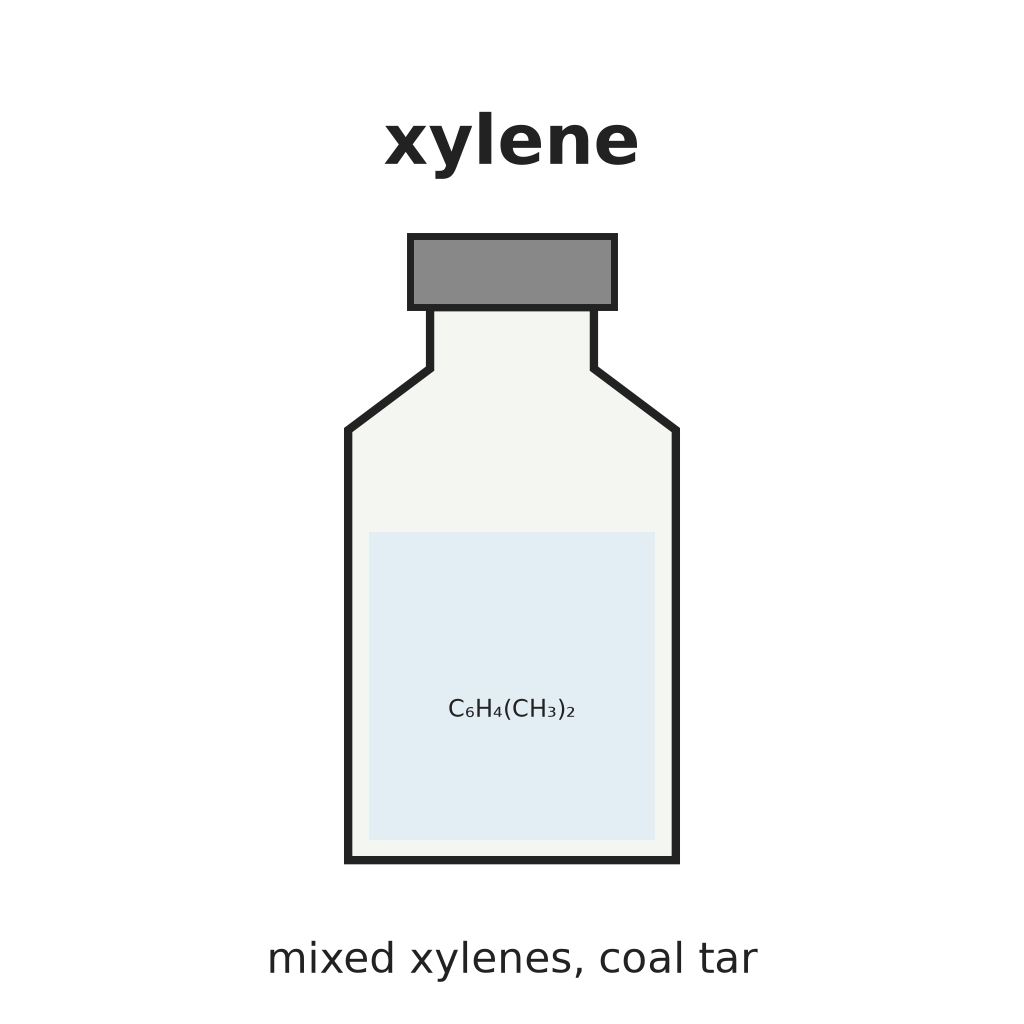 जाइलिन1 as required
चाहिने औजार:
 आसवन स्तम्भ जडान
 वाफ बोइलर
 प्रयोगशाला तापमापक
2
2
Dry the feed and add a little methanol
Dry the feed and add a little methanol
Remove all water from the xylene (calcium chloride is our choice of drier). Add methanol so ice does not plug the cold equipment: the patent's example uses 49 lb methanol to 13,430 lb feed.
चाहिने औजार:
 क्याल्सियम क्लोराइड
 मिथानोल
 क्रिस्टलीकरण ट्याङ्की
3
3
Chill to about −95 °F and spin
Chill to about −95 °F and spin
Cool slowly, over about 20 minutes, to between −75 and −120 °F (−59 to −84 °C); the example uses −95 °F (−71 °C). Spin the slurry in a centrifuge: the liquid (about 8 % para) goes out, the crystals are about 74 % para-xylene.
चाहिने औजार:
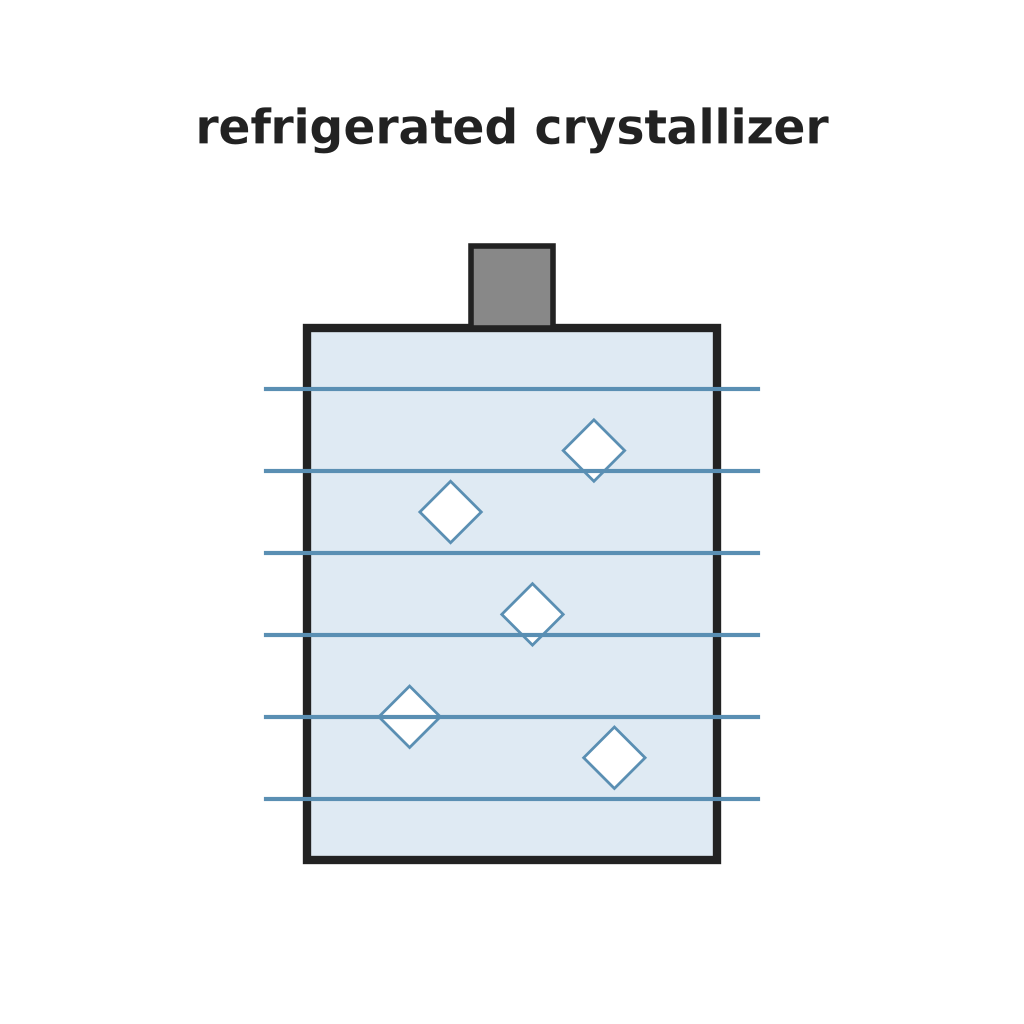 चिसो क्रिस्टलाइजर
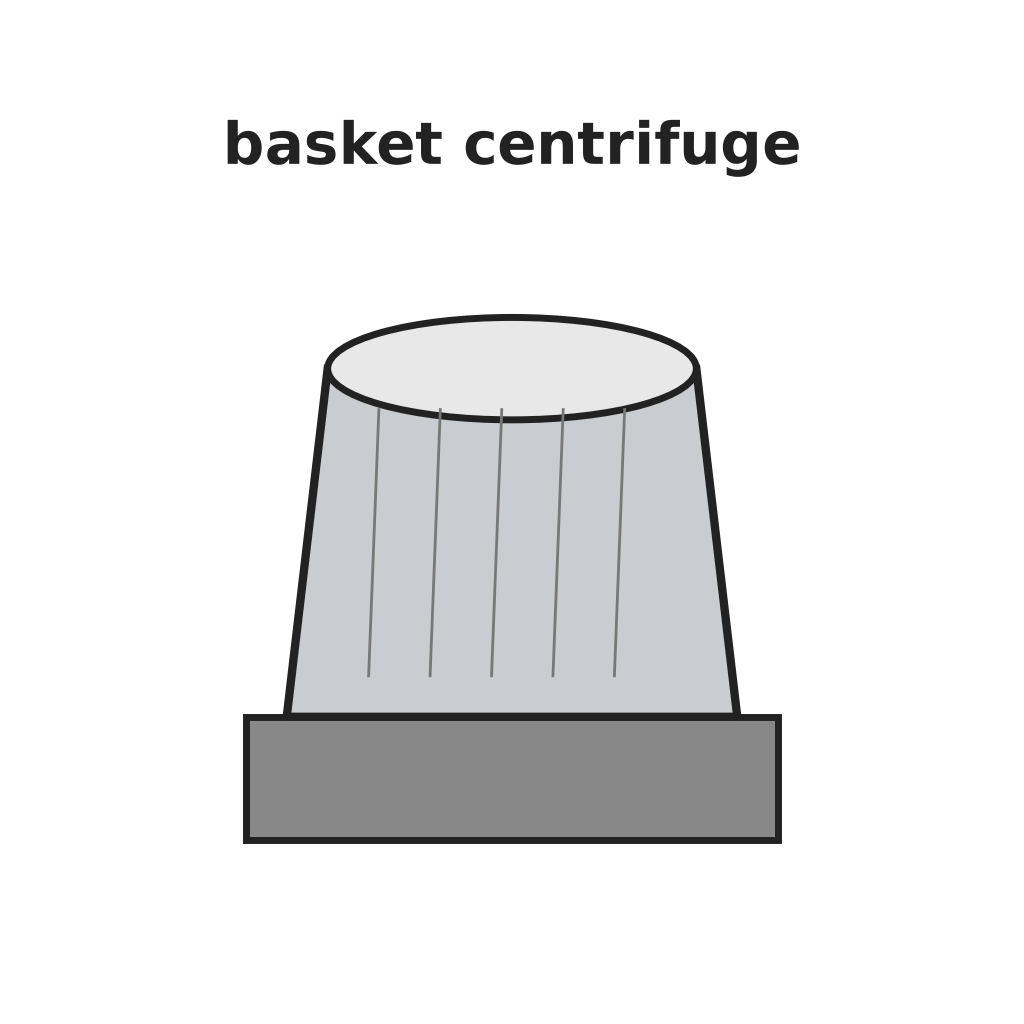 टोकरी सेन्ट्रिफ्युजप्रयोगशाला तापमापक
 ताप सहने पन्जा
 रासायनिक छिटाको चस्मा
4
4
Reslurry, bring to −30 °F, spin
Reslurry, bring to −30 °F, spin
Stir the crystals into the liquid from the next stage and bring the slurry to between 0 and −30 °F (−18 to −34 °C); the example uses −30 °F. Centrifuge again: the crystals are now about 91 % para-xylene.
चाहिने औजार:
क्रिस्टलीकरण ट्याङ्कीचिसो क्रिस्टलाइजरटोकरी सेन्ट्रिफ्युजप्रयोगशाला तापमापकताप सहने पन्जा5
5
Reslurry warmer, spin and melt
Reslurry warmer, spin and melt
Stir these crystals into the liquid from the last spin and bring to 10–45 °F (−12 to 7 °C). Centrifuge: the crystals are 98.5 % para-xylene. Melt them and bottle. Return the liquids to the earlier stages.
चाहिने औजार:
क्रिस्टलीकरण ट्याङ्कीचिसो क्रिस्टलाइजरटोकरी सेन्ट्रिफ्युजप्रयोगशाला तापमापक कर्कको बिर्कोसहितका सिसाका बोतल
आवश्यक उपकरणहरू
11- प्लेसहोल्डर
- प्लेसहोल्डर
- प्लेसहोल्डर
- प्लेसहोल्डर
- प्लेसहोल्डर
- प्लेसहोल्डर
- प्लेसहोल्डर
- प्लेसहोल्डर
- प्लेसहोल्डर
- प्लेसहोल्डर
- प्लेसहोल्डर
यो खाकाले बनाउँछ
सम्बन्धित ब्लुप्रिन्ट
यी ब्लुप्रिन्टहरूले ज्ञान साझा गर्छन् — प्रविधि, सामग्री वा सिद्धान्त
CC0 सार्वजनिक डोमेन
यो ब्लुप्रिन्ट CC0 अन्तर्गत जारी गरिएको छ। तपाईं अनुमति नसोधी प्रतिलिपि, परिमार्जन, वितरण र प्रयोग गर्न सक्नुहुन्छ।
ब्लुप्रिन्ट मार्फत उत्पादनहरू किनेर सिर्जनाकर्तालाई सहयोग गर्नुहोस् सिर्जनाकर्ता कमिसन विक्रेताले तोकेको, वा यो ब्लुप्रिन्टको नयाँ संस्करण बनाउनुहोस् र आम्दानी बाँड्न आफ्नो ब्लुप्रिन्टमा जडानको रूपमा समावेश गर्नुहोस्।