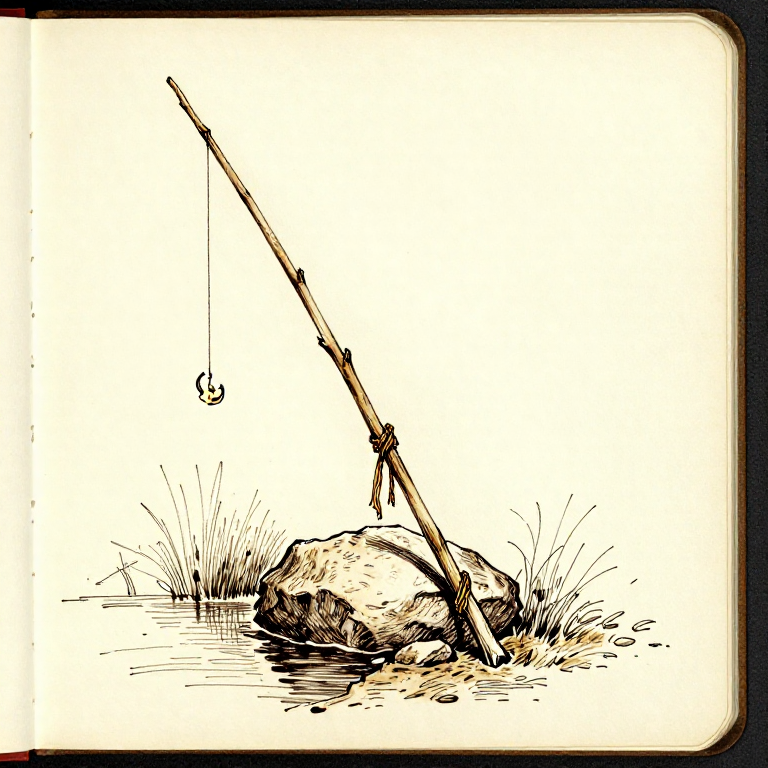

Building a Primitive Fishing Rod — Sapling Pole & Bone Hook
निर्देशनहरू
Select and Prepare the Pole
Select and Prepare the Pole
Find a straight, flexible sapling — hazel, willow, or birch work best. The pole should be 2-3 metres long and taper naturally from a thumb-width base to a pencil-thin tip. Cut it at the base with a flint knife using a scoring-and-snapping motion. Strip all side branches and leaves. Green wood bends without breaking; if the tip snaps when flexed into a gentle arc, the wood is too dry or brittle — choose another.
यस चरणका सामग्री:
 कडा काठको बिरुवाको लौरो1 pole, 2-3m long m
 डोरी3-4m length m
 जनावरका हाड (सफा, बोसो निकालिएको)1 piece टुक्रा
 प्राकृतिक चारोas needed टुक्रा
चाहिने औजार:
 चकमक ढुङ्गाको चक्कु
 बलौटे ढुङ्गा (घोट्ने)
Prepare the Line
Prepare the Line
Use reverse-wrap cordage made from plant fibers — nettle bast, lime inner bark, or twisted sinew all work. The line should be slightly longer than the pole (3-4m). If you have not yet made cordage, see the Plant Fiber Rope blueprint for the reverse-wrap technique. Test the line by pulling firmly — it must hold at least 2-3 kg without snapping.
Carve the Bone Hook
Carve the Bone Hook
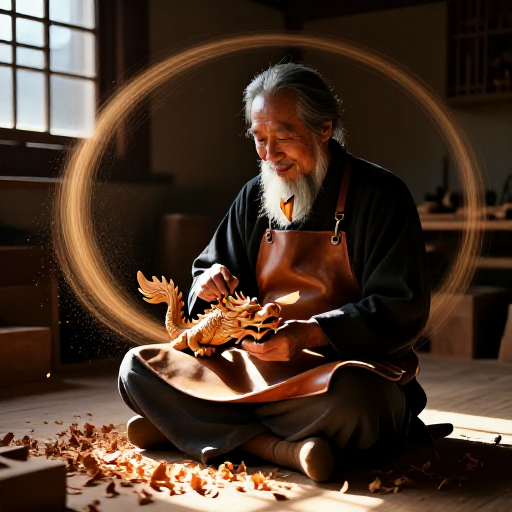
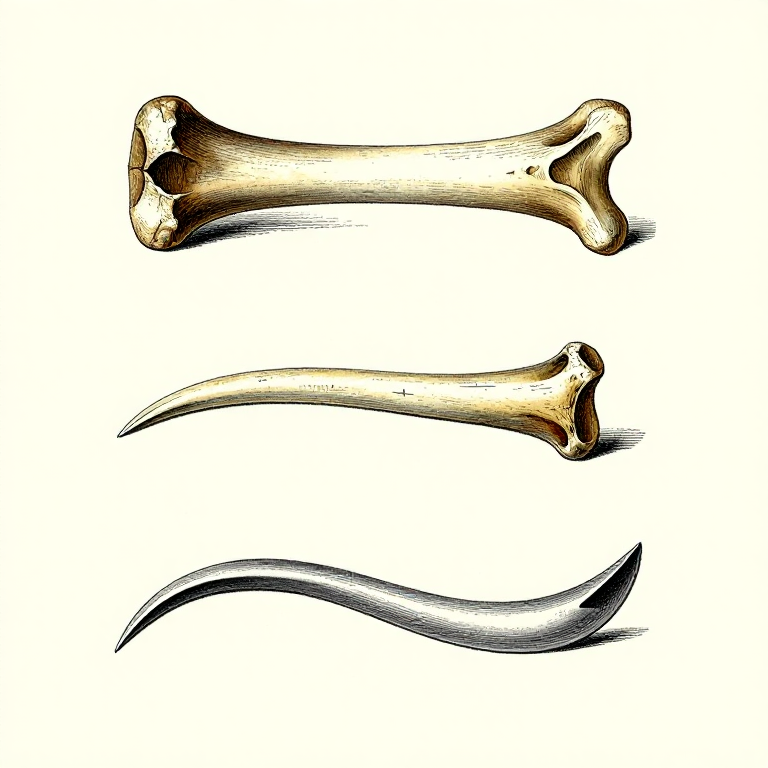
Select a dense bone fragment — the cannon bone of a deer works well. Score the outline of a hook shape (about 3cm long) into the bone surface using the sharp edge of a flint flake. The hook needs a shank (straight section for tying the line), a bend, and a point. Repeatedly score the outline until you can snap the rough shape free. Then grind the point sharp on a sandstone slab using a circular motion. Carve a small notch or groove near the top of the shank for securing the line.
Attach Line to Pole and Hook
Attach Line to Pole and Hook
Lash the line to the pole tip using a clove hitch backed by a simple overhand knot. The attachment should be tight enough that pulling the line does not slip, but if the tip breaks under load, the line stays attached to the next section down. At the hook end, tie the line into the groove on the shank using a snell knot — wrap the line around the shank 5-6 times, then pass the end through the loop at the top. Pull tight. The wraps create friction that prevents the knot from slipping under load.
Bait and Fish
Bait and Fish
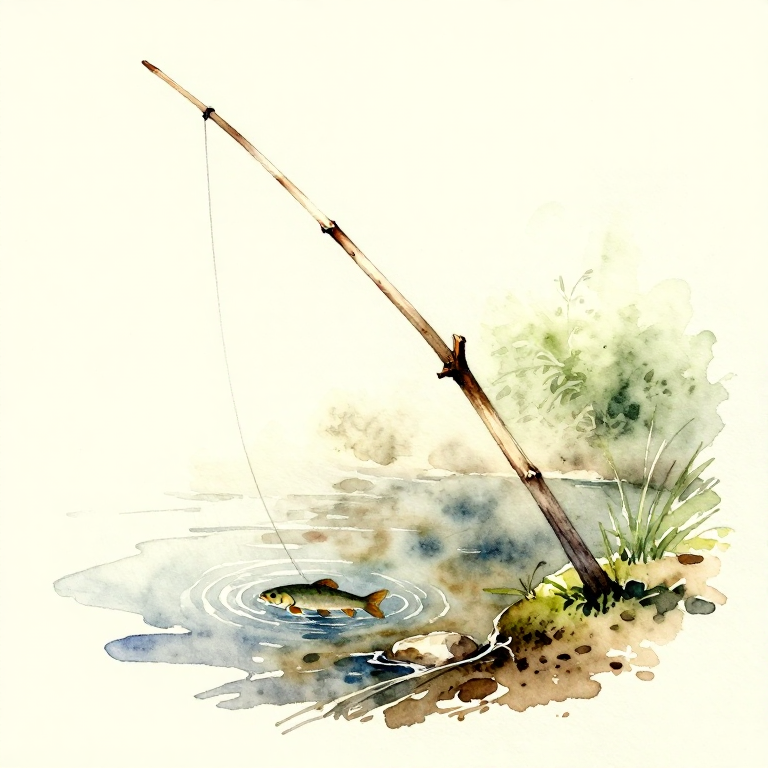
Thread natural bait — grubs, earthworms, or small insects — onto the hook point so the barb is partially concealed. Lower the baited hook into calm water near submerged logs, undercut banks, or weed beds where fish shelter. Hold the pole steady and watch for the line to twitch or the pole tip to dip. When a fish takes the bait, lift the pole tip firmly but smoothly to set the hook. Do not jerk violently — bone hooks are brittle and may snap under sudden force. Guide the fish to shore using steady side pressure.
सामग्री
6- 1 pole, 2-3m long mप्लेसहोल्डर
- 3-4m length mप्लेसहोल्डर
- 1 piece टुक्राप्लेसहोल्डर
- 1 pole, 2-3m long टुक्राप्लेसहोल्डर
- 1 piece टुक्राप्लेसहोल्डर
- as needed टुक्राप्लेसहोल्डर
आवश्यक उपकरणहरू
2- प्लेसहोल्डर
- प्लेसहोल्डर
CC0 सार्वजनिक डोमेन
यो ब्लुप्रिन्ट CC0 अन्तर्गत जारी गरिएको छ। तपाईं अनुमति नसोधी प्रतिलिपि, परिमार्जन, वितरण र प्रयोग गर्न सक्नुहुन्छ।
ब्लुप्रिन्ट मार्फत उत्पादनहरू किनेर सिर्जनाकर्तालाई सहयोग गर्नुहोस् सिर्जनाकर्ता कमिसन विक्रेताले तोकेको, वा यो ब्लुप्रिन्टको नयाँ संस्करण बनाउनुहोस् र आम्दानी बाँड्न आफ्नो ब्लुप्रिन्टमा जडानको रूपमा समावेश गर्नुहोस्।