कला
सुन्दरता र कल्याण
हस्तकला
संस्कृति र इतिहास
मनोरञ्जन
वातावरण
खाना र पेय
रिभर्स इन्जिनियरिङ
विज्ञान
खेलकुद
प्रविधि
पहिर्न मिल्ने
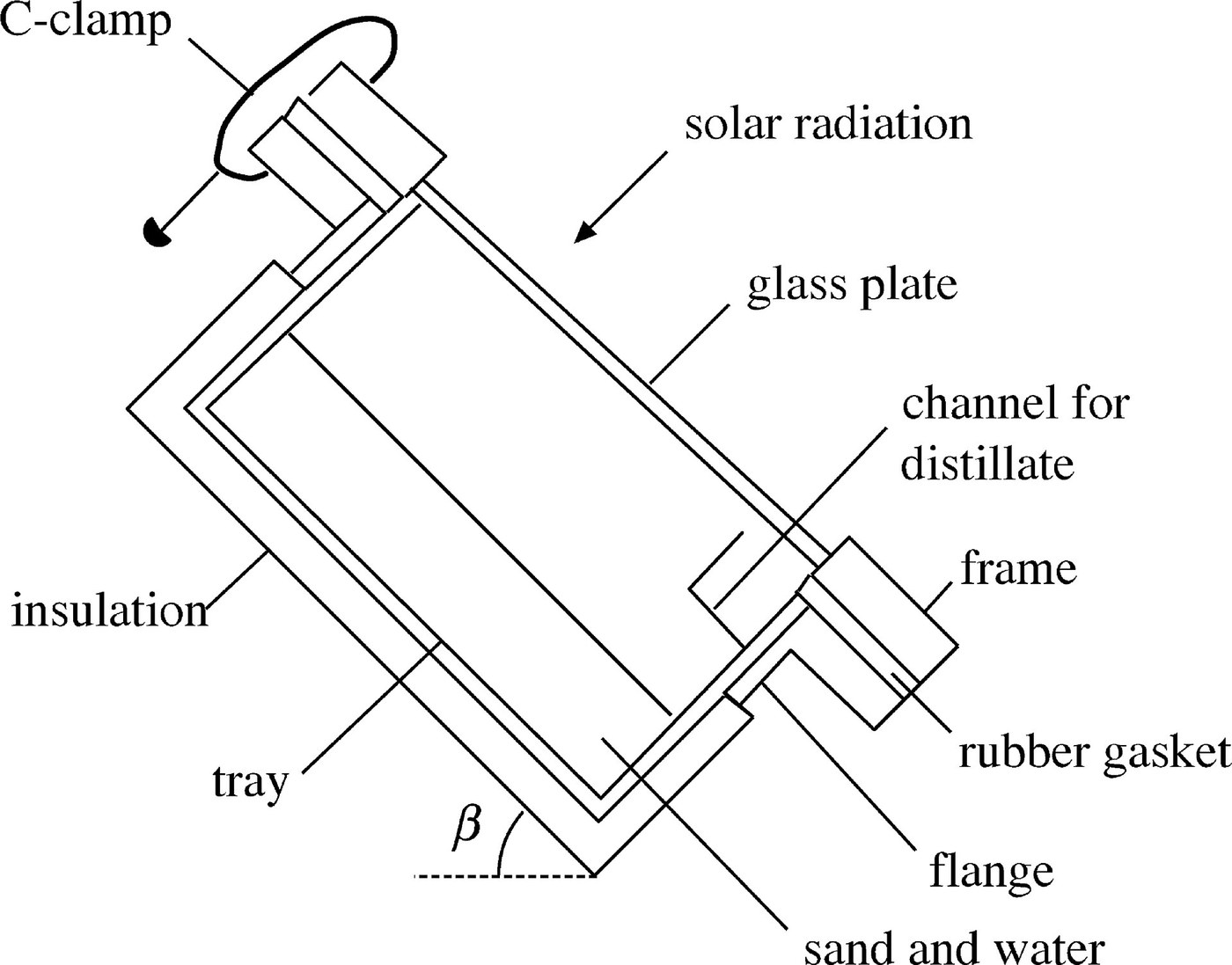


Single-Slope Solar Still
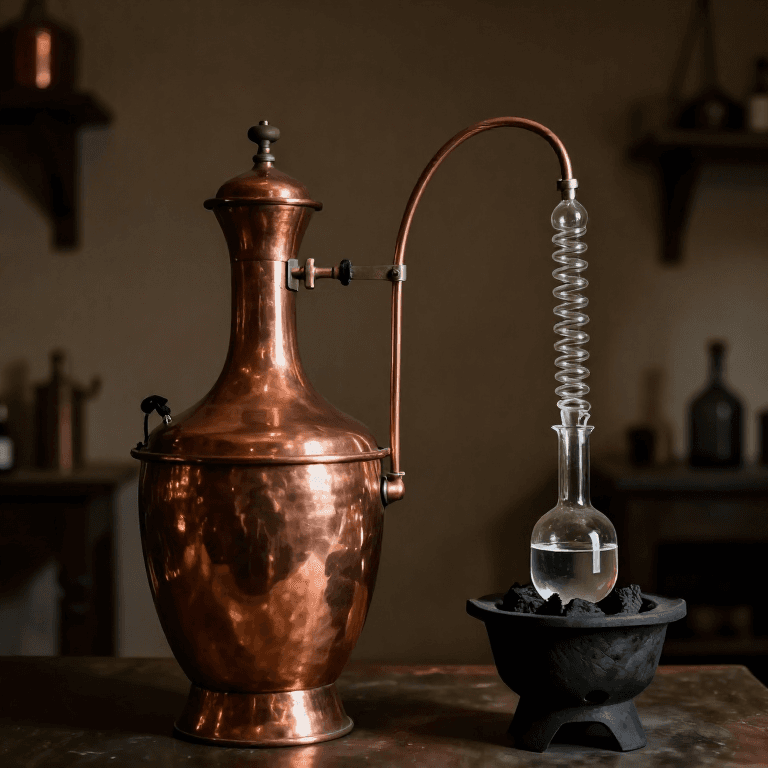
A copper alembic, already published here, boils a liquid over a fire and catches what rises. A solar still does the same separation with no fire at all: the sun evaporates water from a black basin, the vapour condenses on a sloping sheet of glass, and it runs down into a trough as distilled water. Salt, mud, metals and microbes stay behind in the basin, because none of them evaporate at these temperatures.
In 1872 an engineer named Charles Wilson built one of these at Las Salinas in the Atacama, a nitrate-mining settlement with no drinkable water. Its glass covered about 4,700 square metres and it produced roughly 20,000 litres a day for the miners and their mules, for nearly forty years, burning nothing. You will build a tray version of the same machine, measure what it actually yields, and work out why the answer is so much smaller than the sunlight falling on it.
शुरुआती
4 hours plus a sunny day
निर्देशनहरू
1
1
Build the basin
Build the basin
Make a shallow open box from plywood, about 60 cm by 40 cm and 12 cm deep, and seal every inside joint with silicone. The basin has to hold two or three centimetres of water without weeping, because a leak is lost yield.
Paint the whole inside matt black and let it cure fully. Black matters more than it looks: clear water passes most sunlight straight through, so an unpainted basin heats the bottom of the tray and not the water. A black surface under the water absorbs the light and hands the heat back up into it.
यस चरणका सामग्री:
 प्लाइउडको पाता1 पाना
 कालो रङ1 tin
 सिलिकोन सिलेन्ट1 tube
2
2
Glaze it, sloping
Glaze it, sloping
Set a sheet of glass over the box as a lid, tilted so one long edge sits about 10 cm higher than the other — roughly 10 to 15 degrees. Seal the glass to the box everywhere except a gap along the LOW edge, where the condensate will run out.
The slope is doing two jobs. It aims the glass more squarely at the sun, and, far more importantly, it makes the drops run DOWN rather than hang. A flat cover grows fat droplets that eventually fall back into the basin, and you collect nothing. Anything that gets the film moving — a shallow slope, a clean sheet — is worth more than extra area.
यस चरणका सामग्री:
 सिसाको पाता1 पानासिलिकोन सिलेन्ट1 tube
3
3
Hang the trough and the jar
Hang the trough and the jar
Fix a gutter along the inside of the low edge, under the glass, so every drop that runs down the sheet lands in it, and lead it out through a sealed hole to a collecting jar outside the box.
Keep the trough below the glass line and the jar out of the sun. Distilled water warming in a clear jar will simply evaporate again, and you will spend the afternoon watching your yield leave.
यस चरणका सामग्री:
सिलिकोन सिलेन्ट1 tubeचाहिने औजार:
 नाप्ने सिलिन्डर
4
4
Charge it with the worst water you have
Charge it with the worst water you have
Mix 35 grams of salt into a litre of water — that is roughly sea water — and pour two centimetres of it into the basin. Add a spoon of soil if you want to see the point made plainly.
Do not fill it deep. A deep basin is a large thermal mass that spends the morning warming up and never gets hot enough to give much vapour; a shallow film reaches temperature quickly and evaporates hard. This is the single change that most affects what you collect.
यस चरणका सामग्री:
 नुन35 ग्राम
चाहिने औजार:
नाप्ने सिलिन्डर5
5
Run it for a day and log it
Run it for a day and log it
Put the still out at sunrise, facing the midday sun, and leave it. Read the basin temperature and the collected volume every hour if you can. Expect almost nothing before mid-morning, a steep run through the middle of the day, and a surprising amount in the first hour after peak sun, when the glass has cooled but the water has not.
Taste the product only after you have tested it — see the last step. It will taste flat, because distillation removes the dissolved minerals that give water its taste along with everything else.
चाहिने औजार:
 तापमापक
 रोकघडीनाप्ने सिलिन्डर
6
6
Where the sunlight went
Where the sunlight went
Jupyter नोटबुक लोड हुँदैछ…
7
7
Prove it worked, and know what it does not remove
Prove it worked, and know what it does not remove
Test the basin brine and the collected water side by side. The distillate should read close to neutral on a pH strip and taste flat rather than salty; the basin should be saltier than when you started, because you have removed water and left the salt.
Now the limit, and it matters. Distillation removes anything that does not evaporate: salt, heavy metals, sediment, bacteria, viruses. It does NOT remove compounds that boil below water — petrol, solvents, some pesticides ride over with the steam and land in your jar. A solar still is the right tool for seawater and for brackish groundwater. It is the wrong tool, on its own, for water you suspect of industrial contamination.
यस चरणका सामग्री:
 आसुत पानी1 लिटर
चाहिने औजार:
 pH जाँच पट्टी
सामग्री
6- 1 पानाप्लेसहोल्डर
- 1 tinप्लेसहोल्डर
- 3 tubeप्लेसहोल्डर
- 1 पानाप्लेसहोल्डर
- 35 ग्रामप्लेसहोल्डर
- 1 लिटरप्लेसहोल्डर
सम्बन्धित ब्लुप्रिन्ट
यी ब्लुप्रिन्टहरूले ज्ञान साझा गर्छन् — प्रविधि, सामग्री वा सिद्धान्त

CC0 सार्वजनिक डोमेन
यो ब्लुप्रिन्ट CC0 अन्तर्गत जारी गरिएको छ। तपाईं अनुमति नसोधी प्रतिलिपि, परिमार्जन, वितरण र प्रयोग गर्न सक्नुहुन्छ।
ब्लुप्रिन्ट मार्फत उत्पादनहरू किनेर सिर्जनाकर्तालाई सहयोग गर्नुहोस् सिर्जनाकर्ता कमिसन विक्रेताले तोकेको, वा यो ब्लुप्रिन्टको नयाँ संस्करण बनाउनुहोस् र आम्दानी बाँड्न आफ्नो ब्लुप्रिन्टमा जडानको रूपमा समावेश गर्नुहोस्।