कला
सुन्दरता र कल्याण
हस्तकला
संस्कृति र इतिहास
मनोरञ्जन
वातावरण
खाना र पेय
रिभर्स इन्जिनियरिङ
विज्ञान
खेलकुद
प्रविधि
पहिर्न मिल्ने

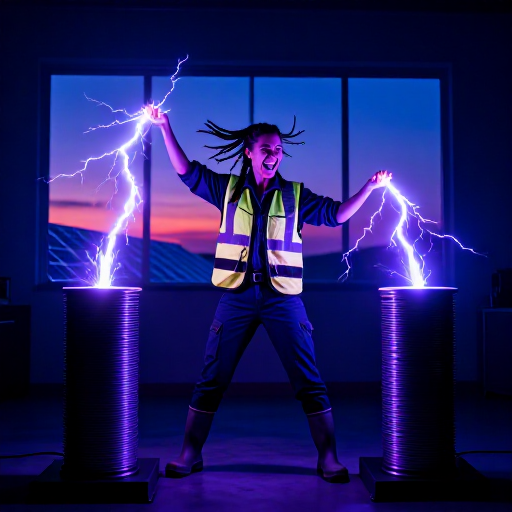

The Arc Lamp: Burning Carbons and Keeping the Gap
Two carbon rods, touched and drawn apart with a current flowing, make an arc of intense white light. The arc lamp lit streets, lighthouses and factories from the 1870s — but an arc burns its carbons away, and its gap must be kept right or it goes out.
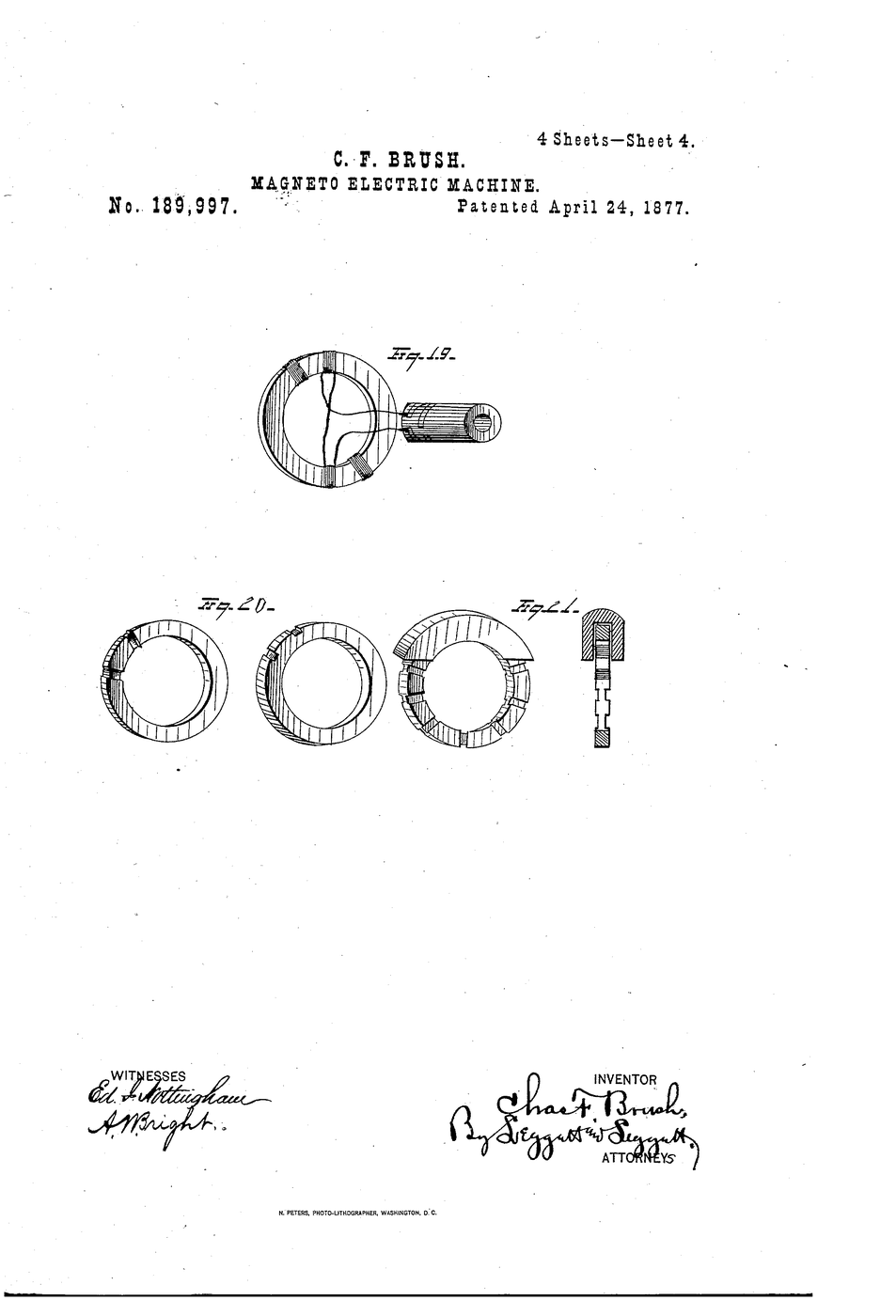
Paul Jablochkoff's 'candle' of 1876–77 did away with any regulator: two carbons stand side by side, separated by a strip of insulating material, and burn down together like a candle. Charles Brush's lamps used a series electromagnet and a clutch to feed the upper carbon down as it burned; his 1879 patent adds two sets of carbons so one lamp could burn all night.
This rung works out why an arc needs a ballast and a regulator, from Hertha Ayrton's arc equation, and builds the regulator's feedback loop at 12 V. **Do not build an arc lamp** — its ultraviolet light burns eyes and skin.
मध्यम
About 2 hours
निर्देशनहरू
1
1
Read the two patents
Read the two patents
**US 190,864, 'Improvement in Carbons for Electric Lights', Paul Jablochkoff, Paris, dated 15 May 1877.** The carbons are placed *"vertically and parallel"* at a short distance apart, the space filled with an insulating substance that burns away with them — the aim, in his words, the *"suppression of any mechanical regulator"*. In service the candles were run on alternating current, so that both carbons burned at the same rate.
**US 219,208, 'Electric-Lamp', Charles F. Brush, Cleveland, Ohio, dated 2 September 1879.** A lamp *"having two or more sets of carbons"*, with a lifting device arranged so that *"the carbons of the two sets"* separate one after the other: when the first pair has burned away, the arc passes to the next, doubling the hours a lamp can burn without attention.
2
2
The regulator's cycle
The regulator's cycle
Blockly कार्यक्षेत्र
Loading Blockly workspace...
3
3
Why a ballast, and why a regulator
Why a ballast, and why a regulator
Jupyter नोटबुक लोड हुँदैछ…
4
4
Build the regulator — without the arc
Build the regulator — without the arc
The regulator can be built and tested safely at 12 V with no arc at all. Mount a small push-pull solenoid vertically on a plywood stand, its plunger pointing down, and fix a short graphite rod (cut from a graphite block) to the bottom of the plunger. Below it, fix a second graphite rod to the base so the two just touch when the plunger hangs free — that is the lamp 'off'.
Wire the 12 V battery, a 10 W power resistor, the solenoid coil and the two rods all in SERIES. Close the circuit: current flows through the touching rods, the solenoid pulls the upper rod up, the contact opens, the current stops, the plunger drops and touches again. It buzzes: that is the regulator's feedback loop hunting, with nothing to hold it steady. Add a light spring or a small weight to the plunger and a drop of oil as a damper, and the buzzing slows and settles — the job Brush's clutch and dashpot did.
Keep it at 12 V. Do not try to draw an arc from mains or a welder: the light burns eyes.
यस चरणका सामग्री:
 सोलेनोइड1 टुक्रा
 ग्रेफाइटको ब्लक1 टुक्रा
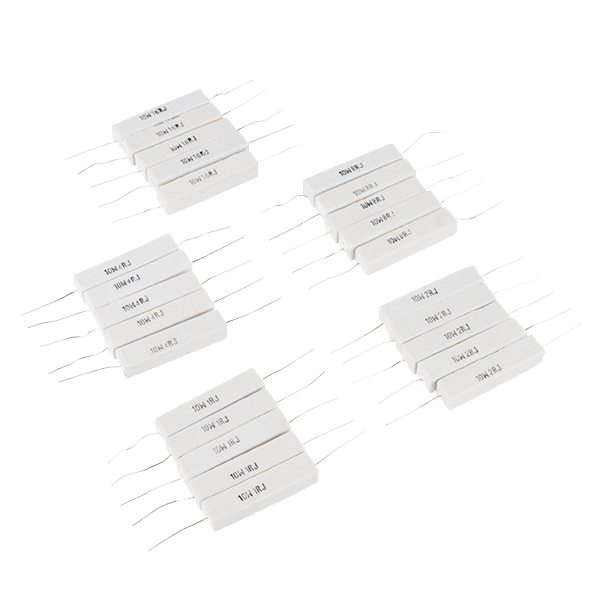 Power Resistor Kit - 10W (25 pack)1 प्याक
 प्लाइउडको पाता1 पाना
 गोहीको क्लिप भएका परीक्षण तार1 सेट
चाहिने औजार:
 १२ V डिप साइकल ब्याट्री
 मल्टिमिटर
 सफा सुरक्षा चस्मा
5
5
History and context
History and context
Humphry Davy demonstrated the carbon arc early in the nineteenth century; it became practical only with the dynamo. Jablochkoff's candles lit the Avenue de l'Opéra in Paris in 1878, and Brush's series arc systems lit American city streets from 1879. **Hertha Ayrton**'s book *The Electric Arc* (1902) gave the equation the notebook uses.
**Honest limits.** Arc lamps are dazzling, hiss, flicker, need their carbons replaced daily and emit dangerous ultraviolet; they gave way to the incandescent lamp (the next rung) indoors and survived only where intense light was needed — searchlights, cinema projectors.
सामग्री
5- देखि$4.93
- 1 टुक्राप्लेसहोल्डर
- Power Resistor Kit - 10W (25 pack)10% कमिसन1 प्याक$5.60
- 1 पानाप्लेसहोल्डर
- प्लेसहोल्डर
आवश्यक उपकरणहरू
3- १२ V डिप साइकल ब्याट्री10% कमिसनप्लेसहोल्डर
- प्लेसहोल्डर
- प्लेसहोल्डर
अनुमानित जम्मा
बनाउनेले किनेको कुरा। मूल्य नदेखिएका सामग्री तपाईंले जहाँबाट किन्नुहुन्छ त्यहीँबाट पाइन्छ।
सम्बन्धित ब्लुप्रिन्ट
यी ब्लुप्रिन्टहरूले ज्ञान साझा गर्छन् — प्रविधि, सामग्री वा सिद्धान्त



CC0 सार्वजनिक डोमेन
यो ब्लुप्रिन्ट CC0 अन्तर्गत जारी गरिएको छ। तपाईं अनुमति नसोधी प्रतिलिपि, परिमार्जन, वितरण र प्रयोग गर्न सक्नुहुन्छ।
ब्लुप्रिन्ट मार्फत उत्पादनहरू किनेर सिर्जनाकर्तालाई सहयोग गर्नुहोस् सिर्जनाकर्ता कमिसन विक्रेताले तोकेको, वा यो ब्लुप्रिन्टको नयाँ संस्करण बनाउनुहोस् र आम्दानी बाँड्न आफ्नो ब्लुप्रिन्टमा जडानको रूपमा समावेश गर्नुहोस्।