कला
सुन्दरता र कल्याण
हस्तकला
संस्कृति र इतिहास
मनोरञ्जन
वातावरण
खाना र पेय
रिभर्स इन्जिनियरिङ
विज्ञान
खेलकुद
प्रविधि
पहिर्न मिल्ने
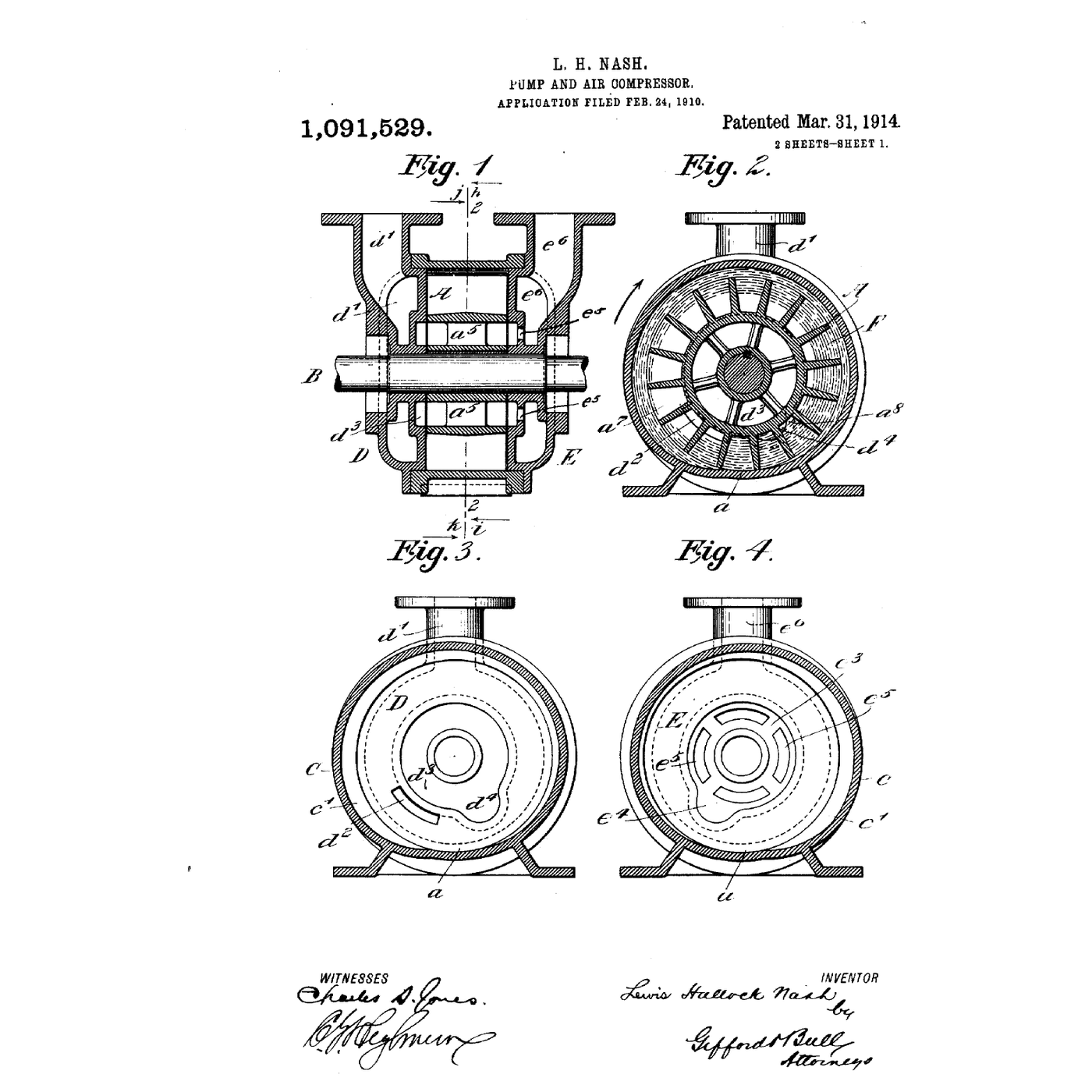

The Liquid-Ring Pump: The Water Is the Piston
A bladed wheel spins off-centre in a round casing partly filled with water. The spin throws the water outward into a ring that follows the casing wall. Because the wheel is off-centre, the ring is deep between the blades on one side and shallow on the other — so each space between two blades fills with water, empties, and fills again once per turn. Each emptying draws gas in; each refilling pushes it out. The water is the piston, and nothing rubs.
Lewis Hallock Nash's patent of 1914 is the form that went into production. It will pump wet gas, dirty gas, vapour that condenses and even slugs of liquid without harm, and the ring cools the gas as it compresses it. That makes it the standard vacuum pump for paper machines, power-station condensers and chemical plant.
It also has a hard floor: it cannot pump below the vapour pressure of its own ring. This rung builds a see-through model and measures that floor.
मध्यम
About 6 hours
निर्देशनहरू
1
1
One bucket, one revolution: Nash's cycle as a sequence
One bucket, one revolution: Nash's cycle as a sequence
Blockly कार्यक्षेत्र
Loading Blockly workspace...
2
2
Print the impeller and set it off-centre in a clear casing
Print the impeller and set it off-centre in a clear casing
Use a length of clear acrylic tube of about 100 mm bore as the casing, closed by two acrylic end plates bolted through with machine screws and sealed with O-rings in printed grooves.
Print a 12-bladed impeller in PETG, 80 mm across, with radial blades and a hub for a steel shaft. Make it the full width of the casing less 0.5 mm, so each blade nearly touches both end plates — the end plates are where the gas ports are, and a large side gap lets the gas short-circuit from outlet back to inlet.
Mount the shaft in bearings in the end plates **8 mm off the casing's centre**, so the impeller nearly touches the casing at the top and clears it by about 18 mm at the bottom. Nash put the variation in the casing shape instead — the enlarged lobe — but the effect on the water ring is the same.
यस चरणका सामग्री:
 एक्रिलिक नली (सफा)1 टुक्रा
 एक्रिलिक पाता1 पाना
 PETG फिलामेन्ट90 ग्राम
 इस्पातको काँचो डन्डी1 टुक्रा
 स्केटबोर्ड बियरिङ2 टुक्रा
 ओ-रिङको संग्रह1 किट
 मेसिन स्क्रु12 टुक्रा
चाहिने औजार:
 फिलामेन्ट चल्ने 3D प्रिन्टर (FDM)
 तारविनाको ड्रिल
 ड्रिल टुप्पाको सेट
 डिजिटल क्यालिपर ६ इन्च
 एलेन चाबी सेट
3
3
Cut the ports in the right place
Cut the ports in the right place
The ports are crescent-shaped slots in one end plate, close to the hub, and their position is the whole design.
- The **inlet** slot goes where the ring is moving AWAY from the hub — where the buckets are emptying — covering the arc from just past the close point to the bottom.
- The **discharge** slot goes where the ring is moving back IN — where the buckets are filling — ending just before the close point.
- Between the end of one slot and the start of the other, leave solid plate at least one blade-spacing wide at each end, so that no bucket is ever open to both at once.
Mark the direction of rotation on the plate before you cut. The same pump turned backwards blows out of its inlet.
Fit a hose tail to each slot through a printed manifold and seal it with silicone. Tee the vacuum gauge into the inlet hose.
यस चरणका सामग्री:
 सिलिकोन सिलेन्ट1 टुक्रा
 सफा भिनाइलको नली1 मिटर
 पाइपका क्ल्याम्पको मिश्रित सेट1 सेट
 निर्वात मापक1 टुक्रा
चाहिने औजार:
तारविनाको ड्रिलड्रिल टुप्पाको सेट नमेटिने मसीको मार्कर
 रुलर
रुलर4
4
Run it, and watch the ring
Run it, and watch the ring
Fill the casing to about a third with water with a drop of dye in it, and drive the shaft with the cordless drill. Below a certain speed the water simply sloshes. Above it the water climbs the wall and forms a ring, and you can see it: deep at the bottom, thin at the top, and the buckets emptying and filling as they pass.
Close the inlet hose with your thumb and read the gauge. Increase the speed and read it again. Then feed the service water: lead a slow trickle of cold water into the inlet side and let the discharge carry the surplus out with the air into a bucket. Measure the temperature of the water leaving.
Then do the test that matters: run once with cold water, once with warm. The warm ring will not reach the same vacuum however fast you drive it — the notebook in the next step says exactly how far it will get.
यस चरणका सामग्री:
 पानी10 लिटर
 खानेकुराको रङ (बहाव देखाउने रङ)1 थोपा
चाहिने औजार:
तारविनाको ड्रिल डिजिटल ट्याकोमिटर
 भान्साको थर्मामिटर
 बाल्टिन
 सफा सुरक्षा चस्मा
5
5
Vapour pressure sets the floor; heat moves it
Vapour pressure sets the floor; heat moves it
Jupyter नोटबुक लोड हुँदैछ…
6
6
The vacuum is poor: find out why
The vacuum is poor: find out why
The faults behind a liquid-ring pump that will not pull down, in the order to check them.
Flow
Loading...
7
7
History and context
History and context
**US 1,091,529, 'Pump and Air Compressor', Lewis Hallock Nash of New York, assignor to the Nash Engineering Company; filed 24 February 1910, patented 31 March 1914.** The specification describes a wheel turning in a cylindrical case chamber with an enlarged portion or *"lobe"*: the water in a bucket *"is caused to flow out into said enlargement by the centrifugal force of the revolving wheel"*, leaving an opening *"through which air or other gas can be drawn"*, and returns as the lobe contracts to eject it.
Nash founded the Nash Engineering Company in 1905, in Norwalk, Connecticut; the Nash name is still on liquid-ring pumps today.
The liquid ring's great virtue is what it tolerates. Gas saturated with water vapour is no problem — the vapour condenses into the ring. Particles pass through. A slug of liquid is simply added to the ring. That is why it drains the water from the felts of paper machines and holds the vacuum on steam condensers, where a dry pump would drown.
**Honest limits.** Its efficiency is low: much of the shaft power churns the ring. The vapour pressure of the service liquid caps the vacuum. It needs a supply of service liquid and gets rid of warm effluent. And the service liquid mixes with what is pumped, so if the gas is toxic, the water becomes a waste stream to treat.
सामग्री
13- 1 टुक्राप्लेसहोल्डर
- 1 पानाप्लेसहोल्डर
- 90 ग्रामप्लेसहोल्डर
- 1 टुक्राप्लेसहोल्डर
- स्केटबोर्ड बियरिङ10% कमिसन2 टुक्राप्लेसहोल्डर
- 1 किटप्लेसहोल्डर
- 12 टुक्राप्लेसहोल्डर
- 1 टुक्राप्लेसहोल्डर
- 1 मिटरप्लेसहोल्डर
- प्लेसहोल्डर
- 1 टुक्राप्लेसहोल्डर
- 10 लिटरप्लेसहोल्डर
- प्लेसहोल्डर
आवश्यक उपकरणहरू
11- प्लेसहोल्डर
- 1 vendor sell this, none ship to you yetप्लेसहोल्डर
- प्लेसहोल्डर
- प्लेसहोल्डर
- प्लेसहोल्डर
- प्लेसहोल्डर
- प्लेसहोल्डर
- प्लेसहोल्डर
- प्लेसहोल्डर
- प्लेसहोल्डर
- प्लेसहोल्डर
सम्बन्धित ब्लुप्रिन्ट
यी ब्लुप्रिन्टहरूले ज्ञान साझा गर्छन् — प्रविधि, सामग्री वा सिद्धान्त
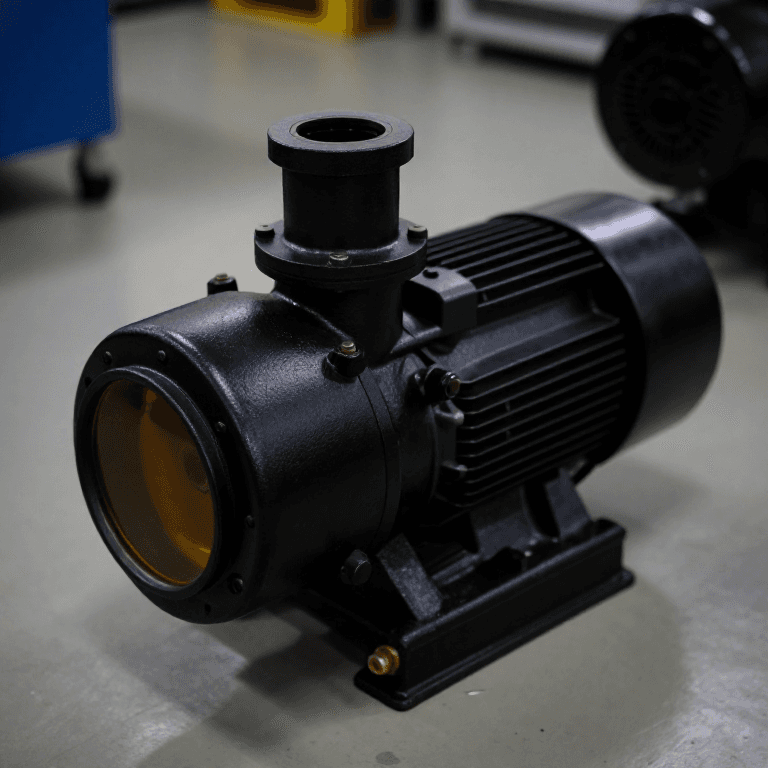
Rotary Vane Vacuum Pump
Emma द्वारा
प्रविधि
४०
०
०
०
०
०
Guericke Air Pump
Penny द्वारा
प्रविधि
४९
०
०
०
०
०
Roots Blower
Karen द्वारा
यान्त्रिकी
३९
०
०
०
०
०
The Centrifugal Pump: Speed Squared, and Why It Cannot Lift Air
Emma द्वारा
यान्त्रिकी
११
०
०
०
०
०
The Steam Injector: Feeding a Boiler With Its Own Steam
Martin द्वारा
यान्त्रिकी
५
०
०
०
०
०
CC0 सार्वजनिक डोमेन
यो ब्लुप्रिन्ट CC0 अन्तर्गत जारी गरिएको छ। तपाईं अनुमति नसोधी प्रतिलिपि, परिमार्जन, वितरण र प्रयोग गर्न सक्नुहुन्छ।
ब्लुप्रिन्ट मार्फत उत्पादनहरू किनेर सिर्जनाकर्तालाई सहयोग गर्नुहोस् सिर्जनाकर्ता कमिसन विक्रेताले तोकेको, वा यो ब्लुप्रिन्टको नयाँ संस्करण बनाउनुहोस् र आम्दानी बाँड्न आफ्नो ब्लुप्रिन्टमा जडानको रूपमा समावेश गर्नुहोस्।