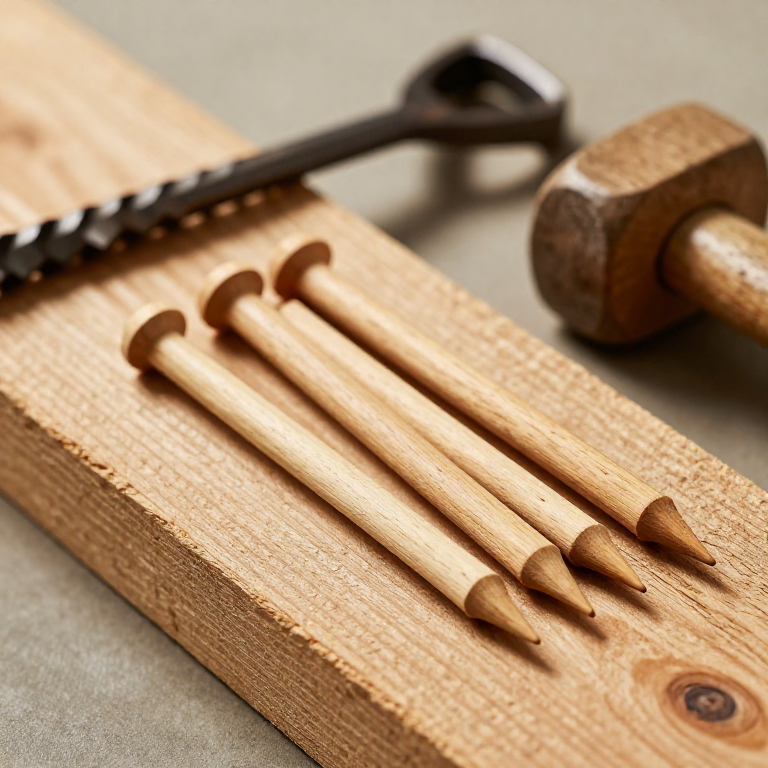


Making Treenails — Wooden Pegs for Timber Framing and Shipbuilding
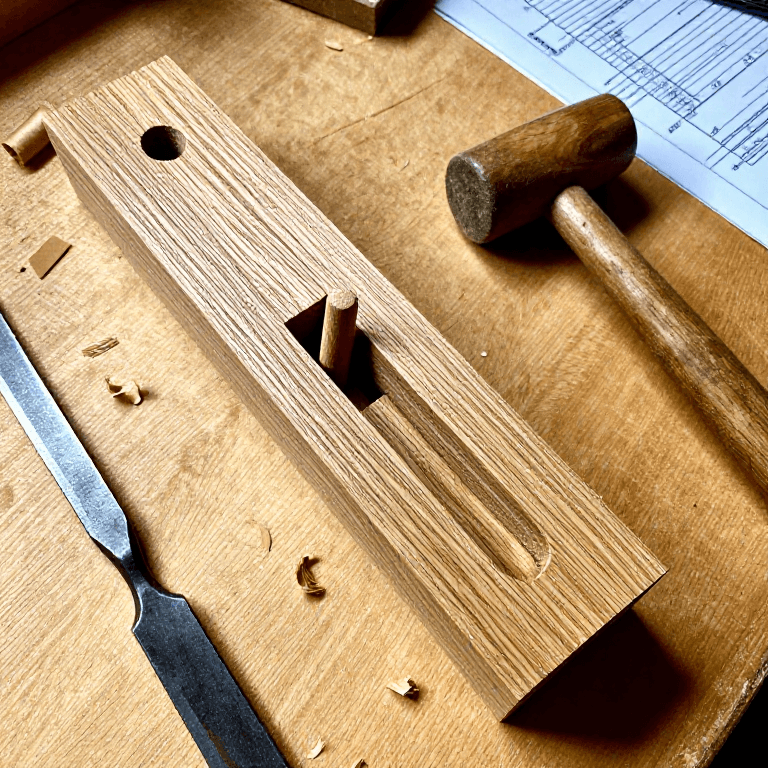
Before iron nails were cheap, wood was fastened with wood. A treenail (pronounced 'trunnel') is a cylindrical wooden peg driven into a bored hole to lock a timber joint together. Treenails held together medieval roof trusses, Viking longships, and post-and-beam barns for centuries. In many applications they outperform iron nails — they do not rust, they swell when wet to tighten the joint, and they flex with the timber instead of working loose.
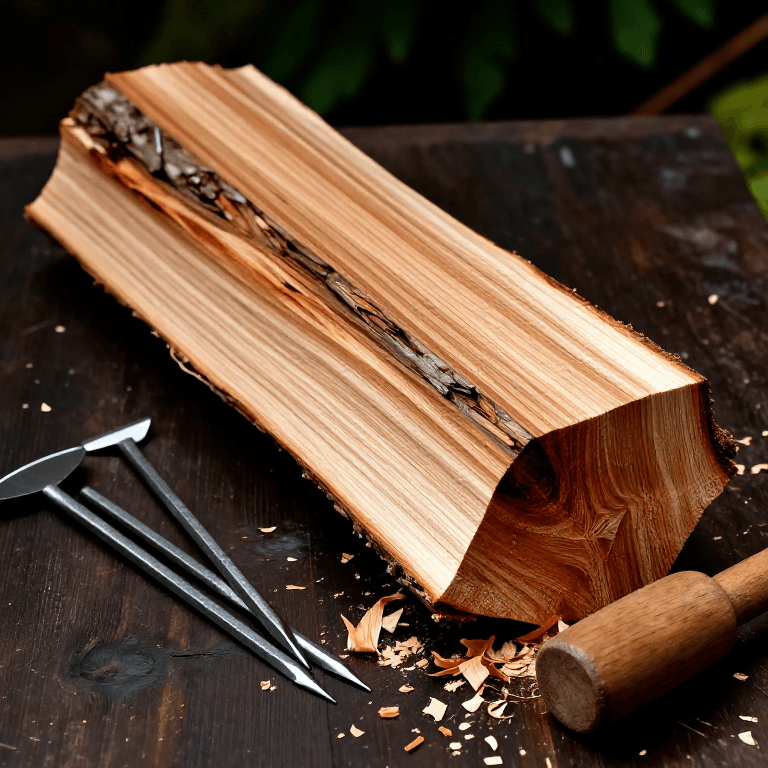
Treenails are always made from a wood harder or at least as hard as the timber they join. Oak treenails in oak frames, or locust treenails in softwood construction. They are riven from straight-grained stock, never sawn — riving preserves the grain continuity that gives the peg its shear strength. A sawn peg has cut fibres that snap under load.
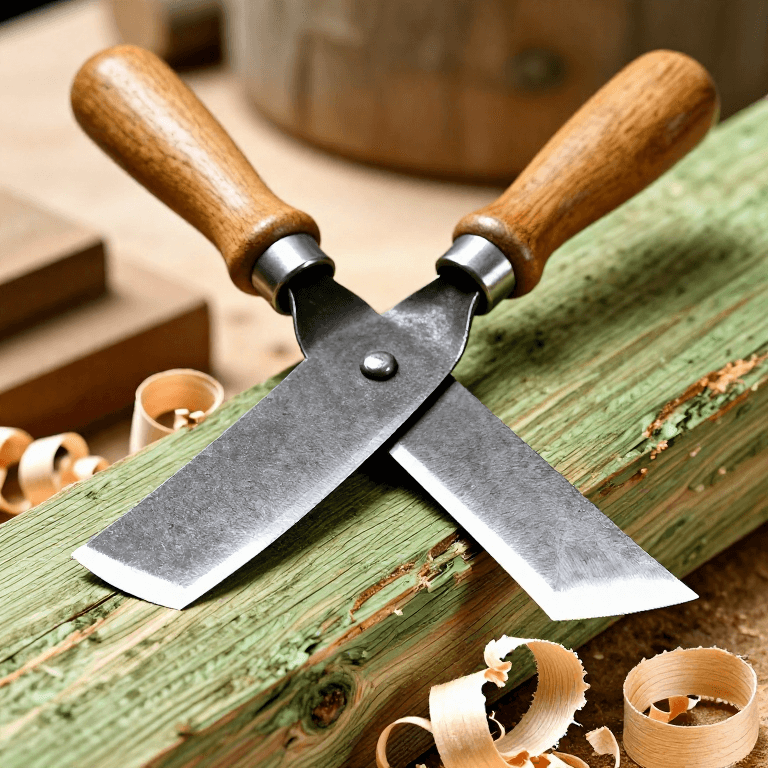
The technique is simple: rive a billet into rough square sections, then round them by driving through a steel plate with a round hole (a rounding die) or by shaving with a drawknife. The finished treenail is slightly tapered so it can be started in the hole and driven home with a mallet. Some traditions split the protruding end and drive a small hardwood wedge into the split, locking the treenail permanently.
Mga Tagubilin
Select straight-grained hardwood
Select straight-grained hardwood
Mga materyales para sa hakbang na ito:
 Tabla ng oak (pula)1 piraso
Rive the billet into square blanks
Rive the billet into square blanks
Mga kailangang kasangkapan:
 Froe (panghating kutsilyo)
Round the blanks
Round the blanks
Mga kailangang kasangkapan:
 Kutsilyong Hinihila
 Bangkong pangkatam
 Kahoy na Pamukpok
Taper the leading end
Taper the leading end
Mga kailangang kasangkapan:
Kutsilyong HinihilaBore the holes and drive the treenails
Bore the holes and drive the treenails
Mga kailangang kasangkapan:
 Barenang PangkamayKahoy na Pamukpok
Wedge the protruding end (optional lock)
Wedge the protruding end (optional lock)
Mga materyales para sa hakbang na ito:
 Kalso ng matigas na kahoy1 piraso
Mga kailangang kasangkapan:
 Set ng pait para sa kahoy
Mga Materyales
2- 1 pirasoPlaceholder
- 1 pirasoPlaceholder
Mga Kinakailangang Kasangkapan
7- Placeholder
- Placeholder
- Placeholder
- Placeholder
- Placeholder
- Placeholder
- Placeholder
Mga Materyales ng Nakakonektang Blueprint
Ang blueprint na ito ay gumagawa ng

Kaugnay na Blueprint
Ang mga blueprint na ito ay nagbabahagi ng kaalaman — mga teknik, materyales, o prinsipyo
CC0 Pampublikong Domain
Ang blueprint na ito ay inilabas sa ilalim ng CC0. Malaya kang kumopya, magbago, mamahagi, at gumamit nang walang pahintulot.
Suportahan ang Maker sa pamamagitan ng pagbili ng mga produkto sa kanilang Blueprint Komisyon ng Maker itinakda ng mga Vendor, o lumikha ng bagong bersyon ng Blueprint na ito at isama bilang koneksyon sa iyong Blueprint upang ibahagi ang kita.