SINING
BEAUTY AT WELLNESS
CRAFTS
KULTURA AT KASAYSAYAN
LIBANGAN
KAPALIGIRAN
PAGKAIN AT INUMIN
REVERSE ENGINEERING
AGHAM
ISPORTS
TEKNOLOHIYA
MGA WEARABLE
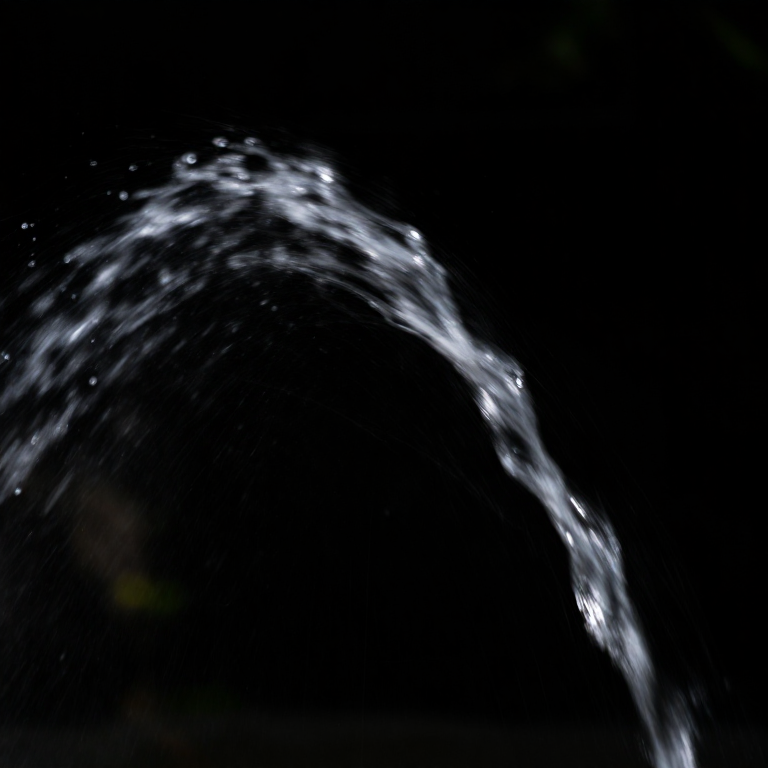


Projectile Motion — Launch a Ball and Measure Its Flight
A hands-on school project: roll a ball off a table or launch it at an angle, measure where it lands, and discover that its path is a parabola made of two independent motions — steady sideways and falling. A Python cell turns your landing distance into the launch speed, and a compendium explains why 45 degrees flies farthest.
Baguhan
30 minutes
Mga Tagubilin
1
1
Two motions at once
Two motions at once
Throw a ball and it does two things together: it moves steadily sideways and it falls under gravity. Galileo realised these two motions are independent and simply add up, and the result is always a curved path called a parabola. You will launch a ball and measure it.
2
2
Set up a launch
Set up a launch
Simplest version: let a ball roll off the edge of a table so it leaves flat and horizontal. Measure the table height with a tape measure, and tape a sheet of paper on the floor where you think it will land to mark the spot. For an angled launch, prop a ramp at a measured angle (use a protractor) and note the angle.
Mga materyales para sa hakbang na ito:
 Ball Bearing1 piraso
Mga kailangang kasangkapan:
 Panukat na Tape
 Panukat ng Anggulo
3
3
Launch and measure where it lands
Launch and measure where it lands
Send the ball off the edge the same way several times and mark each landing spot — carbon paper or flour on the floor records the exact points. Measure the horizontal distance from directly below the launch to the landing marks and average them. Try launching faster and slower and watch the distance change while the drop stays the same.
Mga materyales para sa hakbang na ito:
 Papel1 pilyego
4
4
Work out the launch speed
Work out the launch speed
Naglo-load ng Jupyter notebook…
Mga kailangang kasangkapan:
 Desktop na Kompyuter
 Kalkulador
5
5
Compendium: the arc of everything thrown
Compendium: the arc of everything thrown
What your launches show. (1) The sideways and downward motions are INDEPENDENT — a ball that dribbles slowly off the table and one that rockets off fast hit the floor at the same moment, because their sideways speed does nothing to their falling. (2) For a launch at an angle, the range is largest at 45 degrees, and any two angles that add to 90 (like 30 and 60) land in exactly the same place. (3) Air resistance bends real trajectories away from a perfect parabola, which is why a golf ball is dimpled and a cannonball is not a bad approximation. (4) The same physics governs a basketball's arc, a fountain's spray, a long-jumper's flight — and, pushed to orbital speed, the parabola curves right around the planet and becomes an orbit.
Mga Materyales
2- Placeholder
- 1 pilyegoPlaceholder
Mga Kinakailangang Kasangkapan
5- 1 vendor sell this, none ship to you yetPlaceholder
- Placeholder
- Placeholder
- Placeholder
- Placeholder
Kaugnay na Blueprint
Ang mga blueprint na ito ay nagbabahagi ng kaalaman — mga teknik, materyales, o prinsipyo



CC0 Pampublikong Domain
Ang blueprint na ito ay inilabas sa ilalim ng CC0. Malaya kang kumopya, magbago, mamahagi, at gumamit nang walang pahintulot.
Suportahan ang Maker sa pamamagitan ng pagbili ng mga produkto sa kanilang Blueprint Komisyon ng Maker itinakda ng mga Vendor, o lumikha ng bagong bersyon ng Blueprint na ito at isama bilang koneksyon sa iyong Blueprint upang ibahagi ang kita.