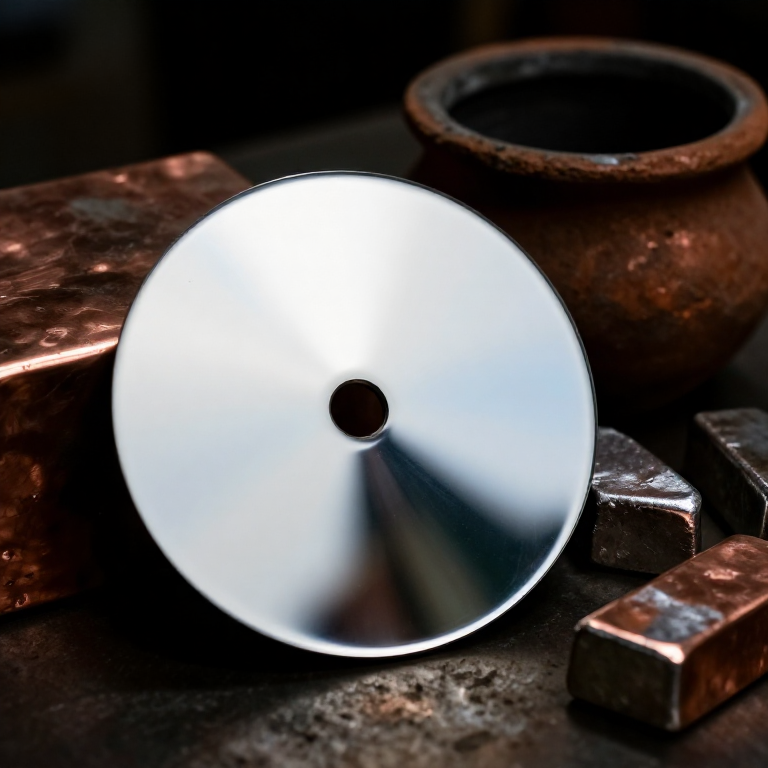


Casting and Grinding a Speculum Metal Telescope Mirror — Newton's Reflecting Alloy
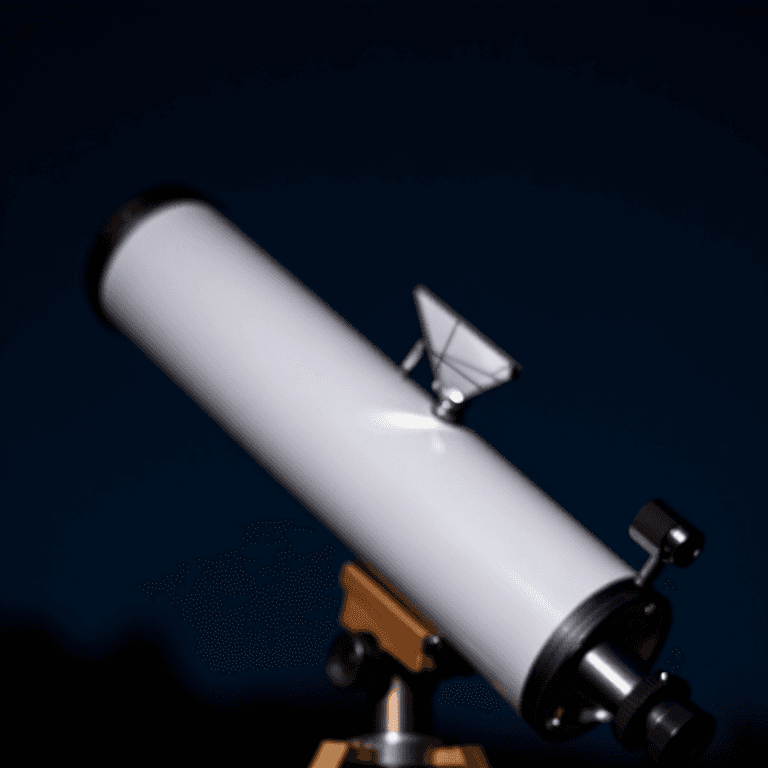
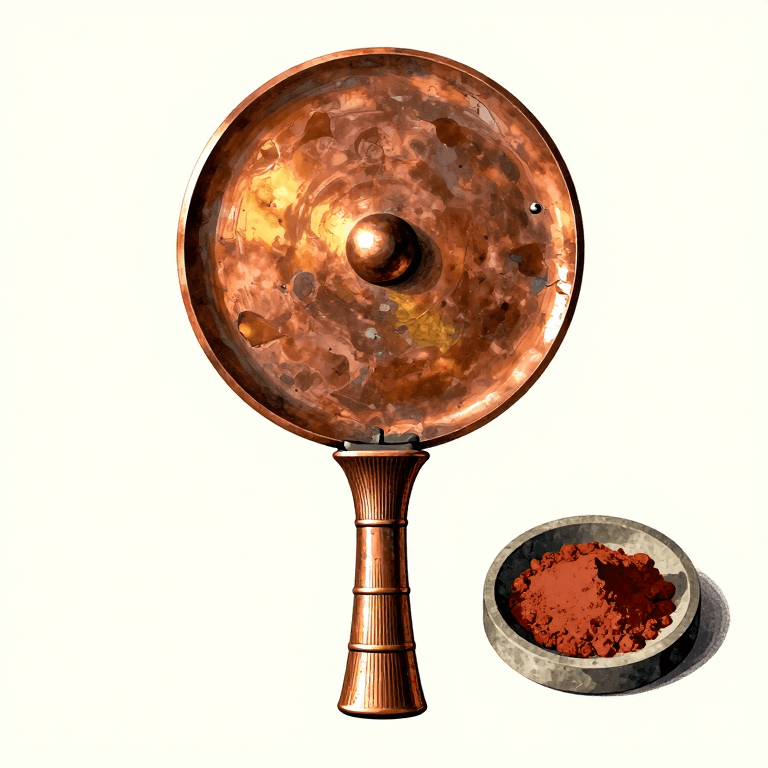
When Isaac Newton built his reflecting telescope in 1668, he needed a concave mirror to focus light — but silvered glass mirrors did not yet exist. Instead, he cast his mirror from speculum metal, a bronze alloy of approximately 68% copper and 32% tin that can be polished to a brilliant, highly reflective surface. Speculum metal had been known since antiquity — the Romans used it for hand mirrors (speculum is Latin for mirror) — but Newton was the first to grind it into a precise concave paraboloid for astronomical use. The alloy is hard, brittle, and takes a superb polish, but it tarnishes in air and must be periodically repolished. Every reflecting telescope before the 1850s used speculum metal mirrors, including William Herschel's great telescopes that discovered Uranus and mapped the Milky Way. This blueprint casts a speculum metal disc from copper and tin ingots, then grinds and polishes it into a concave mirror suitable for a Newtonian reflecting telescope.
Mga Tagubilin
Understand speculum metal
Understand speculum metal
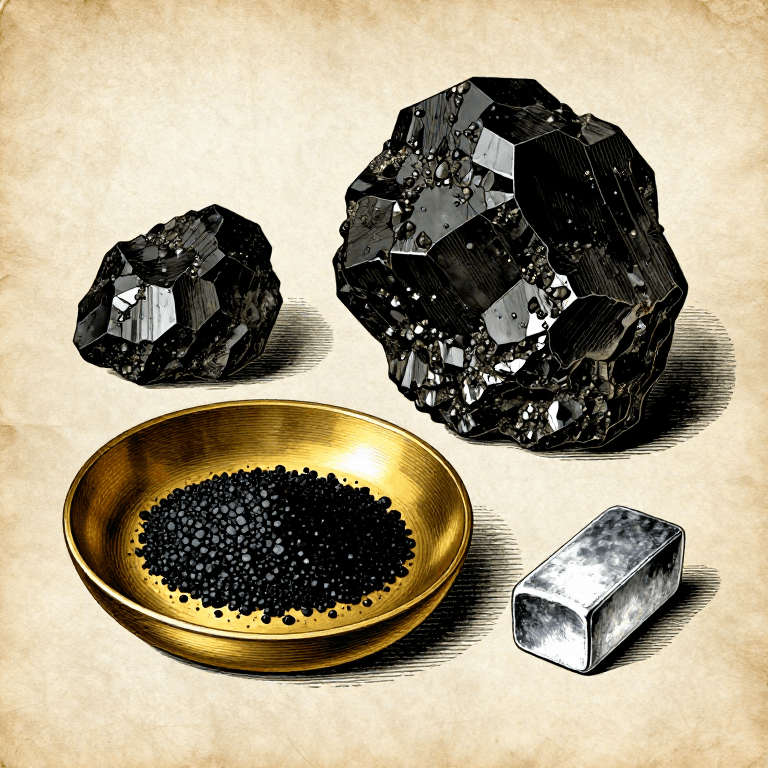
Weigh the copper and tin
Weigh the copper and tin
Mga materyales para sa hakbang na ito:
 Bareta ng tanso na 99.9 % dalisay, 450 g340 g
 Tinggang lingote160 g
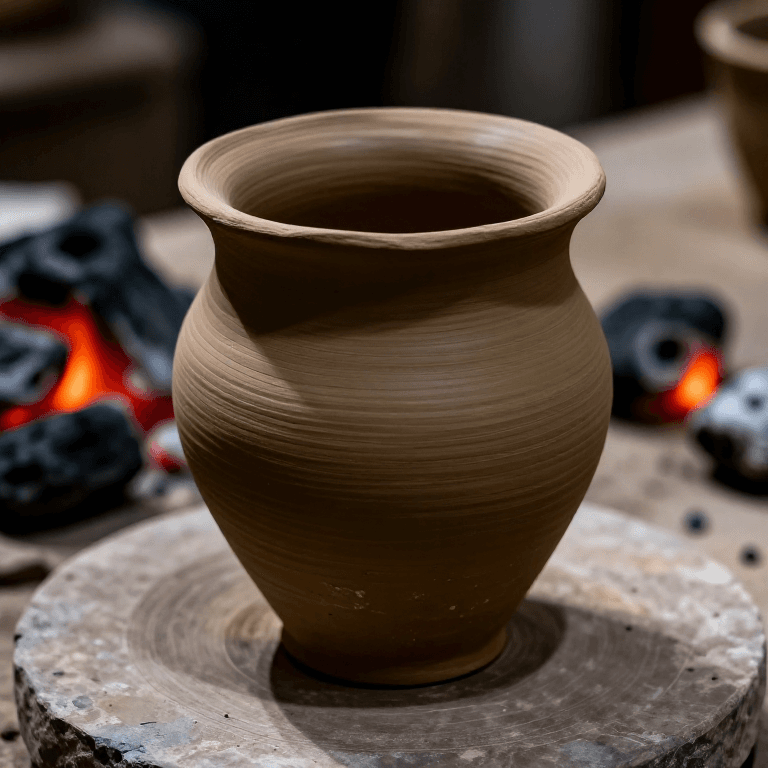
Prepare the crucible and mould
Prepare the crucible and mould
Mga materyales para sa hakbang na ito:
 Malalim na Krisol na Luwad1 piraso
 Uling na Tipak3 kg
Mga kailangang kasangkapan:
 Sipit ng Krisol
Melt the copper
Melt the copper
Add the tin and pour
Add the tin and pour
Mga kailangang kasangkapan:
Sipit ng KrisolAnneal the casting
Anneal the casting
Flatten one face on a lap
Flatten one face on a lap
Mga materyales para sa hakbang na ito:
 Butil ng silicon carbide100 g
Rough grind the concave curve
Rough grind the concave curve
Mga materyales para sa hakbang na ito:
Butil ng silicon carbide200 g Plantsa ng salamin1 piraso
Fine grind with progressively finer grits
Fine grind with progressively finer grits
Polish on a pitch lap
Polish on a pitch lap
Mga materyales para sa hakbang na ito:
 Pandikit na Dagta ng Pino100 g
 Tin oxide (stannic oxide)50 g
 Pampakintab na pasta50 g
Test the mirror with a pinhole
Test the mirror with a pinhole
Protect the polished surface
Protect the polished surface
Mga Materyales
9- Placeholder
- 160 gPlaceholder
- 1 pirasoPlaceholder
- 3 kgPlaceholder
- Placeholder
- 1 pirasoPlaceholder
- Placeholder
- Placeholder
- Placeholder
Mga Kinakailangang Kasangkapan
2- Placeholder
- Placeholder
Mga Materyales ng Nakakonektang Blueprint


Kaugnay na Blueprint
Ang mga blueprint na ito ay nagbabahagi ng kaalaman — mga teknik, materyales, o prinsipyo

CC0 Pampublikong Domain
Ang blueprint na ito ay inilabas sa ilalim ng CC0. Malaya kang kumopya, magbago, mamahagi, at gumamit nang walang pahintulot.
Suportahan ang Maker sa pamamagitan ng pagbili ng mga produkto sa kanilang Blueprint Komisyon ng Maker itinakda ng mga Vendor, o lumikha ng bagong bersyon ng Blueprint na ito at isama bilang koneksyon sa iyong Blueprint upang ibahagi ang kita.