SINING
BEAUTY AT WELLNESS
CRAFTS
KULTURA AT KASAYSAYAN
LIBANGAN
KAPALIGIRAN
PAGKAIN AT INUMIN
REVERSE ENGINEERING
AGHAM
ISPORTS
TEKNOLOHIYA
MGA WEARABLE
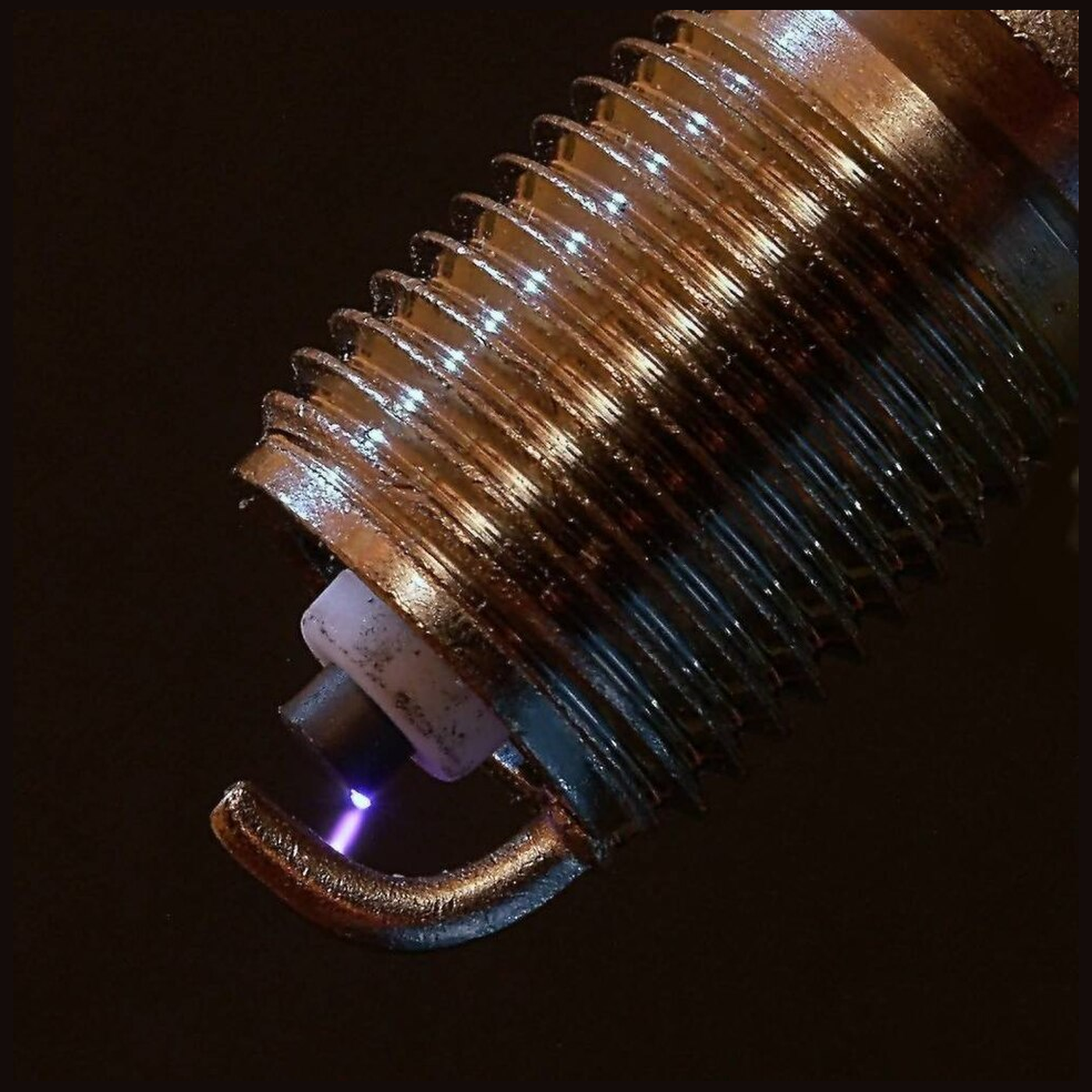


The Magneto and the Spark Plug: Thousands of Volts at the Right Moment
A petrol engine needs a spark in each cylinder at a precise moment, many times a second, inside a charge compressed to many times atmospheric pressure. Early engines used hot tubes or 'make-and-break' contacts inside the cylinder, which wore out fast.
In 1902 Gottlob Honold, an engineer at Robert Bosch's workshop in Stuttgart, produced the high-tension magneto with a fixed-gap spark plug: the engine itself turns a magnet past a coil, and when a contact breaker opens, the collapsing field drives the secondary winding to thousands of volts, which jump the plug's gap.
This rung works out why compressed gas needs so much voltage, gaps a real plug, and fires it from the induction coil built elsewhere in this catalogue.
Katamtaman
About 3 hours
Mga Tagubilin
1
1
One spark, step by step
One spark, step by step
Blockly Workspace
Loading Blockly workspace...
2
2
Breakdown voltage: open air against compressed charge
Breakdown voltage: open air against compressed charge
Naglo-load ng Jupyter notebook…
3
3
Read and gap a spark plug
Read and gap a spark plug
Look at a spark plug end-on: a central electrode through a ceramic insulator, and a ground electrode bent over it from the threaded steel shell. The ceramic must hold off tens of kilovolts while being heated and cooled every cycle.
Check the gap with the feeler gauges: the right blade should slide through with light drag. To close it, tap the ground electrode gently on a hard surface; to open it, lever it with a gapping tool — never lever against the central electrode, which cracks the insulator.
Read the colour of a used plug's insulator nose: light tan is right; black and sooty means too rich or too cold; white and blistered means too lean or too hot.
Mga kailangang kasangkapan:
 Set ng panukat ng siwang
 Digital na Kalibrador 6 Pulgada
 Bujiya ng makina
4
4
Fire the plug from an induction coil
Fire the plug from an induction coil
The magneto's secondary winding is an induction coil driven by the engine. The embedded blueprint builds one; connect its output across the spark plug's terminal and shell and watch the gap fire in open air — and remember from the notebook that it needs several times that voltage inside a compressed charge.
5
5
History and context
History and context
**Gottlob Honold for Robert Bosch, Stuttgart, 1902** — the high-tension magneto ignition with a fixed-gap spark plug, first patented in Germany. No US number is asserted here: it could not be read from a primary source.
Battery-and-coil ignition (Kettering, the self-starter rung of this batch) replaced the magneto in cars; magnetos stayed in aircraft engines and small engines, which need no battery to run. Electronic ignition replaced the contact breaker.
**Honest limits.** Contacts wear and pit; the timing drifts with them. A magneto's spark is weak at cranking speed. And ignition voltages are dangerous: never touch a plug lead or a coil output while it is energised.
Mga Kinakailangang Kasangkapan
3- Placeholder
- Placeholder
- Placeholder
Kaugnay na Blueprint
Ang mga blueprint na ito ay nagbabahagi ng kaalaman — mga teknik, materyales, o prinsipyo

CC0 Pampublikong Domain
Ang blueprint na ito ay inilabas sa ilalim ng CC0. Malaya kang kumopya, magbago, mamahagi, at gumamit nang walang pahintulot.
Suportahan ang Maker sa pamamagitan ng pagbili ng mga produkto sa kanilang Blueprint Komisyon ng Maker itinakda ng mga Vendor, o lumikha ng bagong bersyon ng Blueprint na ito at isama bilang koneksyon sa iyong Blueprint upang ibahagi ang kita.