SINING
BEAUTY AT WELLNESS
CRAFTS
KULTURA AT KASAYSAYAN
LIBANGAN
KAPALIGIRAN
PAGKAIN AT INUMIN
REVERSE ENGINEERING
AGHAM
ISPORTS
TEKNOLOHIYA
MGA WEARABLE
The Savonius Rotor: Two Hollow Vanes, Any Wind, Always Starts
Cut a cylinder in half lengthwise, slide the halves apart so they overlap, and stand them on a vertical shaft: that is the rotor Sigurd Savonius of Finland patented in 1924–29. The wind pushes harder on the hollow of one vane than on the back of the other, and air flowing through the overlap from one hollow into the other helps it along.
It turns in wind from any direction without steering, starts itself in the lightest breeze, and gives strong torque at low speed — for pumping water, ventilating, or driving a current meter. It is also slow and inefficient, because it is pushed by drag.
This rung works out the drag machine's ceiling and builds a Savonius rotor from a PVC pipe, measuring its torque with a string brake.
Baguhan
About 4 hours
Mga Tagubilin
1
1
Read Savonius's overlap
Read Savonius's overlap
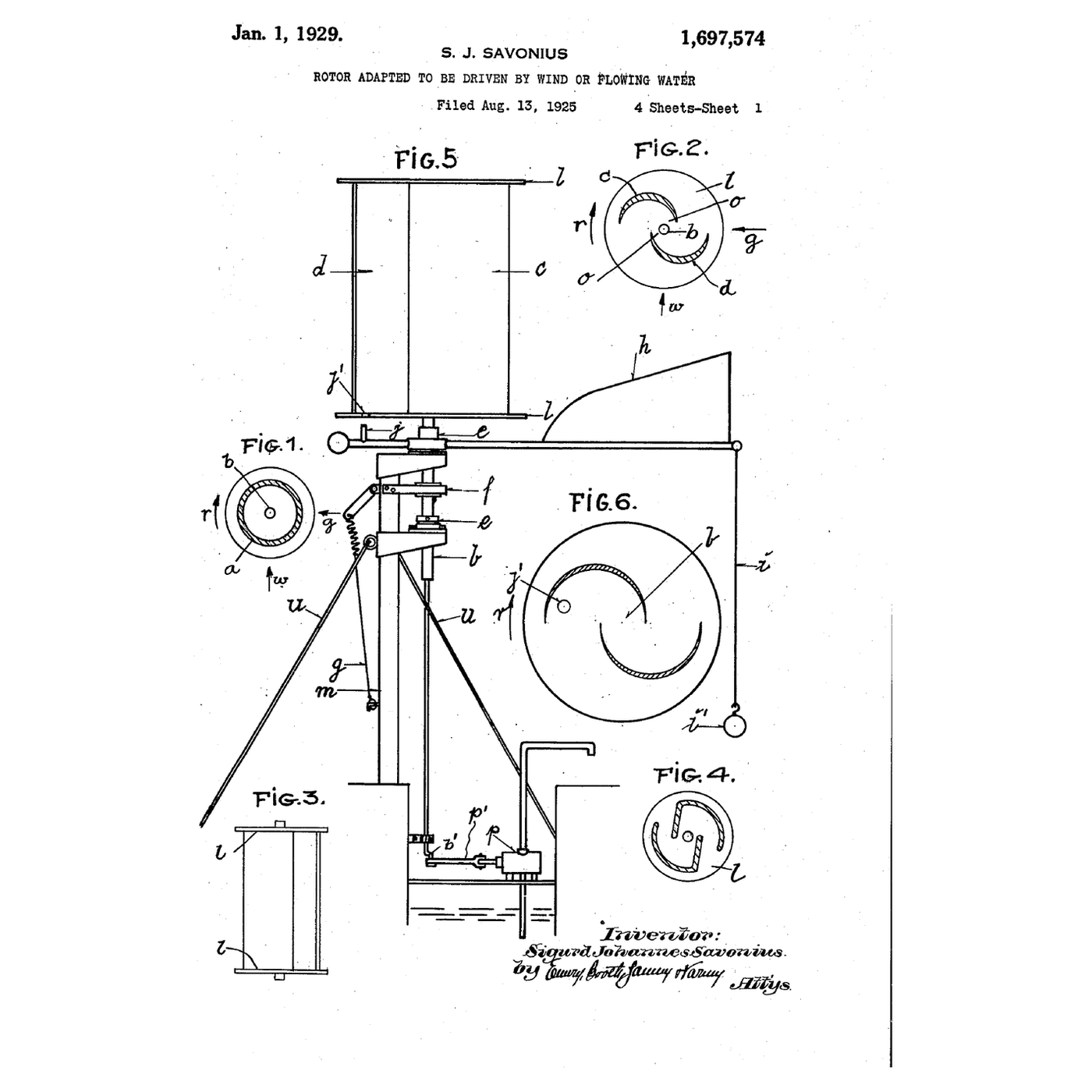
US 1,697,574, 'Rotor Adapted to be Driven by Wind or Flowing Water', Sigurd J. Savonius. The vanes are *"hollow-shaped"* and *"overlapping"*, so that the space between them forms an air passage *"from the hollow side of the vane d, to the hollow side of the other vane c"*. His text compares it with the rotating cylinder then being studied at the Aerodynamische Versuchsanstalt in Göttingen, which it cites.
The overlap is the detail that separates a Savonius rotor from two cups on a stick.
2
2
The drag machine's ceiling
The drag machine's ceiling
Naglo-load ng Jupyter notebook…
3
3
Build it from a PVC pipe
Build it from a PVC pipe
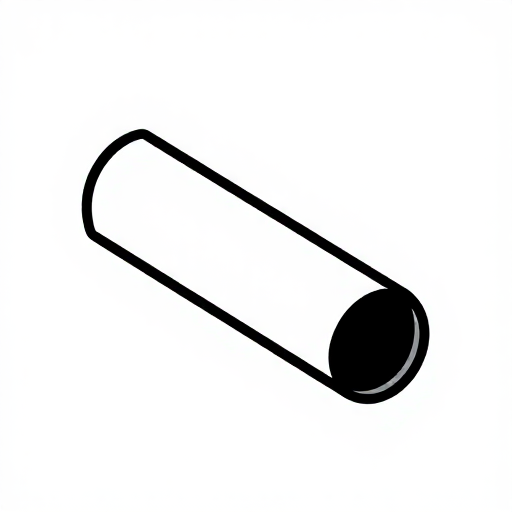
Cut a 300 mm length of 110 mm PVC pipe in half lengthwise with a saw. Cut two plywood end discs 240 mm across. Screw the two half-pipes between the discs, hollow faces opposite, each shifted towards the centre so they **overlap by about a fifth of a half-pipe's width**, leaving the air passage Savonius describes.
Run a threaded-rod shaft through the centre of both discs, held by nuts, and carry it vertically in two skateboard bearings in a plywood frame.
Mga materyales para sa hakbang na ito:
 Tubong PVC1 piraso
 Plantsa ng playwud1 pilyego
 Baras na may sinulid1 piraso
 Rodilyo ng skateboard2 piraso
 Mga turnilyo ng makina12 piraso
Mga kailangang kasangkapan:
 Walang-Kableng Barena
 Hanay ng Talim ng Barena
 Llaveng ingles
 Ruler
Ruler Panghiwa ng tubo
4
4
Measure torque with a string brake
Measure torque with a string brake
Wrap fishing line once round the shaft. Tie one end to the spring scale fixed to the frame, and hang a small weight on the other end, so the line rubs on the turning shaft as a brake. The braking torque is **(weight − scale reading) × shaft radius**.
Put the rotor in front of the box fan. Start with a light weight: the rotor spins fast. Add weight step by step, reading the speed with the tachometer and the scale each time, until it stalls. Power = torque × angular speed.
Turn the rotor to face the wind at a different angle: it does not care. Start the fan at its lowest setting with the rotor stopped: it starts by itself. Those two facts are why Savonius rotors exist.
Mga materyales para sa hakbang na ito:
 Tanso ng pamingwit (monofilament)1 rolyo
 Pambigat1 set
Mga kailangang kasangkapan:
 Box fan (nababagong bilis)
 Panukat ng hangin na hawak-kamay
 Digital na Takometro
 Panukat ng Puwersa (Timbangang Spring)
 Digital na Kalibrador 6 Pulgada
5
5
History and context
History and context
**US 1,697,574, 'Rotor Adapted to be Driven by Wind or Flowing Water', Sigurd J. Savonius; filed 13 August 1925 (Serial 49,985), claiming a Finnish filing of 12 December 1924; granted 1 January 1929.** The title names water as well as wind: the same rotor turns in a current.
**Honest limits.** Low efficiency — a drag machine cannot beat the notebook's ceiling by much. Heavy for its power, because the whole swept area is solid vane. Its torque pulses twice per turn, which is why many are built as two stages twisted 90° apart, or with helical vanes.
Mga Materyales
7- 1 pirasoPlaceholder
- 1 pilyegoPlaceholder
- 1 pirasoPlaceholder
- Rodilyo ng skateboard10% komisyon2 pirasoPlaceholder
- 12 pirasoPlaceholder
- Placeholder
- 1 setPlaceholder
Mga Kinakailangang Kasangkapan
10- 1 vendor sell this, none ship to you yetPlaceholder
- Placeholder
- Placeholder
- Placeholder
- Panghiwa ng tubo10% komisyonPlaceholder
- Placeholder
- Placeholder
- Placeholder
- Placeholder
- Placeholder
Kaugnay na Blueprint
Ang mga blueprint na ito ay nagbabahagi ng kaalaman — mga teknik, materyales, o prinsipyo
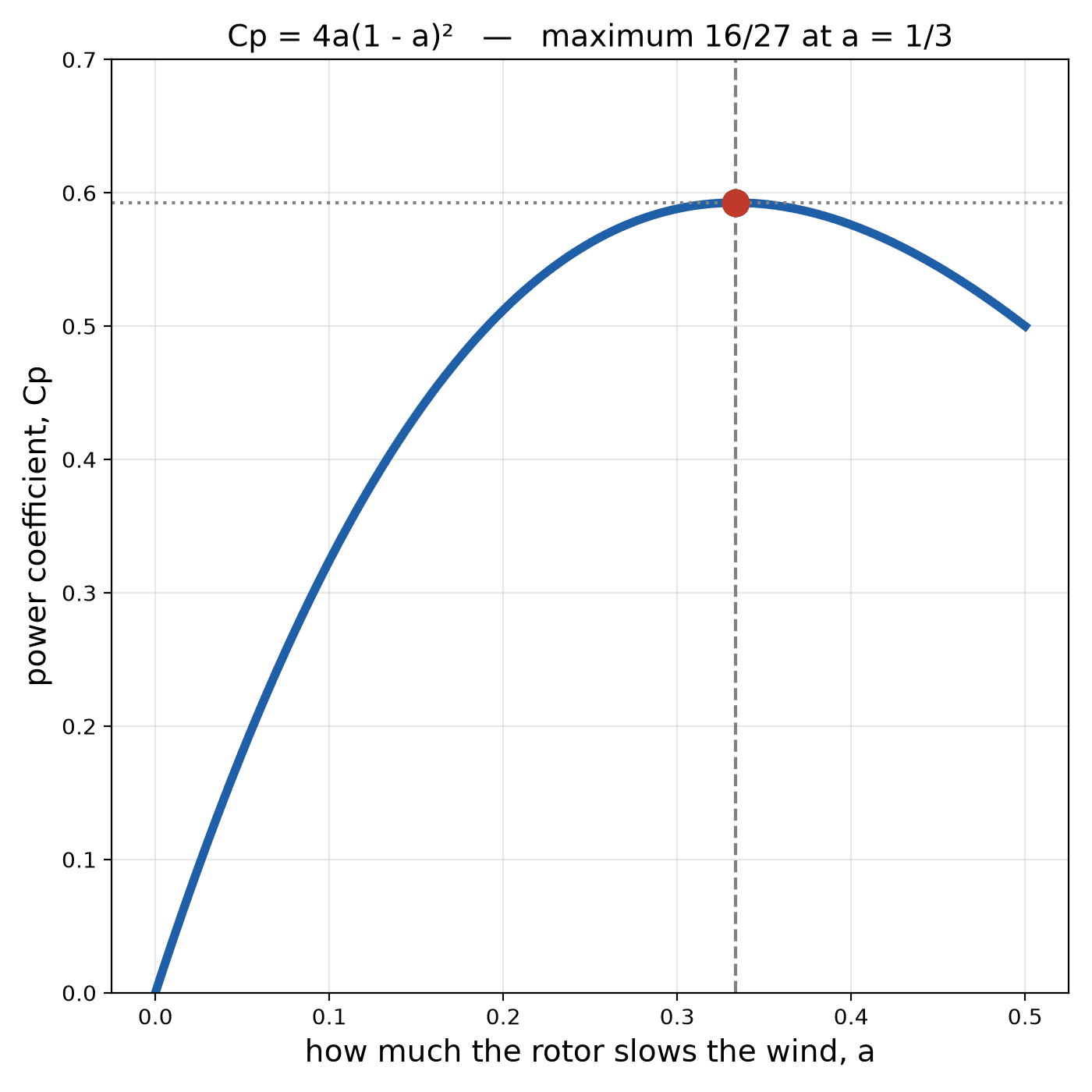
The Betz Limit: Why No Rotor Takes More Than 16/27 of the Wind
ni Volt
Enerhiya
24
0
0
0
0
0
Electricity From the Wind: The Cube Law and a Rotor on a Dynamo
ni Volt
Enerhiya
28
0
0
0
0
0
Building a Persian Windmill — The First Machine Powered by Wind
ni Emma
Mekanika
87
0
0
0
0
0
Robinson Cup Anemometer
ni Karen
KAPALIGIRAN
45
0
0
0
0
0
CC0 Pampublikong Domain
Ang blueprint na ito ay inilabas sa ilalim ng CC0. Malaya kang kumopya, magbago, mamahagi, at gumamit nang walang pahintulot.
Suportahan ang Maker sa pamamagitan ng pagbili ng mga produkto sa kanilang Blueprint Komisyon ng Maker itinakda ng mga Vendor, o lumikha ng bagong bersyon ng Blueprint na ito at isama bilang koneksyon sa iyong Blueprint upang ibahagi ang kita.