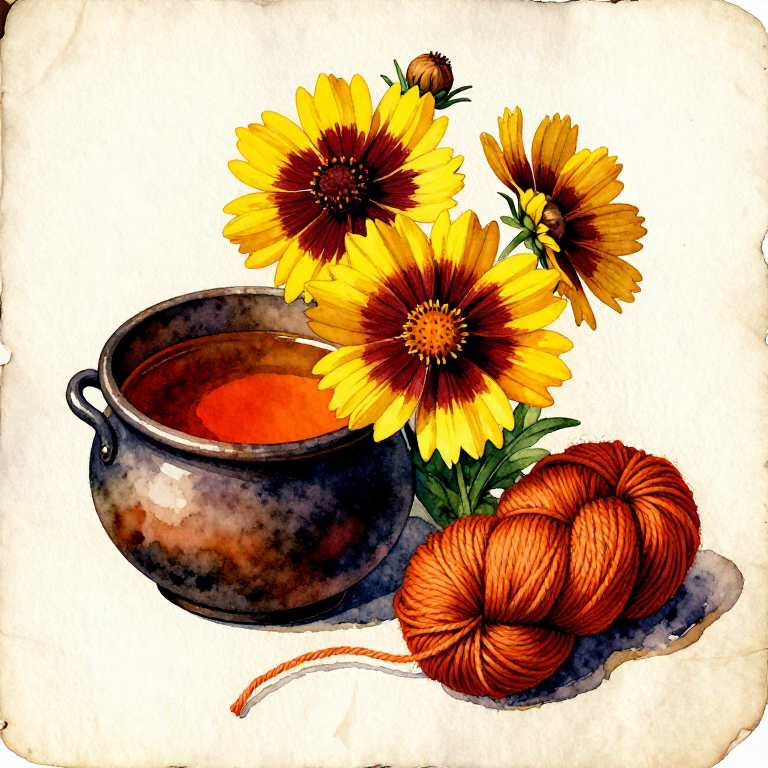


Dyeing Red-Orange with Coreopsis — The Plains Flower That Dyes from Yellow to Rust
Coreopsis tinctoria, commonly called plains coreopsis or calliopsis, is an annual wildflower native to the prairies and open grasslands of North America. Its genus name comes from the Greek koris (bedbug), referring to the seed shape, while tinctoria means 'of the dyers' — a direct acknowledgement of its long history as a dye plant. Indigenous peoples of the Great Plains and the American Southwest used coreopsis to dye textiles, baskets, and body paint, producing colours ranging from yellow to deep rust-red depending on the mordant used.
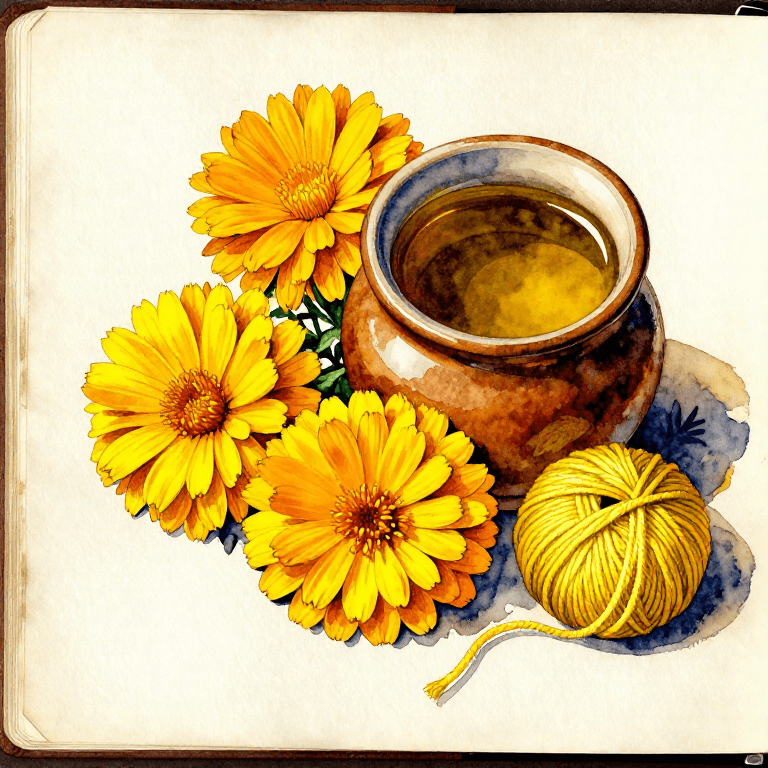
What makes coreopsis unusual among flower dyes is its ability to produce warm red and rust tones — most flower dyes give yellows and golds, but coreopsis flowers contain a combination of flavonoid and chalcone pigments that lean toward red-orange, particularly from the dark mahogany centres of the bicolored flower heads. On alum-mordanted wool, the whole flowers give a warm burnt orange. With iron modification, the colour shifts to a deep rust-brown. Using only the dark flower centres intensifies the reddish tones.
Coreopsis is an exceptionally generous dye plant. It grows easily from seed, flowers within 60 days of sowing, blooms continuously throughout summer if deadheaded, and produces masses of flower heads. A single patch of coreopsis can supply more dye material in one season than a household dyer could use. The colours are moderately lightfast — better than marigold but not as permanent as madder. For warm reds and oranges from a garden-grown flower, coreopsis is unmatched.
ہدایات
Weigh the dried coreopsis flowers
Weigh the dried coreopsis flowers
Use 100-200% WOF of dried coreopsis flower heads. For 100 g of wool, weigh out 100-200 g of dried flowers. Higher quantities push the colour toward deeper orange-red. Pick flowers at full bloom when the dark centres are fully developed — the mahogany-red centres contain the most pigment. Include the dark centres and the yellow ray petals together for the warmest orange tones. Dry the flower heads on screens in shade for 5-7 days until they are crisp and papery.
اس مرحلے کے لیے مواد:
 کوریوپسس کے پھول (خشک)150 گرام
درکار اوزار:
 ڈیجیٹل باورچی خانہ ترازو
Soak the flowers in warm water for one hour
Soak the flowers in warm water for one hour
Place the dried coreopsis flowers in a dye pot with 4 litres of warm water and soak for at least one hour. The water will turn a warm golden-orange within minutes as the flavonoid and chalcone pigments dissolve. The dark centres contribute the most intense colour — they may take slightly longer to fully hydrate than the thin ray petals. Press the flowers below the surface to ensure even extraction.
درکار اوزار:
 یخنی کی بڑی دیگ
Simmer the flowers for 30-40 minutes
Simmer the flowers for 30-40 minutes
Bring the pot to a gentle simmer (80-85°C) and hold for 30-40 minutes. Stir occasionally. The liquid will deepen to a rich orange-red — noticeably warmer and more red-toned than typical flower dye baths. Do not boil. The flower heads will lose their colour during simmering, with the dark centres being the last to fade. Once the centres have paled to brown, extraction is essentially complete.
درکار اوزار:
 پکوان کا تھرمامیٹر
 لکڑی کا چمچہ
Strain out the flowers
Strain out the flowers
Strain the dye liquor through a fine mesh strainer into a clean pot. Coreopsis flowers disintegrate readily during simmering and become pulpy — strain carefully and consider a second straining through muslin for the cleanest bath. Press the spent flowers to extract all the orange-red liquid. The strained liquor should be a warm, clear burnt orange.
درکار اوزار:
 باریک چھلنی
Dye alum-mordanted wool at 80°C for 45 minutes
Dye alum-mordanted wool at 80°C for 45 minutes
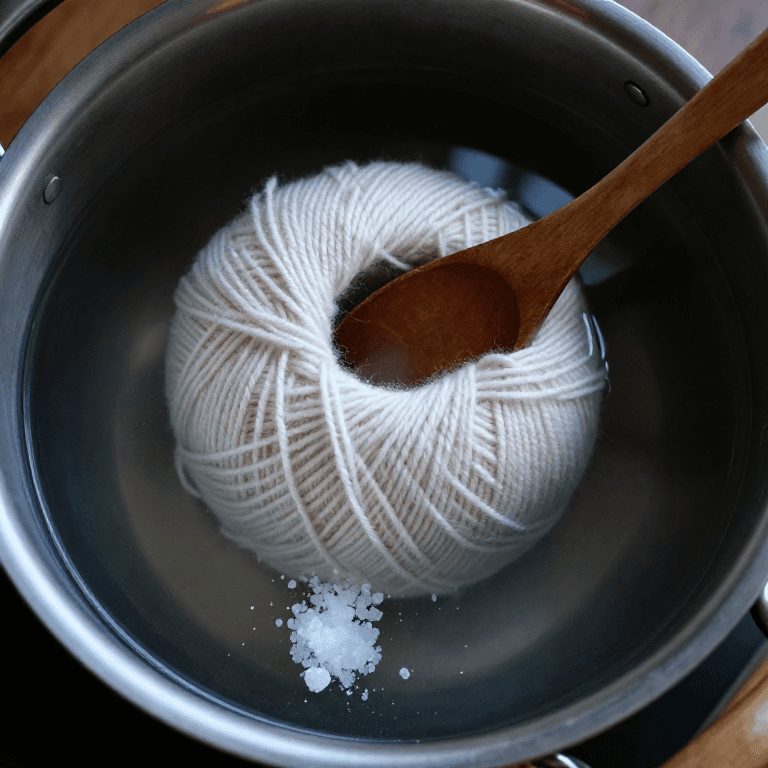
Pre-wet the alum-mordanted wool in lukewarm water for 15 minutes, squeeze gently, and lower it into the coreopsis dye bath at room temperature. Slowly raise to 80°C over 15 minutes, then hold for 45 minutes. Turn gently every 10 minutes. The wool will absorb colour rapidly, developing a warm burnt orange to terracotta. The alum mordant enhances the orange tones. This is one of the warmest reds achievable from a flower dye — most flower dyes top out at yellow, making coreopsis unusual and valued.
اس مرحلے کے لیے مواد:
 اونی دھاگے کا لچھا100 گرام
 پھٹکری (پوٹاشیم ایلم)10 گرام
Cool, rinse, and dry
Cool, rinse, and dry
Turn off the heat and let the wool cool in the dye bath overnight for deepest colour. Remove, squeeze gently, and rinse in lukewarm water until the runoff is mostly clear. The final colour ranges from warm burnt orange to soft terracotta, depending on flower concentration and the ratio of dark centres to ray petals. Lightfastness is moderate — similar to marigold. For items that will see direct sunlight, pair with iron modification for darker tones that resist fading better. Dry in shade.
مواد
3- 150 گرامپلیس ہولڈر
- 100 گرامپلیس ہولڈر
- 10 گرامپلیس ہولڈر
درکار اوزار
5- پلیس ہولڈر
- پلیس ہولڈر
- پلیس ہولڈر
- پلیس ہولڈر
- پلیس ہولڈر
منسلک بلیو پرنٹ مواد
متعلقہ بلیو پرنٹ
یہ بلیو پرنٹ علم بانٹتے ہیں — تکنیک، مواد یا اصول
CC0 پبلک ڈومین
یہ بلیو پرنٹ CC0 کے تحت جاری کیا گیا ہے۔ آپ اجازت لیے بغیر اس کام کو نقل، ترمیم، تقسیم اور کسی بھی مقصد کے لیے استعمال کرنے کے لیے آزاد ہیں۔
میکر کی حمایت کریں ان کے بلیو پرنٹ کے ذریعے پروڈکٹس خرید کر جہاں وہ میکر کمیشن وینڈرز کی طرف سے مقرر، کماتے ہیں، یا اس بلیو پرنٹ کی نئی تکرار بنائیں اور آمدنی شیئر کرنے کے لیے اسے اپنے بلیو پرنٹ میں کنکشن کے طور پر شامل کریں۔