تعاون
فن
خوبصورتی اور تندرستی
دستکاری
ثقافت اور تاریخ
تفریح
ماحول
خوراک اور مشروبات
ریورس انجینئرنگ
سائنسز
کھیل
ٹیکنالوجی
پہننے والے آلات
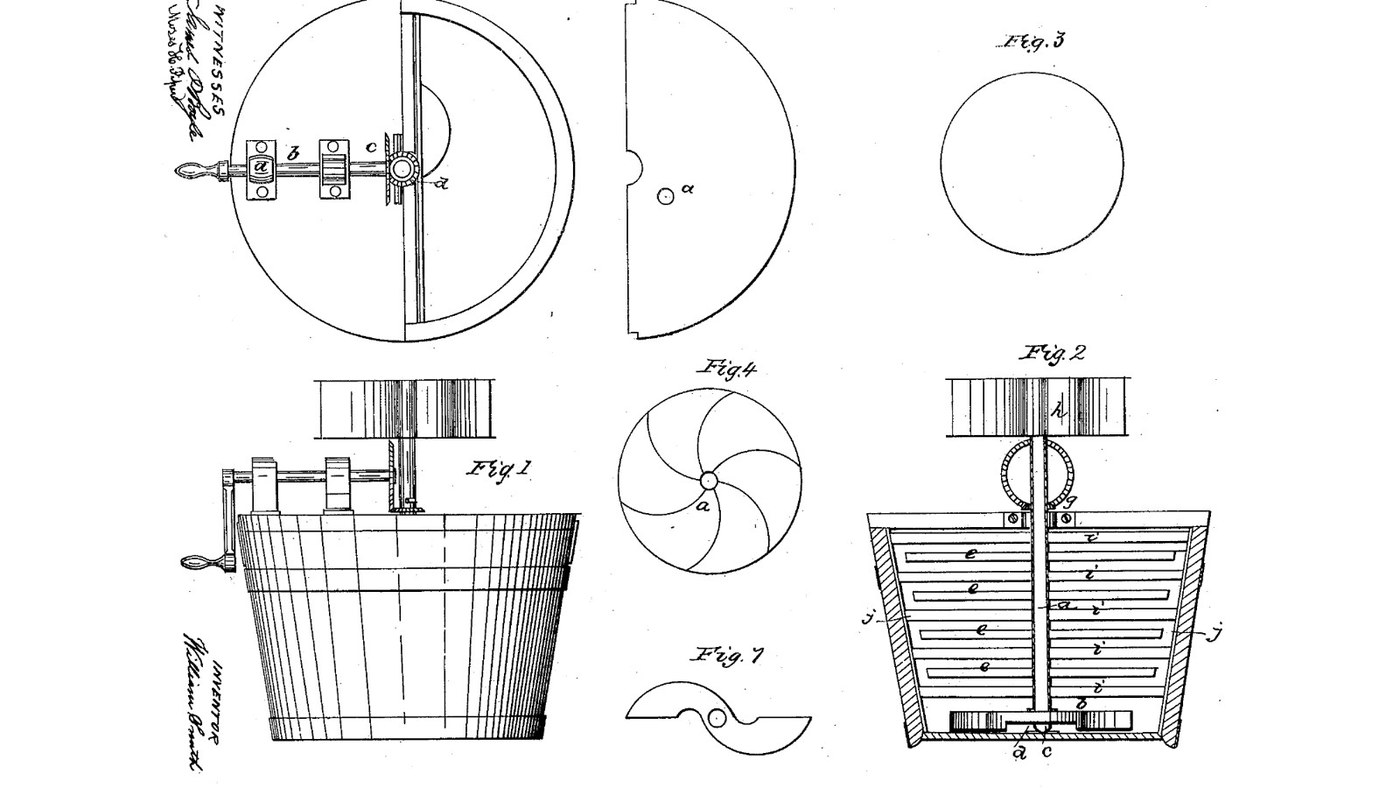

Atmospheric Combination Churn: A Fan Sends Air Down a Hollow Shaft and Out Through the Turning Arm
William Smith Hall of Quincy, Massachusetts, received US 24,934, dated 2 August 1859, for what he called the "Atmospheric Combination-Churn". A crank on the cover turns a hollow upright shaft three times as fast through a large wheel and a pinion. A fan on the shaft's top takes in air, which goes down the shaft and out through a hollow arm at the bottom, while solid paddles on the shaft swing the cream past a rack of fixed bars.
This rung builds it in a 20-litre bucket with printed parts. Hall gives no sizes but the 3:1 wheel; every other size is ours.
درمیانہ
About 2 days, plus printing
ہدایات
1
1
When does air come out of the hollow arm?
When does air come out of the hollow arm?
Jupyter نوٹ بک لوڈ ہو رہی ہے…
2
2
Air through the cream, before it
Air through the cream, before it
That churn pushed air down a hollow staff by hand. Hall's turns, and a fan feeds the air.
3
3
Read US 24,934
Read US 24,934
"By a rapid rotary motion of the hollow shaft from right to left, which is produced by the driving wheel being three times the size of the pinion, the air is forced into the fan down through the hollow shaft, while the curve of the hollow arm or paddle at the bottom of the shaft being in an opposite direction from the arms of the fan, a vacuum is created, which allows the air to be discharged, causing a vertical action on the milk or cream".
4
4
Print the hollow arm b
Print the hollow arm b
Two hollow half-discs (48 mm radius, 24 mm deep) on a hub that takes the 16 mm tube, their straight faces open on opposite sides as Fig. 7 draws, with the point c under the hub. Print it hub down with tree supports and pull them out through the open faces. PETG, 0.2 mm layers, 40 % infill, 4 walls.
5
5
Print the cup d
Print the cup d
The 60 mm cup with a cone recess for the point, a trap for an M6 nut underneath and a groove for an O-ring about 30 mm across on a 2 mm cord. PETG, 0.2 mm layers, 40 % infill, 4 walls.
6
6
Print the paddles e
Print the paddles e
One solid paddle: a split hub for the 16 mm tube with an M5 clamp bolt, and a blade 24 mm tall reaching 96 mm. Print four. PETG, 0.2 mm layers, 40 % infill, 4 walls.
7
7
Print the pinion g
Print the pinion g
The 12-tooth spur pinion (module 2) with a hub, bored for the 16 mm tube and cross-drilled for a pin. PETG, 0.2 mm layers, 40 % infill, 4 walls.
8
8
Print the driving wheel c
Print the driving wheel c
The 36-tooth crown wheel (module 2, three times the pinion) with its hub, bored for the 12 mm crank shaft and cross-drilled for a pin. Print it teeth up. PETG, 0.2 mm layers, 40 % infill, 4 walls.
9
9
Print the fan's upper disc
Print the fan's upper disc
The plain 160 mm disc (Fig. 3) with the six curved arms standing on it (Fig. 4). Print it disc down. PETG, 0.2 mm layers, 40 % infill, 4 walls.
10
10
Print the fan's lower disc
Print the fan's lower disc
The 160 mm disc with the centre hole (Fig. 4, a) on a split hub that clamps to the tube's top with an M5 bolt, Hall's "screw". PETG, 0.2 mm layers, 40 % infill, 4 walls.
11
11
Cup d in the bucket's floor
Cup d in the bucket's floor
Drill a 6.5 mm hole in the middle of the bucket's floor. Push an M6 nut into the cup's trap and lay the O-ring in its groove. Stand the cup over the hole and bolt it from underneath with a stainless M6 x 16 bolt and a washer, just tight enough to squeeze the O-ring. Fill the bucket with water to check it does not leak, then empty it.
اس مرحلے کے لیے مواد:
 20 لٹر کی بالٹی1 ٹکڑا
 شش پہلو بولٹوں کا مجموعہ1 ٹکڑا
 چھ گوشہ ڈھبری1 ٹکڑا
 چپٹا چھلا1 ٹکڑا
 او رنگ1 ٹکڑا
درکار اوزار:
 بے تار مشق
 مشقوں کا سیٹ
 انگریزی پانا
 پانی
12
12
Hollow shaft a, arm b and paddles e
Hollow shaft a, arm b and paddles e
Cut the stainless tube 507 mm long and deburr both ends. Press it 26 mm into the hollow arm's hub and check you can blow through the tube and out of both open faces. Clamp the four paddles on the tube with their middles 80, 140, 200 and 260 mm above the bucket's floor, each turned 45 degrees from the one below, with stainless M5 bolts and lock nuts. Stand the arm's point in the cup.
اس مرحلے کے لیے مواد:
 زنگ نہ لگنے والے فولاد کی نلی1 ٹکڑاشش پہلو بولٹوں کا مجموعہ4 ٹکڑے
 نائیلون والا لاک نٹ4 ٹکڑے
 PETG فلامنٹ1 ٹکڑا
درکار اوزار:
 تار والا 3D پرنٹر (FDM)
 لوہا کاٹنے کی آری
 ریتیاں (ہاتھ کی ریتی)انگریزی پانا
 فیتہ پیما
13
13
Rack of bars i on uprights j
Rack of bars i on uprights j
Cut two hardwood uprights 30 x 20 mm, 366 mm long, and four bars 200 x 20 x 12 mm. Glue and screw the bars between the uprights' faces at 110, 170, 230 and 290 mm up, so the rack is 260 mm wide. Lower it into the bucket beside the shaft, the bars' middle line 25 mm from the shaft, and turn the shaft by hand: every paddle must pass between two bars.
اس مرحلے کے لیے مواد:
 سخت لکڑی کا تختہ1 ٹکڑا
 لکڑی کا گوند1 ٹکڑا
 لکڑی کے پیچ8 ٹکڑے
درکار اوزار:
 ہاتھ کی آریبے تار مشقمشقوں کا سیٹ
 ریگ مالفیتہ پیما
14
14
Cover, journal f, chair and crank
Cover, journal f, chair and crank
Cut a 320 mm disc of 12 mm plywood and saw it in half. Notch the front half 24 mm across and the back half 50 mm across at the middle of the cut, as Fig. 6 draws, and bore a 24 mm air opening in the back half 90 mm from the middle. On the front half screw a hardwood block 80 x 56 x 30 mm over the notch, bored 17 mm for the tube, and two bearing blocks 44 x 30 mm, 110 mm tall, their near faces 45 and 115 mm from the middle, bored 12.6 mm through 90 mm up. Slide a 190 mm stainless rod through them for the crank shaft, pin the driving wheel on its inner end and a hardwood crank arm with a dowel handle 88 mm out on the other.
اس مرحلے کے لیے مواد:
 پلائی ووڈ کی چادر1 ٹکڑاسخت لکڑی کا تختہ1 ٹکڑا
 سخت لکڑی کی کھونٹیاں1 ٹکڑا
 زنگ نہ لگنے والے فولاد کی سلاخ1 ٹکڑالکڑی کا گوند1 ٹکڑالکڑی کے پیچ6 ٹکڑے
درکار اوزار:
 جگسا آریہاتھ کی آریبے تار مشق
 بیلچہ نما بٹ کا سیٹمشقوں کا سیٹلوہا کاٹنے کی آریفیتہ پیما
15
15
Pinion g and fan h
Pinion g and fan h
Lay both cover halves on the bucket, the tube through the journal. Pin the pinion on the tube so its teeth mesh fully with the driving wheel, just above the journal. Glue the fan's two discs together, arms between, and clamp the fan on the tube's top. Turn the crank: the shaft turns three times for each turn, and you feel air drawn in at the fan's rim.
اس مرحلے کے لیے مواد:
لکڑی کا گوند1 ٹکڑاشش پہلو بولٹوں کا مجموعہ1 ٹکڑانائیلون والا لاک نٹ1 ٹکڑادرکار اوزار:
انگریزی پانابے تار مشقمشقوں کا سیٹ16
16
The build in 3D
The build in 3D
FreeCAD model of this build, cut open: the bucket, the cup and the hollow arm on the floor, the hollow shaft with four paddles passing between the rack of bars, the two-piece cover with its journal, chair and air opening, the driving wheel on the crank shaft turning the pinion, and the fan on top. The shaft was checked at 16 angles.
17
17
Churn
Churn
Pour about 10 litres of heavy cream at about 15 °C into the bucket, checked with the thermometer, and put the cover on. Turn the crank steadily, faster than the notebook's lowest speed, and time it. Lift the back half now and then to look. When the butter comes, lift the shaft and rack out, pour off the buttermilk, wash the butter in cold water until it runs clear, work in a pinch of salt and weigh it.
اس مرحلے کے لیے مواد:
 گاڑھی بالائی10 l
 موٹا سمندری نمک1 ٹکڑاپانی1 ٹکڑا
درکار اوزار:
 اندر رہنے والی سلاخ والا ترمامیٹر
 اسٹاپ واچ
 ڈیجیٹل باورچی خانہ ترازو
 زنگ نہ لگنے والے فولاد کا بڑا ملانے کا پیالہ
18
18
Troubleshooting
Troubleshooting
Atmospheric churn troubleshooting.
Flow
Loading...
19
19
History and honest limits
History and honest limits
**William Smith Hall** of Quincy, Massachusetts, US 24,934, 2 August 1859, "Churn". He claimed forcing a current of air through the milk or cream by the rotary fan combined with the upright hollow shaft, the rotary hollow and solid paddles and the stationary bars. He gives no sizes but the driving wheel three times the pinion, so every size here is ours: a crown wheel and pinion stand in for his wheel and pinion, and the fan, arm, paddles and rack are printed or cut to fit a 20-litre bucket. Our notebook is a rough upper-bound estimate, not a test.
مواد
17- 1 ٹکڑاپلیس ہولڈر
- 6 ٹکڑےپلیس ہولڈر
- 1 ٹکڑاپلیس ہولڈر
- 1 ٹکڑاپلیس ہولڈر
- 1 ٹکڑاپلیس ہولڈر
- پلیس ہولڈر
- 5 ٹکڑےپلیس ہولڈر
- 1 ٹکڑاپلیس ہولڈر
- 1 ٹکڑاپلیس ہولڈر
- 3 ٹکڑےپلیس ہولڈر
- 14 ٹکڑےپلیس ہولڈر
- 1 ٹکڑاپلیس ہولڈر
- 1 ٹکڑاپلیس ہولڈر
- پلیس ہولڈر
- 10 lپلیس ہولڈر
- 1 ٹکڑاپلیس ہولڈر
- 1 ٹکڑاپلیس ہولڈر
درکار اوزار
16- 1 vendor sell this, none ship to you yetپلیس ہولڈر
- پلیس ہولڈر
- پلیس ہولڈر
- پلیس ہولڈر
- پلیس ہولڈر
- پلیس ہولڈر
- پلیس ہولڈر
- 1 vendor sell this, none ship to you yetپلیس ہولڈر
- پلیس ہولڈر
- پلیس ہولڈر
- 1 vendor sell this, none ship to you yetپلیس ہولڈر
- پلیس ہولڈر
- پلیس ہولڈر
- پلیس ہولڈر
- پلیس ہولڈر
ڈیزائن فائلیں
8یہ بلوپرنٹ بناتا ہے


متعلقہ بلیو پرنٹ
یہ بلیو پرنٹ علم بانٹتے ہیں — تکنیک، مواد یا اصول
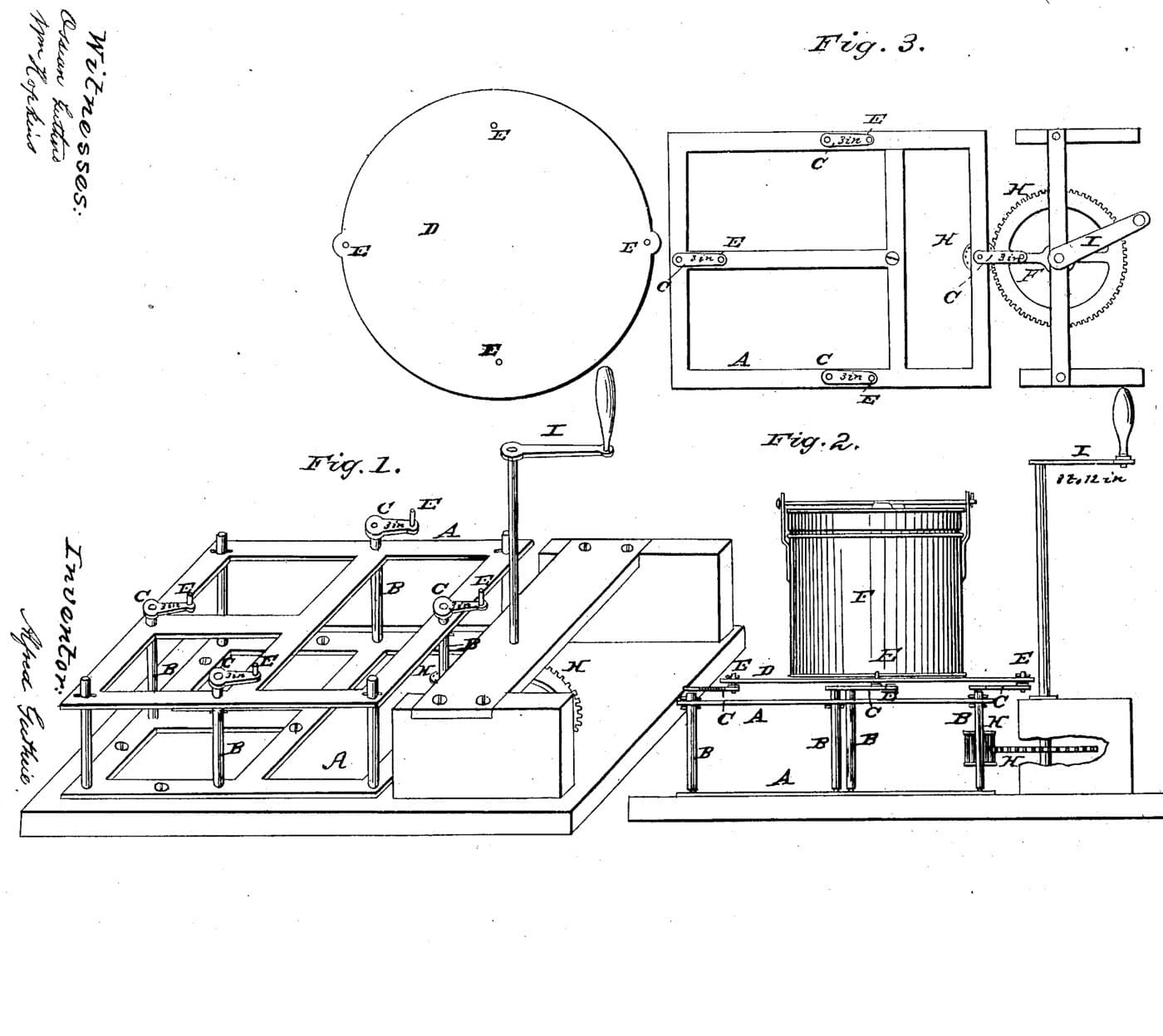
Four-Crank Gyrating Churn: Four Cranks Carry the Tub Round a Small Circle With No Dasher
Martin کی طرف سے
لکڑی کا کام
0
0
0
0
0
0
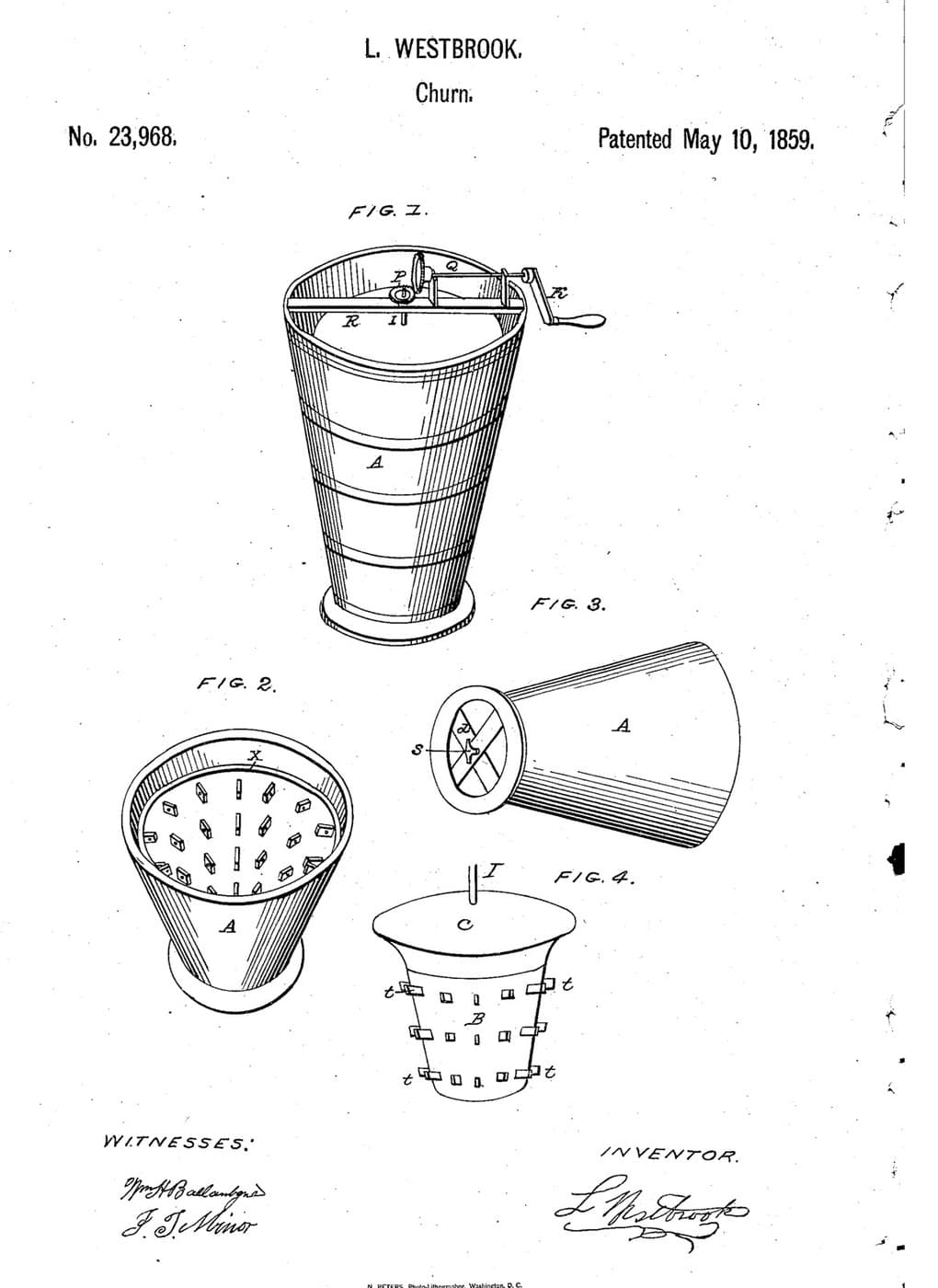
Rim-and-Disk Flow Churn: Cream Is Rubbed Past a Turning Disk, Then Falls Through Fixed and Turning Dashers
Buttercup کی طرف سے
خوراک اور مشروبات
0
0
0
0
0
0
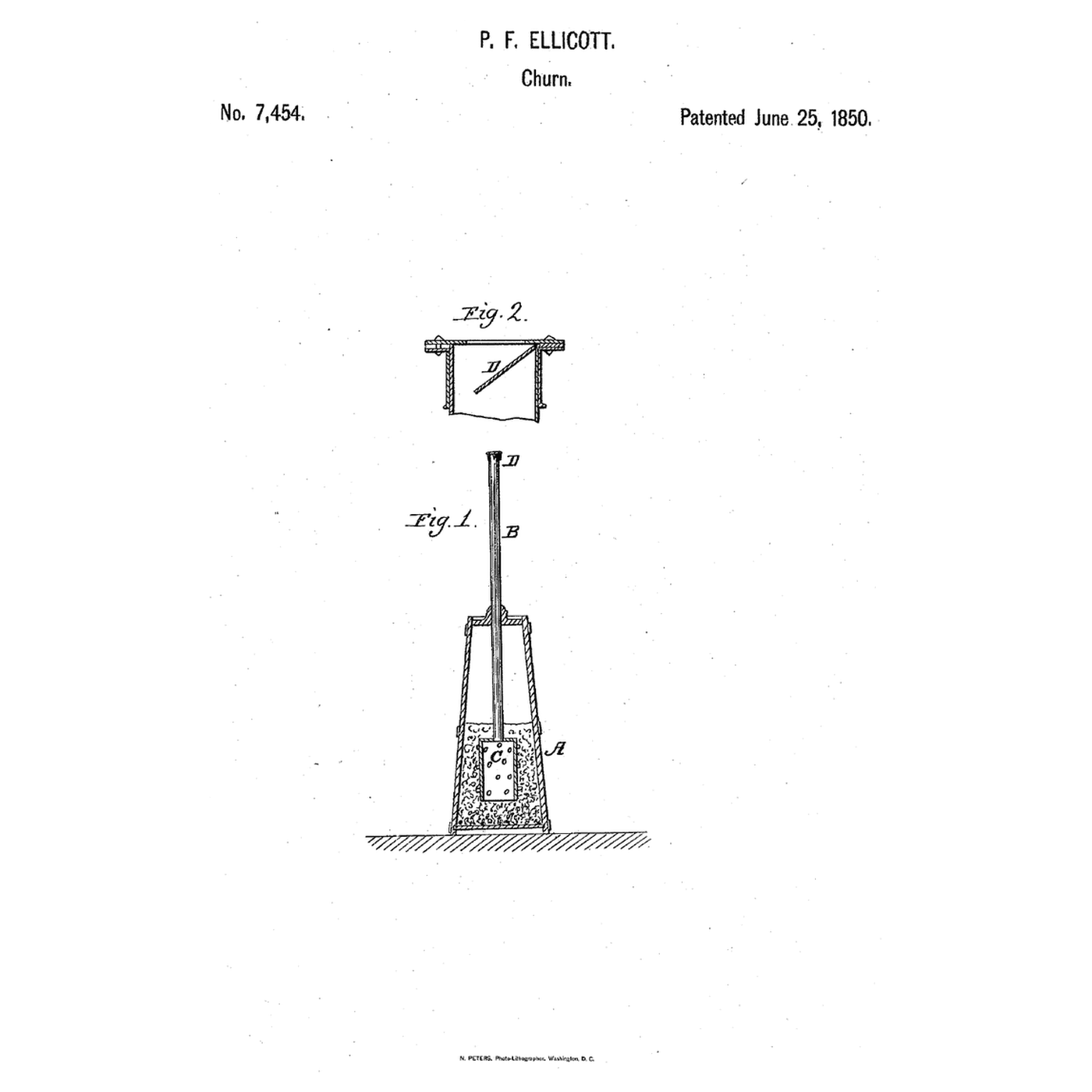
Valved Hollow-Staff Plunger Churn: A Valve at the Top, Air Forced Out at the Foot
TheChef کی طرف سے
خوراک اور مشروبات
40
0
0
0
0
0

Churning Butter from Cream — The 5,000-Year-Old Fat Separation
TheChef کی طرف سے
دستکاری
60
0
0
0
0
0
CC0 پبلک ڈومین
یہ بلیو پرنٹ CC0 کے تحت جاری کیا گیا ہے۔ آپ اجازت لیے بغیر اس کام کو نقل، ترمیم، تقسیم اور کسی بھی مقصد کے لیے استعمال کرنے کے لیے آزاد ہیں۔
میکر کی حمایت کریں ان کے بلیو پرنٹ کے ذریعے پروڈکٹس خرید کر جہاں وہ میکر کمیشن وینڈرز کی طرف سے مقرر، کماتے ہیں، یا اس بلیو پرنٹ کی نئی تکرار بنائیں اور آمدنی شیئر کرنے کے لیے اسے اپنے بلیو پرنٹ میں کنکشن کے طور پر شامل کریں۔