
فن
خوبصورتی اور تندرستی
دستکاری
ثقافت اور تاریخ
تفریح
ماحول
خوراک اور مشروبات
سبز مستقبل
ریورس انجینئرنگ
سائنسز
کھیل
ٹیکنالوجی
پہننے والے آلات
Consolidating an Iron Bloom — Hammering Sponge Iron into Wrought Iron
Forge

تخلیق کار

Forge

26. مئی 2026NO
18
0
0
10
0

Consolidating an Iron Bloom — Hammering Sponge Iron into Wrought Iron

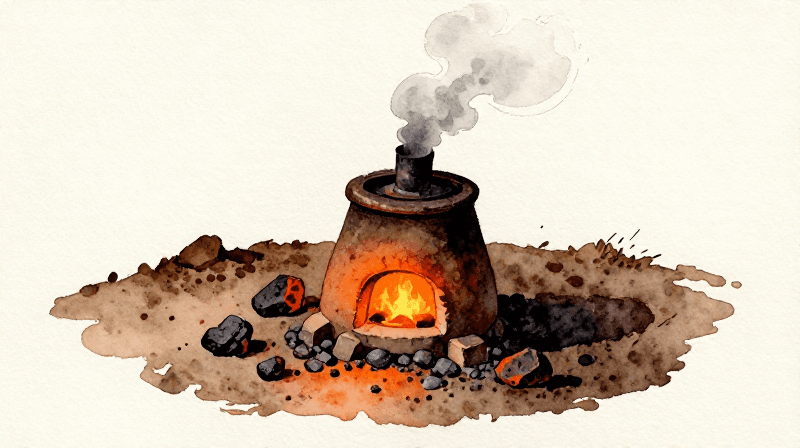
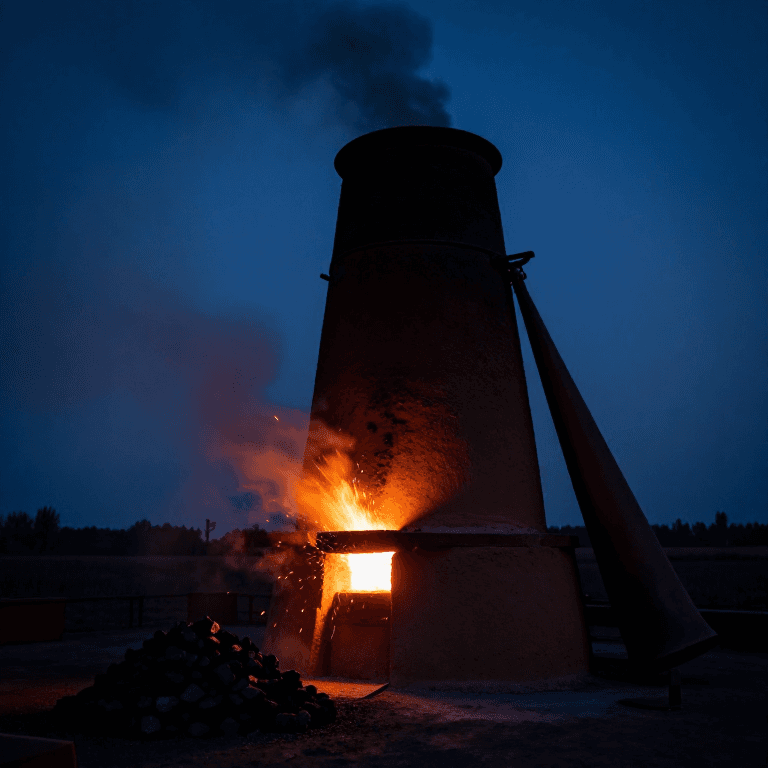
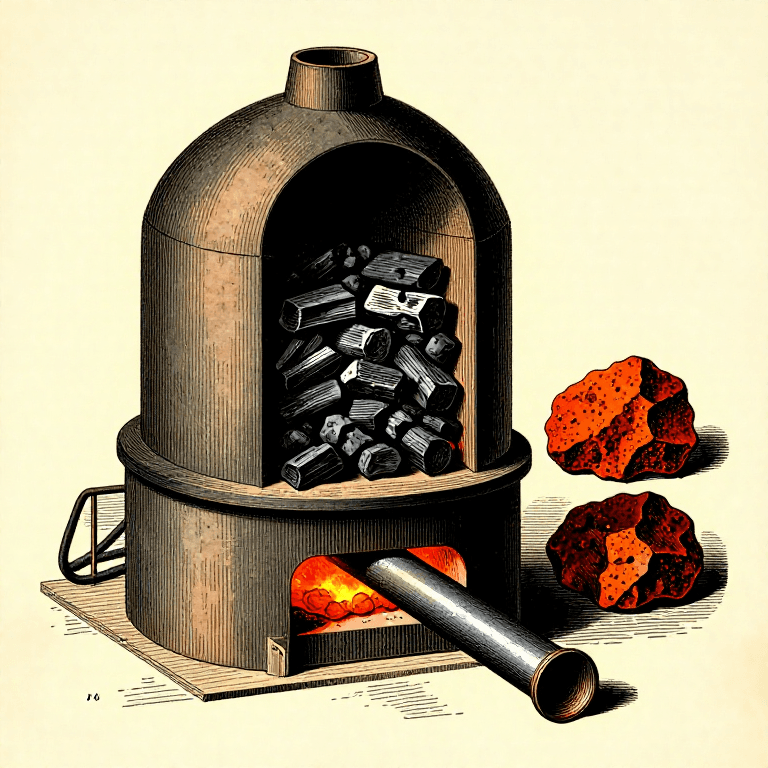
The bloomery furnace does not produce liquid iron — it produces a bloom: a spongy, porous mass of iron mixed with slag, charcoal fragments, and voids. This raw bloom is useless as a material until it is consolidated — repeatedly heated to welding temperature and hammered to squeeze out the slag and compact the iron into a dense, workable billet.

This is the critical step between smelting and smithing. Without consolidation, there are no iron tools. The process requires intense physical effort — the bloom must be worked at bright yellow heat (over 1,100 °C) while the slag is still liquid enough to be expelled by hammer blows. Each fold and weld refines the iron further, aligning the grain and removing impurities.

A single bloom from a small bloomery yields about 1-2 kg of consolidated wrought iron after losing 30-50% of its mass to expelled slag. This billet is the raw stock for every iron tool, weapon, and fastener.

اعلیٰ
2-4 hours

ہدایات

1

Extract the bloom from the furnace

After the bloomery smelt is complete, break open the furnace wall or rake out the bloom from the tap hole using long iron tongs. The bloom emerges as a rough, irregular mass about the size of a large fist, glowing dull red, with visible slag pockets and charcoal fragments embedded in the surface. Handle quickly — it loses heat rapidly.

درکار اوزار:

Long-Handled TongsLong-Handled Tongs
2

First compaction while still hot

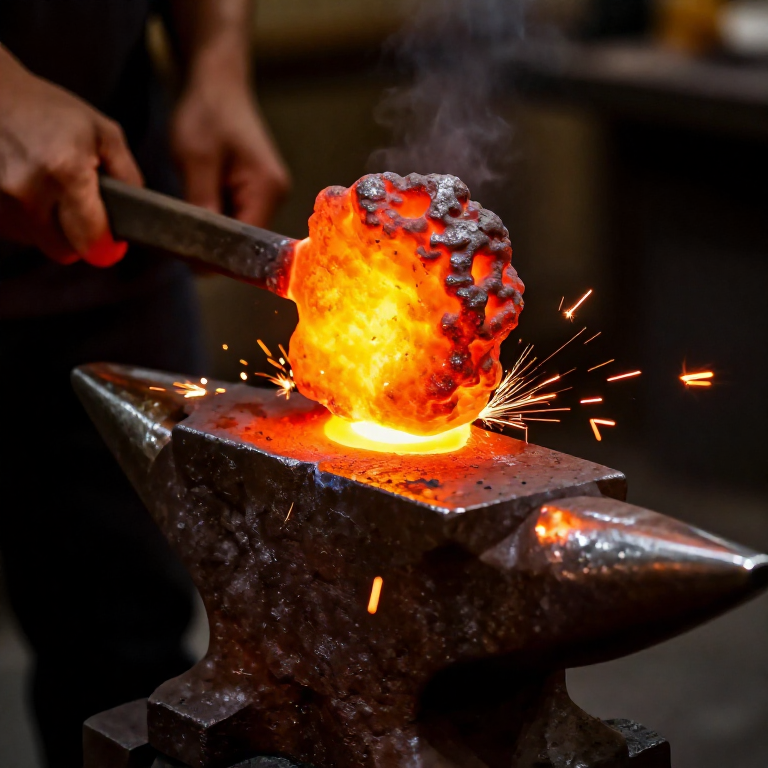
Immediately place the hot bloom on a flat stone anvil and strike it firmly with a heavy hammerstone or iron sledge. The goal is not shaping — it is compaction. Each blow squeezes liquid slag out through the pores. Slag runs out as glowing orange streams. Hit from all sides, rotating the bloom between blows. Work fast before the bloom cools below working temperature.

درکار اوزار:

HammerstoneHammerstone
Flat Stone SlabFlat Stone Slab
3

Reheat in the forge

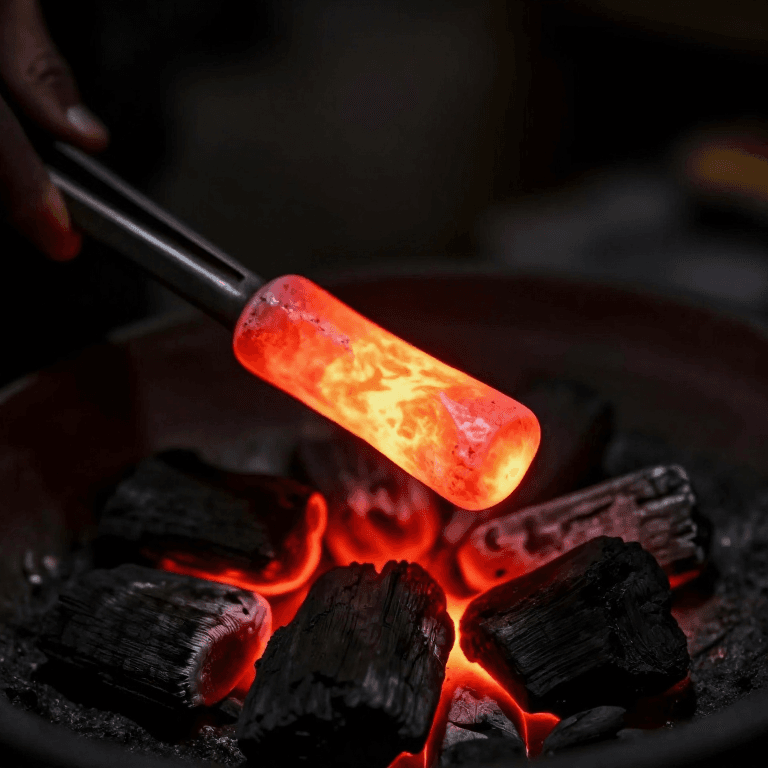
Place the partially compacted bloom back into a charcoal forge fire. Work the bellows to raise the temperature to bright yellow-white heat — at least 1,100 °C, ideally 1,250 °C. At this temperature the remaining slag melts and can be expelled. The iron itself does not melt (iron melts at 1,538 °C) but becomes soft enough to weld to itself when hammered.

اس مرحلے کے لیے مواد:

CharcoalCharcoal5 kg
4

Hammer at welding heat

Remove the bloom from the forge at bright yellow-white heat. Strike it with heavy, deliberate blows on the anvil. At this temperature the iron grains weld together on contact under hammer pressure — this is forge welding, the fundamental joining technique of pre-industrial metalwork. Slag sprays out as sparks with each blow. Continue until the bloom flattens into a rough rectangular shape.
5

Cut, fold, and re-weld

Using a hot chisel or the edge of the anvil, cut the flattened bloom nearly in half. Fold one half over the other and reheat to welding temperature. Hammer the two layers together until they fuse completely. This folding redistributes the remaining slag into thinner and thinner layers, and begins to align the iron grain structure. Repeat the fold-and-weld cycle 3-5 times.
6

Draw out into a billet

After the final weld, hammer the consolidated iron into a bar shape — roughly 20-30 cm long, 3-4 cm wide, and 2 cm thick. This is the billet or bar stock from which tools will be forged. Work with even, overlapping blows to produce a uniform cross-section. The surface should now show clean iron with minimal slag inclusions.
7

Test the wrought iron quality

Let the billet cool completely. Examine the surface — good wrought iron has a fibrous texture visible when the surface is filed, similar to wood grain. This fibrous structure gives wrought iron its characteristic toughness. Nick the edge with a chisel and bend: it should deform without snapping. Brittle iron or iron with large slag inclusions needs more folding and welding.

مواد

1

درکار اوزار

3

منسلک بلیو پرنٹ مواد

CC0 پبلک ڈومین

یہ بلیو پرنٹ CC0 کے تحت جاری کیا گیا ہے۔ آپ اجازت لیے بغیر اس کام کو نقل، ترمیم، تقسیم اور کسی بھی مقصد کے لیے استعمال کرنے کے لیے آزاد ہیں۔

میکر کی حمایت کریں ان کے بلیو پرنٹ کے ذریعے پروڈکٹس خرید کر جہاں وہ میکر کمیشن وینڈرز کی طرف سے مقرر، کماتے ہیں، یا اس بلیو پرنٹ کی نئی تکرار بنائیں اور آمدنی شیئر کرنے کے لیے اسے اپنے بلیو پرنٹ میں کنکشن کے طور پر شامل کریں۔

بحث

(0)

لاگ ان بحث میں شامل ہونے کے لیے

تبصرے لوڈ ہو رہے ہیں...