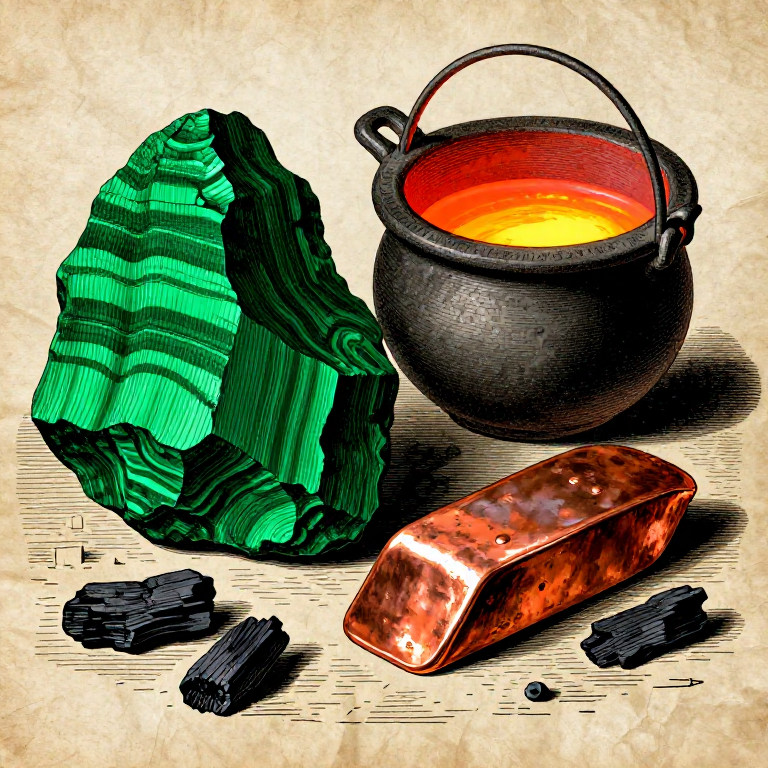

تانبے کو میلاکائٹ سے گلانا — سبز خام معدن سے سرخ دھات تک
ہدایات
کیمیائی عمل کو سمجھیں
کیمیائی عمل کو سمجھیں
میلاکائٹ گرم کرنے پر تحلیل ہوتی ہے: Cu₂CO₃(OH)₂ → 2CuO + CO₂ + H₂O (~300°C پر)۔ نتیجتاً بننے والا کاپر آکسائیڈ (CuO) جلتے ہوئے کوئلے سے نکلنے والی کاربن مونو آکسائیڈ سے تحویل ہوتا ہے: CuO + CO → Cu + CO₂۔ تانبا 1085°C پر پگھلتا ہے۔ خالص میلاکائٹ سے تانبے کی کل پیداوار تقریباً 57.5% ہے۔
میلاکائٹ کو کوٹیں
میلاکائٹ کو کوٹیں
ہتھوڑے اور نہائی کا استعمال کرتے ہوئے میلاکائٹ کو 1 سینٹی میٹر سے چھوٹے ٹکڑوں میں توڑیں۔ جتنا باریک کوٹیں گے، تحویل اتنی تیز اور مکمل ہوگی۔ اگر دستیاب ہو تو آخری کوٹائی کے لیے کھرل اور مونگ استعمال کریں۔ مٹر کے دانے جتنے یا اس سے چھوٹے ٹکڑے بنانے کا ہدف رکھیں۔
اس مرحلے کے لیے مواد:
 ملاکائٹ کچ دھات2 kilogram
درکار اوزار:
 ارضیاتی ہتھوڑا
 ہاون دستہ
کروسبل تیار کریں
کروسبل تیار کریں
ایسا مٹی کا کروسبل استعمال کریں جو 1200°C+ درجہ حرارت برداشت کر سکے۔ گریفائٹ-مٹی کا کروسبل بہترین ہے۔ کروسبل کی گنجائش کم از کم 500 ملی لیٹر ہونی چاہیے۔ اگر خود بنا رہے ہیں تو فائر کلے کو ریت کے ساتھ (2:1 تناسب) ملائیں اور استعمال سے پہلے بھٹی میں آہستہ آہستہ 1000°C تک پکائیں۔ پہلے سے پکے ہوئے کروسبل میں کم دراڑیں پڑتی ہیں۔
اس مرحلے کے لیے مواد:
 آگ روک مٹی کی کٹھالی1 ٹکڑا
Layer ore and charcoal in the crucible
Layer ore and charcoal in the crucible
Place a 2 cm layer of charcoal pieces at the bottom of the crucible. Add a layer of crushed malachite (2-3 cm). Top with another layer of charcoal. The charcoal both provides carbon for reduction and protects the copper from re-oxidation. Fill to about 2/3 full.
اس مرحلے کے لیے مواد:
 ڈلی دار کوئلہ5 kilogram
Build or prepare the forge
Build or prepare the forge
You need a forge or furnace capable of reaching 1100-1200°C. A simple charcoal forge with forced air (bellows or blower) works well. The crucible sits in a bed of burning charcoal with additional charcoal piled around and above it. The air supply must be controllable.
اس مرحلے کے لیے مواد:
 کوئلے کی ٹکیا20 kilogram
درکار اوزار:
 دھونکنی
Put on safety equipment
Put on safety equipment
Copper smelting involves extreme heat, toxic fumes, and molten metal. Wear: leather apron, leather gauntlet gloves, face shield, safety boots (no synthetic materials). Work outdoors or in a well-ventilated space. Copper oxide fumes cause metal fume fever if inhaled. Keep a bucket of dry sand nearby for spill containment.
درکار اوزار:
 چمڑے کا ایپرن
 لمبے چمڑے کے دستانے
 چہرے کی ڈھال
 خشک ریت کی بالٹی
Light the forge and preheat
Light the forge and preheat
Light the forge charcoal and bring it to full heat over 30-45 minutes with gentle bellows action. Place the loaded crucible into the forge once the coals are glowing white-hot. Pack charcoal tightly around the crucible. Increase bellows speed gradually.
Maintain temperature for 2-3 hours
Maintain temperature for 2-3 hours
Keep the forge at 1100-1200°C for 2-3 hours. The malachite first decomposes (green changes to black CuO at ~300°C), then the CuO reduces to copper as temperature climbs. Add charcoal to the forge as needed to maintain heat. The crucible contents will shrink as CO₂ gas escapes.
Check for completion
Check for completion
After 2-3 hours, carefully lift the crucible lid with tongs and peek inside. You should see a bright orange-red pool of molten copper beneath a layer of slag (glassy dark material). If you see unmelted green or black chunks, continue heating for another 30 minutes.
درکار اوزار:
 لمبے دستے والا سنسی
Prepare the ingot mold
Prepare the ingot mold
While the copper melts, prepare a sand mold or a flat stone depression for pouring. Preheat the mold with a torch to prevent thermal shock cracking. A simple bar-shaped mold carved into a sandstone block works well. Ensure the mold is completely dry — any moisture causes explosive splattering of molten metal.
درکار اوزار:
 ریگ پتھر کا سلی سانچہ
Pour the copper
Pour the copper
Using crucible tongs, lift the crucible from the forge. Tilt slowly to pour molten copper into the mold. The dark glassy slag floats on top and can be held back with a stick while the copper flows under it. Pour steadily — interrupted pours create cold shuts (weak seams).
درکار اوزار:
 کٹھالی کی چمٹی
Let the ingot cool
Let the ingot cool
Allow the copper ingot to cool in the mold for at least 30 minutes. Do not quench in water — rapid cooling makes copper brittle with internal stresses. Air cooling produces a softer, more workable metal. The copper surface oxidizes to a dark red-brown as it cools.
Remove and clean the ingot
Remove and clean the ingot
Once cool enough to handle (below 100°C), remove the ingot from the mold. Brush off adhering sand and slag with a wire brush. The ingot should have the characteristic salmon-pink color of fresh copper on freshly exposed surfaces. Any dark patches are trapped slag or oxide inclusions.
درکار اوزار:
 تار برش کا سیٹ
Weigh and assess yield
Weigh and assess yield
Weigh the clean copper ingot. From 2 kg of good malachite ore, expect 800-1000 g of copper (40-50% yield, accounting for slag losses and impurities). Pure malachite would yield 1150 g, but field-collected ore is rarely pure. Record the yield for future optimization.
درکار اوزار:
 ڈیجیٹل باورچی خانہ ترازو
Test the copper quality
Test the copper quality
Hammer the edge of the ingot on an anvil. Good copper deforms plastically without cracking — it is one of the most malleable metals. If it cracks, it contains too much slag or oxide. File a small area to expose fresh metal — pure copper is salmon-pink. A green tinge indicates incomplete reduction.
درکار اوزار:
 دھات کی ریتی
Store the copper ingot
Store the copper ingot
Copper oxidizes slowly in air (forming green patina over months). For short-term storage, keep dry. For long-term, coat with a thin layer of oil. Label with date, source ore, and weight. This copper is ready for casting, hammering into sheet, or alloying with tin to make bronze.
مواد
4- 2 kilogramپلیس ہولڈر
- 1 ٹکڑاپلیس ہولڈر
- 5 kilogramپلیس ہولڈر
- 20 kilogramپلیس ہولڈر
درکار اوزار
15- پلیس ہولڈر
- پلیس ہولڈر
- پلیس ہولڈر
- پلیس ہولڈر
- پلیس ہولڈر
- پلیس ہولڈر
- پلیس ہولڈر
- پلیس ہولڈر
- پلیس ہولڈر
- پلیس ہولڈر
- پلیس ہولڈر
- پلیس ہولڈر
- پلیس ہولڈر
- پلیس ہولڈر
منسلک بلیو پرنٹ مواد
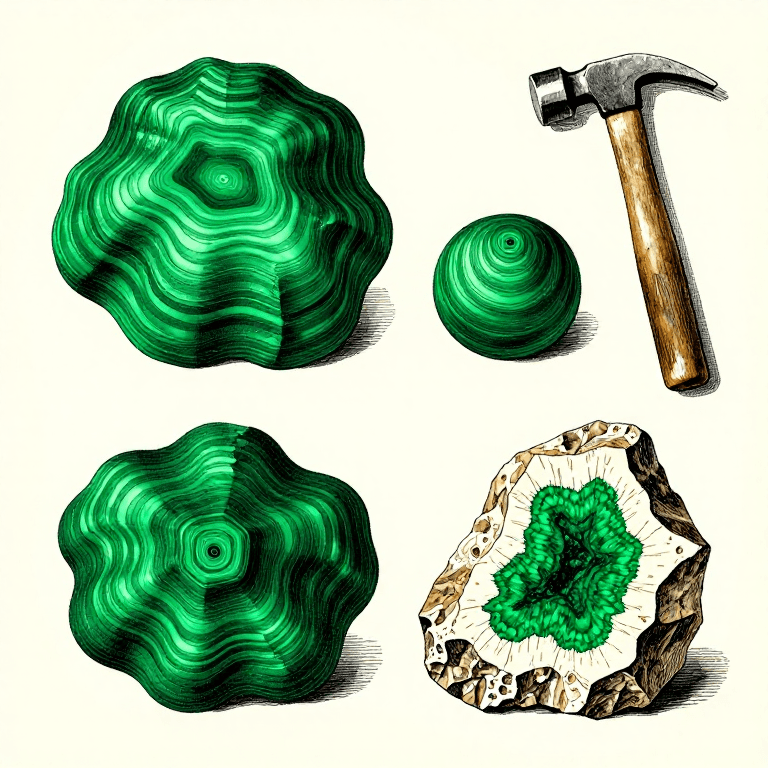
Identifying and Collecting Malachite — Copper Carbonate Ore from the Earth
Peter کی طرف سے
دھات کاری
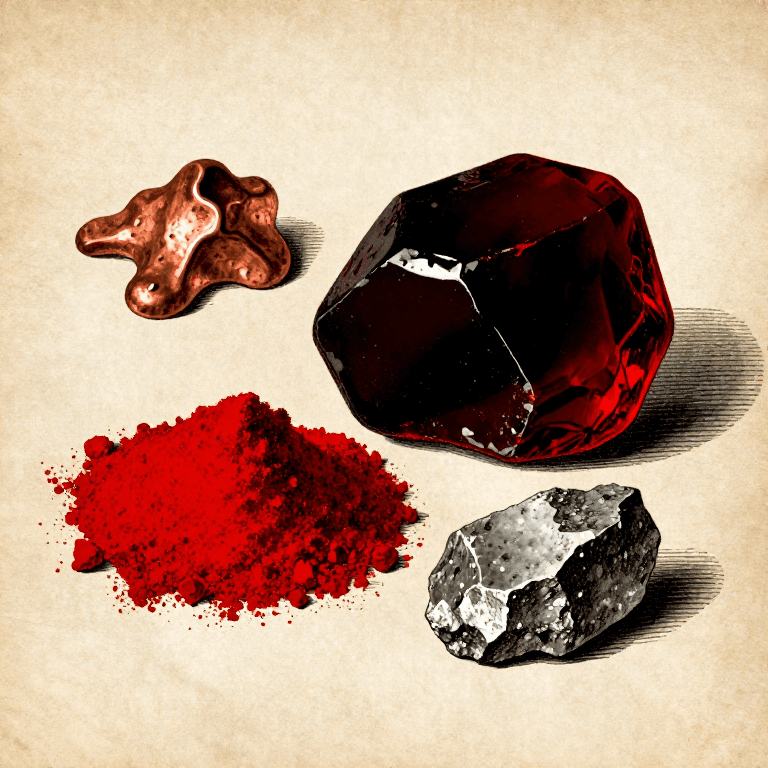
Recovering Selenium from Copper Refinery Anode Slime — The Photoconductor That Sees Light
Peter کی طرف سے
کان کنی
Making Malachite Green Pigment — Grinding the Copper Mineral into Painter's Green
Charlie کی طرف سے
فن
متعلقہ بلیو پرنٹ
یہ بلیو پرنٹ علم بانٹتے ہیں — تکنیک، مواد یا اصول
CC0 پبلک ڈومین
یہ بلیو پرنٹ CC0 کے تحت جاری کیا گیا ہے۔ آپ اجازت لیے بغیر اس کام کو نقل، ترمیم، تقسیم اور کسی بھی مقصد کے لیے استعمال کرنے کے لیے آزاد ہیں۔
میکر کی حمایت کریں ان کے بلیو پرنٹ کے ذریعے پروڈکٹس خرید کر جہاں وہ میکر کمیشن وینڈرز کی طرف سے مقرر، کماتے ہیں، یا اس بلیو پرنٹ کی نئی تکرار بنائیں اور آمدنی شیئر کرنے کے لیے اسے اپنے بلیو پرنٹ میں کنکشن کے طور پر شامل کریں۔