فن
خوبصورتی اور تندرستی
دستکاری
ثقافت اور تاریخ
تفریح
ماحول
خوراک اور مشروبات
ریورس انجینئرنگ
سائنسز
کھیل
ٹیکنالوجی
پہننے والے آلات
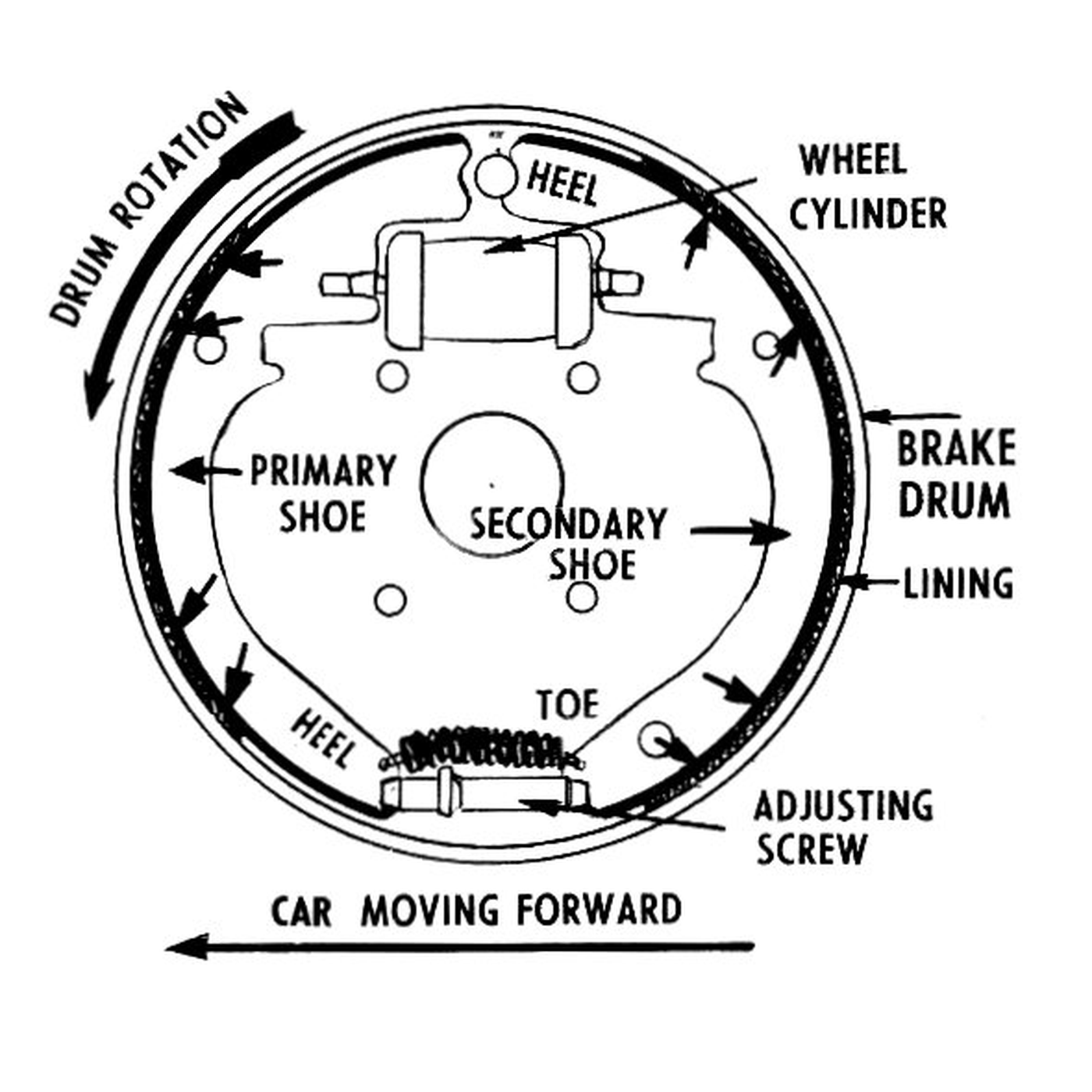


The Drum Brake: Shoes That Push Themselves Harder
Early cars stopped with blocks pressed on the tyres or with a band tightened round a drum on the outside. In 1902 Louis Renault put the friction INSIDE the drum: two curved shoes pivoted on a fixed plate, pushed outward against the drum's inner surface. The drum keeps dirt and water off the linings, and one of the shoes is dragged by the drum's own rotation into firmer contact — it helps to apply itself.
That self-servo gives a lot of braking for a small push. It also makes the brake sensitive to the friction of its linings, which is why drum brakes fade when hot.
This rung works out leading and trailing shoe torques and builds a plywood drum with one shoe to measure the difference by spinning it each way.
درمیانہ
About 4 hours
ہدایات
1
1
Leading and trailing shoes
Leading and trailing shoes
Jupyter نوٹ بک لوڈ ہو رہی ہے…
2
2
Build a drum and one shoe
Build a drum and one shoe
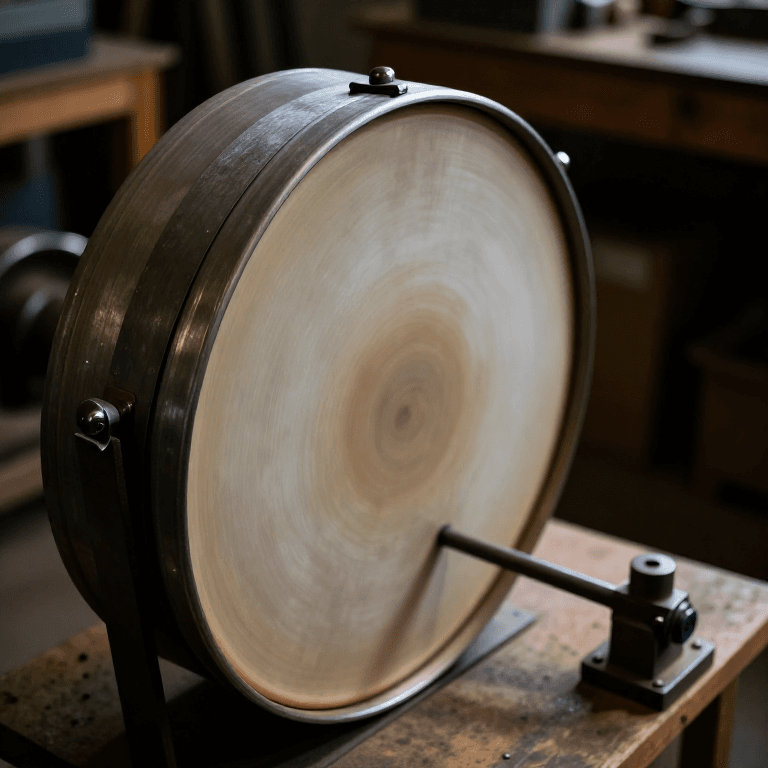
Make a drum: a plywood disc 200 mm across with a 30 mm rim of cardboard strip glued round it, on a bolt axle through a plywood backplate. Line the inside of the rim with sandpaper, rough side in, as a repeatable friction surface for the drum.
Make one shoe: a plywood arc that fits inside the drum, pivoted near one end on the backplate, with a piece of brake-pad friction material glued on its face. At the free end, hang the spring scale to pull the shoe out against the drum with a fixed force.
Wrap string round the drum's hub, hang a weight on it, and find the smallest weight that turns the drum against the shoe — with the drum turning towards the pivot (trailing), then away (leading). The leading direction needs far more weight.
اس مرحلے کے لیے مواد:
 پلائی ووڈ کی چادر1 شیٹ
 نالی دار گتے کی چادریں1 پیک
 بریک پیڈ1 سیٹ
 مشینی پیچ4 ٹکڑے
درکار اوزار:
 بے تار مشق
 مشقوں کا سیٹ
 قوت پیما (کمانی ترازو)
 پیمانہ
 ریگ مال کا سیٹ
3
3
History and context
History and context
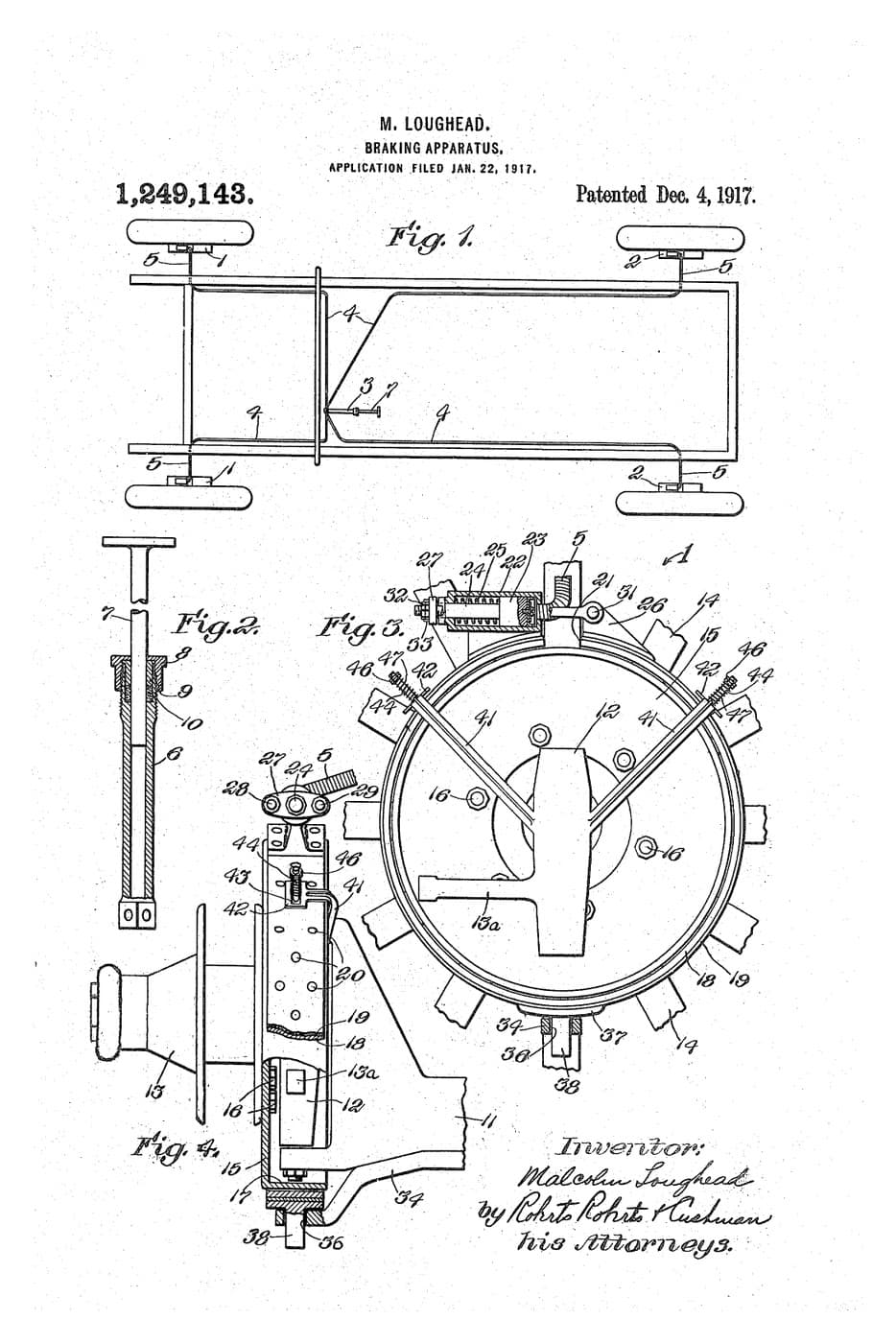
**Louis Renault, 1902** — the internal expanding shoe brake. No patent number is asserted here. Mechanical rods and cables worked the shoes until hydraulic operation (Loughead, in this catalogue) spread in the 1920s; twin-leading-shoe drums put the self-servo on both shoes for stronger front brakes.
**Honest limits.** The self-servo makes the torque sensitive to lining friction, so a hot drum fades and a wet one grabs. The drum expands away from the shoes when hot, lengthening the pedal. And the enclosed drum sheds heat poorly — the reason disc brakes (the next rung) took over at the front of cars.
مواد
4- 1 شیٹپلیس ہولڈر
- پلیس ہولڈر
- 1 سیٹپلیس ہولڈر
- 4 ٹکڑےپلیس ہولڈر
درکار اوزار
5- 1 vendor sell this, none ship to you yetپلیس ہولڈر
- پلیس ہولڈر
- پلیس ہولڈر
- پلیس ہولڈر
- پلیس ہولڈر
متعلقہ بلیو پرنٹ
یہ بلیو پرنٹ علم بانٹتے ہیں — تکنیک، مواد یا اصول



CC0 پبلک ڈومین
یہ بلیو پرنٹ CC0 کے تحت جاری کیا گیا ہے۔ آپ اجازت لیے بغیر اس کام کو نقل، ترمیم، تقسیم اور کسی بھی مقصد کے لیے استعمال کرنے کے لیے آزاد ہیں۔
میکر کی حمایت کریں ان کے بلیو پرنٹ کے ذریعے پروڈکٹس خرید کر جہاں وہ میکر کمیشن وینڈرز کی طرف سے مقرر، کماتے ہیں، یا اس بلیو پرنٹ کی نئی تکرار بنائیں اور آمدنی شیئر کرنے کے لیے اسے اپنے بلیو پرنٹ میں کنکشن کے طور پر شامل کریں۔